Discover Beijing
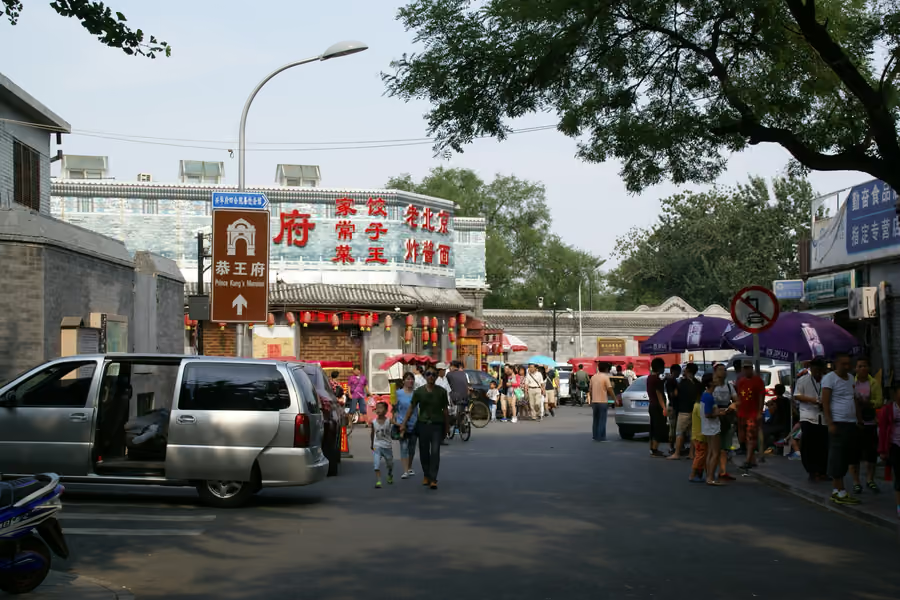
Prince Gong's Mansion
恭王府博物馆
The most complete surviving Qing princely residence in Beijing, with a formal mansion in front and an elaborate rockery-and-pavilion garden behind. It shows how the aristocracy below the emperor actually lived, at a scale you can take in on foot.
The story
What makes this place special
Built in 1777 for Heshen, the Qianlong emperor's favourite and by reputation the most corrupt official in Chinese history; when the Jiaqing emperor had him executed in 1799 the property passed to Prince Qing. The Xianfeng emperor granted it to his sixth brother, Prince Gong, in 1850, and the prince moved in in 1852 after repairs - he was the statesman who ran Qing foreign policy after the 1860 war, so the house is the headquarters of China's first attempts at diplomacy with the West. It covers about 60,000m², with the residential halls to the south and 28,000m² of garden to the north. From 1921 it was leased to Benedictines and became Furen Catholic University until 1951; it opened to tourists in 1996 and a full restoration was completed on 24 August 2008.
What you’ll discover
Two halves. First the formal residence: three parallel courtyard sequences of reception halls and living quarters, with a long two-storey rear building, furnished and labelled to show how a princely household was organised by rank. Then, through a gate, the garden - about twenty set pieces across artificial hills, ponds and corridors, with Lake Tai rockwork, a grotto containing the eight-metre stele of the character fu ('fortune') after the Kangxi emperor's calligraphy, a Western-style stone gateway that is unusual in a Chinese garden, and an enclosed timber Grand Opera House where Peking and Kunqu opera are staged.
A little local insight
Good to know before you go
- Spend your time in the garden, not the halls. The residential rooms are largely empty reconstructions; the garden is the reason this mansion survived as the most complete Qing princely compound in Beijing.
- Find the fu stele. It is inside a dark artificial grotto, easy to walk straight past, and it is the object the whole garden is composed around - the queue to touch it tells you where it is.
- Check whether an opera performance is on in the covered theatre while you are there. Hearing Kunqu in a Qing timber hall built for it is worth rearranging a day for; the theatre is dull and empty otherwise.
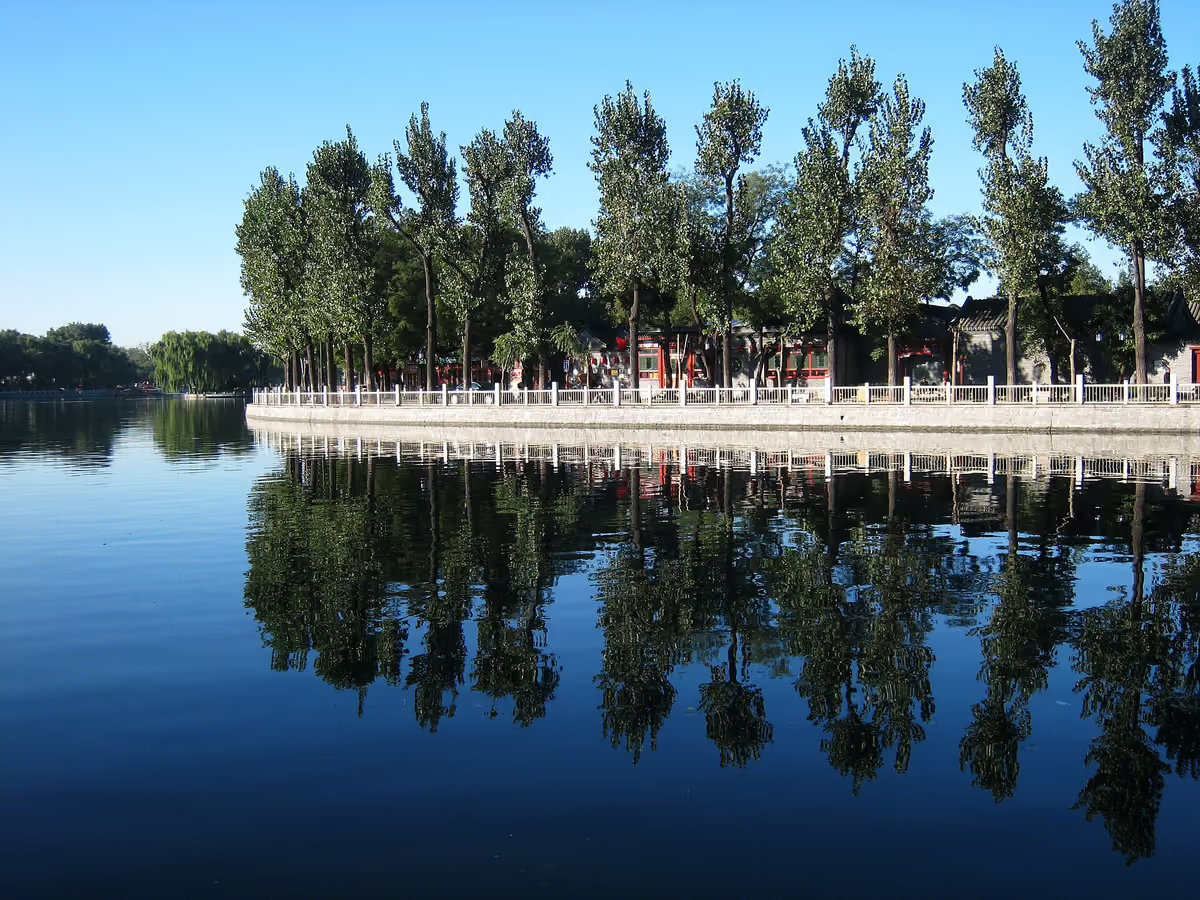
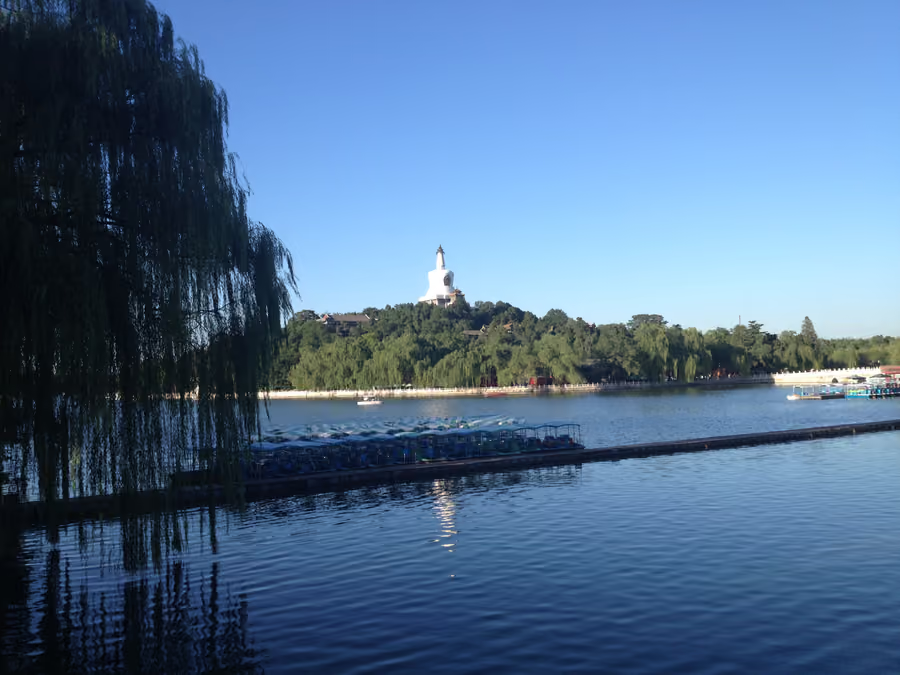
- It is a short walk from Shichahai and Houhai lake - do the mansion in the morning and the lakes and hutongs in the afternoon, rather than treating them as separate trips.
- The rickshaw drivers who offer to take you here from the lakes charge many times a taxi fare and often deliver you to a shop en route. Walk; it is 10-15 minutes.
- This is one of the most heavily group-toured sites in Beijing because it is small and close to the hutongs. Arrive at opening or in the last 90 minutes.
When to come
Early morning on a weekday, before the coach groups arrive from the lakes. Spring and autumn for the garden; the ponds and rockwork are at their best in late April and in October.
Getting around
The courtyards of the residence are flat and navigable, but every hall is up steps with raised thresholds. The garden is the problem: it is built on artificial hills, with humpbacked bridges, a grotto, uneven stone paths and flights of steps, and there is no step-free circuit. A wheelchair user can see the forecourts and some of the lower garden but will be turned back repeatedly; a bad knee copes with the garden slowly. Paths are narrow and get congested when a tour group passes.
Worth knowing before you go
Set a reminder for 20:00 Beijing time exactly ten days out - weekend slots often clear within the evening. Look for the Fu (good fortune) stele in the garden grotto, the object every Chinese visitor queues for.
Compare established providers
Check live tours and tickets
Search for Prince Gong's Mansion in Beijing. Prices, availability, payment and confirmation are handled by the booking provider.
China Travel Select does not take payment or create the reservation. Confirm the exact name, dates, inclusions and cancellation rules on the provider’s page.
Take a closer look
Maps, videos & more
Prices and hours change. These are the places to check on the day.