Your destination guide 北京
Beijing
Imperial China, and the Great Wall
The capital, and the one city almost every first trip includes. Beijing is enormous and its best sights are rationed by timed, passport-linked bookings — so it rewards planning more than anywhere else in China. Two sights a day is a realistic pace, not a lazy one.
Getting there
Two airports, 70 km and about two hours apart: Capital (PEK) and Daxing (PKX) — check which one you are using. The Capital Airport Express is a flat ¥25, Daxing's is ¥10–35. Beijing South, West and North handle high-speed rail to most of the country.
When to go
September to early November and late April to May. Winter is cold and clear with thin crowds; July is hot, wet and packed.
How long: 4–8 days
Give it 4 days for the headline sights, or up to 8 to see it properly and eat your way around.
Four is the Forbidden City, one Wall day and a hutong afternoon, moving briskly. Eight lets you walk the Summer Palace rather than march it, reach the outer temples and the Ming Tombs, and eat duck, mutton hotpot and a proper Beijing breakfast on separate days.
Three days in Beijing, planned around the booking windows
A first-timer's Beijing, arranged so the things that sell out get booked in the right order and you never backtrack across the city.
A little forward planning
Book these before you go
Timed, passport-linked and capable of selling out. Full detail on the reservation radar.
Mutianyu Great Wall 慕田峪长城
Bookable in EnglishOpens 15 days ahead · low sell-out risk
Forbidden City (Palace Museum) 故宫博物院
Bookable in EnglishOpens 7 days ahead at 20:00 Beijing · closed Monday (except public holidays) · extreme sell-out risk
Tiananmen Square 天安门广场
English via resellerOpens 7 days ahead at 12:00 Beijing · high sell-out risk
National Museum of China 中国国家博物馆
No English bookingOpens 7 days ahead at 17:00 Beijing · closed Monday · extreme sell-out risk
Make a few good memories
What to see in Beijing
Researched largely from Chinese-language sources, so it goes beyond the usual shortlist. Dollar figures are approximate, at the rate on 2026-10-08.
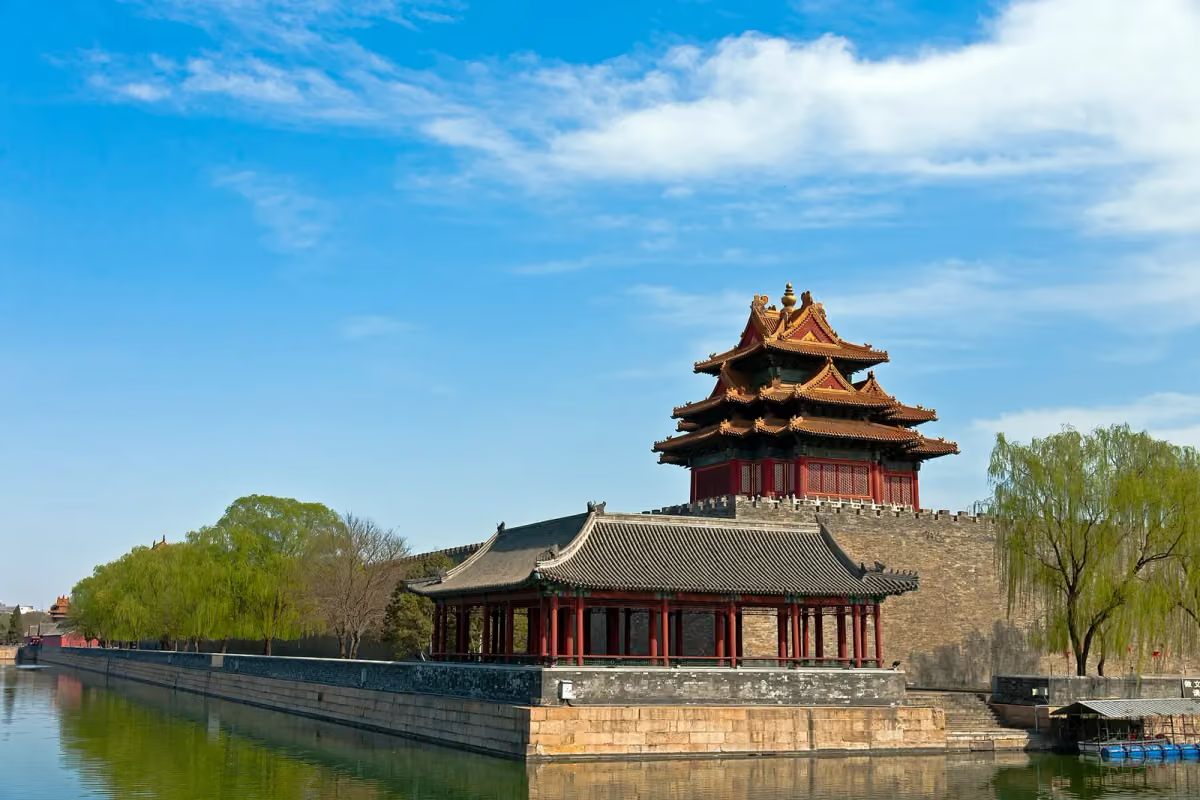
故宫博物院
The vast imperial palace of the Ming and Qing emperors, and the single sight most visitors build a Beijing trip around. Walking the central axis from Meridian Gate to the Imperial Garden takes you through nearly five centuries of court life.
¥60 peak season (1 Apr-31 Oct), ¥40 off-season (1 Nov-31 Mar); Treasure Gallery and Clock Gallery ¥10 each extra
≈ US$1.49–8.94Opening hours, booking and how to get there →
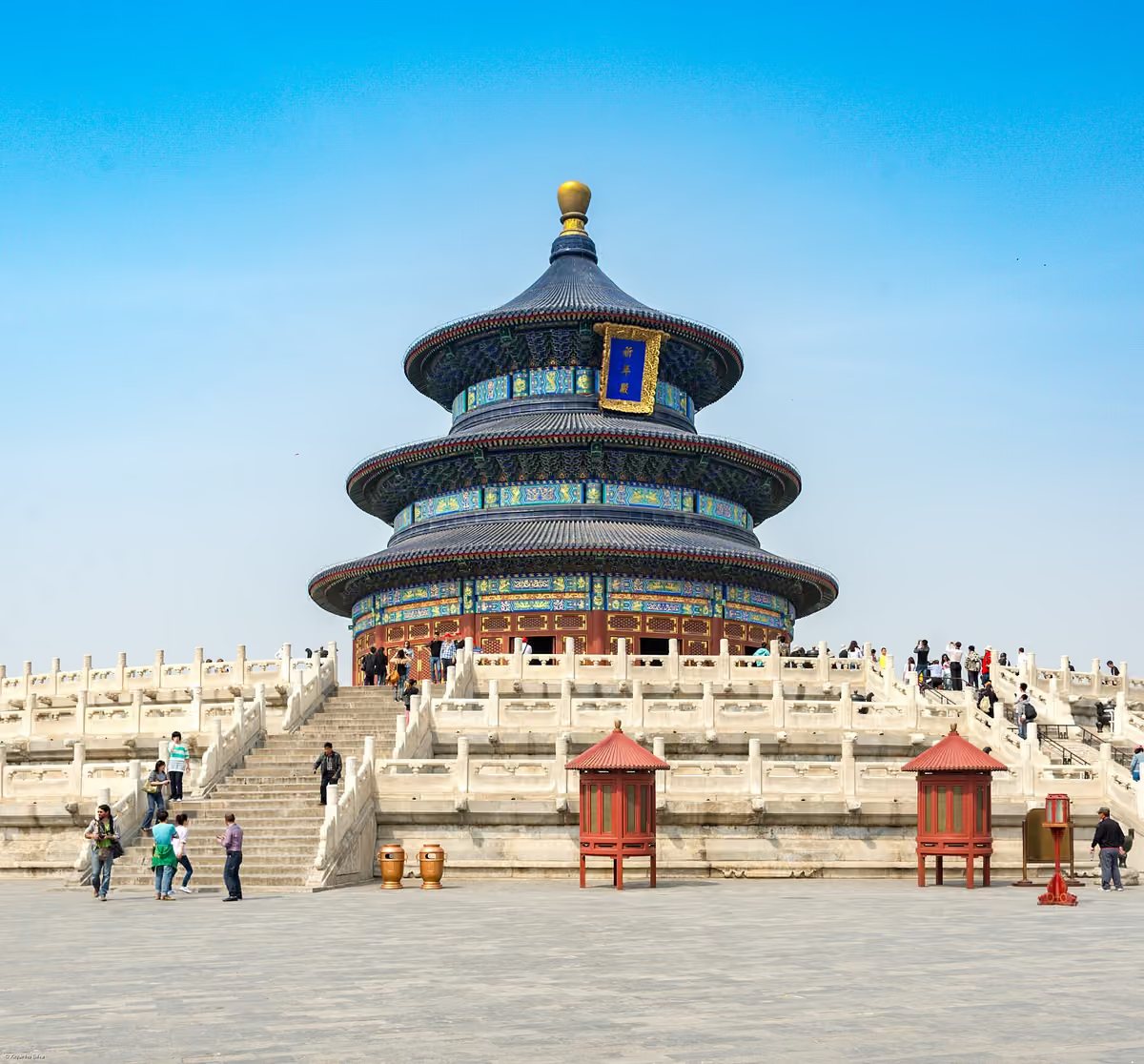
天坛公园
The Ming-Qing imperial altar complex where emperors prayed for good harvests, built as a diagram of heaven and earth in wood and marble. It doubles as a working city park, so you get world-class Ming architecture plus retirees singing opera and playing jianzi under the cypresses.
Park entry ¥15 peak (1 Apr-31 Oct) / ¥10 off-season; combined ticket ¥34 peak / ¥28 off-season
≈ US$1.49–5.07Opening hours, booking and how to get there →
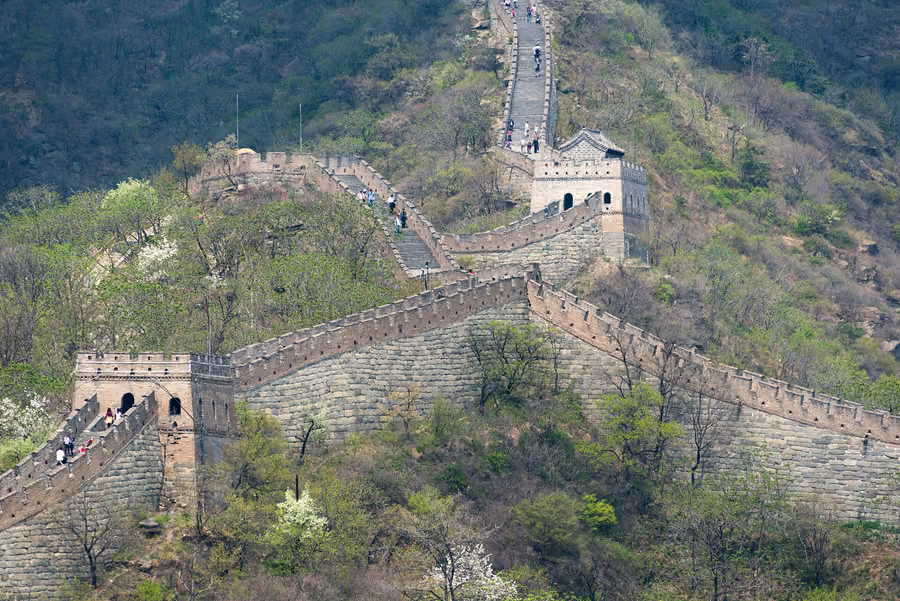
慕田峪长城
The best-balanced Great Wall section near Beijing: fully restored, dramatically steep, backed by forested ridges, and far less crowded than Badaling. Cable car or chairlift up and a toboggan down make it workable even if you are not a hiker.
Entrance from ¥45; ticket plus return shuttle bus ¥60; ticket plus shuttle plus return cable car ¥200
≈ US$6.70–30Opening hours, booking and how to get there →
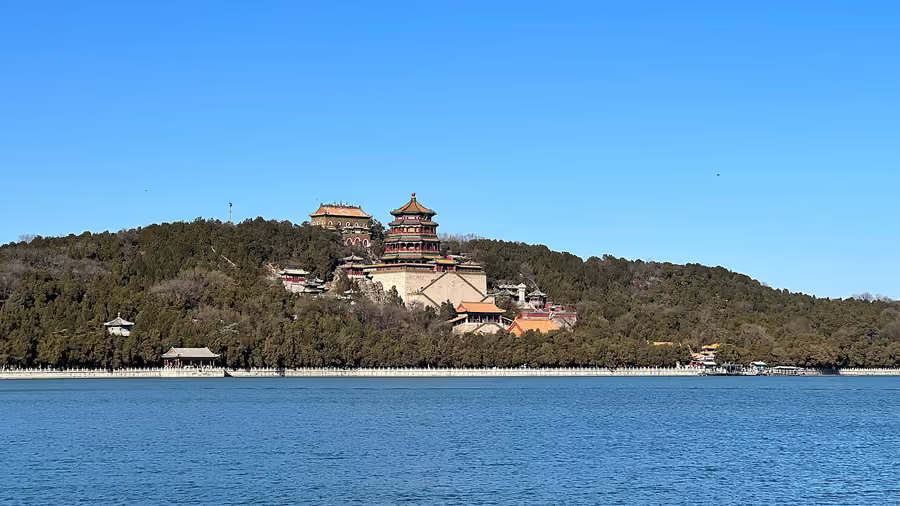
颐和园
The Qing court's lakeside retreat: a 300-hectare landscape of willow causeways, covered walkways and hilltop temples wrapped around Kunming Lake. It is the best place in Beijing to see how imperial China designed scenery rather than buildings.
Park entry ¥30 peak (1 Apr-31 Oct) / ¥20 off-season; combined ticket ¥60 peak. Inner sites charge separately: Tower of Buddhist Incense ¥10, Suzhou Street ¥10, Dehe Garden theatre ¥5, Wenchang Gallery ¥20
≈ US$0.74–8.94Opening hours, booking and how to get there →
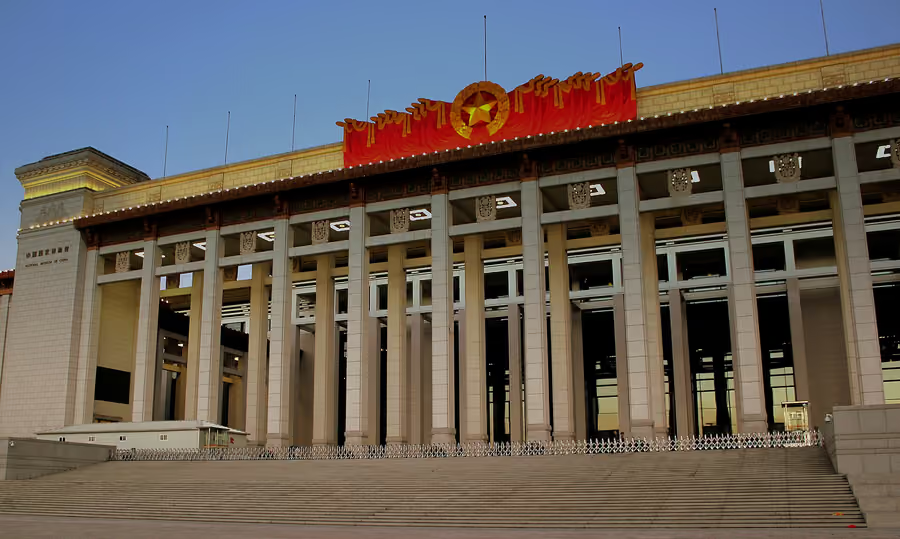
中国国家博物馆
China's flagship museum, on the east side of Tiananmen Square, holding the country's canonical objects - Shang bronzes, the Houmuwu ding, Han jade, Tang ceramics - in a free, air-conditioned building. The single best two hours for context before you visit anything older than the Forbidden City.
Free
Opening hours, booking and how to get there →
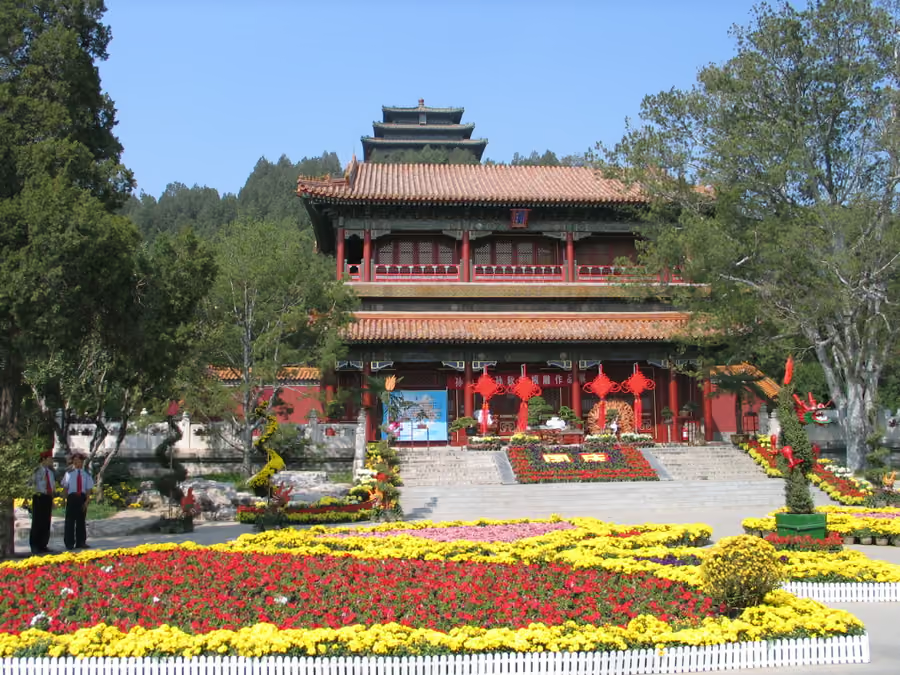
景山公园
The artificial hill directly north of the Forbidden City, crowned by the Wanchun Pavilion - the one place where you can see the whole palace laid out as a single golden-roofed grid along Beijing's central axis. Two yuan buys the city's best view.
¥2 (peak-season through-ticket including the Shouhuang Hall exhibition is a few yuan more)
Opening hours, booking and how to get there →
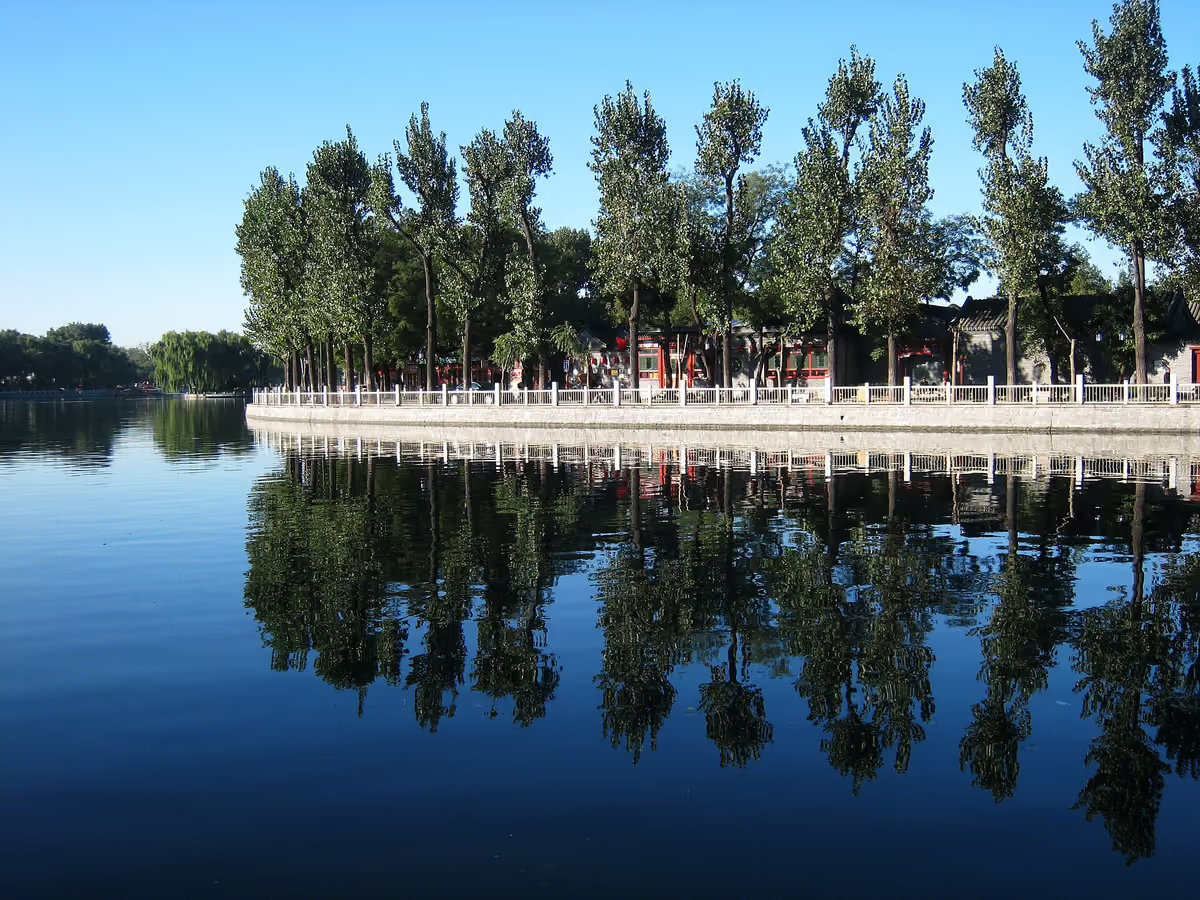
什刹海
Three linked lakes - Qianhai, Houhai and Xihai - that have been Beijing's summer playground since the Yuan dynasty, ringed by grey-brick courtyard lanes, lakeside bars and willow-shaded walking paths. The easiest place to feel the old low-rise city without paying for a ticket.
Free (open public area; boat rides, ice skating in winter and courtyard museums cost extra)
Opening hours, booking and how to get there →
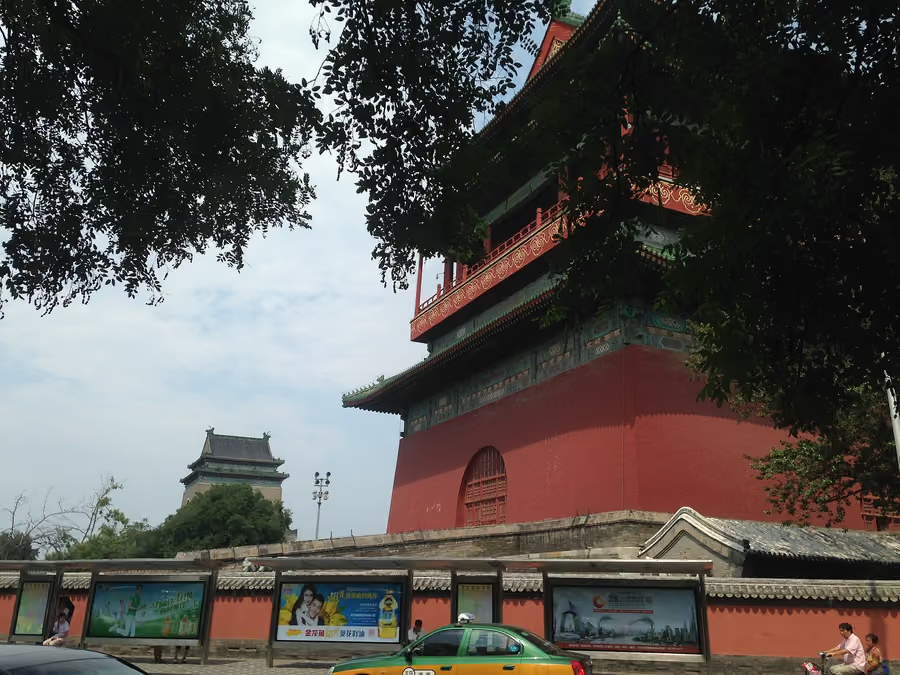
钟楼鼓楼
The Yuan-dynasty timekeeping pair that once sounded the hours for the whole walled city, standing at the north end of the central axis. The Drum Tower holds a reconstructed set of 24 seasonal drums with live drumming performances, and from its gallery you look straight down a hutong roofscape.
Drum Tower ¥20, Bell Tower ¥15, combined ticket ¥30 (half price for seniors and students)
≈ US$2.23–4.47Opening hours, booking and how to get there →
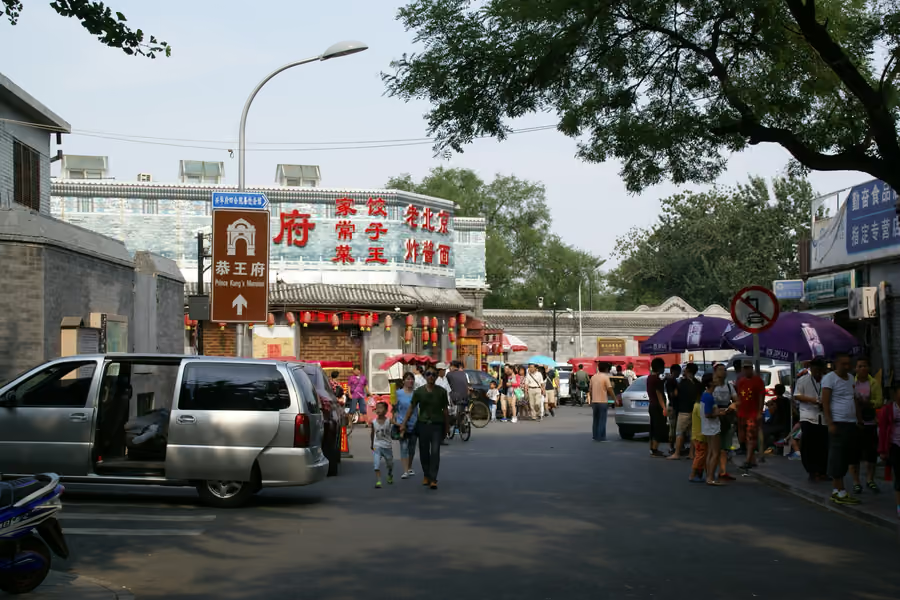
恭王府博物馆
The most complete surviving Qing princely residence in Beijing, with a formal mansion in front and an elaborate rockery-and-pavilion garden behind. It shows how the aristocracy below the emperor actually lived, at a scale you can take in on foot.
¥40 adult; ¥20 concession (students, seniors, serving military)
≈ US$2.98–5.96Opening hours, booking and how to get there →
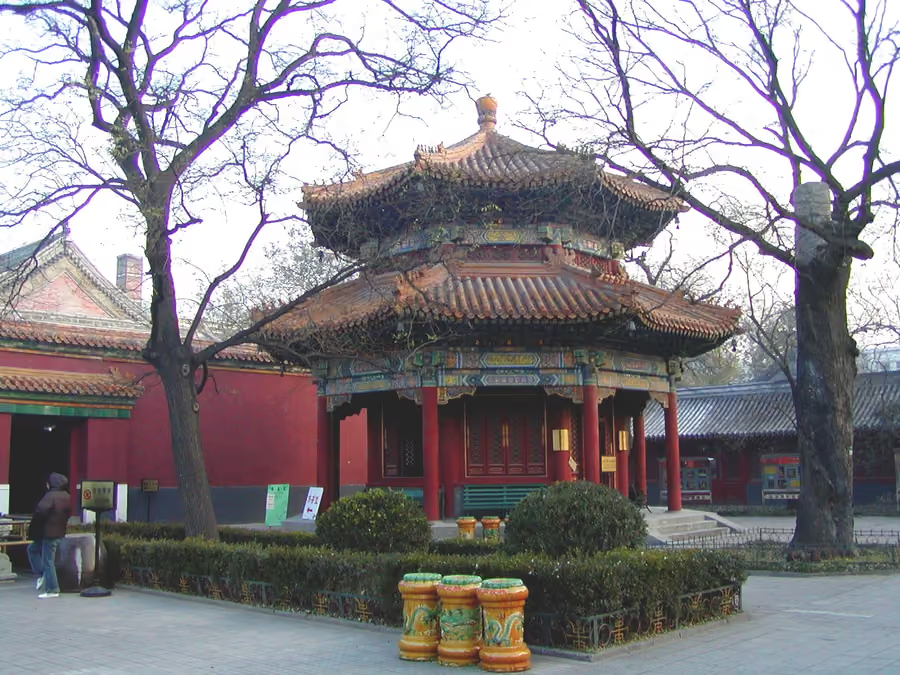
雍和宫
Beijing's great Tibetan Buddhist monastery, converted from a Qing prince's palace and still a busy working temple rather than a museum. The back hall holds an 18-metre Maitreya Buddha carved from a single sandalwood trunk.
¥25
≈ US$3.72Opening hours, booking and how to get there →
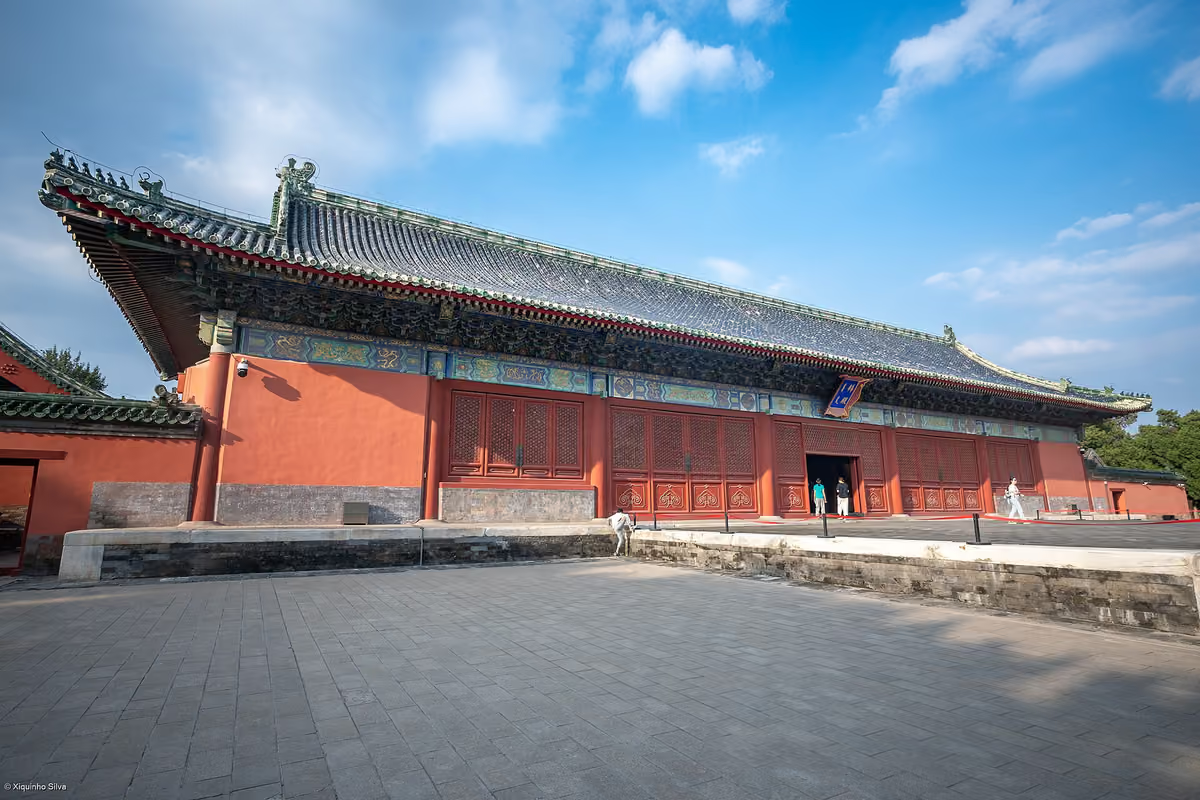
北京古代建筑博物馆
A small, almost empty museum inside the Ming altar where emperors ploughed a ceremonial furrow each spring. Its draw is the Longfu Temple caisson ceiling, a coffered dome painted with some 1,400 stars and constellations, plus clear models explaining how Chinese timber buildings are joined.
¥15 (free for the first 200 visitors each Wednesday, booked online)
≈ US$2.23Opening hours, booking and how to get there →
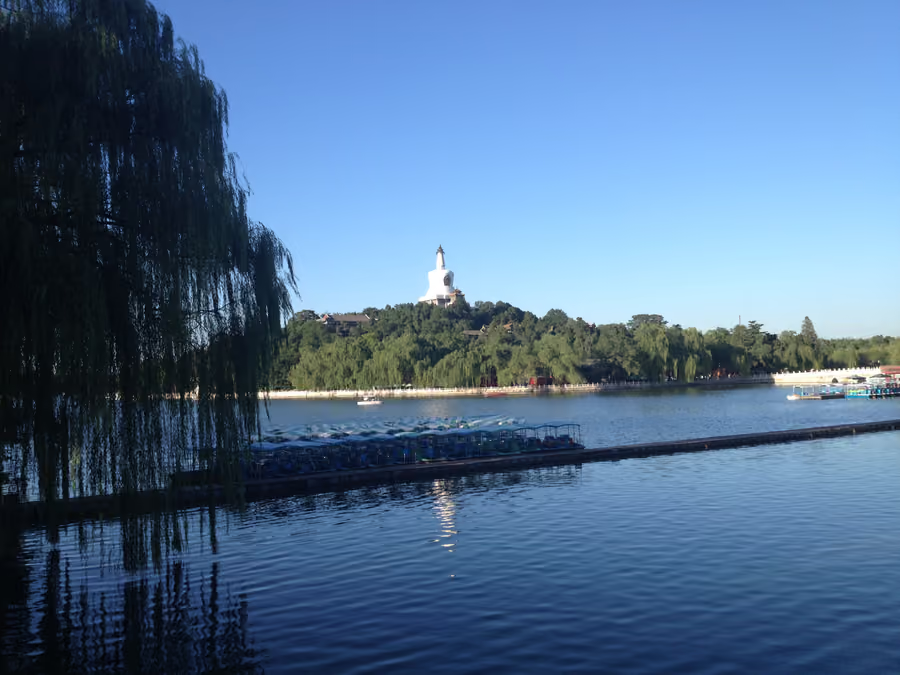
北海公园
A thousand-year-old imperial lake garden a block west of the Forbidden City, centred on Jade Flower Island and its white Tibetan-style stupa. Rowing boats in summer, lotus ponds, and the Nine Dragon Screen make it the most relaxed of the central sights.
Park ¥10 peak (1 Apr-31 Oct) / ¥5 off-season; combined ticket ¥20 peak / ¥15 off-season
≈ US$0.74–2.98Opening hours, booking and how to get there →
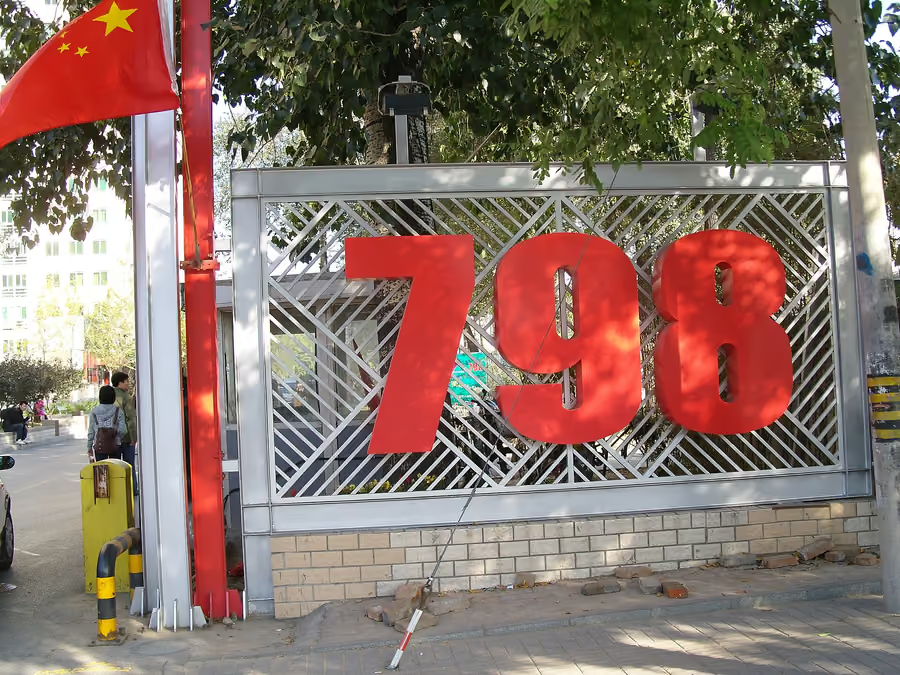
798艺术区
A 1950s Bauhaus-style East German factory complex turned into Beijing's biggest contemporary art quarter, with saw-tooth roofs, Maoist slogans still painted on the beams, and dozens of galleries. The best place to see what artists in China are making right now.
Free to enter the district; individual galleries charge roughly 20-¥50, and big UCCA shows run about 120-¥180
≈ US$7.45–27Opening hours, booking and how to get there →
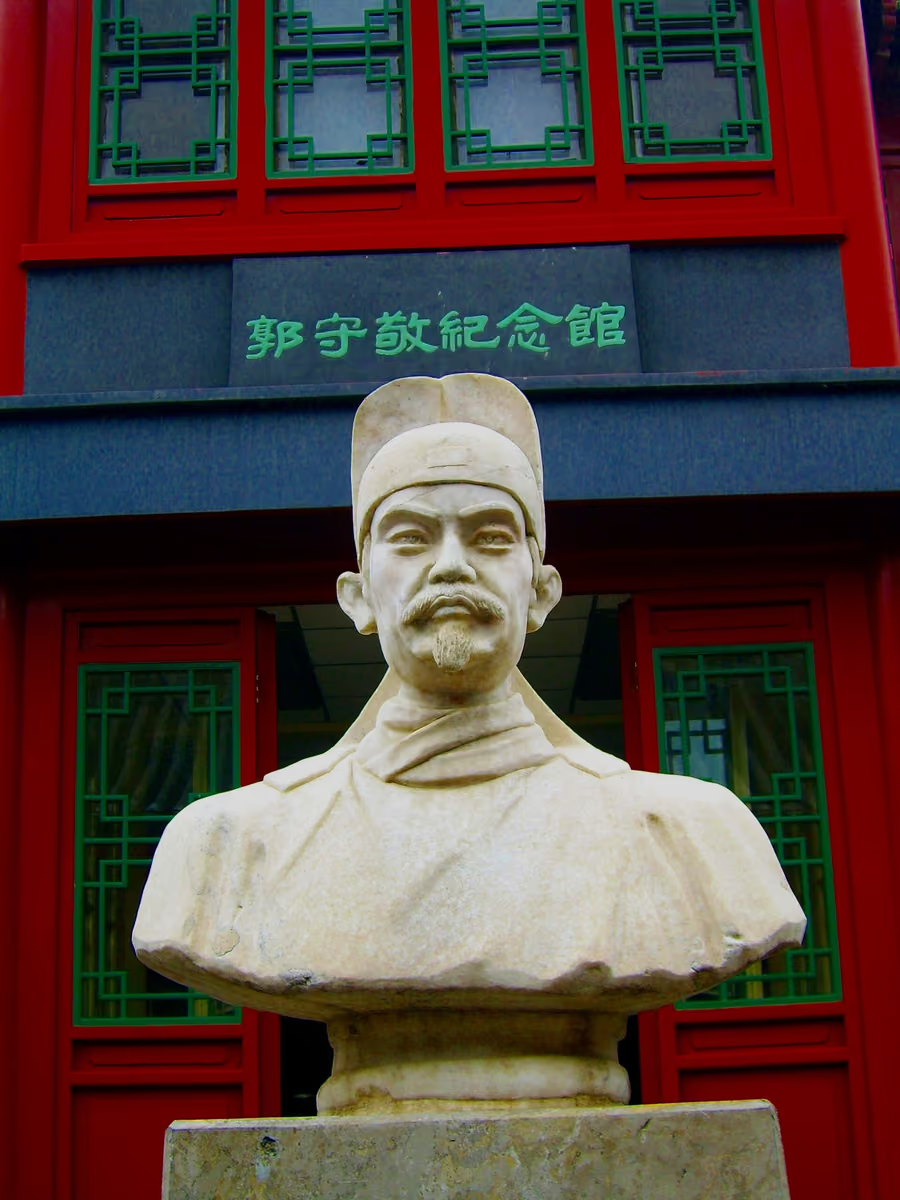
郭守敬纪念馆
A tiny free museum in a Yuan-dynasty temple on an islet at the north end of Xihai lake, devoted to the astronomer-engineer who designed Beijing's water system and the calendar used for three centuries. A quiet, genuinely interesting stop that almost no English guidebook mentions.
Free
Opening hours, booking and how to get there →
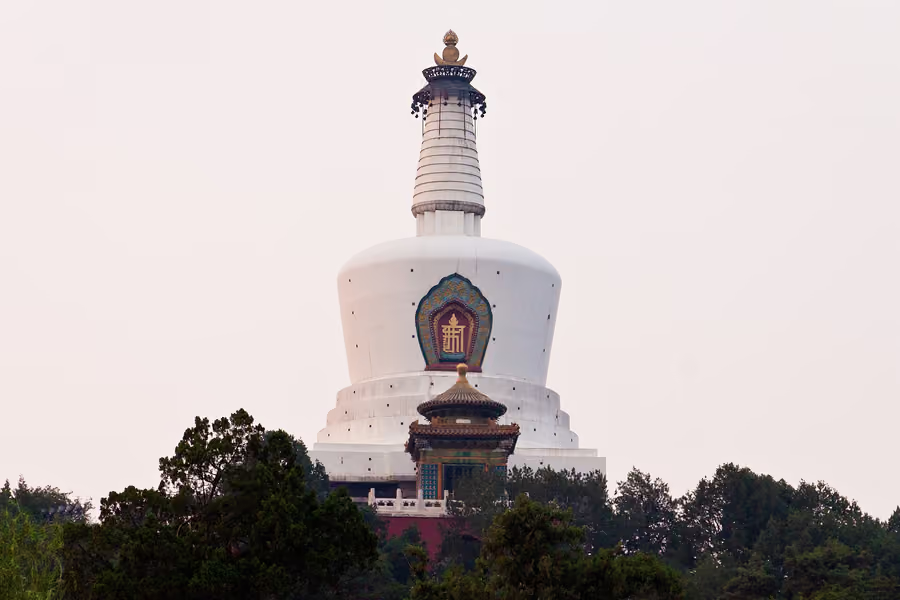
妙应寺白塔
The oldest and largest Tibetan-style stupa surviving in China, built in 1271 under Kublai Khan and still rising white above the grey hutong roofs of Fuchengmen. The surrounding temple halls hold Yuan and Ming Buddhist sculpture, and the lanes around it are a low-key hutong neighbourhood.
¥20 adult (first 200 visitors free on Wednesdays - 100 slots online, 100 queued on site, first come first served)
≈ US$2.98Opening hours, booking and how to get there →
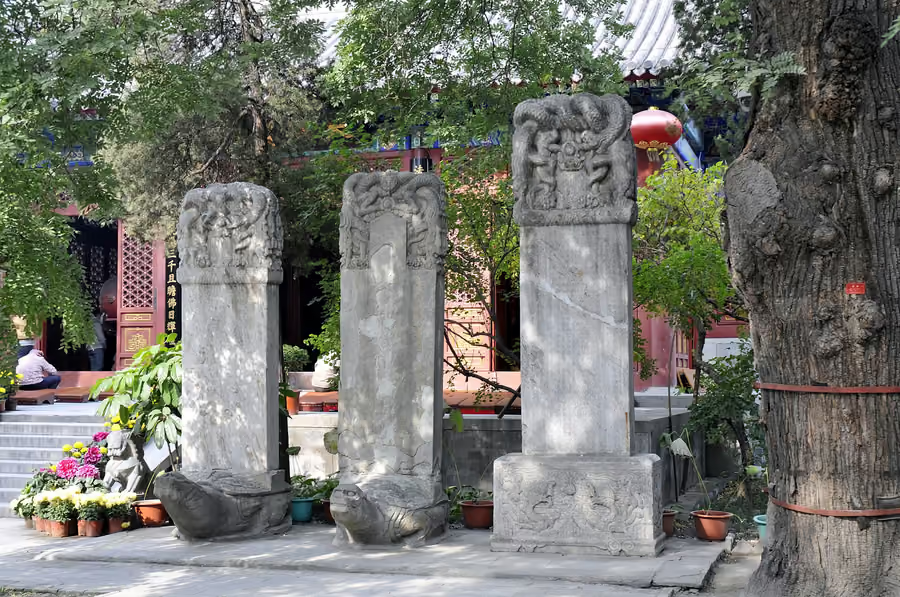
法源寺
Beijing's oldest temple foundation, begun in the 7th century, with six successive courtyards of old trees and a hall of Buddhist sculpture. Free, unticketed and genuinely peaceful - and in early April its lilac grove is one of the city's classic flower events.
Free
Opening hours, booking and how to get there →
五塔寺(北京石刻艺术博物馆)
A Ming temple whose extraordinary Indian-influenced stone hall is topped by five small pagodas carved all over with Buddhist reliefs - there is nothing else like it in China. The courtyard around it is now an open-air museum of 2,600 steles, epitaphs and carvings rescued from across Beijing.
¥20 (first 200 visitors free each Wednesday, booked online)
≈ US$2.98Opening hours, booking and how to get there →
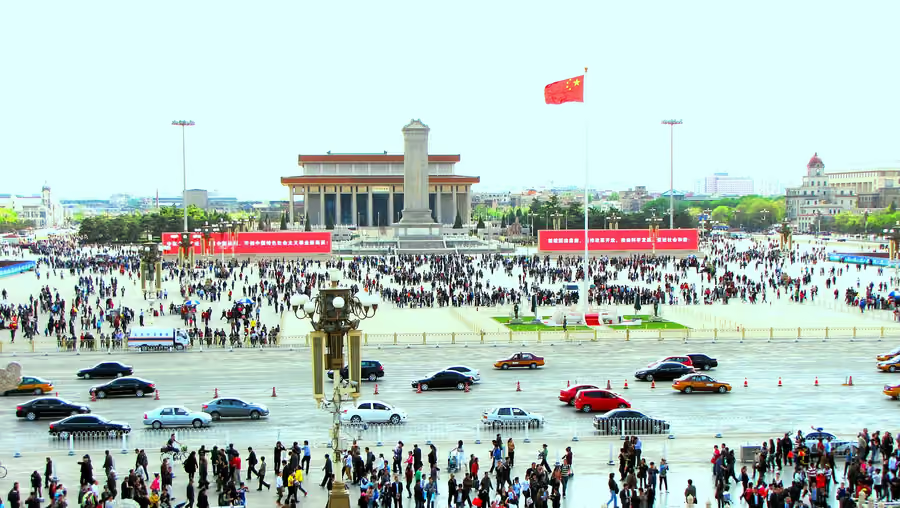
天安门广场
The vast ceremonial square at the heart of the Chinese state, flanked by the Great Hall of the People, the National Museum and Mao's mausoleum, with the Tiananmen gate tower closing its north end. Free, but the most procedurally controlled public space you will visit in China.
Free (climbing the Tiananmen gate tower itself is ticketed separately)
Opening hours, booking and how to get there →
红砖美术馆
A privately founded contemporary art museum on the city's northeast edge whose building is the real attraction: grey and red brickwork, vaulted galleries and a large classical-Chinese-style garden of water courts and walled walks designed by the architect-owner. Beijing's most architecturally satisfying art space.
Varies by exhibition; third-party Chinese listings start around ¥120, but the museum's own current full-price ticket is not confirmed - check before you go
≈ US$18Opening hours, booking and how to get there →
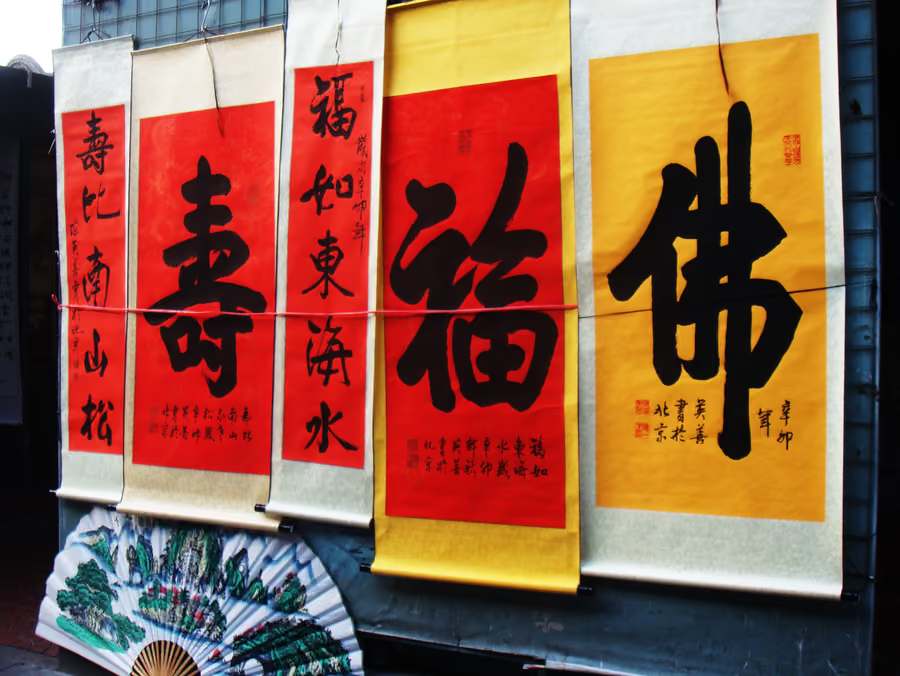
潘家园旧货市场
Beijing's sprawling flea and antique market - roughly 48,500 square metres of stalls selling Mao-era ephemera, porcelain, jade, Tibetan textiles, calligraphy and a lot of convincing fakes. The weekend ground-stall section is the closest thing the city has to a treasure hunt.
Free to enter
Opening hours, booking and how to get there →
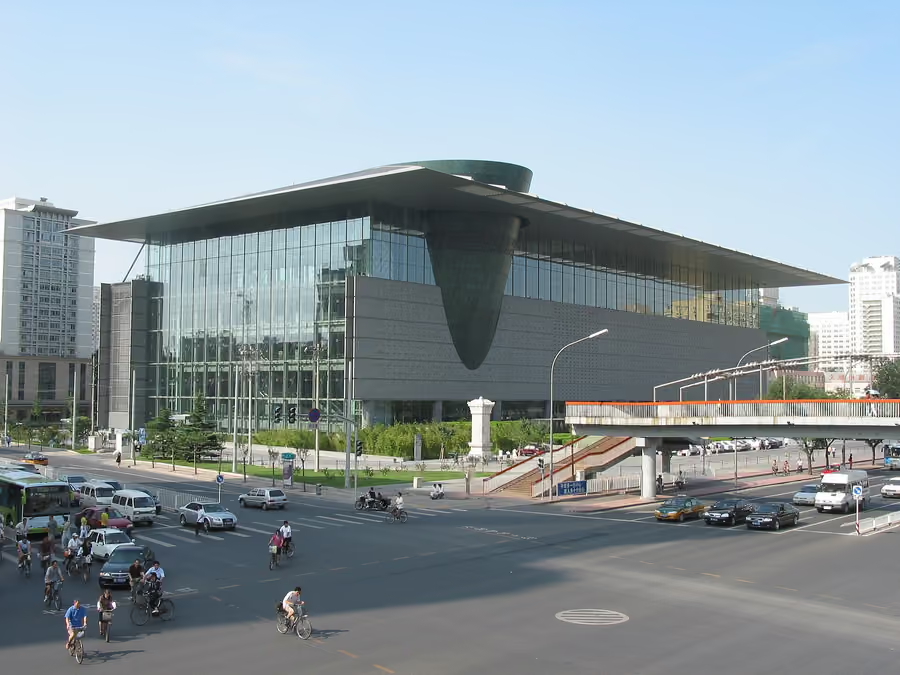
首都博物馆
The city museum of Beijing itself, tracing 3,000 years of urban history and 800 years as a capital through Ming-Qing porcelain, folk-custom displays and a good bronze collection. Free, quiet, and the clearest explanation anywhere of how the city you are walking around came to be laid out that way.
Free
Opening hours, booking and how to get there →
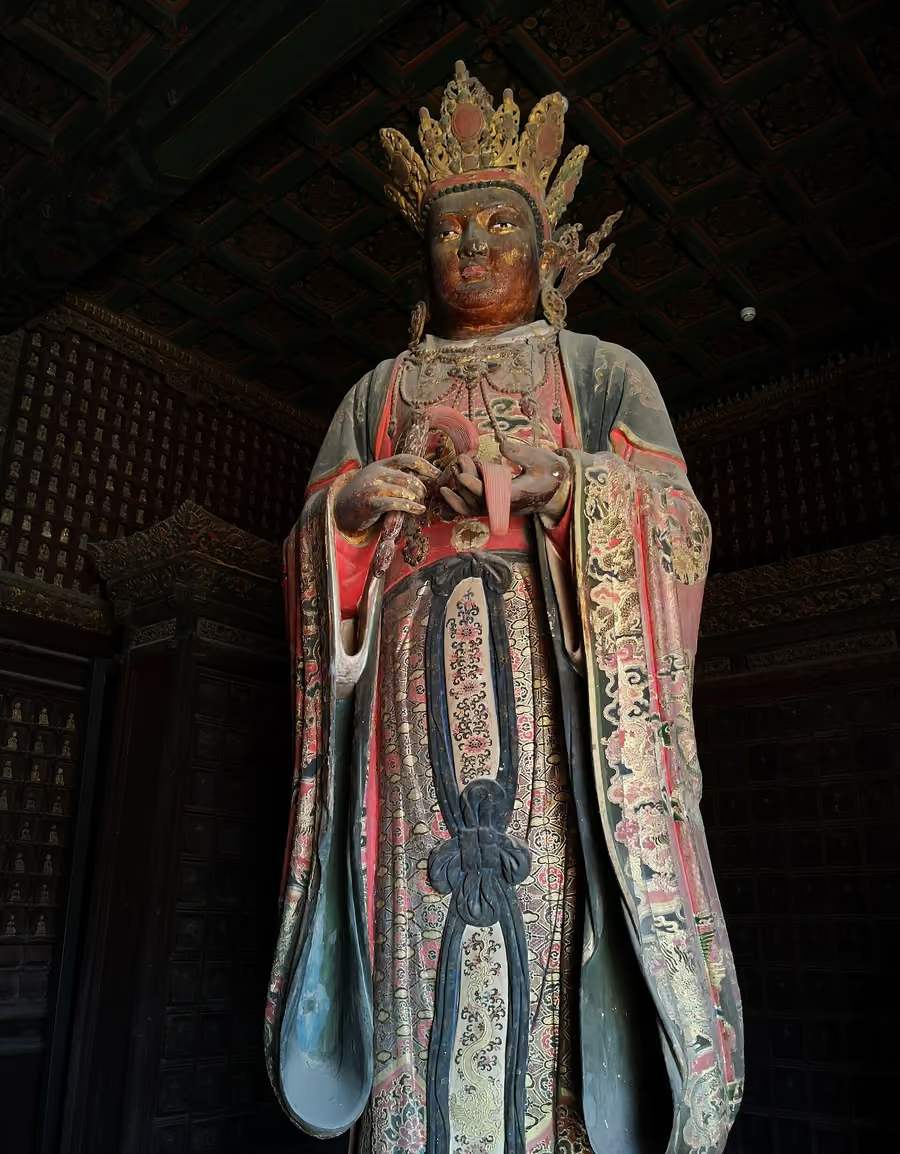
智化寺
A 1444 Ming temple hidden in an ordinary Dongcheng hutong, nicknamed the 'little Forbidden City' for its black-glazed tiles and painted coffered ceilings. Monks here still perform Jingyinyue, a 600-year-old liturgical wind-and-percussion music handed down in an unbroken line.
¥20 (first 200 visitors free on Wednesdays)
≈ US$2.98Opening hours, booking and how to get there →
牛街
Beijing's thousand-year-old Hui Muslim neighbourhood, anchored by the Niujie Mosque and lined with halal snack shops - fried cakes, lamb skewers, imperial-recipe set yoghurt, sesame-rolled glutinous rice. The city's best street-food walk, and almost entirely domestic-visitor territory.
Free to walk (snacks typically 5-¥30 per item; Niujie Mosque charges a small entrance fee for non-worshippers)
≈ US$4.47Opening hours, booking and how to get there →
前门大街与大栅栏
The rebuilt imperial-era commercial boulevard running south from Tiananmen, plus the far more interesting tangle of Dashilan lanes behind it, where century-old shops for silk, tea, pickles, hats and traditional medicine still trade. Free, open late, and the best evening walk in the old city.
Free
Opening hours, booking and how to get there →
What to eat in Beijing
If you only eat two things in Beijing, make them roast duck (served with thin pancakes, spring onion and sweet bean sauce) and a bowl of zhajiangmian hand-pulled noodles. Both are mild, filling, easy to order by pointing, and available at every price level from hutong shopfront to banquet hall.
Peking roast duck
北京烤鸭Běijīng kǎoyā
Duck air-dried, glazed with maltose and roasted either hung over fruitwood flames or in a sealed oven, then carved at the table into skin and meat slices. Eaten rolled in thin wheat pancakes with sweet fermented bean sauce, spring onion and cucumber.
Tastes like: Rich and faintly sweet, crisp fatty skin against savoury-sweet sauce and sharp raw onion
Not on the menu but in it: The sweet bean sauce (tianmianjiang) is wheat-fermented and soy-adjacent; many houses brush the duck with a maltose-and-vinegar wash. Leftover carcass is normally made into a milky duck-bone soup brought out at the end of the meal, not a separate order.
Might not be for you: Some restaurants serve the crispest skin dipped in plain white sugar, which surprises people; a whole carved duck includes plenty of visible fat, and the head is sometimes split and presented as a courtesy.
Where: Old-line duck houses around Qianmen and Wangfujing, or neighbourhood branches of the big duck chains in Dongcheng and Chaoyang
Watch videos of Peking roast duck →Fried sauce noodles
炸酱面zhájiàngmiàn
Thick hand-pulled wheat noodles topped with a dark, salty sauce of fermented yellow soybean paste slow-fried with diced pork belly, plus a ring of raw shredded vegetables you mix in yourself.
Tastes like: Deeply salty and savoury, slightly oily, cut by crunchy raw cucumber and radish
Not on the menu but in it: The sauce is fried in rendered pork fat with diced pork belly as standard; there is no meat-free default. Garlic cloves are served whole on the side to be eaten raw between mouthfuls.
Might not be for you: The sauce is much saltier than most Western palates expect — it is a condiment, not a pasta sauce, and the portion given is meant to be stretched across all the noodles.
Where to eat it
- No. 69 Fangzhuanchang Zhajiangmian · Michelin Bib Gourmand 2026 · ¥20–50 per person · Dongcheng, 1 Fangzhuanchang Hutong
- Yao Ji Chaogan · ¥30–60 per person · Dongcheng, 311 Gulou East Street, across from the Drum Tower; Shichahai station (Line 8) is the nearest stop
Where: Hutong noodle shops in Dongcheng and around the Drum Tower; large no-frills halls with shouted greetings when you enter
Watch videos of Fried sauce noodles →Mutton hotpot (instant-boiled lamb)
涮羊肉shuàn yángròu
Paper-thin slices of lamb swished for seconds in a plain simmering broth in a charcoal-fired brass chimney pot, then dipped in a sesame-paste sauce. The Beijing version keeps the broth clear and unspiced.
Tastes like: Clean and mild in the pot; the character comes from the nutty, salty sesame dip with chive flower and fermented bean curd
Not on the menu but in it: The standard dipping sauce contains sesame paste plus fermented bean curd and chive-flower paste, and many shops add shrimp paste or dried shrimp to the mix — a genuine problem for shellfish allergies and often not mentioned. Some houses now offer a lamb-bone or mutton-fat broth rather than plain water.
Might not be for you: Strong mutton aroma that non-mutton-eaters find assertive; offal plates (tripe, lamb brain) sit on the same menu.
Where to eat it
- Donglaishun · ¥150–250 per person · Dongcheng, 198 Wangfujing Street; Wangfujing station (Line 1). Also a branch on the 5th floor of Beijing APM on Wangfujing Avenue
Where: Old Muslim-run copper-pot houses in Niujie and Xicheng, and around Shichahai in winter
Watch videos of Mutton hotpot (instant-boiled lamb) →Stewed liver and intestine
炒肝chǎogān
Despite the name nothing is stir-fried: pork liver and chopped large intestine are simmered into a thick, glossy, garlic-heavy starch gravy and served in a small bowl, traditionally drunk from the rim without a spoon.
Tastes like: Thick, gluey, intensely garlicky and offally
Not on the menu but in it: Pork liver and intestine are the whole dish; the gravy is thickened with starch and built on pork broth. Usually eaten with a side of steamed pork buns.
Might not be for you: Pure offal, with a slippery cornstarch texture and an unmistakable intestine smell. This is the Beijing breakfast most visitors bounce off.
Where to eat it
- Yao Ji Chaogan · ¥30–60 per person · Dongcheng, 311 Gulou East Street, across from the Drum Tower; Shichahai station (Line 8) is the nearest stop
Where: Early-morning breakfast shops in Qianmen and the Dongcheng hutongs; sold out by mid-morning
Watch videos of Stewed liver and intestine →Boiled tripe
爆肚bàodǔ
Different cuts of beef or lamb stomach blanched in boiling water for a precisely timed few seconds, then dipped in sesame sauce. Shops list each cut separately because every part has a different bite.
Tastes like: Mild in itself; the flavour is all in the sesame-and-fermented-bean-curd dip
Not on the menu but in it: The dip frequently includes shrimp paste or dried shrimp alongside sesame paste and fermented bean curd.
Might not be for you: Rubbery, squeaky, crunchy tripe texture is the entire point of the dish; it does not soften.
Where: Specialist bao du shops in Xicheng (Ande Road area) and around Niujie
Watch videos of Boiled tripe →Pork offal stew with fried tofu
卤煮火烧lǔzhǔ huǒshāo
A bowl of long-simmered pork intestine, lung and fried tofu puffs with quartered dense flatbread soaking in the master stock, topped with chilli oil, vinegar and coriander.
Tastes like: Heavy, salty, oily, strongly offally with sharp vinegar
Not on the menu but in it: Pork lung and intestine; the master stock has been running for years and is pork-based throughout. Fermented bean curd is often stirred in.
Might not be for you: Lung and intestine with a spongy texture, plus bread deliberately soaked to softness. Strong coriander as standard — say 'bu yao xiangcai' if you dislike it.
Where: Late-night and lunchtime counters in the southern hutongs of Dongcheng and Xicheng
Watch videos of Pork offal stew with fried tofu →Fermented mung bean drink
豆汁dòuzhī
The sour grey liquid left over from making mung bean starch noodles, drunk warm at breakfast with a ring-shaped deep-fried dough twist and shredded pickles.
Tastes like: Sour, slightly funky, thin and savoury — nothing like sweet soy milk
Not on the menu but in it: The drink itself is plant-based; the jiaoquan fried ring beside it is usually fried in shared oil.
Might not be for you: A genuinely fermented, cheesy-sour smell that divides even Beijingers. Order a small bowl first.
Where to eat it
- Yao Ji Chaogan · ¥30–60 per person · Dongcheng, 311 Gulou East Street, across from the Drum Tower; Shichahai station (Line 8) is the nearest stop
Where: Old snack halls such as the Huguosi snack street and traditional breakfast shops
Watch videos of Fermented mung bean drink →Pea flour cake
豌豆黄wāndòuhuáng
A pale yellow set block of sweetened, sieved yellow pea purée, chilled and cut into squares. A former imperial court snack now sold in every old snack shop.
Tastes like: Lightly sweet, cool, smooth and slightly grainy
Where to eat it
- Fangshan Restaurant · ¥250–400 per person · Xicheng, 1 Wenjin Street, inside Beihai Park; Beihai North station (Line 6)
Where: Huguosi and Niujie snack shops, and the pastry counters of old-brand confectioners
Watch videos of Pea flour cake →Rolling donkey glutinous rice roll
驴打滚lǘdǎgǔn
A sheet of steamed glutinous rice spread with sweet red bean paste, rolled up and dusted heavily in toasted soybean flour so it looks like a donkey rolling in dust.
Tastes like: Mildly sweet, nutty and toasty, very chewy
Not on the menu but in it: The dusting is roasted soy flour; some versions brush the roll with osmanthus syrup or a little lard.
Might not be for you: Extremely sticky, gluey mochi texture.
Where: Old snack shops and street stalls near the Drum Tower and Huguosi
Watch videos of Rolling donkey glutinous rice roll →Beijing-style pork and chive dumplings
饺子jiǎozi
Hand-wrapped boiled dumplings, the northern staple; Beijing shops lean on pork with chives, pork with fennel, or lamb with spring onion.
Tastes like: Savoury and juicy, eaten with black vinegar, raw garlic and a little chilli oil
Not on the menu but in it: Fillings are usually bound with lard or sesame oil and sometimes a little shrimp; 'vegetable' fillings commonly still contain dried shrimp or egg.
Where to eat it
- Bao Yuan Dumplings · Michelin Bib Gourmand 2025 (Beijing) · ¥60–110 · Chaoyang, Maizidian
Where: Dumpling houses all over Dongcheng and Xicheng; some famous shops sell a dozen fillings by the liang (weight)
Watch videos of Beijing-style pork and chive dumplings →Baodu-style sesame flatbread with braised beef
烧饼夹肉shāobǐng jiā ròu
A layered, sesame-crusted baked flatbread split open and stuffed with sliced braised beef or lamb — the halal Beijing counterpart to a sandwich.
Tastes like: Toasty sesame crust, salty spiced meat, dry rather than saucy
Not on the menu but in it: At halal shops the meat is beef or lamb; at non-halal shops the same bread may be filled with braised pork, so check which kind of shop you are in.
Where: Niujie Muslim quarter and halal canteens across Xicheng
Watch videos of Baodu-style sesame flatbread with braised beef →Pot-sticker dumplings and millet gruel breakfast
锅贴 / 面茶guōtiē / miànchá
Pan-fried crescent dumplings with a crisp base, often eaten with miancha — a thick millet gruel swirled with sesame paste and sprinkled with salt and pepper, traditionally sipped from the bowl's edge.
Tastes like: Dumplings savoury and crisp; the gruel is thick, nutty-salty and unsweetened
Not on the menu but in it: Miancha itself is grain-and-sesame based, but some shops thin it with bone broth; pot-stickers are pork by default.
Might not be for you: A savoury, salty porridge at breakfast surprises visitors expecting something sweet.
Where: Traditional snack halls and the Huguosi snack street
Watch videos of Pot-sticker dumplings and millet gruel breakfast →Where to eat in Beijing
- Dianping (大众点评) — the real ratings. Chinese only, but photos, prices and a 4.5+ score survive translation. Its 必吃榜 "Must-Eat" list is the mainstream benchmark.
- Black Pearl (黑珍珠) — China's own fine-dining guide, published annually by Meituan and taken more seriously domestically than Michelin.
- Michelin covers only a few Chinese cities, so its absence means nothing outside them.
- Xiaohongshu (小红书) — what is actually busy this month, rather than this year.
Gong De Lin 功德林
¥80–150≈ US$12Century-old Buddhist vegetarian restaurant doing elaborate mock-meat dishes, the safest full sit-down meal in Beijing for strict vegetarians.
What to order, booking and allergens →
Bao Du Jin Sheng Long 爆肚金生隆
¥70–130≈ US$10Four-generation specialist in bao du — blanched tripe by the cut — plus copper-pot mutton in winter.
What to order, booking and allergens →
Bao Yuan Dumplings 宝源饺子屋
¥60–110≈ US$8.94Famous for naturally coloured dumpling wrappers (spinach, carrot, purple cabbage) across dozens of fillings, including several genuinely meat-free ones.
Order: Pork and fennel dumplings (猪肉茴香饺), Coloured dumpling assortment (彩色饺子) and 2 more
What to order, booking and allergens →
Lao Chuan Ban 老川办
¥90–160≈ US$13The restaurant of the former Sichuan provincial government office in Beijing, long regarded as the city's most honest Sichuanese cooking.
What to order, booking and allergens →
Yu Hua Tai 玉华台
¥120–220≈ US$18Old-guard Huaiyang restaurant known for lion's-head meatballs, crab-roe dishes and refined knife work — a mild, unspicy alternative to Beijing's heavier food.
What to order, booking and allergens →
Da Dong (Jinbao Street) 大董烤鸭店(金宝汇店)
¥400–600 per person≈ US$60Chef Dong Zhenxiang rebuilt Peking duck for a modern palate: young birds roasted in a patented spherical wood-fired oven that circulates heat evenly, producing a much leaner bird with glassy, almost brittle skin, marketed as 'super-crispy lean duck'. The dining rooms are design-led, the plating is deliberately artful, and the non-duck menu runs to sea cucumber and seasonal tasting dishes. It is the most expensive of the three duck houses visitors choose between, and the least traditional.
Order: Super-crispy lean roast duck (酥不腻烤鸭), Braised sea cucumber with scallion (葱烧海参) and 2 more
What to order, booking and allergens →
Jing Ji Rong Pai Guanfu Cuisine 京季荣派官府菜
¥1,200–2,500≈ US$179Beijing's only three-diamond Black Pearl restaurant, serving guanfu cai — the elaborate 'official's household' banquet cuisine of old Beijing.
What to order, booking and allergens →
Huguosi Snack Shop 护国寺小吃
¥20–50≈ US$2.98State-run snack canteen founded in 1956 serving eighty-odd classic Beijing snacks — douzhi, aiwowo, wandouhuang, lüdagun, miancha — in one cheap sitting.
What to order, booking and allergens →
Siji Minfu (Forbidden City branch) 四季民福烤鸭店(故宫店)
¥150–250 per person≈ US$22The roast duck house Beijingers actually send their relatives to. The Nanchizi Street branch sits right beside the east gate of the Forbidden City and some upper tables look straight out over the palace moat and roofline, which is why the queue regularly runs past two hours at peak. The duck is a classic fruitwood-roasted bird, carved at the table, and the rest of the menu is solid everyday Beijing home cooking rather than banquet theatre.
Order: Fruitwood roast duck (果木烤鸭), Mustard duck webs (芥末鸭掌) and 2 more
What to order, booking and allergens →
Quanjude (Qianmen, the original house) 全聚德(前门店)
¥250–400 per person≈ US$37Founded in 1864, Quanjude invented the hung-oven (gualu) style of Peking duck and its roasting method is listed as national intangible cultural heritage. The Qianmen branch is the original address and the most historically loaded place in the city to eat duck. It is also, honestly, the one locals skip: the dining rooms run on tour-group turnover, service is widely described as indifferent, prices sit at the top of the market, and the listed parent company has spent years losing money as Beijing's food scene moved on. Come for the history and the carving ceremony, not because it is the best duck in town.
Order: Hung-oven roast duck (挂炉烤鸭), Duck bone soup (鸭架汤) and 2 more
What to order, booking and allergens →
Sheng Yong Xing 晟永兴
¥350–550 per person≈ US$52A bright, modern Beijing-cuisine house in Chaoyang that has quietly become the duck restaurant for people who want the dish taken seriously without the banquet-hall crowds. Every bird arrives with a 'birth certificate' confirming it is 45 days old, and it is roasted in a stone oven over jujube wood, giving crisp skin over genuinely tender meat. You can have caviar added if you want to spend more, and the wine list is unusually fairly priced for Beijing.
Order: Jujube-wood roast duck (枣木烤鸭), Roast duck with caviar (鱼子酱烤鸭) and 2 more
What to order, booking and allergens →
Fangshan Restaurant 仿膳饭庄
¥250–400 per person≈ US$37Opened in 1925 by cooks who had worked in the Qing imperial kitchens, Fangshan sits inside Beihai Park and is the original 'imitation imperial' restaurant: its whole premise is reproducing what was served to the court. The repertoire runs to several hundred dishes, including the small steamed pastries recorded as favourites of Empress Dowager Cixi. The setting, in a lakeside park pavilion, does most of the work; the cooking is formal, mild and ceremonial rather than exciting.
Order: Pea flour cake (豌豆黄), Kidney bean roll (芸豆卷) and 2 more
What to order, booking and allergens →
Donglaishun 东来顺
¥150–250 per person≈ US$22Founded in 1903, Donglaishun is the institution for Beijing instant-boiled mutton: a charcoal-fired brass pot with a chimney down the middle, a broth containing little more than scallion and ginger, paper-thin hand-sliced mutton you swish for a few seconds, and a sesame paste dipping sauce. This is not Sichuan hotpot. There is no chilli oil, no numbing peppercorn and no heavy spicing; the whole point is the quality of the lamb and the sesame sauce.
Order: Instant-boiled mutton (涮羊肉), Hand-sliced lamb upper shoulder (手切上脑) and 2 more
What to order, booking and allergens →
No. 69 Fangzhuanchang Zhajiangmian 方砖厂69号炸酱面
¥20–50 per person≈ US$2.98A tiny hutong shop that sells essentially one thing: zhajiangmian, Beijing's defining noodle dish. Chewy hand-made noodles come with a fermented soybean sauce slow-cooked for hours with minced pork, and you mix in shredded cucumber, radish and greens yourself. Pickled garlic cloves and chilli sauce sit on the table. It is packed from opening to closing and costs less than a coffee in most capital cities.
Order: Noodles with fermented soybean paste (炸酱面), Pickled garlic (糖蒜) and 1 more
What to order, booking and allergens →
Yao Ji Chaogan 姚记炒肝店
¥30–60 per person≈ US$4.47A no-frills Beijing breakfast and lunch canteen opposite the Drum Tower, famous for chaogan: pork liver and intestine in a thick, starchy garlic-heavy brown soup, eaten with small steamed pork buns. It became internationally known after Joe Biden ate here as US vice-president in 2011, ordering noodles, buns and cola for five people for a total of 79 yuan, and the 'Biden set' is still a thing locals joke about.
Order: Stir-fried liver and intestine soup (炒肝), Pork and scallion steamed buns (猪肉大葱包子) and 2 more
What to order, booking and allergens →
King's Joy 京兆尹
¥800–1200 per person≈ US$119A courtyard restaurant next to the Lama Temple serving one of the most serious vegetarian tasting menus in Asia. The room is spare and Zen-influenced, and the kitchen works mainly by steaming, slow-cooking and sautéing to let organic, seasonal produce carry the dish rather than imitating meat. Three lacto-ovo tasting menus of ten or more courses, with vegan versions on request. It has held two Michelin stars for years and is the obvious choice for a vegetarian in a city built on pork and duck.
Order: Seasonal vegetarian tasting menu (季节素食套餐), Matsutake mushroom consomme (松茸汤) and 2 more
What to order, booking and allergens →
TRB Hutong TRB Hutong
¥700–1200 per person≈ US$104Contemporary French cooking set in the courtyard of a historic temple in Dongcheng, which gives you the most striking dining room in Beijing: grey brick, old timber, and a modern, calmly professional dining room inside it. The kitchen builds precise, polished dishes around premium local produce, offered either as a signature menu with luxury ingredients or a seasonal one. It finishes with 'Le Grand Dessert', a multi-part dessert course the restaurant is known for.
Order: Signature tasting menu (招牌套餐), Seasonal tasting menu (季节套餐) and 1 more
What to order, booking and allergens →
See the Forbidden City
Other people's videos, on YouTube — we link, we don't host. Worth knowing: YouTube is blocked in mainland China, so watch these at home, or download them in the YouTube app before you fly.
- Inside The Forbidden City: Historian Explores Ancient BeijingA historian walks through the Palace Museum's courtyards and halls explaining what each one was used for.History Hit · opens on YouTube · Auto-generated subtitles
- The Ultimate Forbidden City Survival Guide: How to Book & Visit Like a Pro (2026 Updated)Step-by-step guide to reserving Palace Museum tickets and navigating the complex as a foreign visitor.Emily Unlocks China · opens on YouTube · Auto-generated subtitles
- What You Need to Know Before Visiting the Forbidden City in Beijing 🇨🇳A traveller's practical walkthrough of booking, entering and moving through the Forbidden City, filmed on site.Wilko Wanders · opens on YouTube
- [4K] Forbidden City Walkthrough 2025 | Full Tour of Palaces & ExhibitionsLong unnarrated 4K walk along the main axis and side exhibition halls, showing crowd levels and layout.SeiuTravel · opens on YouTube
Videos belong to the channels credited above. We have no affiliation with them and earn nothing from these links.
See the Great Wall at Mutianyu
Other people's videos, on YouTube — we link, we don't host. Worth knowing: YouTube is blocked in mainland China, so watch these at home, or download them in the YouTube app before you fly.
- GREAT WALL OF CHINA (MUTIANYU): Watch This Before You Go!Short pre-trip briefing on what Mutianyu is actually like, including which towers to aim for.Greta's Travels · opens on YouTube
- How to Visit the Great Wall of China - Mutianyu 🇨🇳Logistics-focused visit to Mutianyu: getting there independently, ticket and lift options, and the toboggan down.Wilko Wanders · opens on YouTube
- We Made It To The Great Wall of China - Day Trip From Beijing | Mutiyanu Side of Great WallFull day-trip record from Beijing to Mutianyu with on-the-ground footage of the climb and the views.Wandering Minds · opens on YouTube
- We Made it to the Great Wall of China! (BEST Day Trip from Beijing) 🇨🇳A couple's day trip from Beijing to Mutianyu, covering transport, the cable car and walking the wall.Sammy and Tommy · opens on YouTube
Videos belong to the channels credited above. We have no affiliation with them and earn nothing from these links.
See Beijing beyond the monuments
Other people's videos, on YouTube — we link, we don't host. Worth knowing: YouTube is blocked in mainland China, so watch these at home, or download them in the YouTube app before you fly.
- Explore Beijing's Hutongs With Us: What to See, Eat and Do? 北京胡同 (寻煎饼、 面茶) 🇨🇳 #exploringchinaA walk through Beijing's hutongs covering what to see and eat in the old lanes.Aaron and Char · opens on YouTube
- Best Things to Do Beijing China Travel Guide 2026 4KA broad 4K tour of Beijing's main sights beyond the Forbidden City.Island Hopper TV · opens on YouTube
- DEEP Chinese Street Food Tour in Beijing, China | BEST Unknown Street Foods + PEKING DUCKA deep street-food tour of Beijing, well away from the tourist restaurants.The Food Ranger · opens on YouTube
- Beijing Hutong Travel Guide | Where to Visit, Local Life, Best Visiting Time & Etiquette TipsBeijing's hutongs with an eye on everyday local life rather than monuments.China Travel VIP · opens on YouTube
Videos belong to the channels credited above. We have no affiliation with them and earn nothing from these links.