Discover Beijing
Panjiayuan Antique Market
潘家园旧货市场
Beijing's sprawling flea and antique market - roughly 48,500 square metres of stalls selling Mao-era ephemera, porcelain, jade, Tibetan textiles, calligraphy and a lot of convincing fakes. The weekend ground-stall section is the closest thing the city has to a treasure hunt.
The story
What makes this place special
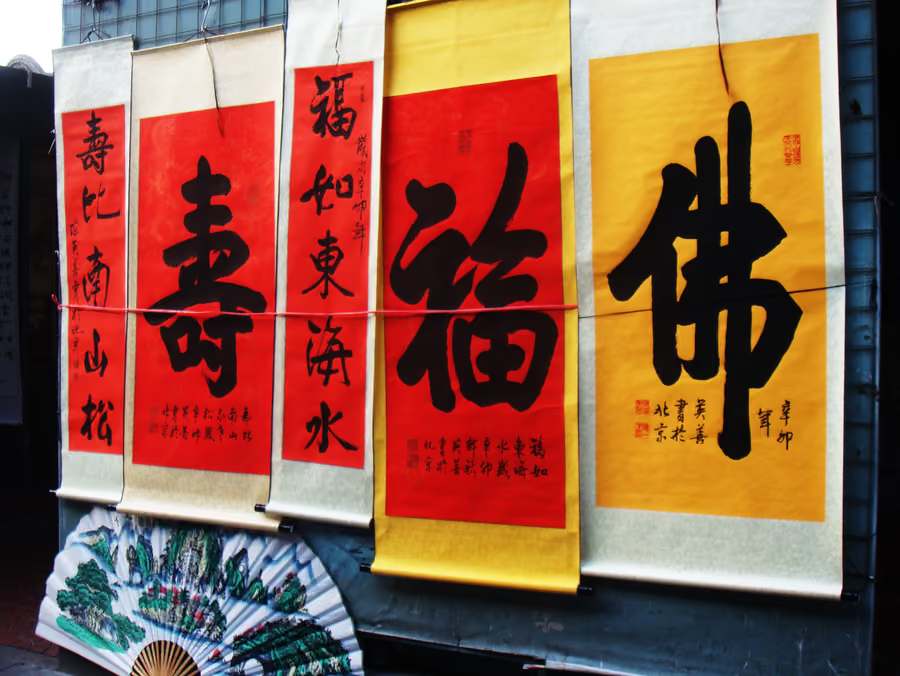
Panjiayuan grew up from the 1980s and 1990s as an informal weekend trading ground on the south-eastern edge of the city, where dealers brought porcelain, furniture, books, carvings and household objects out of the provinces into Beijing; it is reported at around 4.85 hectares with over 3,000 stalls, and is routinely called the largest antiques market in China or in Asia - a claim made by the organisers and contested by other markets. It was progressively formalised into covered halls and fixed stalls around the open-air core. Its interest now is as much social as commercial: what is laid out on the ground is the material residue of the 20th century - Cultural Revolution badges and posters, pre-war photographs, family seals, Mao-era enamelware - alongside the reproductions that make up most of the trade.
What you’ll discover
Several zones in one large site: open-air rows of ground-sheet stalls at the centre, which is where the weekend dealers set out ceramics, jade, carvings, coins, old books, photographs and ephemera; permanent indoor stalls around them; and buildings of furniture, stone and larger pieces at the edges. Minority traders from Tibet, Xinjiang and the south-west occupy identifiable sections. Walking it properly takes two to three hours.
A little local insight
Good to know before you go
- Go on a Saturday or Sunday, and go absurdly early - the open-air middle section only runs at the weekend and reportedly opens around 4.30am, which is when dealers buy from each other. By mid-morning the interesting material has gone; on a weekday you get only the permanent shops and the reproductions.
- Assume everything presented as antique is a reproduction unless you are an expert, and buy on whether you like the object at the price, not on age. Export of genuine antiquities from China is also restricted, which is a second reason not to pay antique prices.
- Bargain, properly and good-humouredly. Opening prices to a foreign face routinely start at several times the expected sale price; walking away is a normal and expected move.
- The interesting buys are not the 'antiques': old photographs, propaganda posters, printing blocks, enamel mugs, family seals, Cultural Revolution ephemera, and secondhand books. They are cheap, light, and genuinely old.
- Bring cash as well as a payment app, carry small notes, and keep valuables close in the crowded aisles.
- Do not ship anything through a dealer's recommended agent. If you buy something large, arrange your own freight.
When to come
Saturday or Sunday between opening and about 10am, for the weekend ground stalls and the dealers' own trading hour. Spring and autumn; much of the market is open-air, so rain shuts the ground-sheet section and summer heat is unpleasant.
Getting around
Mixed. The site is flat with no significant gradient, and the main aisles and the covered halls are wide enough and hard-surfaced, so a wheelchair can get around a good part of it. The difficulties are the weekend crush in the central aisles, goods laid out directly on the ground across the walking surface, uneven paving and drainage channels, and the fact that the best material is displayed at ground level, which is hard to examine from a chair. A bad knee is fine on the flat but will be standing and stooping for hours with nowhere to sit.
Worth knowing before you go
Hours for the different zones conflict between Chinese sources, so aim for Saturday or Sunday 08:30-11:00 when everything is certain to be trading. Assume anything described as an antique is a reproduction, haggle from about a third of the asking price, and remember genuine pre-1949 antiques cannot legally leave China without a customs seal.
Compare established providers
Check live tours and tickets
Search for Panjiayuan Antique Market in Beijing. Prices, availability, payment and confirmation are handled by the booking provider.
China Travel Select does not take payment or create the reservation. Confirm the exact name, dates, inclusions and cancellation rules on the provider’s page.
Take a closer look
Maps, videos & more
Prices and hours change. These are the places to check on the day.