Discover Beijing
Zhihua Temple
智化寺
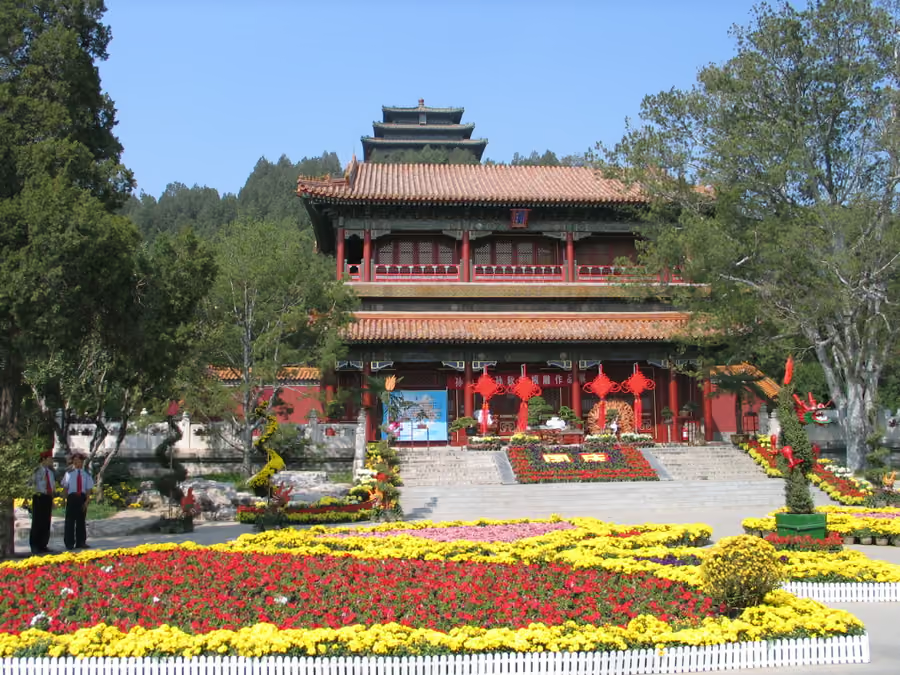
A 1444 Ming temple hidden in an ordinary Dongcheng hutong, nicknamed the 'little Forbidden City' for its black-glazed tiles and painted coffered ceilings. Monks here still perform Jingyinyue, a 600-year-old liturgical wind-and-percussion music handed down in an unbroken line.
The story
What makes this place special
Built in 1443 on the order of Wang Zhen, the eunuch who dominated the court of the Zhengtong emperor - its bell was cast in 1444, and Wang Zhen's fall the following year, after the military catastrophe at Tumu, is the reason the temple was never grandly rebuilt and therefore survives. Most of its structures are original Ming work, which makes this roughly two-hectare compound one of the most intact Ming building groups left inside Beijing's old city; it is unusual for its black roof tiles rather than the normal grey or yellow. It became a nationally protected relic in 1961 and was renovated in 2005. Its other distinction is musical: a small group of players, six at a time, has transmitted the temple's ritual music through 27 generations, on guanzi, dizi, sheng and yunluo - the last leader, the monk Zhang Benxing, died in 2009.
What you’ll discover
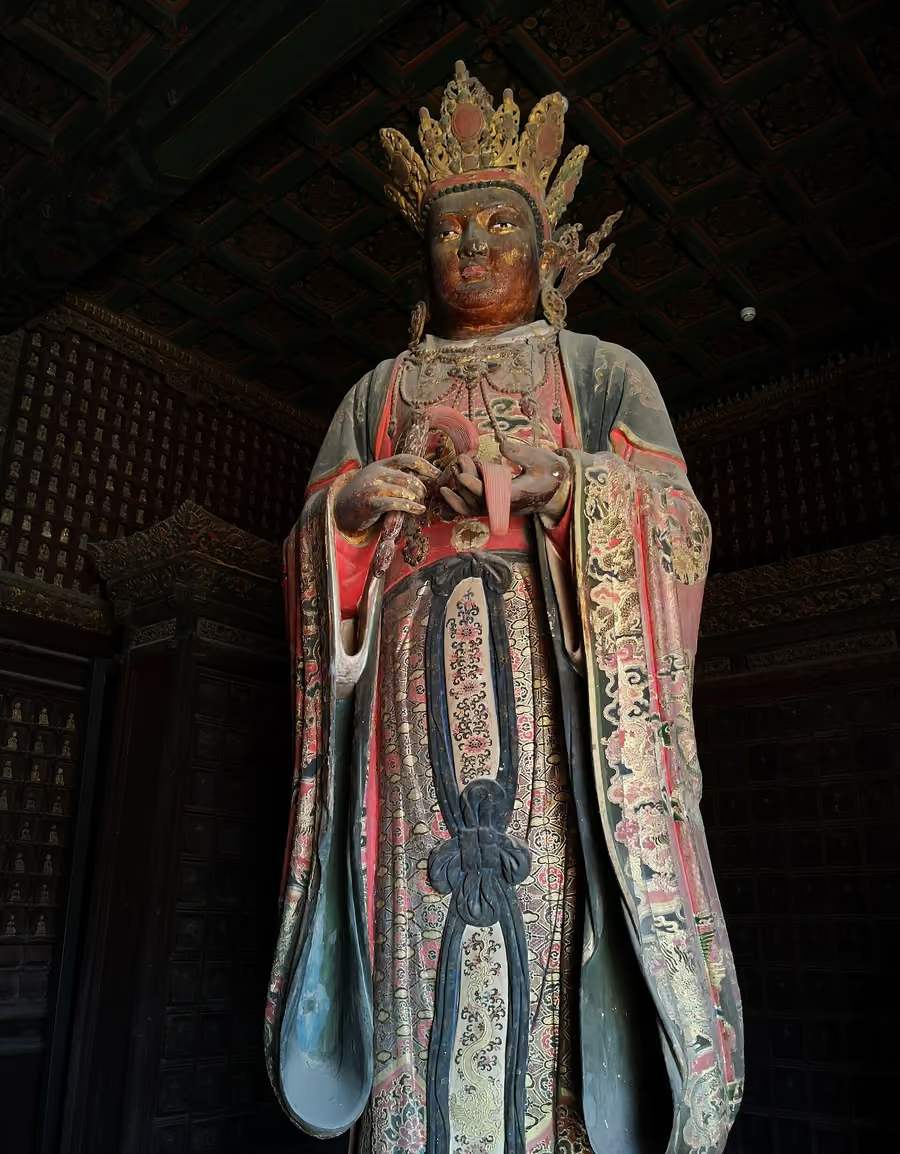
A quiet series of courtyards in an ordinary city block, with dark-tiled halls whose interiors still have Ming carved and painted timber - the detail is the reason to come. The key building holds the Tathagata Hall on the ground floor, with a Ming Sakyamuni flanked by two attendant deities, and above it the Thousand Buddha Pavilion, whose walls are lined with niches for thousands of small Buddha figures. The temple is almost always empty of visitors, which for an original Ming interior in central Beijing is remarkable.
A little local insight
Good to know before you go
- Come for a music performance. Short recitals of the temple's transmitted ritual music are given on a set schedule most days - usually a couple of sessions in the morning - and hearing it in the hall it was written for is the single best reason to make the trip. Check the day's times by phone or at the gate.
- Go upstairs. The Thousand Buddha Pavilion above the Tathagata Hall is reached by a narrow internal stair and is routinely missed.
- Look at the ceilings and the carved brackets rather than the statues. This is a building visit - original Ming joinery and painted decoration, which almost nothing else in central Beijing retains.
- Expect it to be empty, and expect very little English. There is no tour infrastructure, no shop and no cafe; bring water and read up beforehand.
- It is a few minutes from Chaoyangmen metro, in a block of ordinary offices and flats off Lumicang Hutong - easy to walk past. The address matters more than the signage here.
- If you have seen the Lama Temple and Confucius Temple and want a third, quieter Beijing temple, this is the one to pick over the busier options.
When to come
Weekday morning, timed to a music recital. Any season; the halls are unheated so it is cold in winter, and the courtyards are pleasant in spring and autumn.
Getting around
Courtyards are level, short and paved, so a wheelchair can see the compound and the exteriors, with help over the raised thresholds into the halls, each of which is up a few steps. The Thousand Buddha Pavilion upstairs is only reachable by a narrow, steep internal staircase and cannot be done in a wheelchair. There are no lifts, no accessible toilet to rely on, and no staff accustomed to assisting, so bring a companion. A bad knee has very little walking to do, which makes it a good small-site choice.
Worth knowing before you go
Plan your arrival for 09:50 or 14:50 so you catch a music performance - that twenty minutes is the point of coming, and the halls themselves take only half an hour. Parts of the complex have been under heritage restoration in recent years and Chinese notices conflict on what is currently open, so check the WeChat account first.
Compare established providers
Check live tours and tickets
Search for Zhihua Temple in Beijing. Prices, availability, payment and confirmation are handled by the booking provider.
China Travel Select does not take payment or create the reservation. Confirm the exact name, dates, inclusions and cancellation rules on the provider’s page.
Take a closer look
Maps, videos & more
Prices and hours change. These are the places to check on the day.