Discover Beijing
Beijing Museum of Ancient Architecture
北京古代建筑博物馆
A small, almost empty museum inside the Ming altar where emperors ploughed a ceremonial furrow each spring. Its draw is the Longfu Temple caisson ceiling, a coffered dome painted with some 1,400 stars and constellations, plus clear models explaining how Chinese timber buildings are joined.
The story
What makes this place special
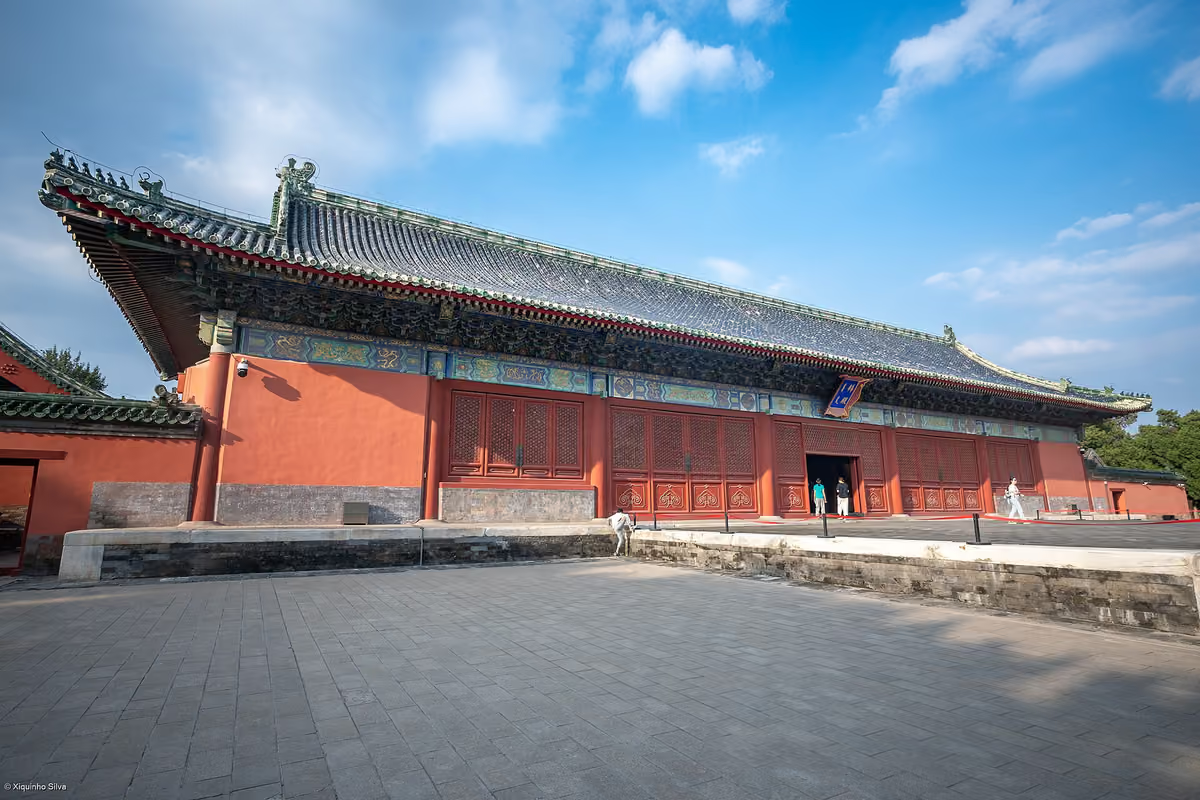
The museum occupies the Xiannongtan, the Ming and Qing Altar of Agriculture, where emperors sacrificed to Xiannong the god of farming, to Taisui, and to the gods of the mountains and rivers - and where the emperor ceremonially ploughed a furrow each spring to open the agricultural year. It is the counterpart to the Temple of Heaven across the road and almost nobody visits it. The museum displays the history and techniques of Chinese building: the main architecture exhibition is in the Taisui Hall, with the history of the altar itself in the Shenchu courtyard. Its celebrated object is a caisson ceiling salvaged from the Zhengjue Hall of Beijing's Longfu Temple - a square well within a circular well within another square, originally six layers of which five survive, with celestial palaces on the tiers and, at the apex, a painted star map of some 1,400 stars.
What you’ll discover
Quiet walled courtyards and large Ming timber halls in a neglected corner south of the centre, with the raised altar platforms outside. Inside the Taisui Hall are models, timber joint specimens, bracket sets and roof structures taken from demolished buildings - this is the place to learn how Chinese buildings actually stand up, with full-size mortise-and-tenon joints you can look into. Above you, in the hall's central bay, is the Longfu Temple caisson with its star map. There is also an architectural model of old Beijing showing the vanished city walls and gates.
A little local insight
Good to know before you go
- Look up as soon as you enter the Taisui Hall. The caisson ceiling with its star map is the single best thing in the museum and is directly overhead; people walk the cases without noticing it.
- Come here before the Forbidden City, not after. An hour with the joint specimens, bracket sets and roof models teaches you to read every imperial building you will see for the rest of the trip.
- The altar platforms and the emperor's ploughing ground are outside in the grounds and are unlabelled in English - ask or read up, because the ritual is the reason the site exists.
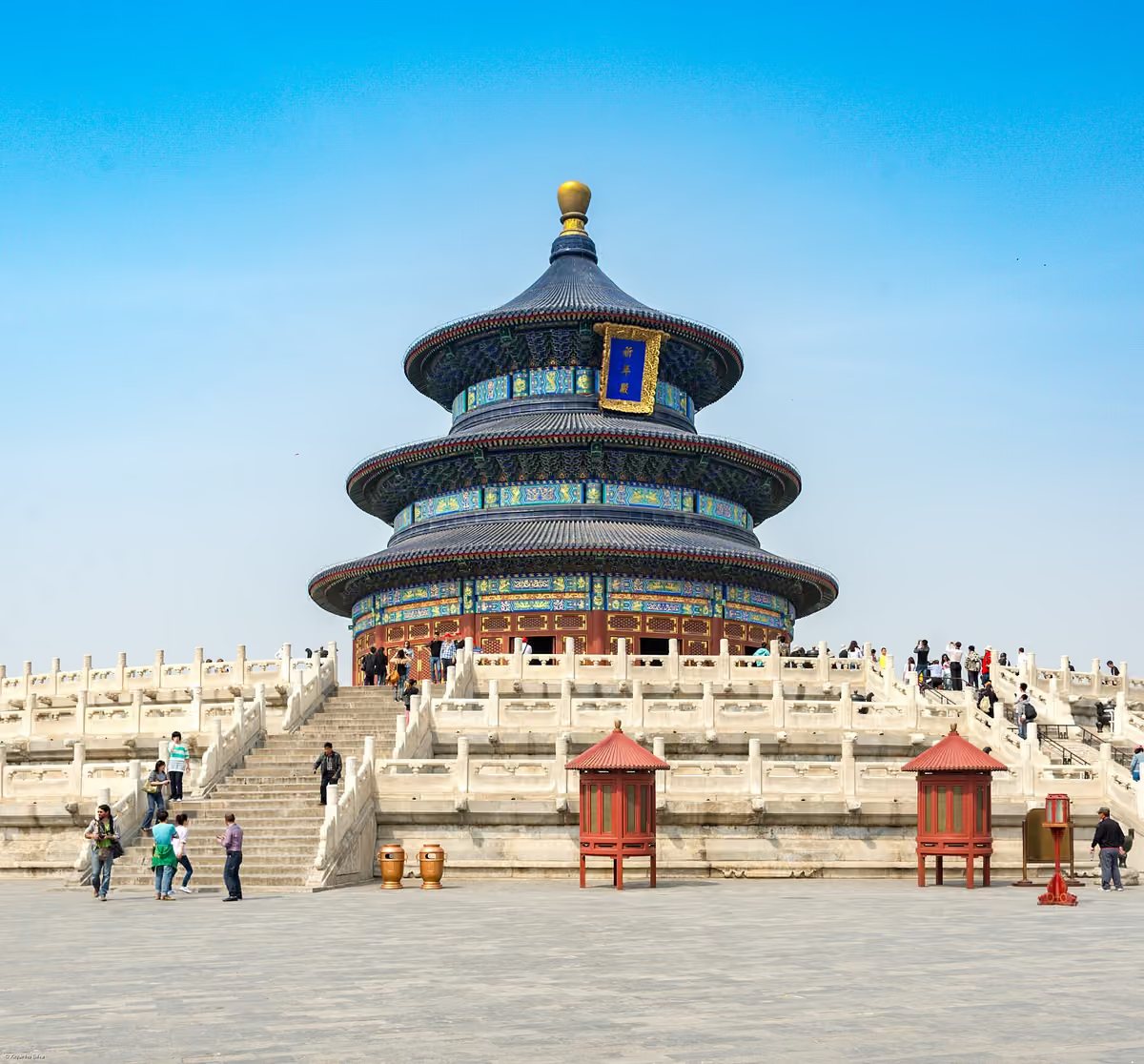
- It is directly across from the west side of the Temple of Heaven, so it slots into that morning for a small extra ticket, and it is empty while the Temple of Heaven is not.
- The model of old Beijing showing the walls and gates is the clearest illustration anywhere of what was demolished in the 1950s and 1960s.
- English interpretation is limited and the site is run as a scholarly museum rather than an attraction; allow an hour to ninety minutes and don't expect a cafe.
When to come
Any weekday morning - it is one of the least visited significant sites in Beijing. Spring and autumn for the courtyards; the halls are unheated in winter.
Getting around
The courtyards and grounds are flat and paved with short distances, so a wheelchair can move around the site, with the usual few steps and raised thresholds up into each hall and no ramps or lifts. The altar platforms are stepped. It is small and level, which makes it an easy choice for a bad knee, and the caisson ceiling - the main object - is visible from floor level once you are inside the hall.
Worth knowing before you go
The star ceiling is in the Taisui Hall and is lit from below - stand directly beneath it and look up rather than photographing from the doorway. Pair it with the Temple of Heaven, which is a 15-minute walk east across Tianqiao.
Compare established providers
Check live tours and tickets
Search for Beijing Museum of Ancient Architecture in Beijing. Prices, availability, payment and confirmation are handled by the booking provider.
China Travel Select does not take payment or create the reservation. Confirm the exact name, dates, inclusions and cancellation rules on the provider’s page.
Take a closer look
Maps, videos & more
Prices and hours change. These are the places to check on the day.