Discover Beijing
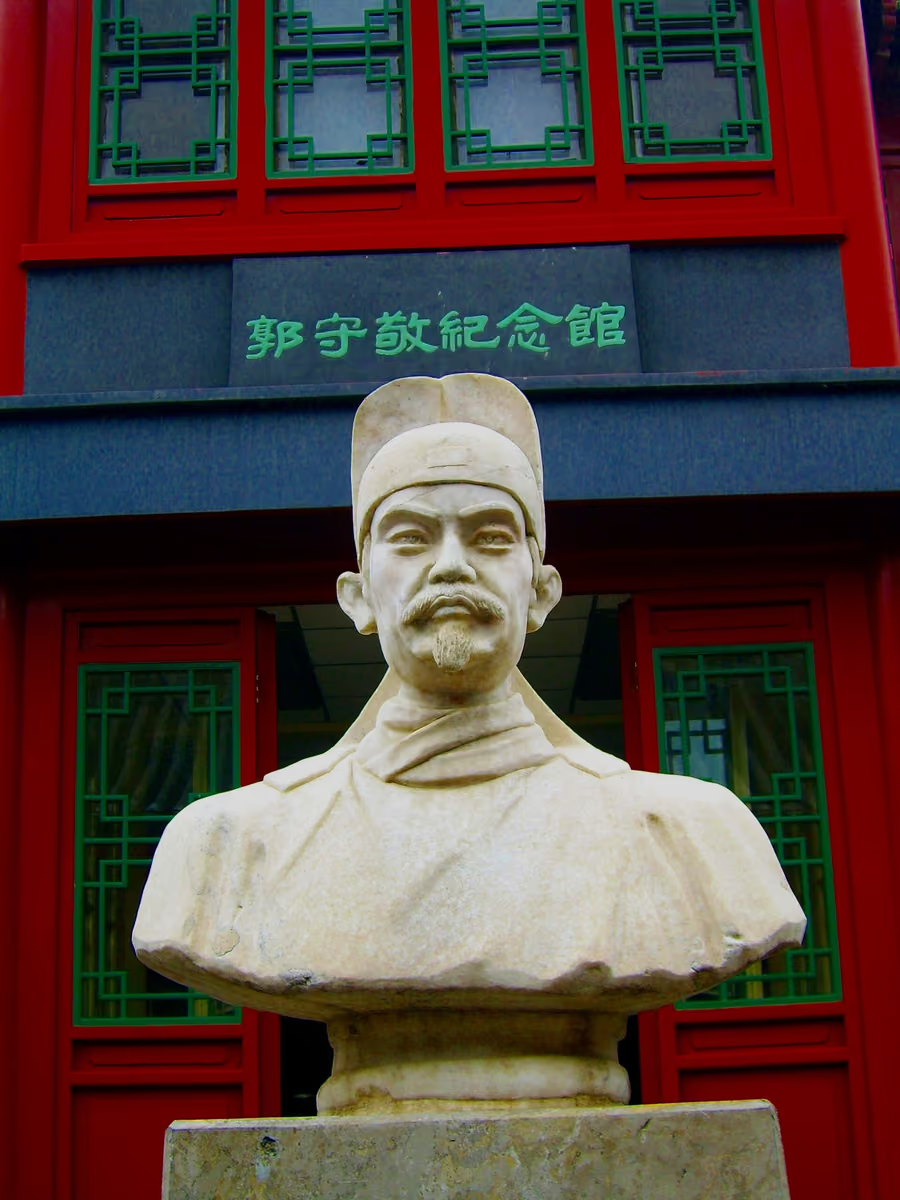
Guo Shoujing Memorial Museum
郭守敬纪念馆
A tiny free museum in a Yuan-dynasty temple on an islet at the north end of Xihai lake, devoted to the astronomer-engineer who designed Beijing's water system and the calendar used for three centuries. A quiet, genuinely interesting stop that almost no English guidebook mentions.
The story
What makes this place special
The museum occupies the Huitong Shrine, a historic temple building on the hillside at the north bank of Xihai, the northernmost of the three Shichahai lakes. It was converted to commemorate Guo Shoujing, the Yuan-dynasty astronomer and hydraulic engineer who directed the waterworks that brought the Grand Canal's northern terminus into Beijing - the reason the Shichahai lakes exist as a basin at all. Huitong Shrine is itself one of the significant old buildings of the Shichahai area, alongside Prince Gong's Mansion, the Bell and Drum Towers, Deshengmen and Guanghua Temple.
What you’ll discover
A small shrine building up a short slope above the water, with galleries on Guo Shoujing's astronomical instruments, calendar reform and canal engineering, including models of his observational devices. It is a modest, quiet museum of two or three rooms and takes half an hour. The setting is as much of the visit as the content - you come out onto a hillside above the quietest of the Shichahai lakes.
A little local insight
Good to know before you go
- Walk the Xihai wetland shore afterwards. It is the least visited of the three lakes, the water is clear, and recently built lakeside boardwalks run along it - a completely different experience from the bar-crowded Houhai shore to the south.
- Do not confuse this with the Guo Moruo Memorial Hall, which is a different person at a different address, near Prince Gong's Mansion on the west side of Qianhai. Guidebooks list them close together and visitors arrive at the wrong one.
- This is the museum that explains why Beijing's lakes and canals are where they are. Visiting it before walking Shichahai or the Grand Canal park makes the whole landscape legible.
- It is small, in Chinese, and rarely busy. Half an hour is enough and it works best as a stop on a Shichahai walking loop rather than a trip in itself.
- Combine with Deshengmen gate tower and Guanghua Temple, both within walking distance on the north side, for a half day that avoids the Houhai tourist strip entirely.
When to come
Morning, as the start of a Shichahai walk before the lakeside fills up. Spring and autumn for the lake walk; summer for lotus on the water.
Getting around
The shrine sits on a hillside and is reached by a flight of stone steps from the lakeside, with no ramp or lift, so a wheelchair cannot get in. A bad knee can manage the steps slowly. The Xihai lakeside path below is flat and has recently built boardwalks, and is itself fully accessible - so the walk is possible even when the museum is not.
Worth knowing before you go
Four small halls, mostly bilingual panels and models of Yuan-era water engineering - allow half an hour inside, then walk the Xihai lakeside boardwalk south into Shichahai, which is the real reason locals come here.
Compare established providers
Check live tours and tickets
Search for Guo Shoujing Memorial Museum in Beijing. Prices, availability, payment and confirmation are handled by the booking provider.
China Travel Select does not take payment or create the reservation. Confirm the exact name, dates, inclusions and cancellation rules on the provider’s page.
Take a closer look
Maps, videos & more
Prices and hours change. These are the places to check on the day.