Discover Datong
Yungang Grottoes
云冈石窟
Some 45 cave temples cut into a sandstone ridge in the 5th century by the Northern Wei, holding more than 50,000 carvings including a 17-metre seated Buddha open to the sky. Along with Dunhuang and Longmen it is one of China's three great Buddhist cave sites, and the Indian and Central Asian influence in the carving is unmistakable.
The story
What makes this place special
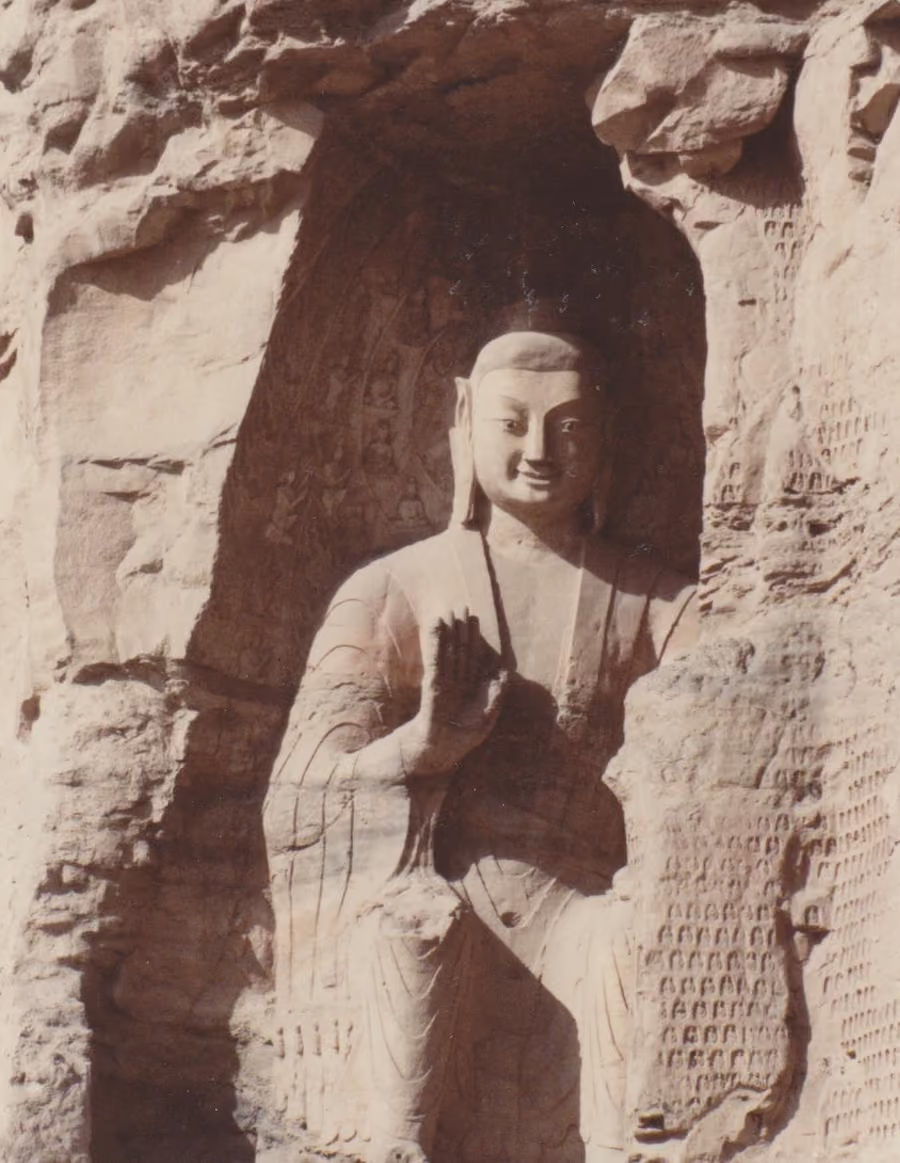
The Yungang Grottoes were cut into a sandstone cliff west of Datong from about 460 CE, when Datong was Pingcheng, capital of the Northern Wei. The first group - the Tanyao Five, caves 16 to 20 - was commissioned by the monk Tanyao after a period of Buddhist persecution, each colossal Buddha standing for one of the dynasty's founding emperors. A second, imperially sponsored phase from roughly 471 to 494 produced the paired caves 5/6, 7/8 and 9/10 and caves 11 to 13; carving tailed off after the court moved the capital to Luoyang in 494. UNESCO calls the site the most important surviving evidence of Chinese Buddhist carving at its fifth-century height.
What you’ll discover
After a long modern approach - a gate complex, a colonnade of elephants, a temple and a lake, all built in 2010 and historically meaningless - you reach the cliff and walk east to west past 45 numbered caves. The numbered caves matter very unevenly. The ones to actually spend time in: cave 20, where the 13-metre seated Buddha sits in the open because its front wall collapsed, the image on every poster; caves 5 and 6, the richest interiors, 5 holding a seated Buddha around 17 m tall and 6 a central pillar covered in panels of the Buddha's life; cave 12, the Music Cave, with registers of carved musicians and dancers holding identifiable fifth-century instruments; and caves 9 and 10 for their painted entrance columns. Caves 1 to 4 and the high-numbered eastern caves are badly eroded and can be walked past.
A little local insight
Good to know before you go
- Walk the long entrance plaza without stopping. It is all 21st-century construction and it absorbs half the energy of visitors who think it is part of the site.
- Do the caves in this order of priority: 20, then 5 and 6, then 12, then 9 and 10, then 16-19. If you are short of time or stamina, those nine are the site.
- Caves 5 and 6 are sometimes opened on a rotation, so you may only get into one of the pair. Ask at the ticket gate which is open that day and go straight there first before the groups arrive.
- The painted colour in caves 5, 6 and 12 is mostly Qing-dynasty repainting over Wei carving. Knowing that changes what you look at - the carved form is ancient, the pigment is not.
- No flash, and in several caves no photography at all. Bring a small torch to light up ceiling detail instead; guards generally allow it.
- Go west to east rather than with the crowd flow if the gate is busy - start at 20, work back, and you will see the important caves without the group queues.
- Two to three hours is right. Visitors who allot one hour spend it on the wrong caves.
When to come
Morning, and the earlier the better: the cliff faces south, so the light reaches into the caves before midday, and the tour buses from Datong arrive from about 10:00. May, June, September and October are the comfortable months; the site is exposed and the Datong winter is severe.
Getting around
Harder than it looks. The approach from the gate to the cliff is well over a kilometre of flat paving - electric carts run it and are worth paying for. The cave row itself is largely level, but the important interiors are entered up flights of stone steps, and caves 5, 6 and 12 all require climbing with no ramp or lift. A wheelchair can reach the cliff and see cave 20 (which is open-fronted and visible from the ground) but cannot get inside the best caves. A bad knee can do the whole site with the cart for the approach and slow going on the cave steps; handrails exist on most but not all.
Worth knowing before you go
Book before you fly: with no ticket window, turning up without a reservation means not getting in. Caves 5 and 6 hold the best-preserved painted carving and are where to spend your time if you are short of it.
Compare established providers
Check live tours and tickets
Search for Yungang Grottoes in Datong. Prices, availability, payment and confirmation are handled by the booking provider.
China Travel Select does not take payment or create the reservation. Confirm the exact name, dates, inclusions and cancellation rules on the provider’s page.
Take a closer look
Maps, videos & more
Prices and hours change. These are the places to check on the day.