Discover Guangzhou
Liwan teahouses and dim sum
荔湾老字号茶楼
Yum cha was invented here, and the old Liwan houses - Panxi, Taotaoju, Guangzhou Restaurant - still run trolley or order-sheet dim sum from early morning. Eating one slow breakfast is as much a sight as any temple.
The story
What makes this place special
Cantonese tea drinking began well below the level of the famous restaurants: in the Xianfeng reign of the Qing, Foshan and Guangzhou had cheap tea stalls nicknamed 'two-cent houses' after the price of a cup, and more refined teahouses grew out of them. Taotaoju on Shangjiu Fu Road in Liwan dates from 1880. In the 1950s and 1960s a distinct Guangzhou form appeared — the garden teahouse, with Lingnan landscaping built into the restaurant — of which Beiyuan, Nanyuan and Panxi were the three that mattered; Panxi still stands on Longjin West Road. Panxi's dim sum reputation was made in the 1970s under the chef Luo Kun, when Canton Fair visitors came specifically for it. 'Yat jung leung gin', one pot of tea and two baskets, is the local name for the meal.
What you’ll discover
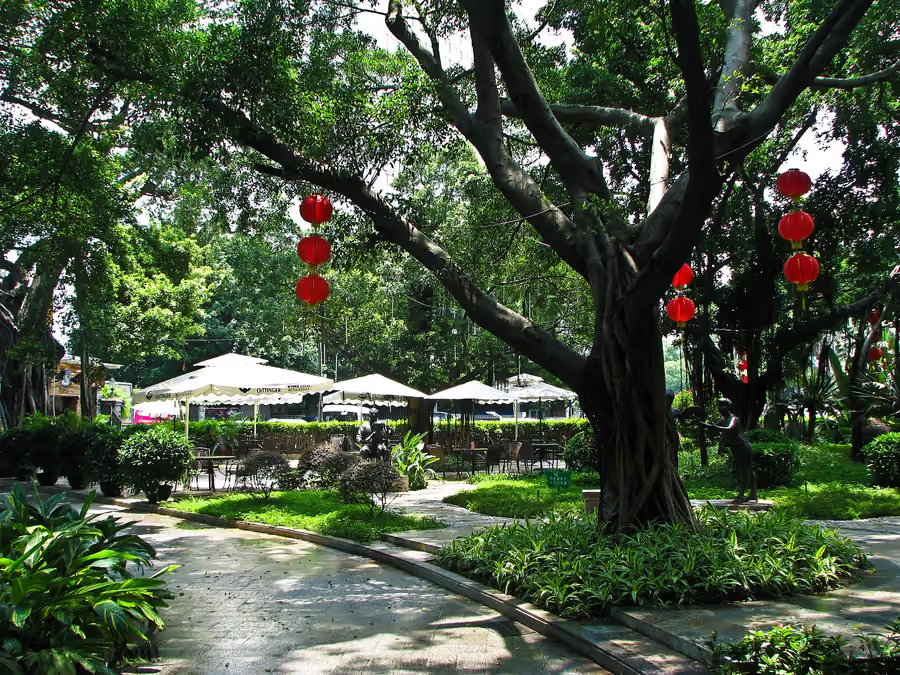
Morning tea in Liwan is a loud, full, multi-generational room: families at round tables, a trolley or a tick-sheet, pots of pu'er or chrysanthemum topped up continuously, and bamboo baskets arriving over an hour or two. At Panxi you eat beside ponds and covered walkways in a 1960s garden; at Taotaoju you eat in a narrow old-town building on a pedestrian street of medicine shops and pastry makers. The food itself is the standard canon done well — har gow, siu mai, cheung fun, char siu bao, lotus-leaf rice, egg tarts, and the regional things visitors skip: steamed rice rolls with dried shrimp, phoenix claws, beef offal.
A little local insight
Good to know before you go
- Go at seven in the morning, not at eleven. The locals' sitting is early; by late morning the old houses are queueing an hour and the kitchen is under pressure.
- Expect to be seated with strangers or to wait for a whole table, and expect a number ticket. Take the ticket, stand aside, and watch for your number on the board — nobody will come and find you.
- Learn the two gestures: tap two fingers on the table to thank whoever pours your tea, and leave the lid of the pot tilted open to ask for hot water.
- Order the things that look unfamiliar. Visitors order har gow and siu mai, which are good everywhere; the phoenix claws, beef tripe, steamed spare ribs and the rice-noodle rolls are what the room next to you is eating.
- Panxi is in the garden and worth it for the setting; Taotaoju is better for walking the old Xiguan streets afterwards. Dim Dou Dak is a modern chain, perfectly good and much easier to get into, but it is not an old house.
When to come
Between about seven and nine in the morning, any day of the week. Weekend mornings are the fullest and most atmospheric and also the longest wait.
Getting around
Varies sharply by house. The modern chains are in shopping centres with lifts and level floors and are easy. The old garden and old-town houses are not: Panxi has steps, bridges and thresholds through its garden, and Taotaoju is an old multi-storey building on a pedestrian street with narrow stairs and tightly packed tables. A wheelchair user is far better served by a modern teahouse; call ahead if you want a historic one, and ask for ground-floor seating.
Worth knowing before you go
Arrive before 08:30 on a weekday; the "one cup two pieces" set is the cheap local way to order.
Compare established providers
Check live tours and tickets
Search for Liwan teahouses and dim sum in Guangzhou. Prices, availability, payment and confirmation are handled by the booking provider.
China Travel Select does not take payment or create the reservation. Confirm the exact name, dates, inclusions and cancellation rules on the provider’s page.
Take a closer look
Maps, videos & more
Prices and hours change. These are the places to check on the day.