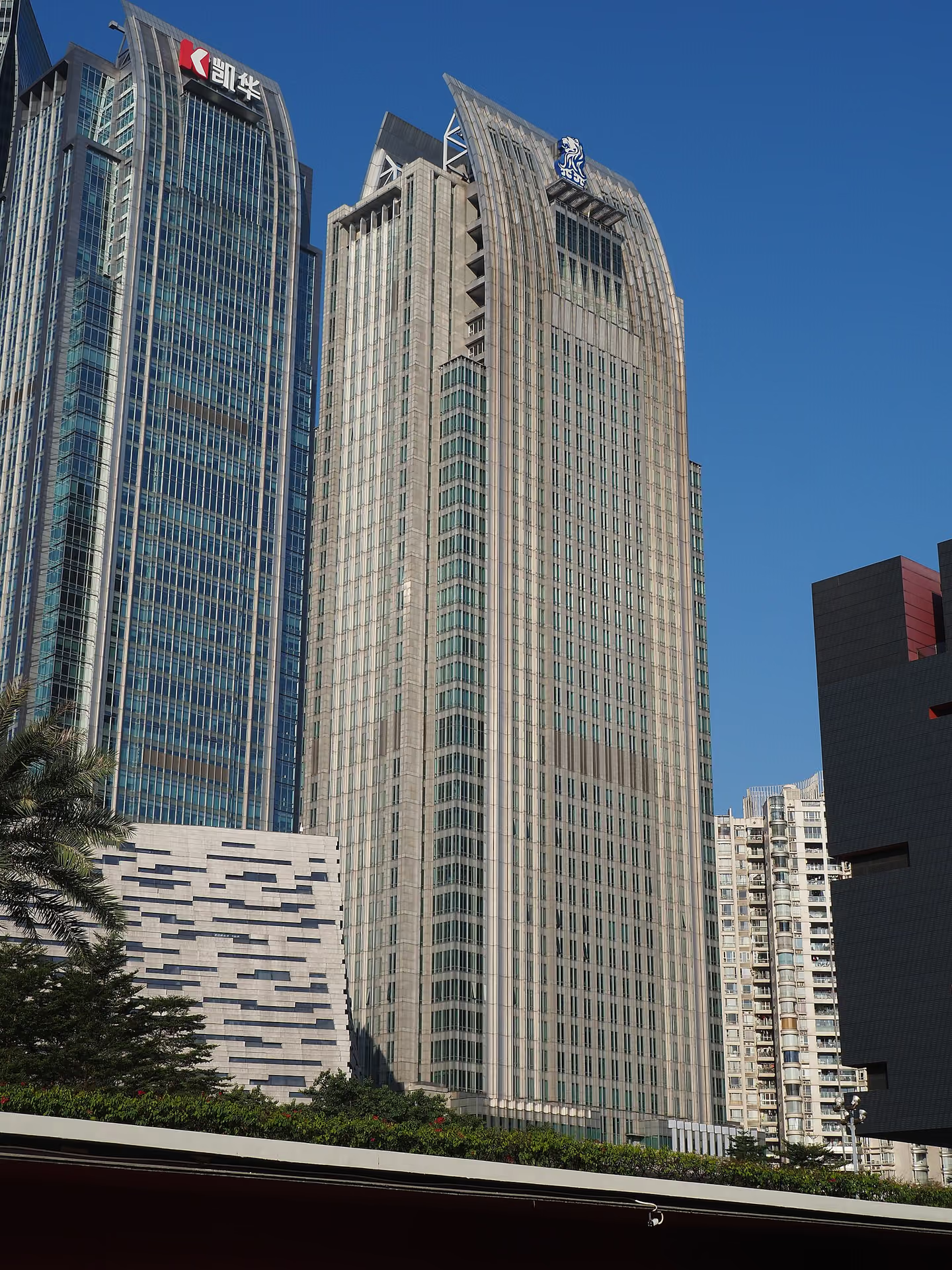
Your destination guide 广州
Guangzhou
Cantonese food at its source, and almost no queues
The old Canton, and the reason dim sum exists. Most of what is worth seeing is free or costs ¥10, which makes it the cheapest major city on this list by a wide margin. Pair it with Shenzhen — they are 30 minutes apart by train.
Getting there
Baiyun airport (CAN) is on Metro Line 3, 40–60 minutes from Tianhe. High-speed trains use Guangzhou South: roughly 8 hours from Beijing West, 7–8 from Shanghai Hongqiao, and as little as 45 minutes from Hong Kong West Kowloon on a service that runs about 28 times a day. Shenzhen North is under 40 minutes away.
When to go
October to December, and March to April. June to September is hot, very humid and the typhoon season; winters are mild and dry.
How long: 3–5 days
Give it 3 days for the headline sights, or up to 5 to see it properly and eat your way around.
Three covers Canton Tower, Shamian Island and two rounds of morning tea. Five adds Baiyun Mountain, the Chen Clan Hall and the Nanyue King tomb, and the evenings to get through roast meats, congee and late-night food properly.
Guangzhou and Shenzhen: the food trip with no queues
Two cities half an hour apart by train, 14 minutes from Hong Kong, holding the best eating in China and almost no foreign tourists. This guide covers how to split four days between them, what to eat, and why the theme parks and the tower are a waste of your time.
Make a few good memories
What to see in Guangzhou
Researched largely from Chinese-language sources, so it goes beyond the usual shortlist. Dollar figures are approximate, at the rate on 2026-10-08.
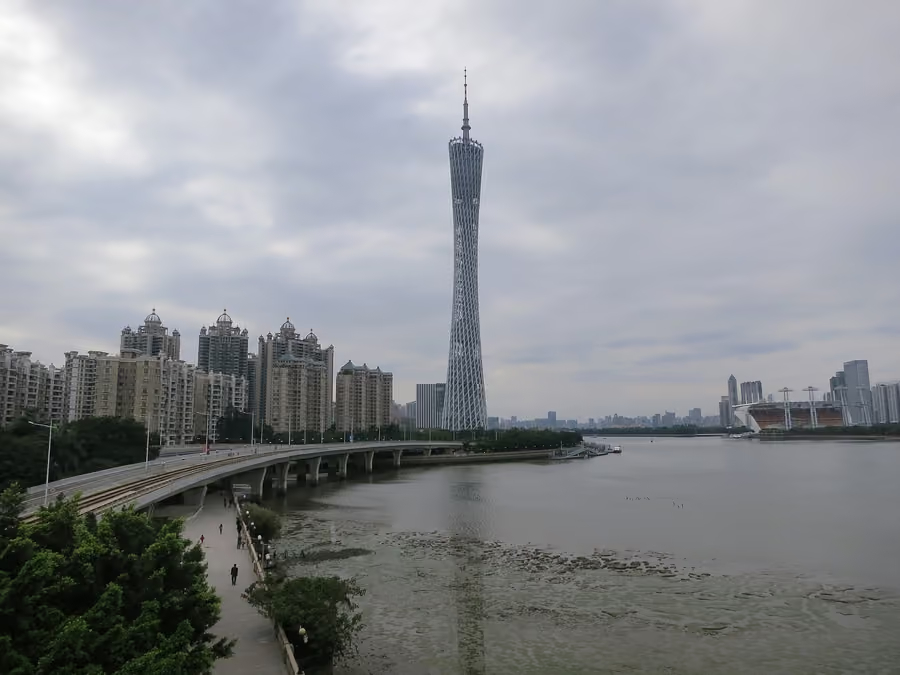
广州塔
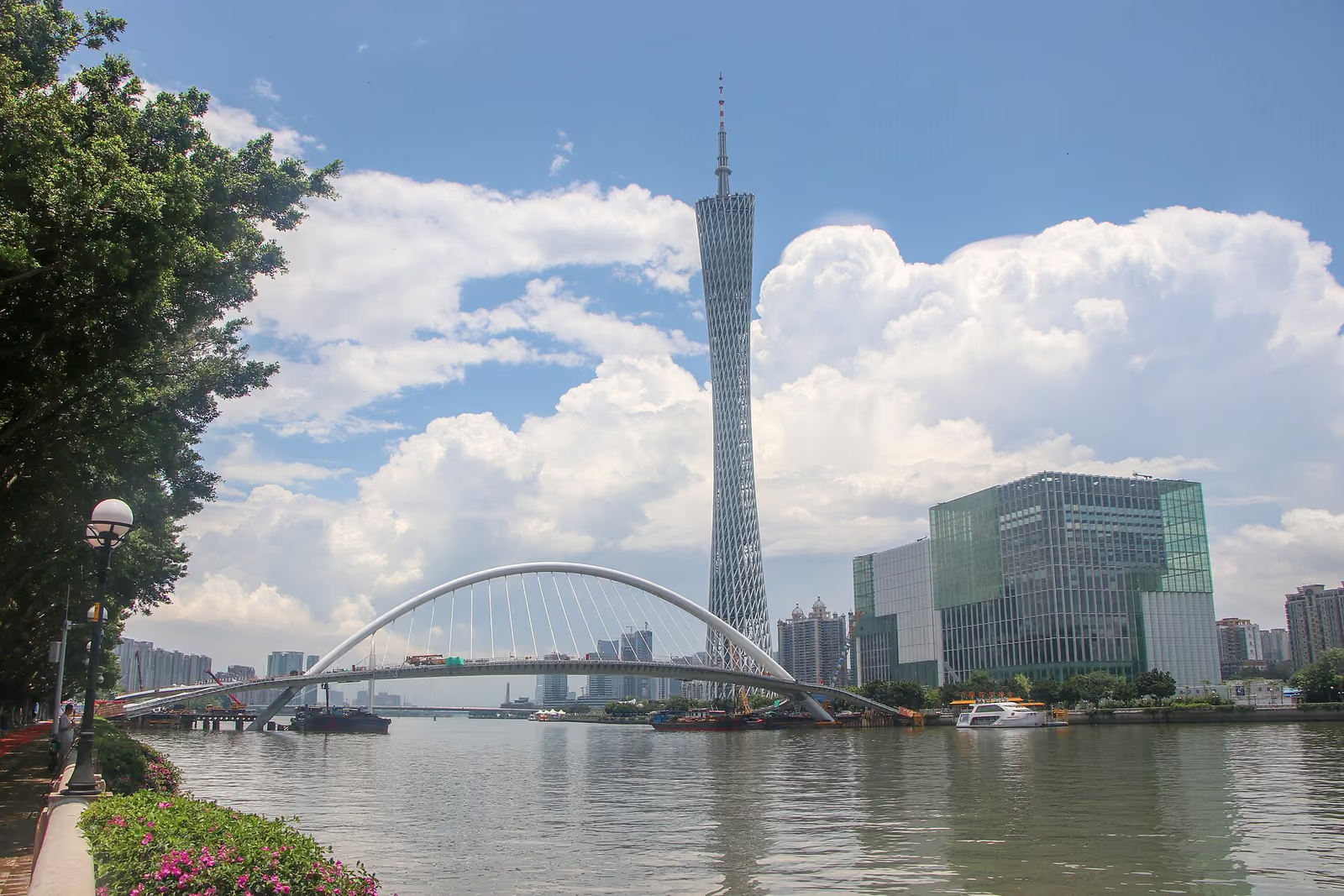
At 600 metres this twisting steel lattice is the tallest tower in China and the best place to understand how Guangzhou sprawls along the Pearl River. Several separate decks are sold, including an open-air 450m platform and a rooftop bubble tram.
From ¥150 (base observation); 450m outdoor platform ¥228; 460m ferris-wheel package from about ¥283
≈ US$22–42Opening hours, booking and how to get there →
沙面岛
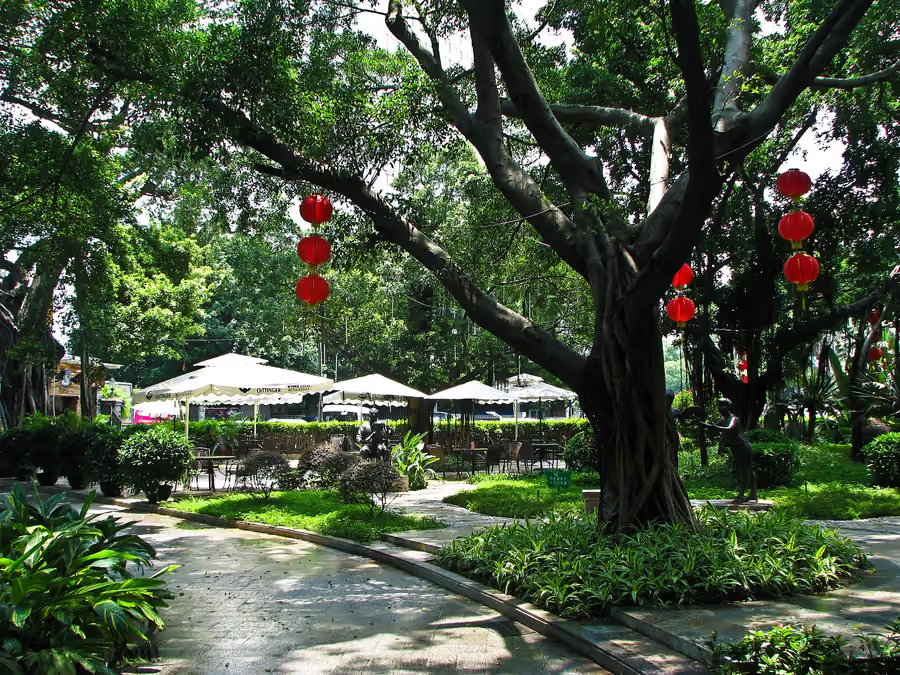
A small sandbank in the Pearl River that was the British and French concession, and still the most intact stretch of European colonial architecture in China. Banyan-shaded lanes, old consulates and quiet cafes make it the easiest walk in the city.
Free
Opening hours, booking and how to get there →
陈家祠
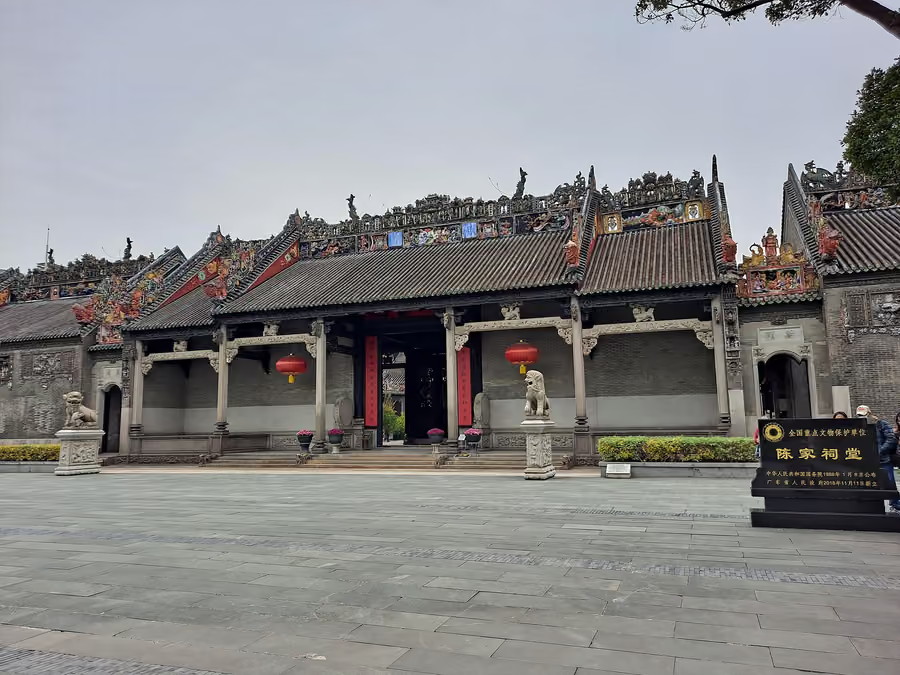
An 1894 clan temple that is really a showroom for every Cantonese decorative craft at once - wood, brick and stone carving, ceramic roof friezes and iron lacework. Now the Guangdong Folk Arts Museum, and astonishing value for ten yuan.
¥10
≈ US$1.49Opening hours, booking and how to get there →
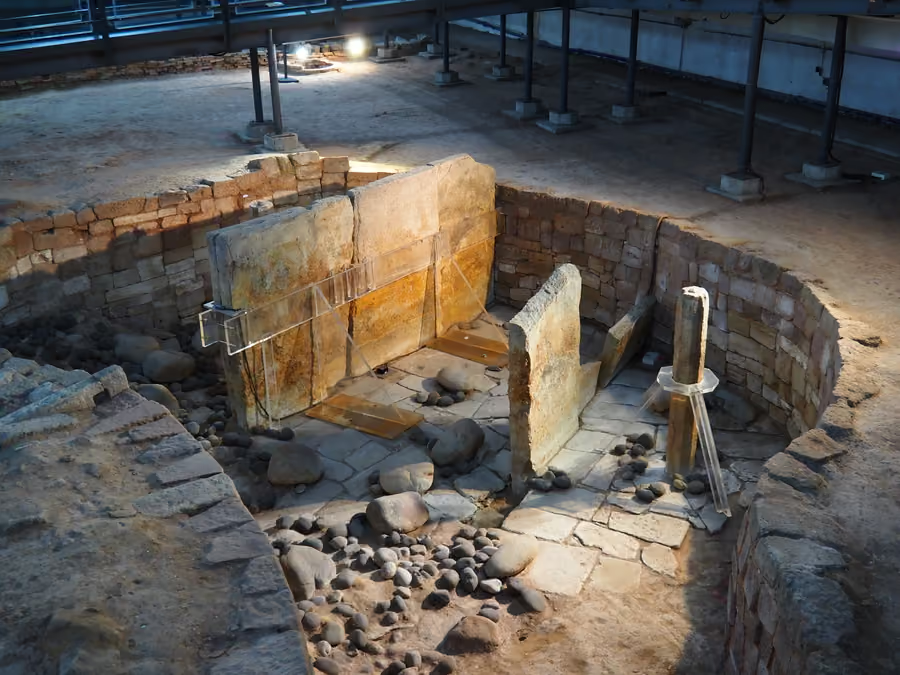
南越王博物院
Built over the intact 2,000-year-old tomb of the second king of Nanyue, discovered under a hill in 1983. You walk down into the burial chambers, then see the jade burial suit and bronzes that came out of them.
¥10
≈ US$1.49Opening hours, booking and how to get there →
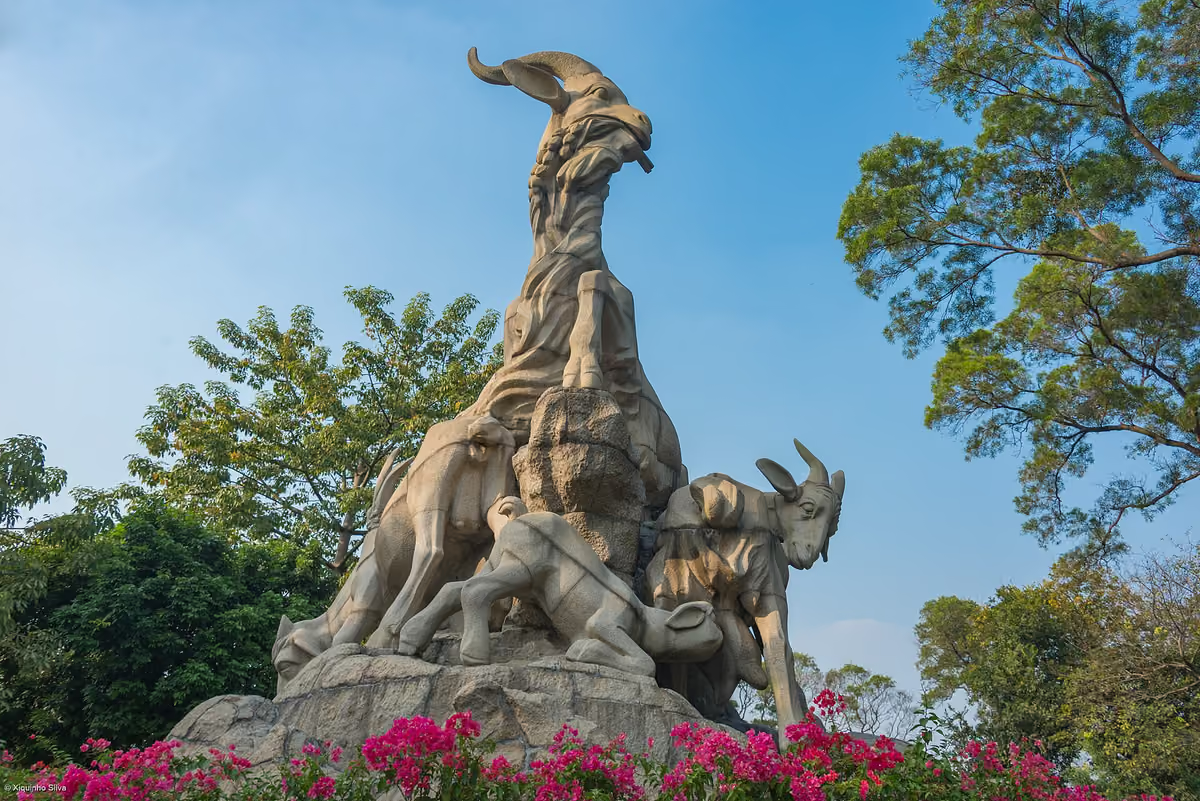
越秀公园
Guangzhou's biggest central park, 650,000 square metres of hills and lakes holding the Five Rams statue that is the city's emblem, the Ming-era Zhenhai Tower and a surviving stretch of city wall.
Free
Opening hours, booking and how to get there →
石室圣心大教堂
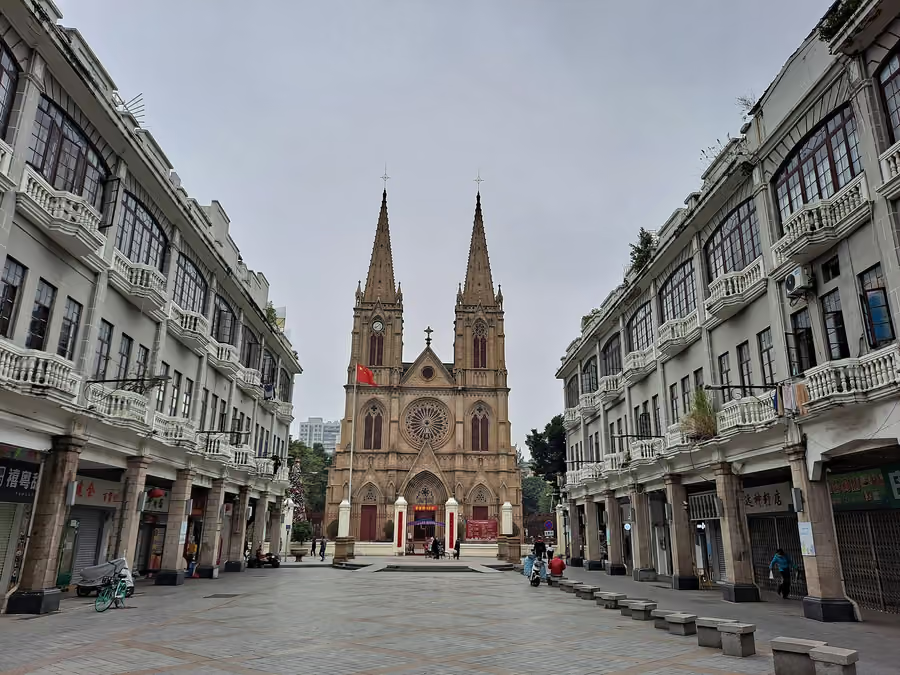
One of only four all-granite Gothic cathedrals in the world, finished in 1888 with twin spires 58.5 metres high. Known locally as the Stone House, it sits incongruously among the wholesale markets of old Guangzhou.
Free
Opening hours, booking and how to get there →
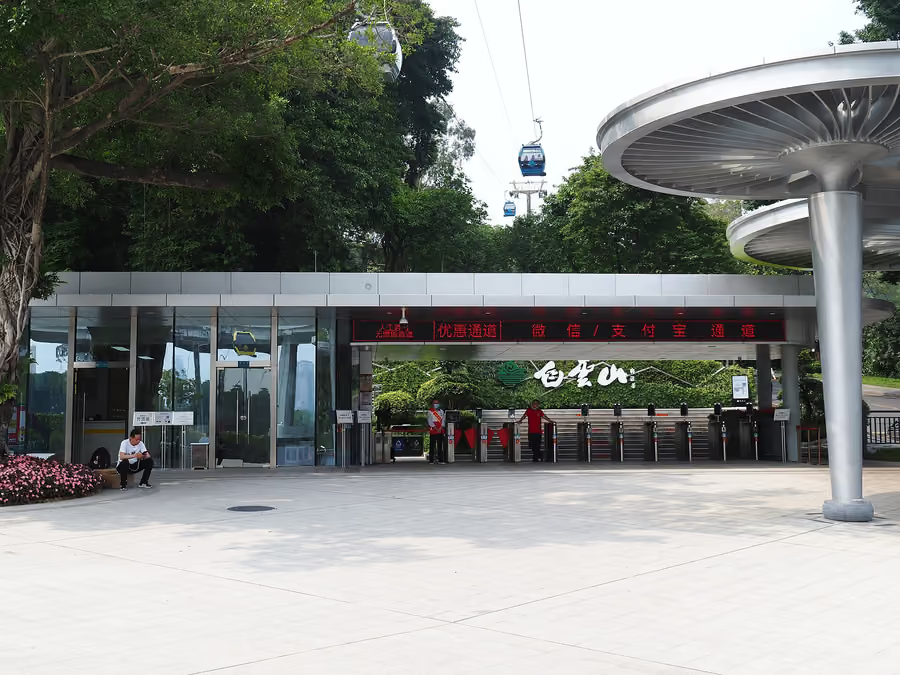
白云山
The green hill north of the city, a national scenic area that Guangzhou residents climb at dawn. Paths run up through Yuntai Garden and Mingchun Valley to Moxing Ridge, the highest point around the city.
¥5 entry (cable car and internal gardens such as Yuntai Garden charge extra)
Opening hours, booking and how to get there →
广东省博物馆
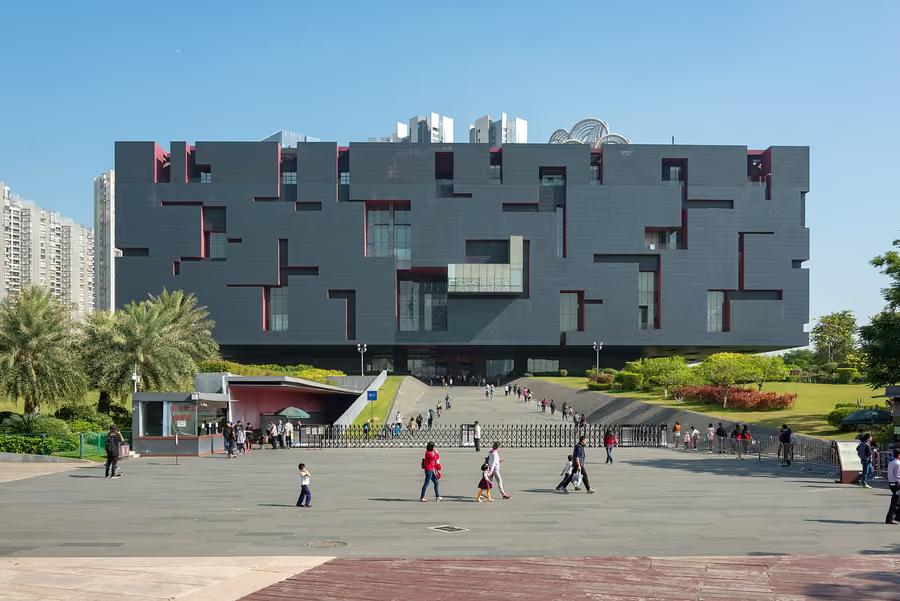
A carved-box building in Zhujiang New Town covering Guangdong history, Chaozhou woodcarving, export porcelain and the natural history of the delta. The best single place to see what made this a trading province.
Free (special exhibitions ticketed)
Opening hours, booking and how to get there →
北京路步行街
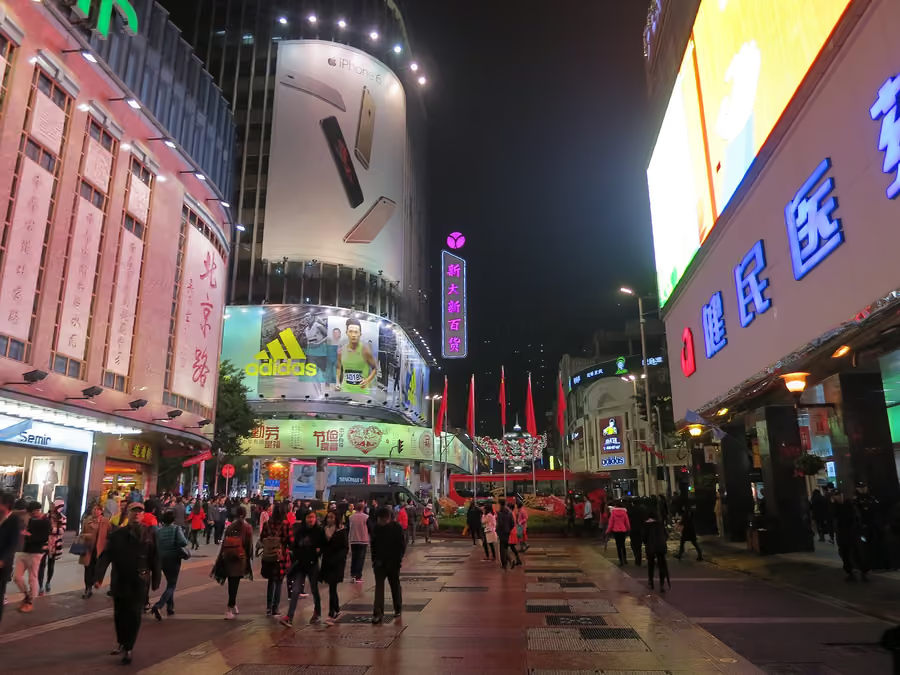
Guangzhou's commercial spine for over a thousand years, and still its busiest shopping street. Glass panels in the pavement show the excavated layers of road surface from five dynasties underfoot.
Free
Opening hours, booking and how to get there →
荔湾老字号茶楼
Yum cha was invented here, and the old Liwan houses - Panxi, Taotaoju, Guangzhou Restaurant - still run trolley or order-sheet dim sum from early morning. Eating one slow breakfast is as much a sight as any temple.
Typically ¥60–120 per person for morning tea — not confirmed
≈ US$8.94Opening hours, booking and how to get there →
What to eat in Guangzhou
Rice is the staple here in every form - steamed rice, rice-flour noodle sheets, rice noodles and congee - and wheat appears mainly as the thin egg noodles in wonton soup. The structure of a Guangzhou eating day matters more than any single dish: morning tea (早茶, yum cha) from roughly 7am to 11am, a roast-meat or noodle lunch, a proper dinner with a slow-boiled soup, and late-night 宵夜 from 9pm until the small hours. At yum cha you are usually charged a per-head tea seat fee (茶位费) on top of the food, order by ticking a paper card or tapping a WeChat mini-program at the table, and Cantonese cooking prizes freshness and subtlety over spice, so almost nothing on the table will be chilli-hot.
Shrimp dumplings (har gow)
虾饺Xiā jiǎo
Whole prawns, bamboo shoot and a little pork fat wrapped in a translucent wheat-starch skin and steamed in a bamboo basket. A good one is pleated by hand - Tao Tao Ju insists on thirteen pleats per dumpling and three to four prawns inside. Eat it straight from the steamer with chopsticks, in one or two bites, plain or with a dab of soy.
Tastes like: Sweet, clean prawn with a springy snap; the skin is slippery and faintly chewy.
Not on the menu but in it: Pork fat is worked into the filling of traditional versions for juiciness, so this is not pork-free even though it looks like a prawn dumpling.
Where to eat it
- Tao Tao Ju · ¥100–150 per person · Liwan, 20 Dishifu Road; Chinese-language sources point to Changshou Road station on Line 1.
- Guangzhou Restaurant (Wenchang flagship) · ¥95–110 per person (reported for the Wenchang flagship morning tea) · Liwan, 2 Wenchang South Road. Nearest metro station not confirmed.
- Dian Dou De · ¥80–105 per person · One reported branch: Lake-side Intime (湖滨银泰) C2, 4F, 258 Yan'an Road, Yuexiu, near Longxiangqiao station exit D1 on Line 1 (Chinese source). Other branches exist.
- Lian Xiang Lou · Price not confirmed · Liwan, formerly 67 Dishifu Road; a Haizhu district branch is reported. Current branch not confirmed.
Open-topped pork and prawn dumplings (siu mai)
干蒸烧卖Gānzhēng shāomài
Minced pork and prawn bound with mushroom or water chestnut, wrapped in a thin yellow wheat wrapper left open at the top and steamed. The Cantonese version is squat and firm rather than soupy, and is often topped with a few grains of crab roe or a slice of mushroom. Eaten whole, sometimes dipped in chilli oil.
Tastes like: Dense, bouncy and meaty with a savoury pork-fat richness.
Not on the menu but in it: The wrapper is usually egg-coloured wheat dough; dried shrimp or prawn is mixed into the pork even when the menu just says pork.
Watch videos of Open-topped pork and prawn dumplings (siu mai) →Barbecued pork buns (char siu bao)
叉烧包Chāshāo bāo
A soft white steamed bun that splits open at the top to show diced barbecued pork in a thick glossy sauce of soy, honey and five-spice. Some teahouses do a baked version with a crumbly sweet crust instead. Pull it apart or bite straight in; it is eaten hot.
Tastes like: Sweet-savoury and sticky inside, cloud-soft and slightly sweet outside.
Not on the menu but in it: The filling sauce is thickened with wheat flour or cornflour and contains a good deal of sugar; lard is common in the bun dough.
Where to eat it
- Tao Tao Ju · ¥100–150 per person · Liwan, 20 Dishifu Road; Chinese-language sources point to Changshou Road station on Line 1.
- Guangzhou Restaurant (Wenchang flagship) · ¥95–110 per person (reported for the Wenchang flagship morning tea) · Liwan, 2 Wenchang South Road. Nearest metro station not confirmed.
- Dian Dou De · ¥80–105 per person · One reported branch: Lake-side Intime (湖滨银泰) C2, 4F, 258 Yan'an Road, Yuexiu, near Longxiangqiao station exit D1 on Line 1 (Chinese source). Other branches exist.
Steamed rice noodle rolls (cheung fun)
肠粉Chángfěn
A thin rice-milk batter is steamed in a flat drawer into a silky sheet, scattered with filling and rolled up. Guangzhou has two traditions: the delicate teahouse rolls stuffed with prawn, beef or barbecued pork, and the cheaper neighbourhood 'drawer' version with egg, minced pork and lettuce. Both arrive doused in a sweetened light soy sauce and are cut with the side of your chopsticks.
Tastes like: Very soft, slippery and barely chewy, carried by the sweet-salty soy.
Not on the menu but in it: The 'soy' poured over it is usually a house sauce with sugar, oil and sometimes oyster sauce or dried-shrimp stock, so a plain vegetable roll is often not vegetarian. Some shops brush the sheet with lard.
Where to eat it
- Tao Tao Ju · ¥100–150 per person · Liwan, 20 Dishifu Road; Chinese-language sources point to Changshou Road station on Line 1.
- Guangzhou Restaurant (Wenchang flagship) · ¥95–110 per person (reported for the Wenchang flagship morning tea) · Liwan, 2 Wenchang South Road. Nearest metro station not confirmed.
- Imperial Treasure Fine Chinese Cuisine · Michelin 2 stars 2026 · Price not confirmed — Michelin rates it ¥¥¥ · Tianhe, in IGC Mall, 222 Xingmin Road (L514B, 5F). Nearest metro station not confirmed.
- Dian Dou De · ¥80–105 per person · One reported branch: Lake-side Intime (湖滨银泰) C2, 4F, 258 Yan'an Road, Yuexiu, near Longxiangqiao station exit D1 on Line 1 (Chinese source). Other branches exist.
Chicken feet in black bean sauce
豉汁凤爪Chǐzhī fèngzhǎo
Chicken feet are deep-fried, soaked until puffy, then steamed slowly with fermented black beans, garlic and sugar until the skin and tendon slide off the bone. They are called 'phoenix claws' on menus. You pick one up, work the soft skin off with your teeth and put the bones in the dish provided - everyone does this with their fingers.
Tastes like: Deeply savoury and sweet, with a gelatinous, lip-sticking softness and no real meat.
Not on the menu but in it: Nothing hidden, but note they are fried before steaming and the sauce contains a lot of sugar.
Watch videos of Chicken feet in black bean sauce →Cantonese roast goose
烧鹅Shāo'é
A whole goose is rubbed inside with a paste of fermented bean curd, five-spice and sugar, sewn shut, inflated, coated in maltose and hung in a charcoal oven until the skin is lacquer-dark and crisp. It is chopped through the bone into pieces and served with sour plum sauce. Order a quarter or by weight rather than a whole bird.
Tastes like: Rich dark meat with a thick layer of rendered fat under shattering sweet skin; the plum sauce cuts it.
Not on the menu but in it: The marinade is built on fermented red bean curd (南乳) and the glaze on maltose sugar - both can taste unfamiliar and funky.
Where to eat it
- Jiang by Chef Fei · Michelin 2 stars 2026 · Price not confirmed — Michelin rates it ¥¥¥ · Tianhe, 3F Mandarin Oriental, 389 Tianhe Road. Nearest metro station not confirmed.
- Zhu Zai Ji Shi Fu (Jiangnan Avenue) · Michelin Bib Gourmand (year not confirmed) · Price not confirmed; Michelin lists it as budget (¥) · Haizhu, 429 Jiangnan Avenue South. Nearest metro station not confirmed.
White-cut chicken
白切鸡Báiqiē jī
A whole free-range chicken is poached just to the point of doneness in barely-simmering water, plunged into ice water so the skin tightens into a jelly layer, then chopped through the bone and served cool with a dip of scallion, ginger and hot oil. It is the dish Cantonese cooks are judged on, and the famous versions - like Wen Ji Yixinji's - are deliberately left pink at the bone.
Tastes like: Mild, clean and faintly sweet chicken with a gelatinous skin; the ginger-scallion dip does the seasoning.
Not on the menu but in it: Nothing added, but the bird is served cold or barely warm, which surprises people expecting hot roast chicken.
Where to eat it
- Lai Heen · Michelin 1 star 2026 · Price not confirmed — Michelin rates it ¥¥¥ · Tianhe (Zhujiang New Town), 3F Ritz-Carlton, 3 Xing An Road. Nearest metro station not confirmed.
Roast meat over rice
烧腊饭Shāolà fàn
The standard cheap lunch: a plate of rice topped with one or two roast meats carved to order - barbecued pork (叉烧), crisp-skinned pork belly (烧肉), roast duck or soy-braised goose - plus a spoon of blanched greens and a ladle of the drip sauce from the roasting tray. Point at what is hanging in the window and say how many items you want.
Tastes like: Sweet-salty glazed meat, crackling fat, and rice soaked in savoury drippings.
Not on the menu but in it: The drip sauce is a meat gravy, so the greens on the plate are not vegetarian. Char siu is coloured and sweetened heavily with maltose and sometimes red fermented bean curd.
Watch videos of Roast meat over rice →Liwan boat congee
艇仔粥Tǐngzǎi zhōu
Rice cooked down for hours until the grains collapse into a smooth cream, then finished to order with slivers of fish, squid, peanuts, jellyfish, pork skin and fried noodle shards. The name comes from the sampan vendors who sold it on the Liwan canals. Stir everything in as soon as it arrives and eat it with a spoon; many people dunk a fried dough stick (油条) in it.
Tastes like: Silky and faintly sweet, with crunch from peanuts and fried bits and a light seafood savour.
Not on the menu but in it: Jellyfish, pork skin and dried squid are standard toppings and are not usually itemised in English. Peanuts are almost always present.
Where to eat it
- Guangzhou Restaurant (Wenchang flagship) · ¥95–110 per person (reported for the Wenchang flagship morning tea) · Liwan, 2 Wenchang South Road. Nearest metro station not confirmed.
Wonton noodles with bamboo-pressed noodles
云吞面Yúntūn miàn
Thin alkaline egg noodles, traditionally kneaded by riding a bamboo pole over the dough (竹升面), served with prawn-and-pork wontons in a clear broth built from pork bone, dried flounder and dried scallop. The classic order is a small bowl where the noodles sit on top of the wontons so they do not go soft. Eat it fast, and add a splash of the red vinegar on the table.
Tastes like: Springy, almost crunchy noodles in a light but intensely savoury seafood-pork broth.
Not on the menu but in it: The broth's depth comes from dried flounder (大地鱼) and dried scallop, so it is never vegetarian even without visible meat. The noodles contain egg and lye water, which gives the faint bitterness.
Watch videos of Wonton noodles with bamboo-pressed noodles →Claypot rice
煲仔饭Bāozǎi fàn
Raw rice is cooked to order over a flame in a small clay pot, with cured pork sausage, marinated chicken, spare ribs or preserved duck laid on top so the fat drips through. It arrives sealed; you pour the sweet soy sauce over, stir hard to scrape up the scorched crust (饭焦) stuck to the bottom, and eat straight from the pot. Allow 20-25 minutes from ordering.
Tastes like: Smoky, sweet-salty and rich, with a toasted crunchy layer at the base that is the whole point.
Not on the menu but in it: Cantonese cured sausage (腊肠) is pork sweetened with sugar and rose-flavoured liquor; the preserved duck version is very salty. A ladle of lard is sometimes added at the table.
Watch videos of Claypot rice →Beef offal with radish
萝卜牛杂Luóbo niúzá
Beef tripe, lung, intestine and tendon simmered for hours with daikon radish in a star-anise and fermented bean broth, snipped up with scissors into a paper cup and drowned in sweet hoisin-style sauce and chilli. You eat it standing up with a bamboo skewer. The radish, which has absorbed the broth, is often the best thing in the cup.
Tastes like: Sweet, spiced and faintly funky; textures run from springy tripe to soft honeycomb lung.
Not on the menu but in it: The pieces really are lung and intestine, not just tripe and tendon; the sauce is a sweet bean-and-sesame paste that often contains peanut.
Watch videos of Beef offal with radish →Dry-fried beef rice noodles
干炒牛河Gānchǎo niúhé
Wide fresh Shahe rice noodles stir-fried over ferocious heat with marinated beef, bean sprouts and spring onion, with no added liquid - the test of a wok cook is that the noodles stay whole and dry but pick up a charred breath of smoke. Shahe noodle-making is a recognised Guangzhou heritage craft. Served as a shared plate.
Tastes like: Smoky and savoury, slippery noodles with tender beef; dry rather than saucy.
Not on the menu but in it: The beef is tenderised with bicarbonate of soda, which gives its oddly soft texture; dark soy and oyster sauce carry wheat and shellfish.
Watch videos of Dry-fried beef rice noodles →Double-skin milk pudding
双皮奶Shuāngpí nǎi
Water-buffalo milk is scalded and left to form a skin, the milk poured off and mixed with sugar and egg white, then returned under the skin and steamed so a second skin forms on top. It originates in Shunde, just south of Guangzhou, and is eaten warm or chilled, sometimes with red bean or lotus seed on top. Scoop it with a spoon and try to get both skins.
Tastes like: Barely-set, silky and gently sweet, with a faint cooked-cream flavour.
Not on the menu but in it: Egg white is a core ingredient even though it is a milk dessert - relevant if you are avoiding egg. Buffalo milk is much higher in fat than cow's milk.
Watch videos of Double-skin milk pudding →Where to eat in Guangzhou
- Dianping (大众点评) — the real ratings. Chinese only, but photos, prices and a 4.5+ score survive translation. Its 必吃榜 "Must-Eat" list is the mainstream benchmark.
- Black Pearl (黑珍珠) — China's own fine-dining guide, published annually by Meituan and taken more seriously domestically than Michelin.
- Michelin covers only a few Chinese cities, so its absence means nothing outside them.
- Xiaohongshu (小红书) — what is actually busy this month, rather than this year.
Tao Tao Ju 陶陶居
¥100–150 per person≈ US$15A teahouse founded in 1880 in Liwan and the most photographed of the old yum cha houses, with its flagship on Dishifu Road. It is touristy and busy, but the old-fashioned morning-tea ritual is the point. The yum cha (早茶) runs from early morning: you sit, choose a tea, and pay a per-head tea charge (茶位费) on top of the food. Food is marked on a card or by staff as it arrives, and the card is tallied at the end. Some houses still push trolleys, while others use order sheets or QR codes.
Order: Shrimp dumplings (虾饺), Steamed barbecued pork buns (叉烧包) and 2 more
What to order, booking and allergens →
Rong Hua Lou 荣华楼
¥58–75≈ US$8.64Founded in 1876 and the last teahouse in Guangzhou where you can still hear live Cantonese opera over your dumplings - singers perform on the third floor every afternoon from about 1pm. The dim sum is old-school rather than refined, and the room is full of regulars in their seventies.
What to order, booking and allergens →
Xiang Qun (Longjin East Road) 向群饭店 (龙津东路店)
¥80–150≈ US$12Trading since 1988, grown from an ice-cream parlour into Guangzhou's best-known home-style Cantonese canteen. Michelin singles out the steamed Qingyuan chicken, the soy-marinated goose and a stir-fry of eel fillet with French beans. This is where you eat the everyday Cantonese dishes that do not appear on tourist menus.
What to order, booking and allergens →
Wen Ji Yixinji 文记壹心鸡
¥30–60≈ US$4.47A tiny shop whose chef trained at the vanished state-run Qingping Restaurant, serving what many locals rate the best white-cut chicken in the city - poached so lightly that the bone is still pink. Little else on the menu matters; order the chicken and a plate of greens.
What to order, booking and allergens →
Bao Hua Noodle Shop 宝华面店
¥25–40≈ US$3.72A cramped two-table noodle shop down an alley off Baohua Road, making wontons with large whole prawns and serving them over traditional bamboo-pressed noodles in a broth built from dried scallop, roast bones and dried flounder. One of the fixed stops on any walk around Shangxiajiu.
What to order, booking and allergens →
Nan Yuan Restaurant 南园酒家
¥150–300≈ US$22A classic garden restaurant - courtyards, ponds and lattice screens - serving banquet Cantonese cooking: suckling pig, roast goose and slow-simmered soups. Good for a sit-down dinner that shows what Cantonese fine cooking is without fine-dining prices.
What to order, booking and allergens →
Nanxin Milk Dessert Expert 南信牛奶甜品专家
¥18–30≈ US$2.68The reference point for Cantonese milk desserts on the Shangxiajiu strip: double-skin milk, ginger milk curd and sweet dumplings in ginger syrup, made with buffalo milk. A ten-minute stop, not a meal.
What to order, booking and allergens →
Guangzhou Restaurant (Wenchang flagship) 广州酒家(文昌总店)
¥95–110 per person (reported for the Wenchang flagship morning tea)≈ US$14The city's best-known state-linked Cantonese institution, with its main branch on Wenchang South Road. It has a private-room, garden-courtyard atmosphere and serves morning tea from 7:00 to 14:30. It is touristy and often crowded, but the dim sum is made fresh to order and the shrimp dumpling is the standard test. It is also famous across China for its mooncakes.
Order: Shrimp dumplings with thin skin (水晶虾饺), Boat congee (艇仔粥) and 2 more
What to order, booking and allergens →
Imperial Treasure Fine Chinese Cuisine 御宝轩
Price not confirmed — Michelin rates it ¥¥¥The Guangzhou branch of a Singapore-based fine-dining Cantonese group, opened in 2017 on the fifth floor of a Tianhe mall. It is a polished, dressy room rather than a local teahouse, and lunchtime dim sum is the easiest way in. Expect hotel-level service and a menu built around classical Cantonese technique.
Order: Black pepper mud crab (黑椒焗肉蟹), Double-boiled fish maw soup with shark bone (花胶炖汤) and 2 more
What to order, booking and allergens →
Jiang by Chef Fei 江
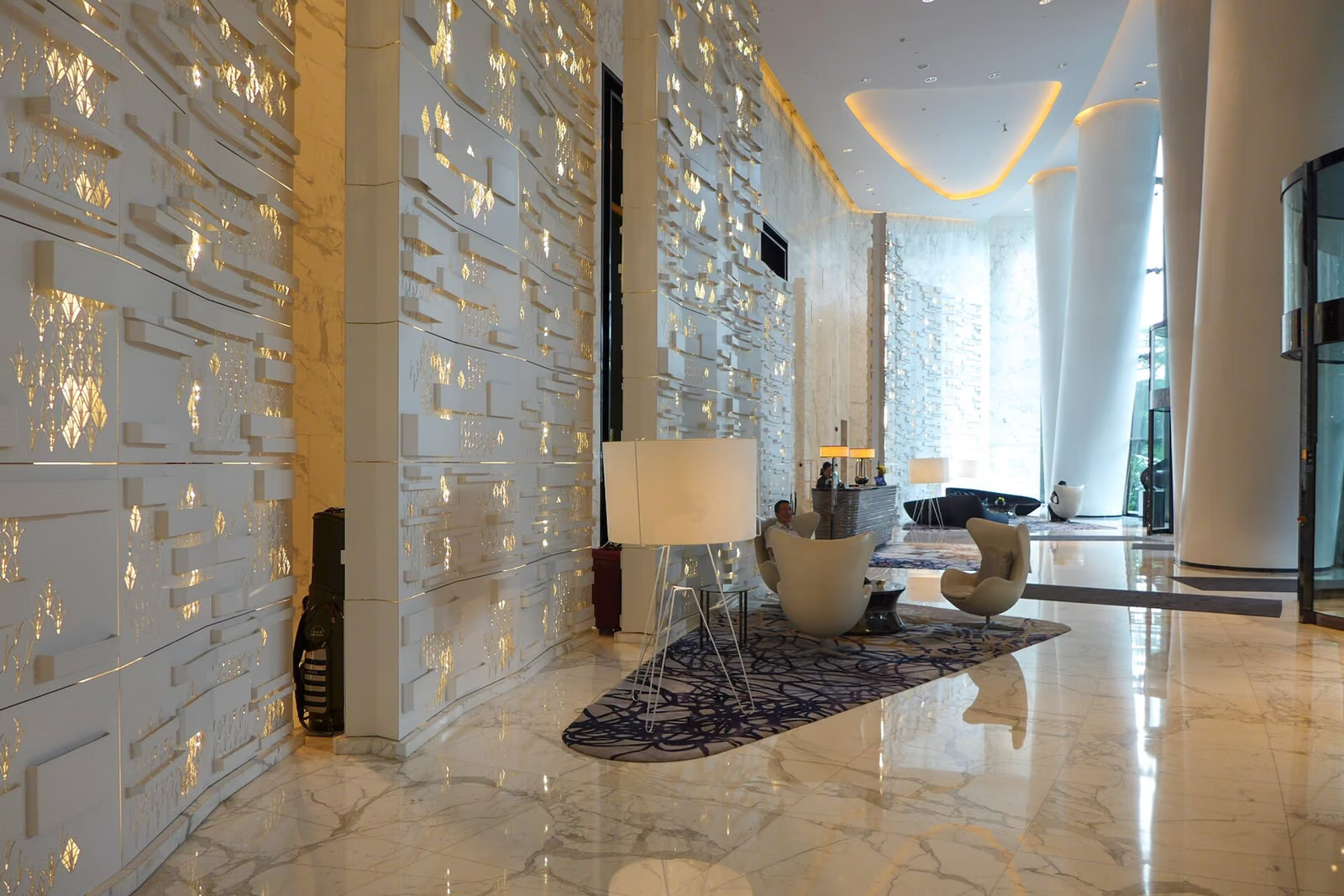
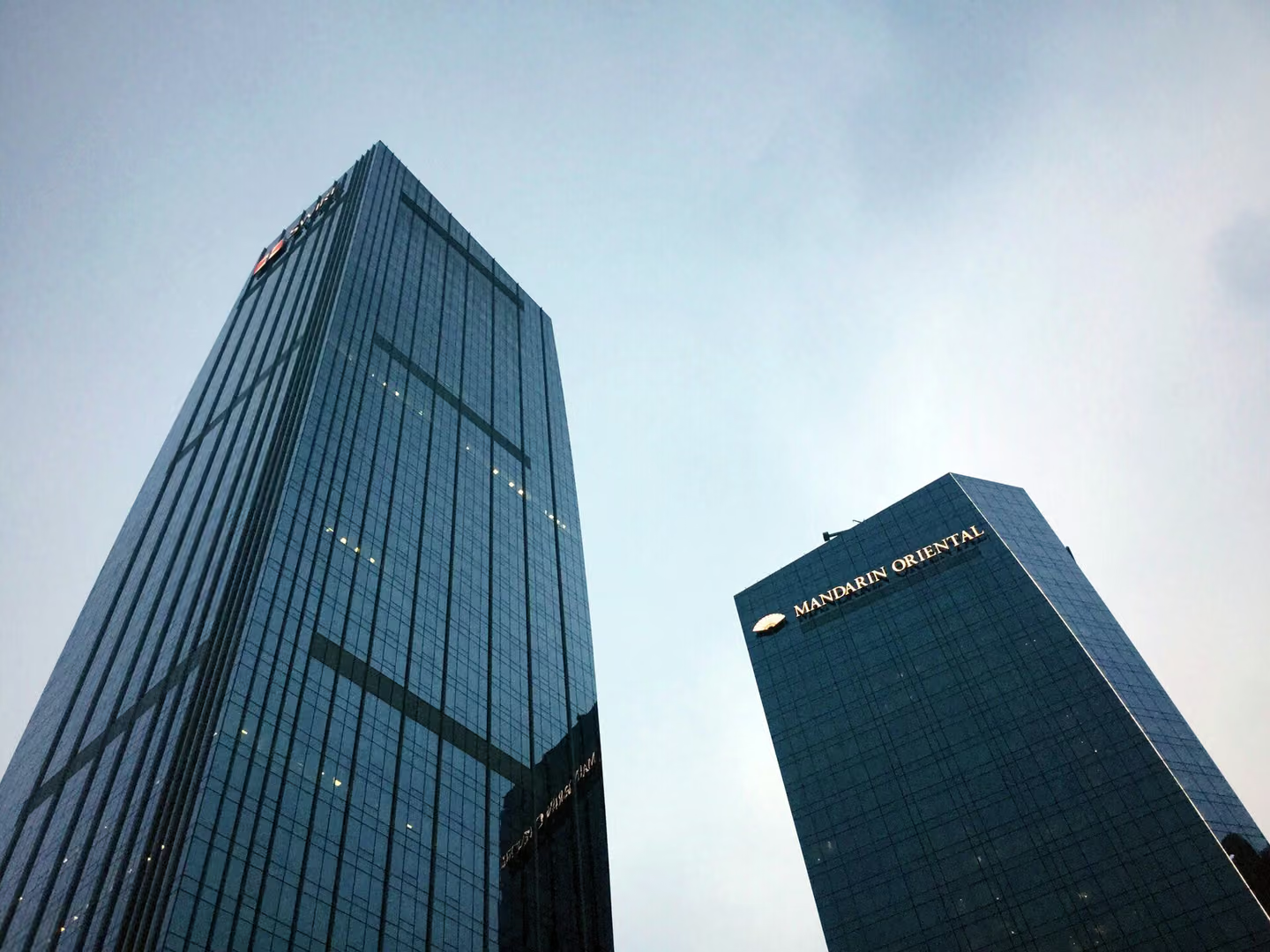
Price not confirmed — Michelin rates it ¥¥¥Fine-dining Cantonese on the third floor of the Mandarin Oriental, Tianhe, run by chef Huang Jinghui (known as Chef Fei). It was the first restaurant in Guangzhou to reach two Michelin stars, in 2019. The cooking stays Cantonese but borrows Japanese and Western touches, so it suits a visitor who wants a refined introduction rather than a teahouse scrum.
Order: Roasted Wenchang chicken with flaxseed (亚麻籽文昌鸡), Wood-roasted char siu pork belly (柴火叉烧) and 2 more
What to order, booking and allergens →
Lai Heen 丽轩
Price not confirmed — Michelin rates it ¥¥¥The Cantonese restaurant of the Ritz-Carlton Guangzhou in Zhujiang New Town, a star holder since the first Guangzhou guide in 2018. The room is split into semi-private dining spaces and is an expensive but comfortable introduction to hotel-grade Cantonese, with dim sum served at lunch.
Order: Poached sunflower chicken (葵花鸡 / 白切鸡), Steamed crab custard (蟹肉蒸蛋) and 2 more
What to order, booking and allergens →
Lei Garden (Yuexiu) 利苑酒家(越秀)
¥200–260 per person (Ctrip reports an average of about ¥230)≈ US$30–34Guangzhou branch of the Hong Kong group, on the fourth floor of Yi An Plaza. It is a reliable, traditional-style Cantonese dining room, popular with both locals and visitors, and is a comfortable place for soups and roast pork if you want a quiet table rather than a rowdy teahouse.
Order: Crispy roast pork belly (冰烧三层肉), Jellyfish head (珊瑚海蜇头) and 2 more
What to order, booking and allergens →
Xin Ji Seafood Restaurant 信记海鲜饭店
¥105–200 per person (a Chinese source gives from ¥105 per head)≈ US$16A decades-old dai pai dong-style seafood restaurant on the Pearl River waterfront, reported as the only Michelin-starred street-stall-style place in Guangzhou. Opened in the early 1980s, it keeps a fish tank at the door and Lingnan-style decor. It is a rare chance to eat a starred meal at mid-range prices, but be aware the place is busy and cooking to order can be slow.
Order: Eel braised with roast pork (红烧白鳗 / 烧腩焖白鳝), Swamp eel rice cooked to order (黄鳝饭) and 1 more
What to order, booking and allergens →
Dian Dou De 点都德
¥80–105 per person≈ US$12Guangzhou's most widely spread modern dim sum chain, with branches in Tianhe, Beijing Road and elsewhere. Unlike traditional teahouses, it serves dim sum all day with picture menus and phone ordering, so it is the easiest first yum cha for a foreigner. It is a chain, so it is a convenience pick rather than a heritage one.
Order: Red rice rolls with shrimp and fried dough (金莎红米肠), Shrimp dumplings (虾饺皇) and 2 more
What to order, booking and allergens →
Lian Xiang Lou 莲香楼
Price not confirmedA Liwan teahouse founded in 1889 by Chen Weiqing, the origin of the lotus-seed paste filling behind Cantonese mooncakes. It is a heritage name and a good place to order lotus seed paste buns. The famous Dishifu Road building was reported closed in November 2023, so check which branch is currently open.
Order: Lotus seed paste bun (莲蓉包), Lotus seed paste mooncake (莲蓉月饼) and 2 more
What to order, booking and allergens →
Zhu Zai Ji Shi Fu (Jiangnan Avenue) 珠仔记食府(江南大道)
Price not confirmed; Michelin lists it as budget (¥)A three-storey, informal Haizhu restaurant that grew out of a roadside stall and has served Cantonese roast meats for over two decades. The charcoal-roasted goose, using a large black-feathered goose from Qingyuan, is the draw. It is a local place with big tables and no frills.
Order: Charcoal roast goose (古法烧鹅), Zhu Ji steamed chicken (珠记蒸鸡) and 2 more
What to order, booking and allergens →
Yin Ji Changfen 银记肠粉
¥30–40 per person≈ US$4.47A long-established Guangzhou rice-roll and congee shop and a standard cheap breakfast stop. Rice rolls (肠粉) are made to order, and 生滚粥 is congee boiled fresh in the pot and served scalding, so let it cool. It is a cheap, quick meal, and a good counterweight to the pricier restaurants.
Order: Shrimp and beef rice rolls (鲜虾牛肉肠), Fish-slice congee (鱼片粥) and 2 more
What to order, booking and allergens →
See Guangzhou and Shenzhen
Other people's videos, on YouTube — we link, we don't host. Worth knowing: YouTube is blocked in mainland China, so watch these at home, or download them in the YouTube app before you fly.
- The GUANGZHOU Foods Tourists Always Miss | So Much More Than Dim SumA Guangzhou eating route that goes past the obvious dim sum into congee shops, roast meat counters and neighbourhood stalls, with prices named.Jamie · opens on YouTube · Auto-generated subtitles
- GUANGZHOU VLOG 🇨🇳 What to Eat & Where to Go 🤩 (a Singaporean's Guide to 广州)A Singaporean visitor eats her way through Guangzhou teahouses and night markets while covering the main sights and how to move between them.itsmeAQ · opens on YouTube · Auto-generated subtitles
- I spent 4 days in China’s Most Futuristic CityFour days in Shenzhen filmed around the tech malls, driverless transport and new-build districts that give the city its futuristic reputation.CoolVision · opens on YouTube · Auto-generated subtitles
- 广东深圳叹早茶,华强北猪脚饭,城中村番薯粥,阿星看无人机表演Fast-paced life and delicious food in Shenzhen, GuangdongA Mandarin food host does morning yum cha, pork-trotter rice in Huaqiangbei and congee in an urban village before watching the Shenzhen drone show, with hand-made English subtitles.阿星探店Chinese Food Tour · opens on YouTube · In Chinese, with English subtitles
Videos belong to the channels credited above. We have no affiliation with them and earn nothing from these links.