Discover Nanjing
Ming Xiaoling Mausoleum
明孝陵
The burial place of the first Ming emperor, who founded the dynasty here in 1368 - a UNESCO site whose Sacred Way curves between 600-year-old stone elephants, camels and lions rather than running straight.
The story
What makes this place special
Ming Xiaoling is the tomb of Zhu Yuanzhang, the Hongwu Emperor and founder of the Ming dynasty, at the southern foot of Purple Mountain. Construction began in 1381 in his own lifetime and was completed in 1405 under his son the Yongle Emperor, using around 100,000 labourers and guarded by 5,000 troops. It was the model for the later Ming tombs outside Beijing, which is the reason it matters: everything you recognise from the Beijing tombs was worked out here first. The site covers 116 hectares and was inscribed by UNESCO in 2000 as part of the Imperial Tombs of the Ming and Qing Dynasties.
What you’ll discover
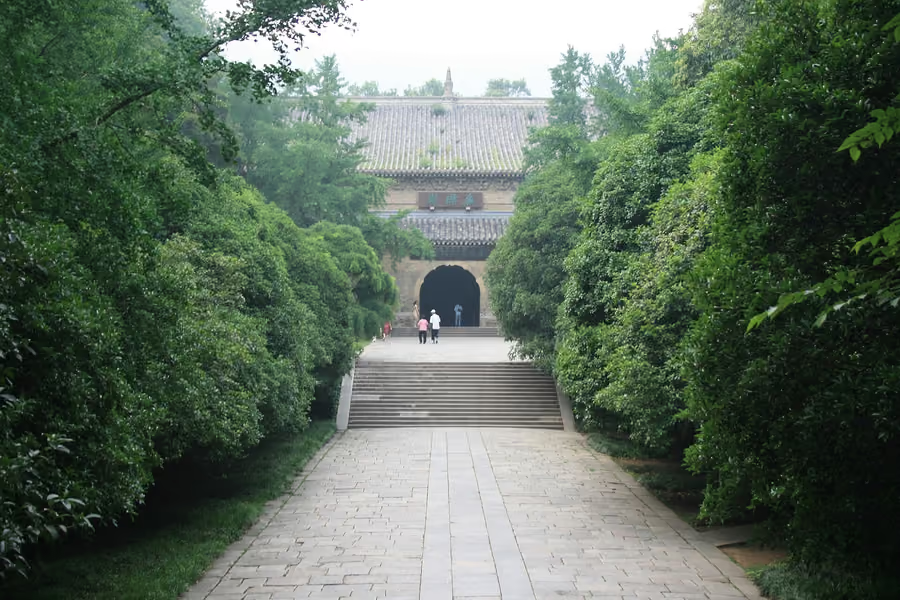
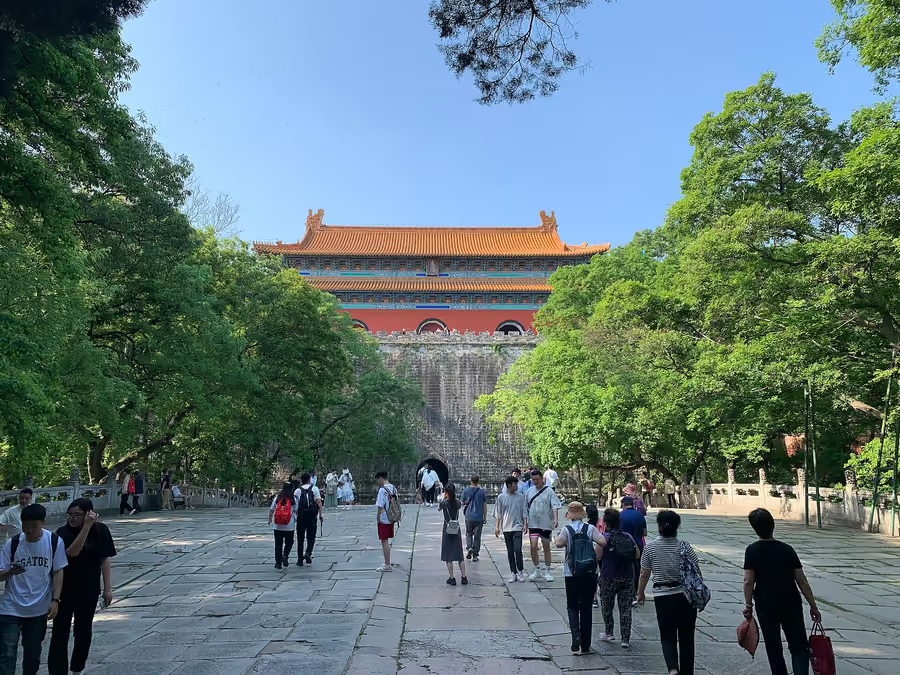
The approach is the best part. From the Great Golden Gates you reach the Square City pavilion, which holds a stone tortoise carrying the Yongle Emperor's great merit stele; its roof was destroyed in the Taiping war and rebuilt in 2007–09. Then comes about 1,800 metres of Sacred Way: first the Elephant Road, twelve pairs of stone animals — lions, xiezhi, camels, elephants, qilin, horses, each pair once standing and once kneeling — then the Wengzhong Road with four pairs of stone officials, civil and military. The route bends, uniquely for an imperial tomb, because Sun Quan's third-century tomb on Plum Blossom Mountain was in the way and Zhu Yuanzhang chose to go round it. Beyond the gates lies the Tablet Hall and the Ming Lou terrace, with the emperor and empress under an unexcavated earth mound behind it.
A little local insight
Good to know before you go
- The Sacred Way has its own entrance, separate from the tomb enclosure, and the two are a kilometre or more apart. Enter at the Sacred Way end and walk towards the tomb, not the other way round, or you will see the stone animals last and tired.
- The bend in the Sacred Way is the detail that makes this tomb unlike any other: an emperor diverted his own funeral road rather than disturb a king who died a thousand years before him. Look at the map and you can see it.
- Late November is the reason to time a visit. The Sacred Way runs under old plane and ginkgo trees and the colour here is the best in Nanjing.
- Nothing has been excavated. There is no underground chamber to go into — the mound behind Ming Lou is intact, which disappoints people expecting a tomb interior.
- Use the scenic-area shuttle between here, the Sun Yat-sen Mausoleum and Linggu Temple. They are all one ticket area and much further apart on foot than the map suggests.
When to come
Late November for the trees, or early spring. Early morning either way — the Sacred Way is at its best empty and side-lit.
Getting around
Partly manageable. The Sacred Way itself is long but broadly level, on paved and stone surfaces with some uneven flagstones, and can be done in a wheelchair with a pusher — it is the best part of the site and the most accessible. The tomb enclosure is harder: there are steps up through the gates and a substantial stepped climb onto the Ming Lou terrace, with no lift. A bad knee can manage the Sacred Way easily and should expect to stop below Ming Lou.
Worth knowing before you go
Enter before 06:30 and it is free - a trick locals use for the Sacred Way in morning mist.
Compare established providers
Check live tours and tickets
Search for Ming Xiaoling Mausoleum in Nanjing. Prices, availability, payment and confirmation are handled by the booking provider.
China Travel Select does not take payment or create the reservation. Confirm the exact name, dates, inclusions and cancellation rules on the provider’s page.
Take a closer look
Maps, videos & more
Prices and hours change. These are the places to check on the day.