Your destination guide 南京
Nanjing
Six dynasties of capital, an hour from Shanghai
Capital of China more than once, and it shows: Ming tombs, the longest surviving city wall in the world, and a memorial museum that is the hardest and most necessary stop in eastern China. An hour from Shanghai, and far less visited than it should be.
Getting there
Lukou airport (NKG) connects on Metro Line S1, about 53 minutes to Nanjing South. Nanjing South is one of China's largest rail hubs — Shanghai Hongqiao is about an hour away with departures every few minutes, Beijing South about 3.5 hours. Nanjing station on the north side serves some conventional trains and sits on Metro Lines 1 and 3.
When to go
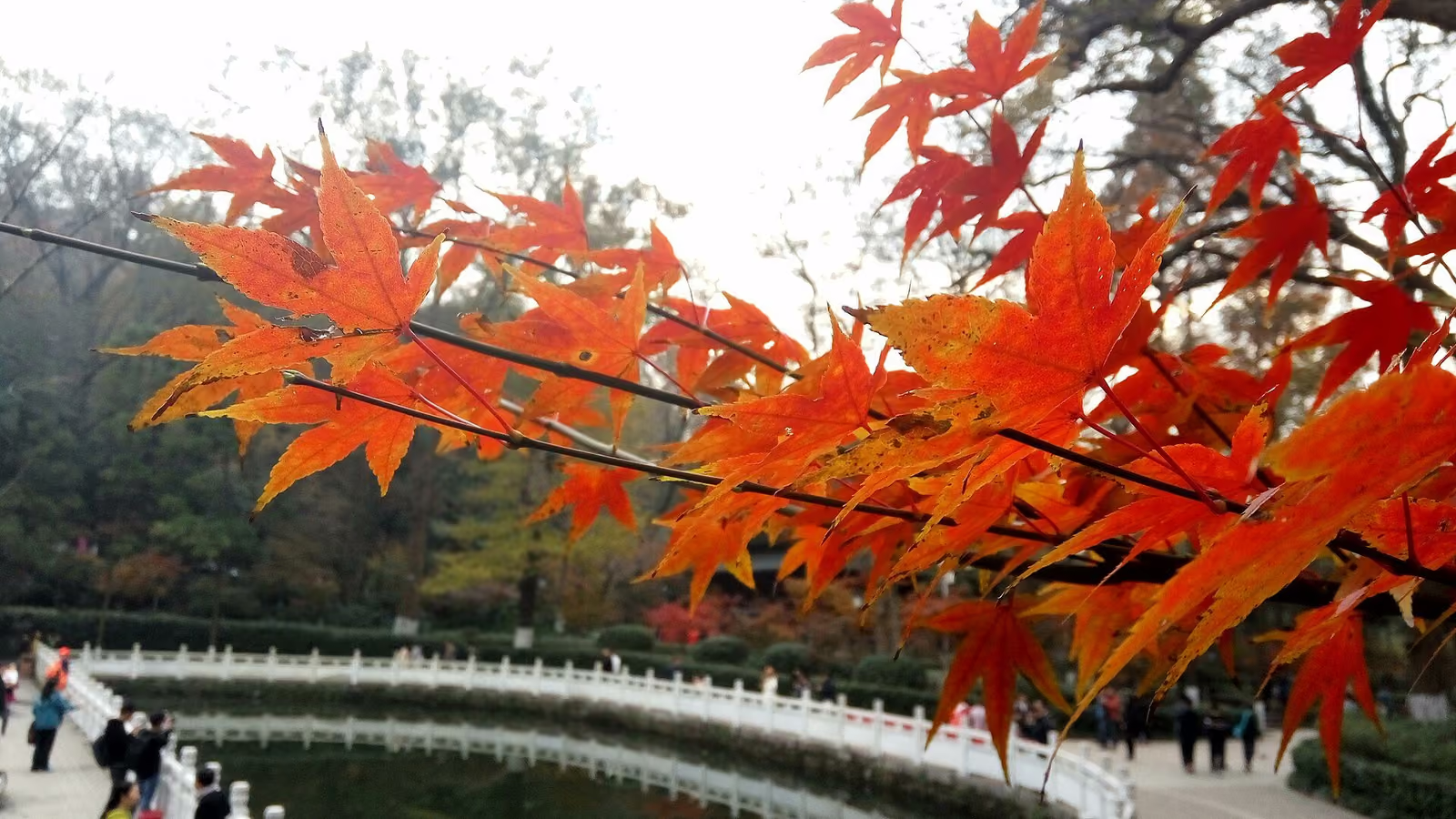
Late March to early May for the blossom, and October to November for the maples at Qixia and Zhongshan. July and August are one of China's 'furnace' summers.
How long: 3–5 days
Give it 3 days for the headline sights, or up to 5 to see it properly and eat your way around.
Three covers the Massacre Memorial, Sun Yat-sen's mausoleum and the Confucius Temple quarter. Five adds the Ming city wall walk, Qixia Mountain and the Presidential Palace, with time for salted duck and the Qinhuai snack houses.
Nanjing: six capitals, one wall, and a memorial you need to prepare for
An hour and a quarter from Shanghai sits a city that was China's capital under six dynasties, with the country's most complete city wall and one of its most difficult museums. This guide gives a three-day shape, says plainly what the Massacre Memorial contains, and explains how locals actually eat salted duck.
A little forward planning
Book these before you go
Timed, passport-linked and capable of selling out. Full detail on the reservation radar.
Memorial Hall of the Victims of the Nanjing Massacre 侵华日军南京大屠杀遇难同胞纪念馆
No English bookingOpens 7 days ahead at 08:00 Beijing · closed Monday · high sell-out risk
Sun Yat-sen Mausoleum 中山陵
No English bookingOpens 7 days ahead · closed Monday · medium sell-out risk
Make a few good memories
What to see in Nanjing
Researched largely from Chinese-language sources, so it goes beyond the usual shortlist. Dollar figures are approximate, at the rate on 2026-10-08.
中山陵
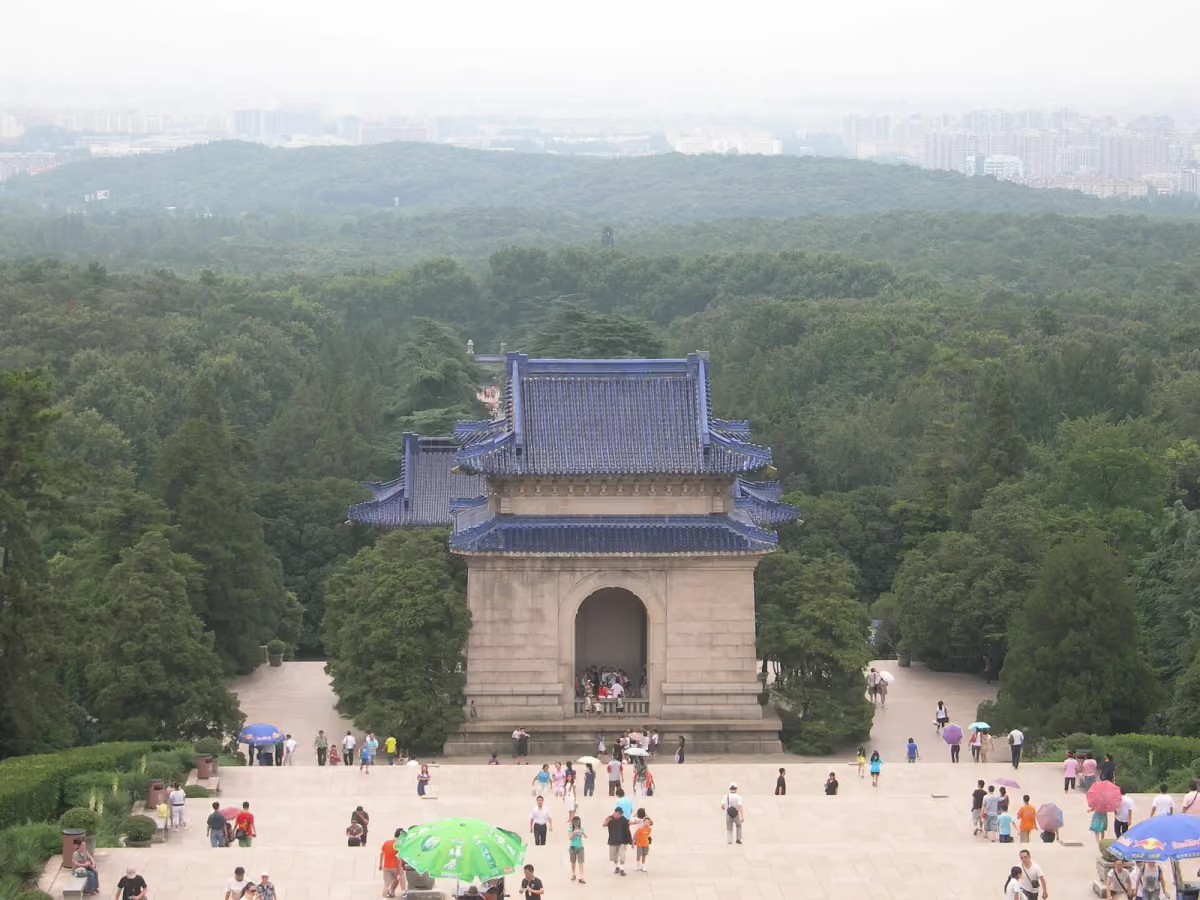
The tomb of the founder of modern China, reached by a 392-step blue-and-white granite stairway up Purple Mountain. Free, monumental, and the single most visited sight in the city.
Free
Opening hours, booking and how to get there →
明孝陵
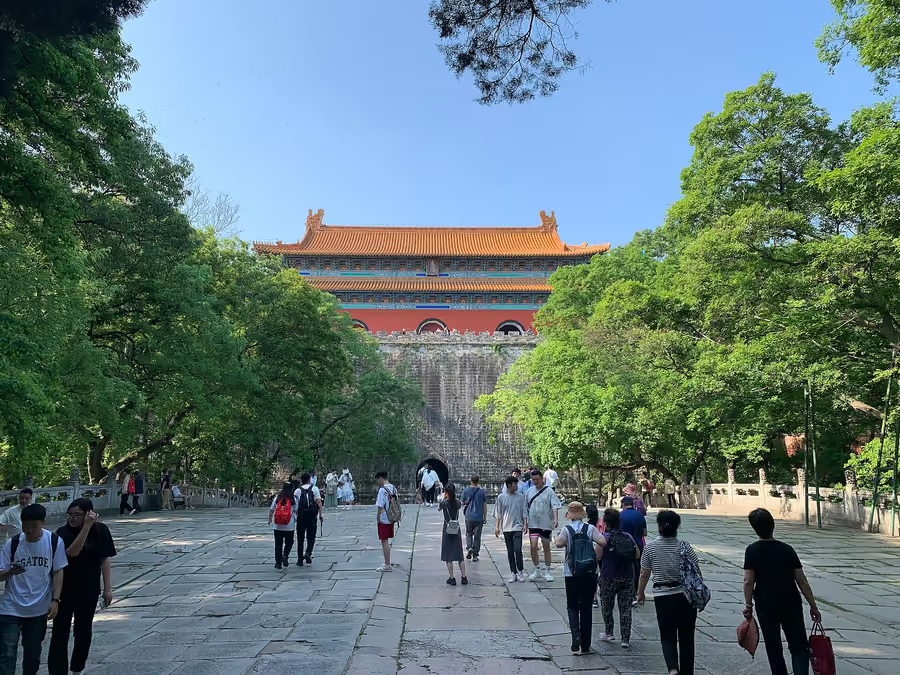
The burial place of the first Ming emperor, who founded the dynasty here in 1368 - a UNESCO site whose Sacred Way curves between 600-year-old stone elephants, camels and lions rather than running straight.
¥70 (Zhongshan combination ticket ¥100 covers Ming Xiaoling, Meiling Palace, the Music Platform and Linggu Temple)
≈ US$10–15Opening hours, booking and how to get there →
侵华日军南京大屠杀遇难同胞纪念馆
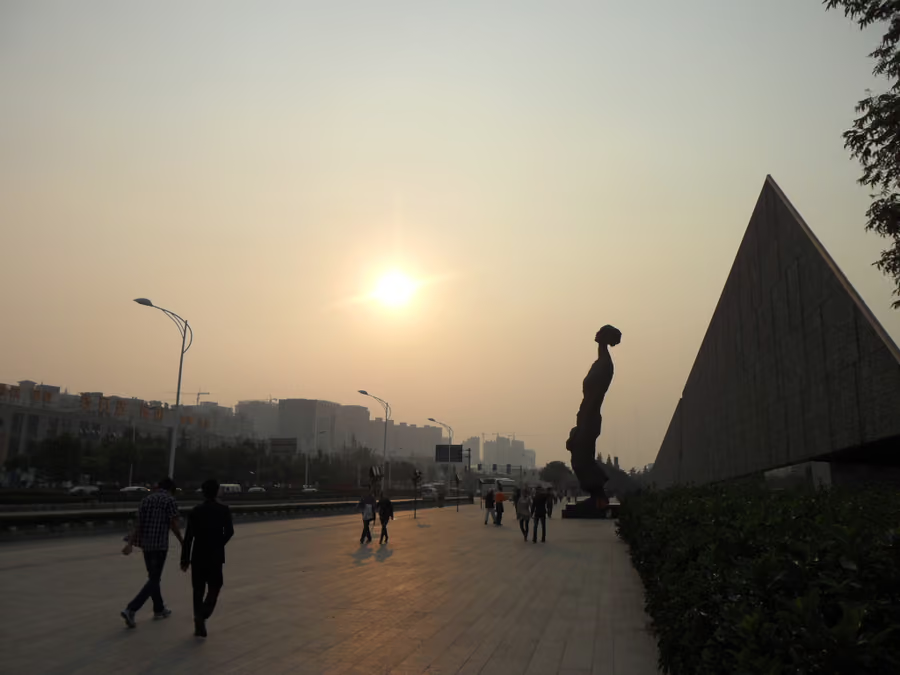
Built over one of the mass burial pits, this is the central Chinese memorial to the killings of 1937-38, with excavated remains, survivor testimony and a long archive wall. Sombre and essential to understanding the city.
Free
Opening hours, booking and how to get there →
夫子庙秦淮风光带
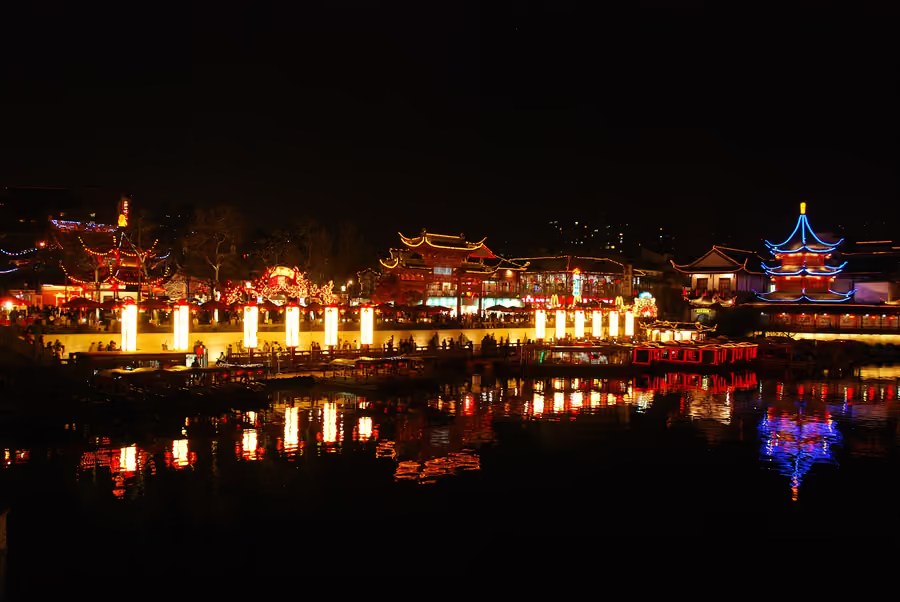
The restored heart of old Nanjing: a Confucian temple and imperial examination complex beside a canal lined with lantern-hung Ming-style houses. Touristy by day, genuinely beautiful lit up at night.
Street area free; Confucius Temple complex ¥30; Qinhuai pleasure boats charged separately
≈ US$4.47Opening hours, booking and how to get there →
南京城墙·中华门
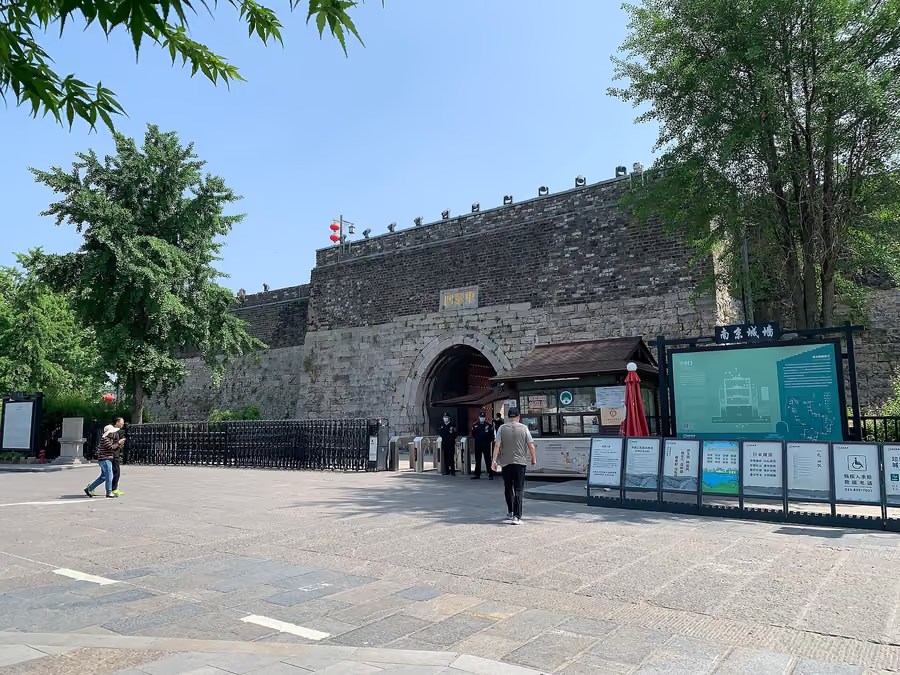
Nanjing kept more of its Ming city wall than any other Chinese city, and Zhonghua Gate is the largest surviving city gate in China - three successive barbicans, two horse ramps and 27 chambers that hid 3,000 soldiers.
¥50 for the Zhonghua Gate section (Dongshuiguan to Jiqingmen)
≈ US$7.45Opening hours, booking and how to get there →
总统府
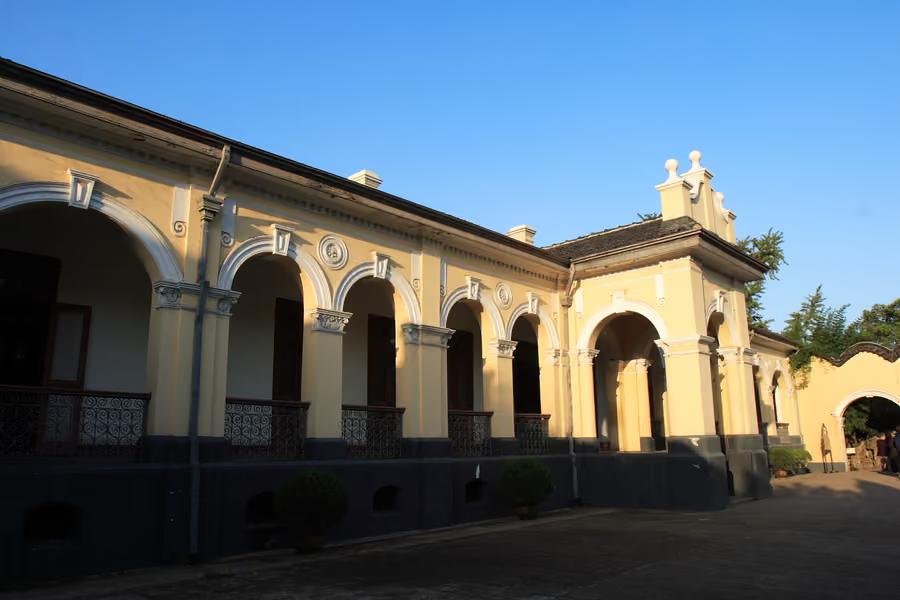
A single walled compound that was a Ming princely mansion, the Taiping rebels' heavenly palace, Sun Yat-sen's provisional presidency and then Chiang Kai-shek's seat of government. Republican-era China in one visit.
¥35
≈ US$5.21Opening hours, booking and how to get there →
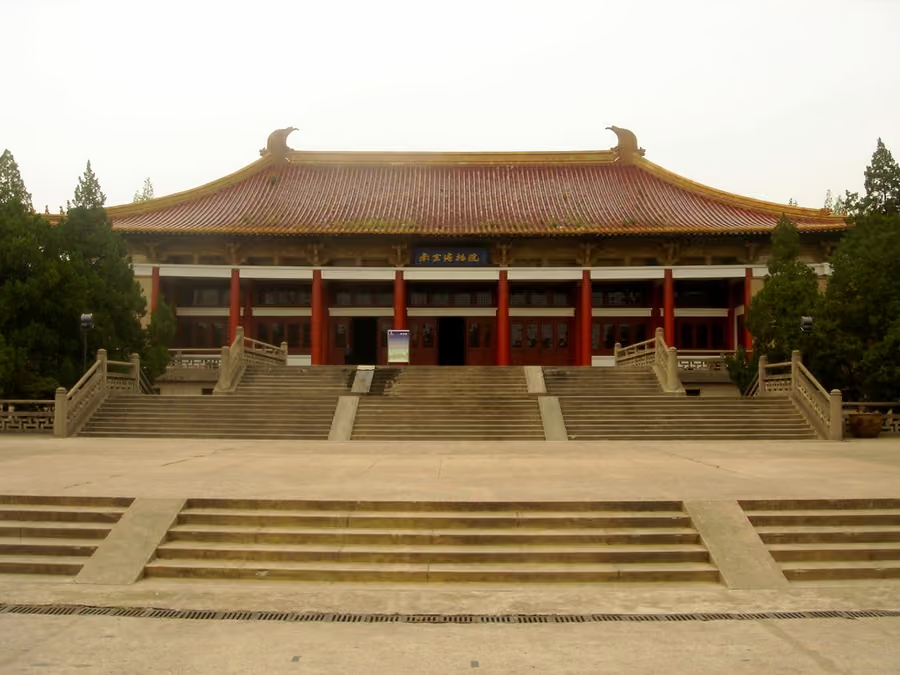
南京博物院
One of China's three biggest museums and arguably the best-curated, with a Jiangsu-wide collection plus a full reconstructed Republic-era street inside the building that you can walk down.
Free (special exhibitions ticketed)
Opening hours, booking and how to get there →
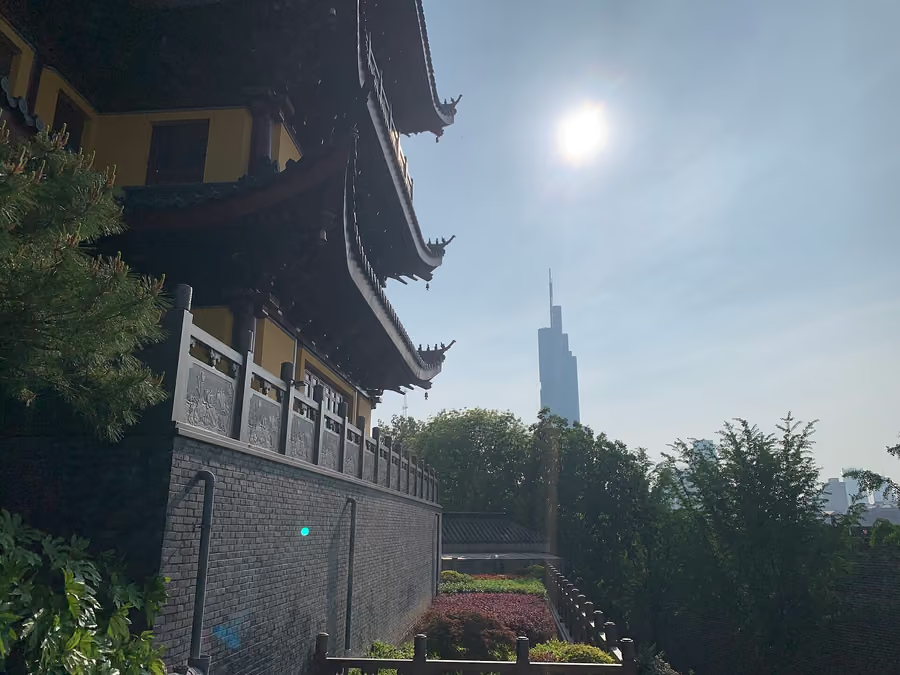
鸡鸣寺
A small hillside nunnery founded in the 6th century, pressed right up against the Ming city wall and Xuanwu Lake. Nanjing's most famous cherry-blossom street runs along its approach road.
¥10 (includes three sticks of incense)
≈ US$1.49Opening hours, booking and how to get there →
栖霞寺与栖霞山
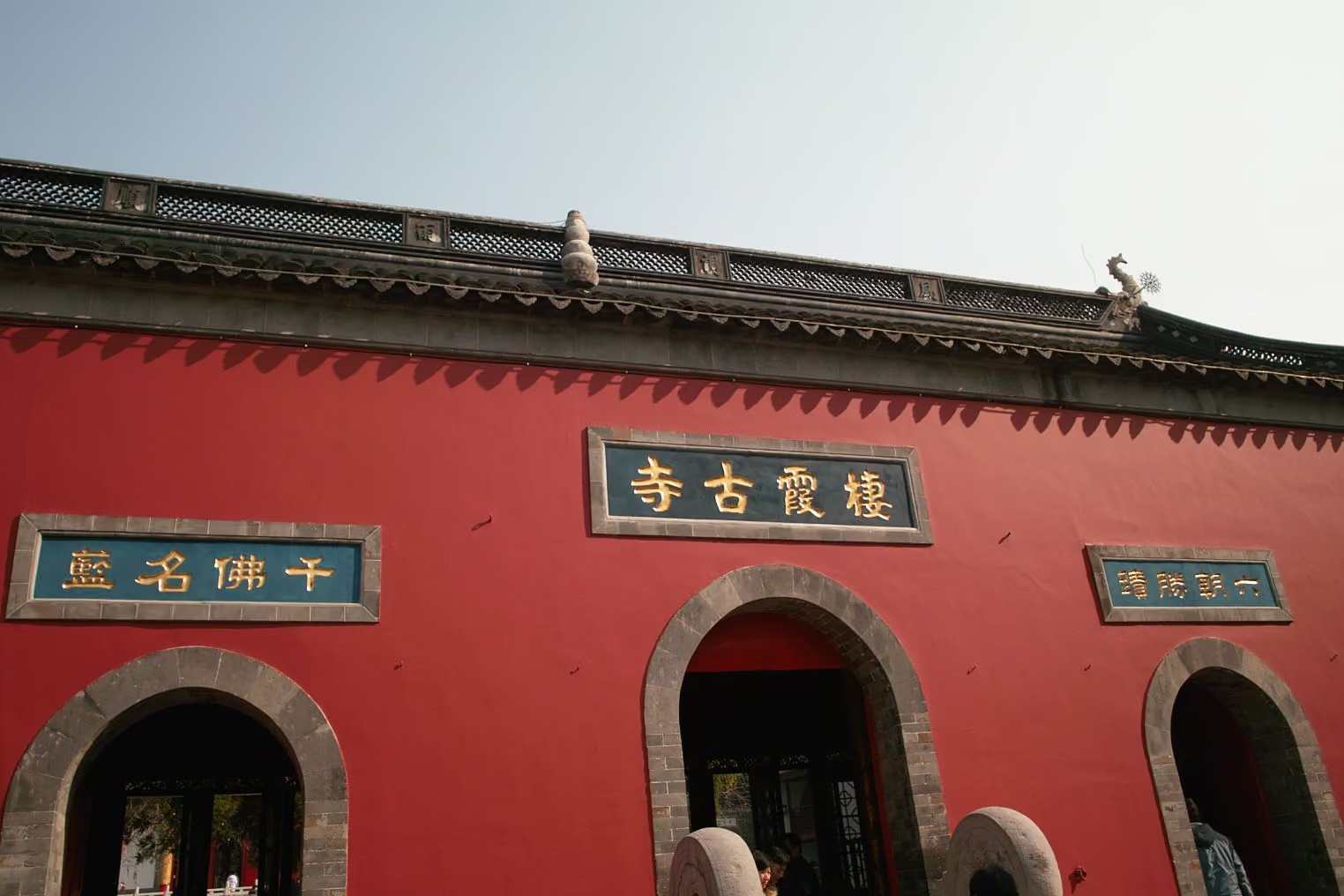
A 5th-century monastery north-east of the city whose cliff face holds the Thousand Buddha Caves, the oldest surviving stone carving of its kind in southern China. The mountain behind it is Nanjing's great autumn maple site.
Separate mountain scenic-area and temple tickets, higher in the autumn maple season — not confirmed
Opening hours, booking and how to get there →
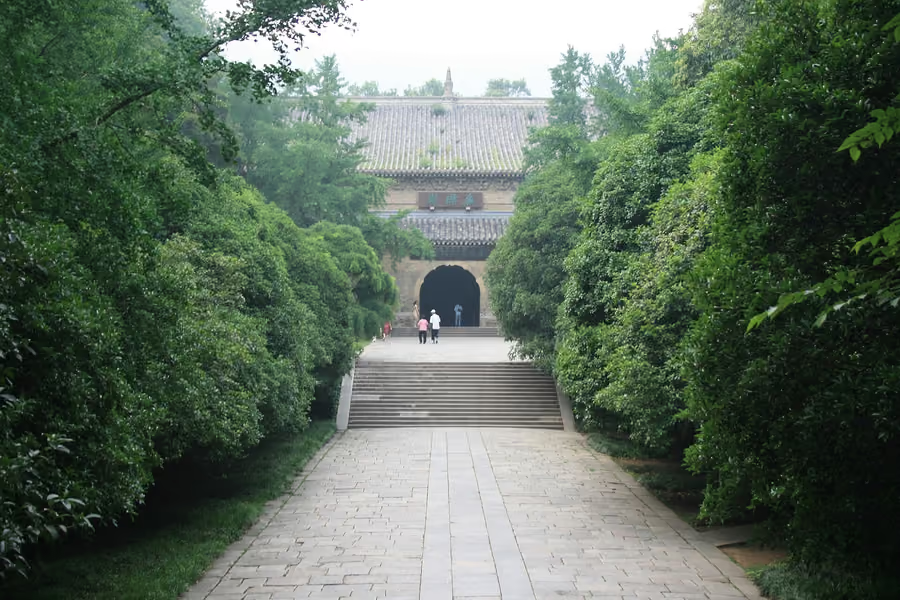
灵谷寺与无梁殿
Inside the Zhongshan scenic area, a monastery whose 1381 Beamless Hall is built entirely of brick vaulting with no timber at all, later made a memorial to Republican war dead. Quiet compared with the mausoleum up the road.
Covered by the ¥100 Zhongshan combination ticket; separate entry around ¥35 — not confirmed
≈ US$5.21–15Opening hours, booking and how to get there →
What to eat in Nanjing
Nanjing sits on the dividing line between rice-eating south and wheat-eating north, and eats both: rice and rice-flour vermicelli in soups, but also noodles, flatbreads, potstickers and soup dumplings. The organising obsession is duck - the local duck trade association reckoned the city was eating over a hundred million ducks a year as far back as 2014 - and duck turns up as cold sliced meat, as roast, as blood curd, as fat in the pastry and as stock in the soup. Snacks (小吃) rather than big dishes are the local strength, so plan to graze: a bowl here, a plate of potstickers there, especially around the Confucius Temple (夫子庙) and Laomendong. Expect mobile payment everywhere and very little English outside hotel restaurants.
Nanjing salted duck
盐水鸭Yánshuǐ yā
The city's defining dish. A duck is dry-rubbed with hot salt and spices, rested, then gently poached in a seasoned brine and hung to cool, so it is served cold and sliced through the bone. Autumn ducks, made when the osmanthus is flowering, are called 'osmanthus duck' (桂花鸭) and are considered the best. Buy a quarter or half from a cooked-meat counter and eat it as a starter or with rice.
Tastes like: Cool, firm, gently salty meat with a faintly sweet, perfumed finish and soft translucent skin; not greasy at all.
Not on the menu but in it: Nothing surprising - salt, Sichuan pepper, ginger, star anise and rice wine - but note it contains no soy sauce and is deliberately pale, which confuses people expecting a dark roast duck.
Where to eat it
- Plum Garden · Michelin Selected 2026 · ¥¥¥ on the MICHELIN price scale (upper-middle band); exact per-head price unconfirmed · Gulou district, 2F Jinling Hotel, 2 Hanzhong Road.
Duck blood and vermicelli soup
鸭血粉丝汤Yāxuè fěnsī tāng
Sweet potato glass noodles in a long-simmered old-duck broth, topped with cubes of set duck blood, puffed tofu that soaks up the stock, and usually duck gizzard, liver and intestine, finished with dried shrimp, coriander and chilli oil. The duck blood is cooked and set into a soft, dark, liver-coloured curd - it is not raw and has almost no taste of blood. Stir, then eat with the spoon and chopsticks together.
Tastes like: Light, clean duck broth; the blood curd is soft and faintly metallic-sweet, somewhere between silken tofu and chicken liver.
Not on the menu but in it: Dried shrimp is almost always in the broth or the topping. The 'full set' (全套) brings intestine and liver whether or not the menu says so.
Where to eat it
- Xiao Pan Ji Ya Xie Fen Si Tang · Michelin Bib Gourmand 2026 · ¥ on the MICHELIN price scale (lowest band); exact figure unconfirmed · Qinhuai district, 1F Longtai Building, 198 Zhongshan East Road, central and walkable from Xinjiekou.
- Zhi He Lao Ya Fen Si Tang · Michelin Bib Gourmand 2026 · ¥ on the MICHELIN price scale (lowest band); exact figure unconfirmed · Qinhuai district, 51-53 Changbai Street.
- Hao Po Tang Bao · Michelin Bib Gourmand 2026 · ¥ on the MICHELIN price scale (lowest band); exact figure unconfirmed · Xuanwu district, 35-2 Taiping North Road.
Nanjing roast duck
南京烤鸭Nánjīng kǎoyā
Nothing like the Beijing version: no pancakes, no carving trolley. The duck is roasted, chopped into bone-in pieces and sold from a counter, then doused in a warm spiced jus (卤汁) of star anise, cassia and ginger that is the whole point of the dish. If you are taking it away, ask for the jus in a separate bag or the skin goes soggy.
Tastes like: Savoury and aromatic rather than sweet, with a brothy, spiced sauce soaking into the meat.
Not on the menu but in it: The jus is built on soy and the roasting drippings and is sometimes thickened; it contains a good deal of sugar in some shops.
Where to eat it
- Xiao Pan Ji Ya Xie Fen Si Tang · Michelin Bib Gourmand 2026 · ¥ on the MICHELIN price scale (lowest band); exact figure unconfirmed · Qinhuai district, 1F Longtai Building, 198 Zhongshan East Road, central and walkable from Xinjiekou.
Duck-fat sesame flatbread
鸭油烧饼Yāyóu shāobǐng
A layered wheat flatbread made with rendered duck fat instead of oil, stuck with sesame seeds and baked against the wall of a drum oven until it puffs and flakes. It comes plain, savoury with spring onion, or sweet with sugar. Eaten in the hand, usually alongside a bowl of duck blood soup.
Tastes like: Shattering, buttery-rich layers with toasted sesame; much more savoury than it looks.
Not on the menu but in it: The fat is duck - this bread is not vegetarian, which catches a lot of people out because it looks like a plain sesame bun.
Where to eat it
- Zhi He Lao Ya Fen Si Tang · Michelin Bib Gourmand 2026 · ¥ on the MICHELIN price scale (lowest band); exact figure unconfirmed · Qinhuai district, 51-53 Changbai Street.
Halal beef potstickers
牛肉锅贴Niúròu guōtiē
Long crescent dumplings of beef and spring onion, fried in a flat pan until the base is glassy and deep brown while the top stays soft. They are a Hui Muslim speciality of the Qijiawan and Pingshijie quarters, where Nanjing's Hui community has lived for centuries. Bite a corner first and let the steam out - the filling releases a mouthful of scalding beef juice.
Tastes like: Crunchy base, soft top, juicy peppery beef inside.
Not on the menu but in it: These are halal, so no pork - but check the 清真 sign on the shop if that matters to you. The vinegar on the table is dark Zhenjiang vinegar, which is sweeter and more malty than Western vinegar.
Where to eat it
- Li Ji Qing Zhen Guan · Michelin Bib Gourmand 2026 · ¥ on the MICHELIN price scale (lowest band); exact figure unconfirmed · Qinhuai district, 1 Dading Lane, near the Confucius Temple / Qinhuai River area.
Soup dumplings
汤包Tāngbāo
Thin-skinned steamed buns holding pork and a mouthful of jellied stock that melts into soup as they cook. Nanjing's own version at Jiming is bigger than the Shanghai kind and drunk through a straw, and the city also makes a chrysanthemum-leaf variant (菊叶汤包) with a herbal, slightly bitter green note. Set it on your spoon, nip the side, drink the soup, then eat the rest.
Tastes like: Sweet-savoury pork broth with a tender wrapper; the chrysanthemum-leaf version is grassy and faintly medicinal.
Not on the menu but in it: The soup is set with pork-skin aspic, so it is gelatine-rich; crab-roe versions in autumn add shellfish without always saying so in English.
Where to eat it
- Li Ji Qing Zhen Guan · Michelin Bib Gourmand 2026 · ¥ on the MICHELIN price scale (lowest band); exact figure unconfirmed · Qinhuai district, 1 Dading Lane, near the Confucius Temple / Qinhuai River area.
- Hao Po Tang Bao · Michelin Bib Gourmand 2026 · ¥ on the MICHELIN price scale (lowest band); exact figure unconfirmed · Xuanwu district, 35-2 Taiping North Road.
Pork skin noodles
皮肚面Pídù miàn
The Nanjing worker's lunch: wheat noodles in a big bowl of pork-bone broth loaded with puffed, deep-fried pork skin that has been rehydrated so it is spongy and soaks up stock, plus pork liver, tomato, greens, wood ear and whatever else you tick on the order sheet. It is a full meal, not a snack, and you build your own bowl from a list of add-ins.
Tastes like: Rich and peppery, with the pork skin turning into savoury sponge; the tomato version is tangy.
Not on the menu but in it: Despite all the vegetables on the menu, the broth is pork-bone and lard-based - not vegetarian under any configuration.
Watch videos of Pork skin noodles →Lion's head meatball
狮子头Shīzi tóu
A single enormous pork meatball, hand-chopped rather than minced so the texture stays loose, simmered for hours in clear stock until it barely holds together. In autumn it is made with crab meat and roe (蟹粉狮子头). Eat it with a spoon - it should collapse without a knife.
Tastes like: Extremely soft, juicy and mild, almost custardy; the broth around it is clean rather than rich.
Not on the menu but in it: The meat is about 30 percent fat by design, which is why it is so tender. Crab versions are seasonal and obvious by price.
Where to eat it
- Plum Garden · Michelin Selected 2026 · ¥¥¥ on the MICHELIN price scale (upper-middle band); exact per-head price unconfirmed · Gulou district, 2F Jinling Hotel, 2 Hanzhong Road.
Meiling congee
美龄粥Měilíng zhōu
A pale, creamy porridge of rice and glutinous rice cooked in soy milk with Chinese yam, often with lily bulb or goji berries, named after Song Meiling, Chiang Kai-shek's wife, who is said to have been fed it in Nanjing. Served in a small bowl as a counterweight to fried and roasted dishes.
Tastes like: Silky, barely sweet and milky, with a soft yam thickness.
Not on the menu but in it: The creaminess comes from soy milk, not dairy - good news for the lactose-intolerant, bad news if you avoid soy. Usually sweetened with rock sugar.
Watch videos of Meiling congee →Osmanthus taro in sweet soup
桂花糖芋苗Guìhuā táng yùmiáo
Small taro corms simmered with brown sugar and a little alkali until they turn pink-purple and the syrup thickens to a glossy gel, then scattered with sugared osmanthus blossom. Served warm in autumn and winter, cool in summer, from street stalls and dessert counters.
Tastes like: Sticky-sweet and faintly floral, with the taro soft and powdery inside.
Not on the menu but in it: The thickener is usually lotus-root or sweet potato starch; the pink colour comes from an alkali reaction, not dye.
Watch videos of Osmanthus taro in sweet soup →Red bean soup with rice balls
赤豆元宵Chìdòu yuánxiāo
A thick red bean soup, sweetened and thickened with starch, full of tiny unfilled glutinous rice balls and scented with osmanthus. Served warm in a bowl at snack counters around the Confucius Temple; Lianhu is the name locals give for the benchmark version.
Tastes like: Sweet, thick and slightly gluey, with chewy little rice pearls.
Not on the menu but in it: Sometimes finished with a spoon of lard in traditional shops, which makes it richer - worth asking if you are vegetarian.
Where to eat it
- Fang Po · Michelin Bib Gourmand 2026 · ¥ on the MICHELIN price scale (lowest band); a few yuan per item, exact figures unconfirmed · Qinhuai district, 50 Wangfu Street, in the Confucius Temple / Qinhuai snack area.
Plum blossom cake
梅花糕Méihuā gāo
Batter is poured into a flower-shaped iron mould over charcoal, filled with red bean paste or custard, topped with candied fruit and small rice balls, and baked until the outside is crisp and the inside is molten. It comes out looking like a flower on a stick and is eaten immediately, standing up.
Tastes like: Crisp, sweet shell over a hot soft centre.
Not on the menu but in it: Fillings vary by stall and may include custard (egg and milk) rather than bean paste.
Watch videos of Plum blossom cake →Stinky tofu
臭豆腐Chòu dòufu
Tofu fermented in a brine of vegetables and sometimes shrimp until it smells overpowering, then deep-fried until the outside crackles and the inside turns to custard, and served in a paper bowl with sweet-and-spicy sauce and pickled vegetables. The Nanjing version is pale-fried rather than the black Changsha kind.
Tastes like: The smell is far stronger than the taste - fried, it is savoury, mild and slightly cheesy inside.
Not on the menu but in it: The fermenting brine traditionally contains dried shrimp or fish, so stinky tofu is not reliably vegetarian even though it is made of soybeans.
Where to eat it
- Pin Ning Fu · Michelin 1 star 2026 · ¥¥ on the MICHELIN price scale (moderate), unusually low for a starred restaurant; exact per-head price unconfirmed · Xuanwu district, 39F The Ritz-Carlton, 18 Zhongshan Road.
- Qiang Ye Fan Dian (Changbai Street) · Michelin Bib Gourmand 2026 · ¥¥ on the MICHELIN price scale (moderate); exact per-head price unconfirmed · Qinhuai district, 636 Changbai Street.
Black glutinous rice ball
乌饭团Wūfàn tuán
Glutinous rice dyed slate-black by soaking in the juice of Vaccinium bracteatum leaves, pressed around a filling of fried dough stick, pickled vegetable, sugar or floss, and squeezed into a dense ball you eat in the hand. It is a Nanjing breakfast institution and the signature of Fang Po's shop, which sells out well before mid-morning.
Tastes like: Faintly herbal, nutty rice with a crunchy fried-dough core; chewy and very filling.
Not on the menu but in it: The black colour is a plant dye, not squid ink or charcoal. Savoury versions contain pork floss; the fried dough inside is wheat.
Where to eat it
- Fang Po · Michelin Bib Gourmand 2026 · ¥ on the MICHELIN price scale (lowest band); a few yuan per item, exact figures unconfirmed · Qinhuai district, 50 Wangfu Street, in the Confucius Temple / Qinhuai snack area.
Where to eat in Nanjing
- Dianping (大众点评) — the real ratings. Chinese only, but photos, prices and a 4.5+ score survive translation. Its 必吃榜 "Must-Eat" list is the mainstream benchmark.
- Black Pearl (黑珍珠) — China's own fine-dining guide, published annually by Meituan and taken more seriously domestically than Michelin.
- Michelin covers only a few Chinese cities, so its absence means nothing outside them.
- Xiaohongshu (小红书) — what is actually busy this month, rather than this year.
Han Fuxing 韩复兴
¥50 per person≈ US$7.45A duck shop founded in 1866 and the most traditional name for Nanjing salted duck - thin-fatted, tender, with a spiced sweetness that lingers. This is a counter, not a restaurant: you buy duck by the quarter, half or whole, cut in front of you.
What to order, booking and allergens →
Zhang Yun Pressed Duck 章云板鸭
¥34 per person≈ US$5.07A long-standing duck counter in the Pingshijie area near the Confucius Temple, selling salted duck and the drier pressed duck (板鸭) that travels well as a gift. Cheap, quick and a good first taste of Nanjing duck if you are already sightseeing at Fuzimiao.
What to order, booking and allergens →
Jiang Youji 蒋有记
¥25–45≈ US$3.72A century-old halal shop that is the reference point for Nanjing beef potstickers, plus beef wonton soup. Five long, crisp-bottomed potstickers for about ¥25 is the standard order.
What to order, booking and allergens →
Fang Po 芳婆糕团店
¥ on the MICHELIN price scale (lowest band); a few yuan per item, exact figures unconfirmedA no-frills counter on Wangfu Street in Qinhuai that has been selling Nanjing breakfast snacks since the 1970s. The thing to queue for is the black rice ball: black glutinous rice coloured with bilberry leaves, wrapped around a meat filling, pressed into a fist-sized lump and handed over in a plastic bag. It is the most purely local thing you can eat in Nanjing for a few yuan, and English-language guides almost never mention it.
Order: Black glutinous rice ball with meat filling (乌饭团), Baby taro in osmanthus sweet soup (桂花小芋头) and 2 more
What to order, booking and allergens →
Jiming Soup Dumplings 鸡鸣汤包
¥25–50≈ US$3.72The local soup-dumpling brand, named after Jiming Temple, doing a larger, soupier bun than the Shanghai style, including the Nanjing chrysanthemum-leaf version. A proper sit-down breakfast rather than a street snack.
What to order, booking and allergens →
Nanjing Impressions 南京大牌档
¥80–140≈ US$12A theatrical recreation of an old Jiangnan market hall - lanterns, wooden galleries, staff in period dress, live storytelling - serving the full Nanjing snack repertoire in one place: Meiling congee, roast duck, duck-fat buns, lion's head, osmanthus taro. It is a tourist restaurant and locals say so, but the cooking is sound and it is by far the easiest way to try eight Nanjing dishes in one sitting.
What to order, booking and allergens →
Ma Xiangxing 马祥兴
¥65–120≈ US$9.68A Hui Muslim restaurant trading since 1845 and one of the oldest in the city, known for its 'four famous dishes' including the duck-liver dish 美人肝 and a sweet-sour shrimp. Proper sit-down Jinling cooking rather than snacks.
What to order, booking and allergens →
Xiao Pan Ji Ya Xie Fen Si Tang 小潘记鸭血粉丝汤
¥ on the MICHELIN price scale (lowest band); exact figure unconfirmedStarted as a cold-appetiser stall in Hongmiao and moved several times before landing on the ground floor of an office building on Zhongshan East Road, in the middle of town. The MICHELIN Guide names it both for its duck blood noodle soup and for Nanjing roast duck — which, unlike the Beijing version, is marinated, less sweet, and served chopped rather than carved. Convenient for anyone staying near the Confucius Temple or Xinjiekou.
Order: Duck blood and glass noodle soup, with your choice of duck cuts (鸭血粉丝汤), Nanjing roast duck, chopped, with its marinade poured over (南京烤鸭) and 1 more
What to order, booking and allergens →
Jiangnan Wok · Yun 江南灶·云府
¥¥¥¥ on the MICHELIN price scale (top band); exact per-head price unconfirmedNanjing's most expensive serious restaurant, on the 42nd floor of the Shangri-La in Gulou, with private rooms that each have their own balcony over the city. Chef Hou cooks Huaiyang food in its fine-dining register, which means knife work treated as the main event and seasonal local produce handled with very little seasoning. It holds its Michelin star from one edition of the regional guide to the next.
Order: Braised eight-treasure pigeon with abalone (八宝鸽), Wensi tofu soup, tofu shredded to hair-thickness by hand (文思豆腐) and 1 more
What to order, booking and allergens →
Pin Ning Fu 品宁府
¥¥ on the MICHELIN price scale (moderate), unusually low for a starred restaurant; exact per-head price unconfirmedThe best value starred restaurant in this entire file: a one-star Huaiyang kitchen on the 39th floor of the Ritz-Carlton with an open pass, views over Xuanwu Lake and Purple Mountain, and a Michelin price band of only two symbols. The chef updates regional classics rather than reinventing them, and the knife-work dishes are the reason to come. It was newly promoted to one star in the 2026 regional guide.
Order: Crystal pork aspic with vinegar pearls (水晶肴肉), Wensi tofu soup with crabmeat, hand-shredded (蟹粉文思豆腐) and 1 more
What to order, booking and allergens →
Dai Yuet Heen 帝粤轩
¥¥¥ on the MICHELIN price scale (upper-middle band); exact per-head price unconfirmedThe Cantonese counterpart to Pin Ning Fu, on the same floor of the Ritz-Carlton. Chef Liang brings thirty years of experience including time in Macau, and pulls Shunde ingredients into a barbecue-led menu. Worth knowing about as the one starred restaurant in Nanjing that is not Huaiyang — useful if you have had four days of duck.
Order: Crispy-skin chicken, which sells out (脆皮鸡), Sautéed baby lobster with radish cake and salted kohlrabi (萝卜糕炒龙虾仔) and 1 more
What to order, booking and allergens →
Plum Garden 梅苑
¥¥¥ on the MICHELIN price scale (upper-middle band); exact per-head price unconfirmedOpen since 1983 on the second floor of the Jinling Hotel, Plum Garden is where Nanjing's own establishment goes for Huaiyang food, and it is the restaurant the MICHELIN Guide names when it writes about the city's salted duck. The duck is cured and brined daily, then deboned and sliced to order: skin the colour of porcelain over pale pink meat, served cold. If you only eat salted duck once, eat it here rather than from a street stall.
Order: Salted duck, the Nanjing dish (盐水鸭), Braised pork meatball with crab roe (蟹粉狮子头) and 1 more
What to order, booking and allergens →
Zhi He Lao Ya Fen Si Tang 致和老鸭粉丝汤
¥ on the MICHELIN price scale (lowest band); exact figure unconfirmedA husband-and-wife shop in Qinhuai that has been making one bowl for more than twenty years: duck offal glass-noodle soup, the dish Nanjing is defined by. The broth is clear duck stock simmered for hours; into it go sweet-potato glass noodles, cubes of set duck blood, duck intestine, and tofu puffs stuffed with duck. Locals eat it with a duck-fat shaobing flatbread on the side. This is the version to try first.
Order: Duck blood and glass noodle soup (鸭血粉丝汤), The deluxe bowl, which adds duck heart and gizzard (全家福 / 加鸭胗鸭心) and 1 more
What to order, booking and allergens →
Li Ji Qing Zhen Guan 李记清真馆
¥ on the MICHELIN price scale (lowest band); exact figure unconfirmedA century-old halal dim sum house on a lane in Qinhuai, a few minutes from the Confucius Temple, with a glass wall so you can watch the kitchen fold dumplings. It is the Nanjing address for beef potstickers — crescent-shaped, juicy inside, browned and crisp on the base — and the queue outside is permanent. Being halal, it is also the only place on this Nanjing list a Muslim visitor can eat without negotiation.
Order: Beef potstickers (牛肉锅贴), Beef xiao long bao with soupy, gingery filling (牛肉汤包) and 1 more
What to order, booking and allergens →
Hao Po Tang Bao 好婆汤包
¥ on the MICHELIN price scale (lowest band); exact figure unconfirmedThe owner's grandparents co-founded Jiming, one of the legendary Nanjing soup-dumpling houses, in the 1950s; he took the family recipe and opened this bright, young-feeling shop on Taiping North Road in 2017. The Nanjing tang bao is pleated with the folds facing down, which is what keeps the soup inside. It is the rare cheap Nanjing shop that takes cards.
Order: Pork soup dumplings (鲜肉汤包), Crabmeat and roe soup dumplings (蟹粉汤包) and 2 more
What to order, booking and allergens →
Qiang Ye Fan Dian (Changbai Street) 强烨饭店
¥¥ on the MICHELIN price scale (moderate); exact per-head price unconfirmedThirty years of neighbourhood trade have turned a small Changbai Street shop into a two-storey restaurant that is still, in every other respect, a neighbourhood shop. The kitchen mixes Cantonese and Jiangsu cooking and the house style is the sizzling claypot. It is the Nanjing dinner that most resembles how the city actually eats at night.
Order: Frog's legs with duck tongues in a sizzling claypot (牛蛙鸭舌煲), Nanjing stinky tofu (臭豆腐) and 1 more
What to order, booking and allergens →
You Mian 有面
¥ on the MICHELIN price scale (lowest band); exact figure unconfirmedA small noodle shop on Zhongyang Road run by an owner trained in Huaiyang cooking, who applies that training to a bowl of noodles: Suzhou-style thin noodles, Nanjing-style braised meats on top, and a beef bone broth boiled fresh every morning. It is the sort of place that makes the case for Nanjing as a breakfast city.
Order: Beef brisket and tendon noodle soup (牛腩牛筋面), Nanjing braised toppings on noodles (老卤浇头面)
What to order, booking and allergens →
See Nanjing
Other people's videos, on YouTube — we link, we don't host. Worth knowing: YouTube is blocked in mainland China, so watch these at home, or download them in the YouTube app before you fly.
- Is THIS China's MOST underrated city?! 🇨🇳 Nanjing Travel GuideA walk through Nanjing framed around why so few foreign visitors stop here, covering the city wall and the old quarters.Travel For Phoebe · opens on YouTube
- 8 days in Nanjing China Travel 🇨🇳 Ancient city wall, local food, old streets, Yangtze RiverEight days in Nanjing at a slow pace — the Ming city wall, local food streets and the parts of the city beyond the headline sights.Clement Ying - Travel Diaries · opens on YouTube
- Explore Nanjing in 48 Hours | Is Nanjing China worth visiting? Check inside! China Travel VlogA two-day route through Nanjing, useful if you are deciding whether to give the city a stop between Shanghai and Beijing.Sweet Sour Travel · opens on YouTube
Videos belong to the channels credited above. We have no affiliation with them and earn nothing from these links.