Discover Nanjing
Memorial Hall of the Victims of the Nanjing Massacre
侵华日军南京大屠杀遇难同胞纪念馆
Built over one of the mass burial pits, this is the central Chinese memorial to the killings of 1937-38, with excavated remains, survivor testimony and a long archive wall. Sombre and essential to understanding the city.
The story
What makes this place special
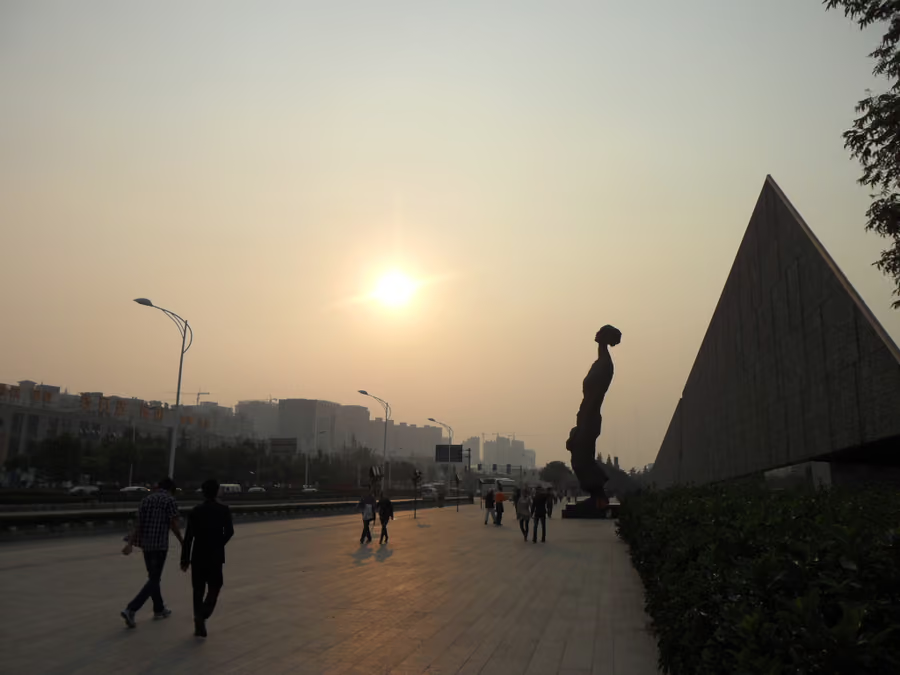
In December 1937 the Japanese army captured Nanjing and killed large numbers of Chinese prisoners of war and civilians over the following weeks, and committed mass rape. This memorial was established by the Nanjing municipal government on 15 August 1985 and enlarged in 1995 and again later. It stands at Jiangdongmen in Jianye District, on the site of one of the mass burial pits, and the museum exists because the ground itself is evidence: remains were excavated here in 1985 and a further 208 sets in 1998. The architect was Qi Kang. The grounds cover about 28,000 square metres.
What you’ll discover
The visit has three parts and takes two to three hours. Outdoors, a gravel courtyard with sculpture, inscribed stones, a long wall listing the names of victims as they are confirmed, and a path cast with survivors' footprints. A separate coffin-shaped hall is built over the excavated burial pit, and you look down at human remains in the ground where they were found. The main exhibition is half underground: more than a thousand photographs, documents, personal objects, testimony and film, arranged chronologically from the city's fall onward, including sections on the Nanking Safety Zone and the foreigners who ran it — John Rabe, Minnie Vautrin, John Magee. Exhibits are explicit, including photographs of the dead and of injuries, and recorded survivor testimony. There is no soft-focus version of this museum and it does not attempt one.
A little local insight
Good to know before you go
- Admission is free but requires advance registration, and it is busy at every hour of every day. Book before you go and arrive at opening if you want to read rather than shuffle.
- Allow time afterwards with nothing in it. Most people need an hour of quiet, a walk or a sit-down before they can do anything else, and plans made for the same afternoon tend to get abandoned.
- Do not bring young children into the exhibition hall. The material includes photographs of mutilated bodies and detailed accounts of sexual violence.
- The hall built over the burial pit is the part people are least prepared for. If you would rather not look at human remains, it can be skipped without leaving the rest of the museum.
- Read the Safety Zone section rather than hurrying past it. It is the part of the story with people acting well in it, and it is also the documentary basis — Rabe's diaries, Magee's film — for much of what is known.
- Behave as you would at a cemetery: quiet voices, no posed photographs. Staff do intervene, and the Chinese visitors around you are frequently descendants of people who were here.
When to come
First thing in the morning on a weekday, when it is least crowded and you can read at your own pace. Around the national day of remembrance on 13 December it is extremely busy and formal ceremonies take place.
Getting around
Good physically. The site is modern and purpose-built, with level and ramped routes through the outdoor areas, lifts to the underground exhibition hall, and level galleries; a wheelchair user can see essentially the whole museum, including the viewing gallery over the burial pit. Surfaces in the outdoor courtyard are gravel and cobble in places, which is harder going. The gradient of the visit is emotional rather than physical: there are few places to sit inside the exhibition, so plan a break.
Worth knowing before you go
The passport number you book with must match the one you present; no large bags and no eating inside.
Book ahead
Make time for the reservation
Tickets open 7 days before the visit, at 08:00 Beijing time, and the sell-out risk is high.
See the full rules on the reservation radarCompare established providers
Check live tours and tickets
Search for Memorial Hall of the Victims of the Nanjing Massacre in Nanjing. Prices, availability, payment and confirmation are handled by the booking provider.
China Travel Select does not take payment or create the reservation. Confirm the exact name, dates, inclusions and cancellation rules on the provider’s page.
Take a closer look
Maps, videos & more
Prices and hours change. These are the places to check on the day.