Discover Shanghai
Longhua Temple and Pagoda
龙华寺 / 龙华塔
Shanghai's largest and oldest temple compound, traced back some 1,700 years, with a leaning Song-dynasty brick pagoda outside the walls. Almost no foreign tour groups come here, so you get an actual working monastery rather than a photo stop.
The story
What makes this place special
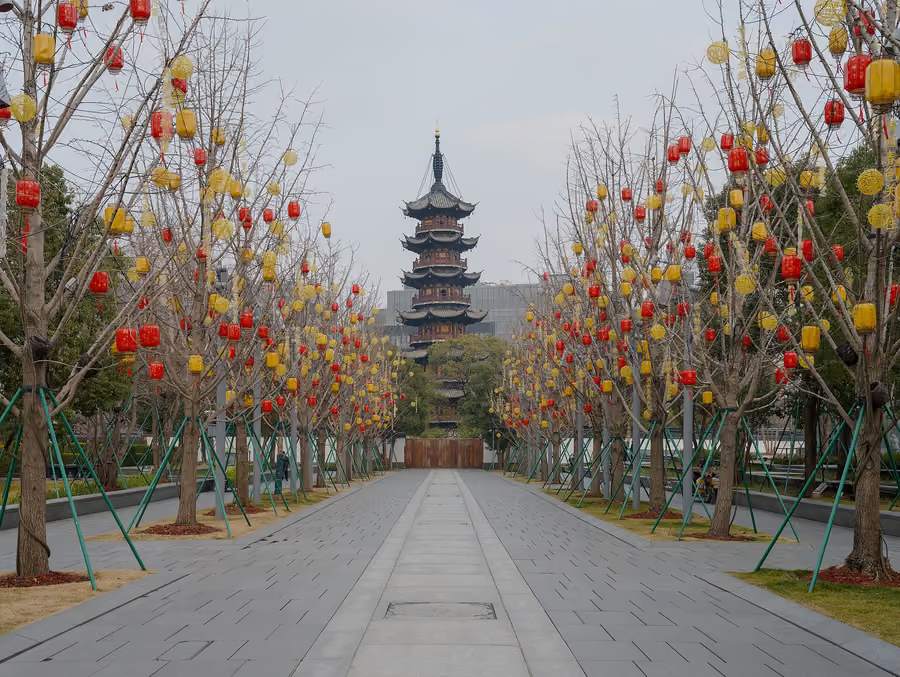
By claim the oldest temple in Shanghai, traditionally founded in 242 AD in the Three Kingdoms period, and the largest ancient temple complex in the city at over 20,000m² with a main axis 194m long. The brick core of the seven-storey octagonal Longhua Pagoda, 40.4m tall, dates to 977 under the Wuyue kingdom; it is too fragile to be opened to visitors, so it is a thing you look at rather than climb. The bell tower holds a copper bell cast in 1382, about 2m tall and some 5,000kg, struck in the New Year's Eve bell ceremony, and a second bell of 1586 hangs in the main hall. Directly behind the temple is the Longhua Martyrs Cemetery, for those killed in the Kuomintang purge of suspected Communists in 1927 - many were executed on the temple's own ground.
What you’ll discover
The full classical temple plan, which Shanghai's other temples have lost: pagoda in front, then gate, bell and drum towers, a sequence of halls on a long axis with courtyards between, monks' quarters to the sides and a vegetarian canteen. It is a working monastery with a large resident community and far fewer visitors than the Jade Buddha Temple. The pagoda stands outside the enclosure across the street. Behind, the martyrs' cemetery is a separate, sombre memorial park with the execution site and prison cells preserved.
A little local insight
Good to know before you go
- This is the temple to choose over the Jade Buddha Temple if you want age, scale and a real monastic atmosphere rather than a famous object. It is bigger, older in fabric, and a fraction as busy.
- You cannot go up or into the pagoda, and it is outside the temple walls - plan to photograph it from the street rather than looking for the entrance.
- Go on to the martyrs' cemetery behind. It is a serious 20th-century site, almost entirely unvisited by foreigners, and it explains why 1927 matters in Shanghai.
- Eat in the temple's vegetarian canteen - cheap, good, and used by locals rather than tourists.
- Come for the temple fair on the third day of the third lunar month, which coincides with the peach blossom in Longhua Park next door - the oldest surviving temple fair in Shanghai.
- New Year's Eve, when the 1382 bell is struck, is the one night this temple is crowded; tickets for the ceremony are sold separately and sell out.
When to come
Early morning on a weekday, when the monks are chanting. Early April for the peach blossom and the temple fair. Any season otherwise - it is rarely crowded.
Getting around
Better than most Chinese temples because the site is large and flat: the courtyards are broad level paving, distances between halls are short, and there is room to manoeuvre. Every hall is up a few steps onto its platform with a raised threshold, so getting inside needs help, and the pagoda is closed to everyone. The martyrs' cemetery behind is a modern memorial park, largely level and paved with ramps. A bad knee is fine here.
Worth knowing before you go
The pagoda cannot be climbed - Shanghai's soft ground has left it visibly tilted, so it is viewed from outside only. Come in late March for the peach blossom, which is a local tradition.
Compare established providers
Check live tours and tickets
Search for Longhua Temple and Pagoda in Shanghai. Prices, availability, payment and confirmation are handled by the booking provider.
China Travel Select does not take payment or create the reservation. Confirm the exact name, dates, inclusions and cancellation rules on the provider’s page.
Take a closer look
Maps, videos & more
Prices and hours change. These are the places to check on the day.