Your destination guide 上海
Shanghai
The waterfront, the concession, the easy half of a first trip
Shanghai needs far less advance booking than Beijing and rewards wandering more. It is not 'the real China' and does not pretend to be — pair it with Beijing or Xi'an rather than treating it as representative.
Getting there
Pudong (PVG) for long-haul and Hongqiao (SHA) for domestic, both on the metro. The Pudong maglev is ¥50 and takes 8 minutes to Longyang Road, where you change; Line 2 goes the whole way for a few yuan. Hongqiao is also a major rail station.
When to go
October and April. Summer is punishingly humid; winter is a damp cold in poorly heated older buildings.
How long: 3–6 days
Give it 3 days for the headline sights, or up to 6 to see it properly and eat your way around.
Three gets the Bund, the French Concession and one museum. Six adds Zhujiajiao or a water town, the West Bund galleries, and enough evenings to work through xiaolongbao, benbang cuisine and the high-end scene.
Three days in Shanghai for a first visit
Shanghai needs less advance booking than Beijing and rewards wandering more. Here is a route that shows you the three cities Shanghai actually is.
A little forward planning
Book these before you go
Timed, passport-linked and capable of selling out. Full detail on the reservation radar.
Shanghai Disney Resort 上海迪士尼度假区
Bookable in EnglishOpens 30 days ahead · medium sell-out risk
Yu Garden 豫园
English via resellerOpens 0 days ahead · closed Monday (except statutory holidays) · low sell-out risk
Make a few good memories
What to see in Shanghai
Researched largely from Chinese-language sources, so it goes beyond the usual shortlist. Dollar figures are approximate, at the rate on 2026-10-08.
外滩
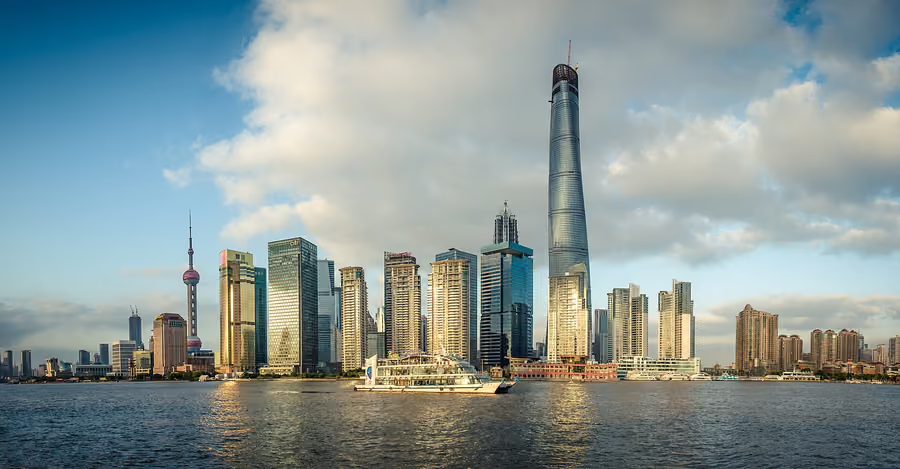
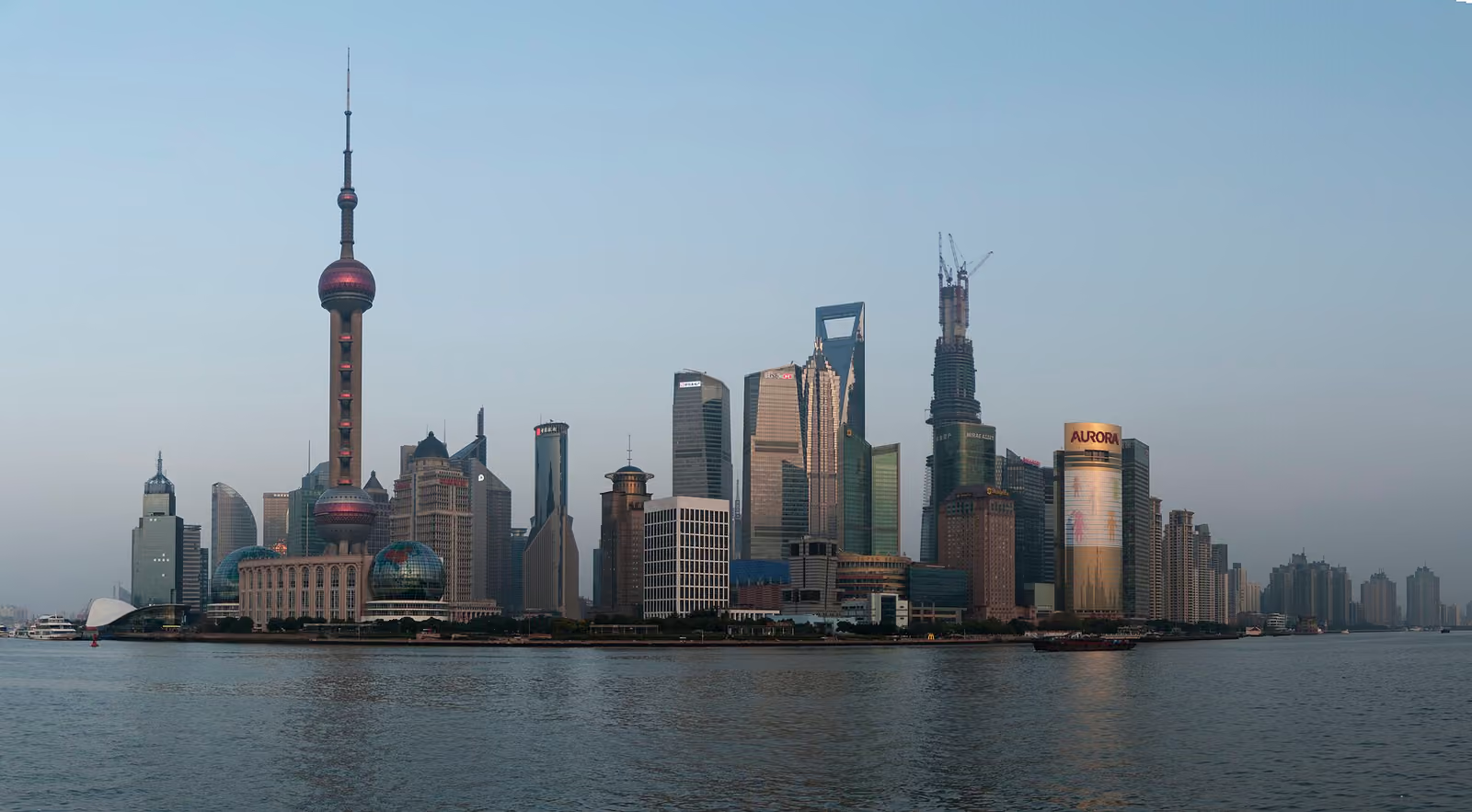
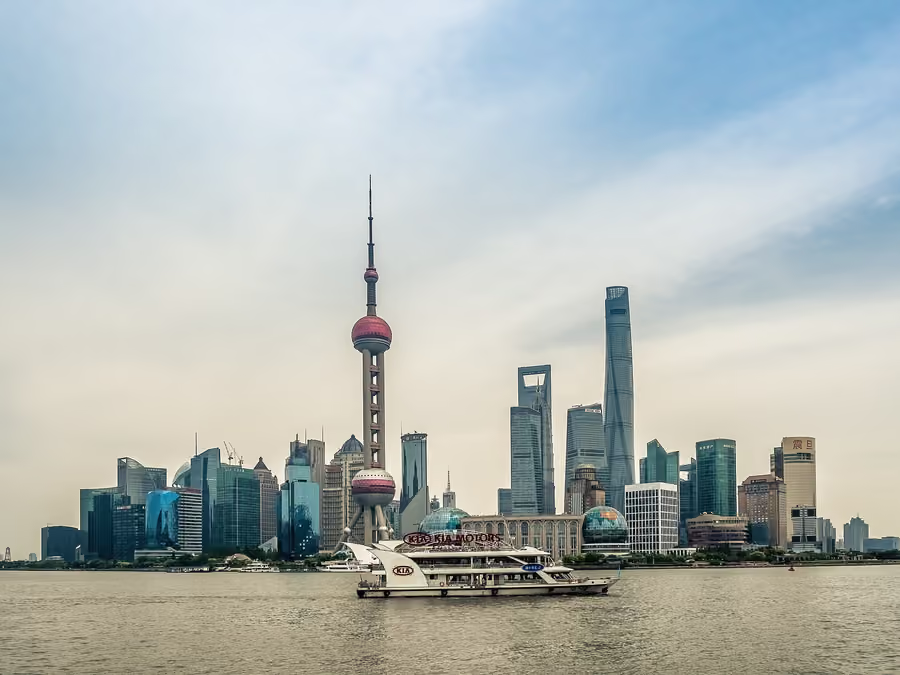
A 1.5km riverside promenade lined with twenty-odd colonial-era banks and trading houses, facing the Pudong skyline across the Huangpu. Chinese guides call it the city's soul; it is the one view that explains Shanghai in a single glance.
Free
Opening hours, booking and how to get there →
东方明珠广播电视塔
The 1994 rocket-and-spheres tower that became Shanghai's logo, with a glass-floor walkway on the 259m level and a small but genuinely good city-history museum in the base. Cheaper than the newer towers and far more photogenic from outside.
From ¥100 adult for the 263m sphere; higher combination tickets add the 259m glass floor, the 351m Space Module and the history museum
≈ US$15Opening hours, booking and how to get there →
上海中心大厦 上海之巅观光厅
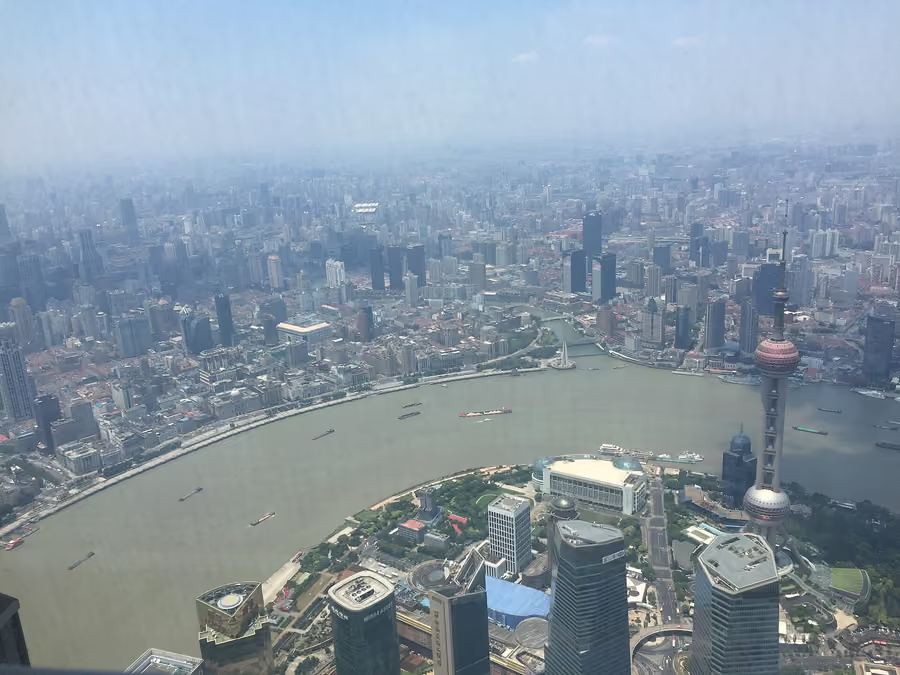
China's tallest building, with an observation hall on floors 118-119 at 546m reached by one of the world's fastest lifts. On a clear day you look straight down onto the Jin Mao and SWFC towers that used to be the skyline.
¥180 adult; ¥120 concession (students, over-60s); ¥90 child
≈ US$13–27Opening hours, booking and how to get there →
上海博物馆 人民广场馆
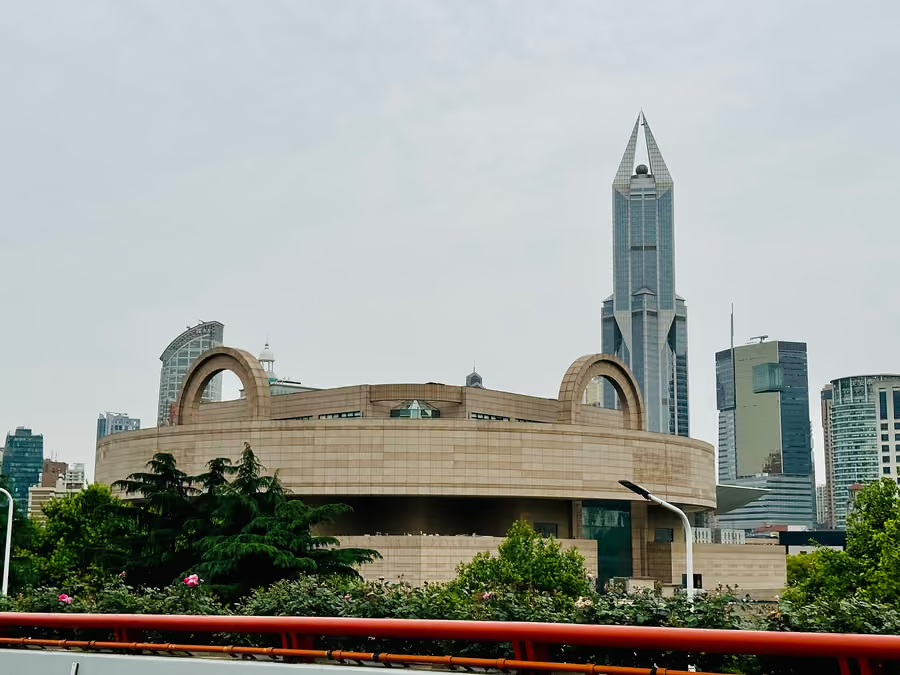
China's best collection of bronzes, ancient ceramics and classical painting and calligraphy, laid out gallery by gallery in a drum-shaped building on People's Square. Entry is free and, since 1 September 2025, individual visitors no longer need a reservation.
Free (special exhibitions ticketed separately)
Opening hours, booking and how to get there →
上海博物馆东馆
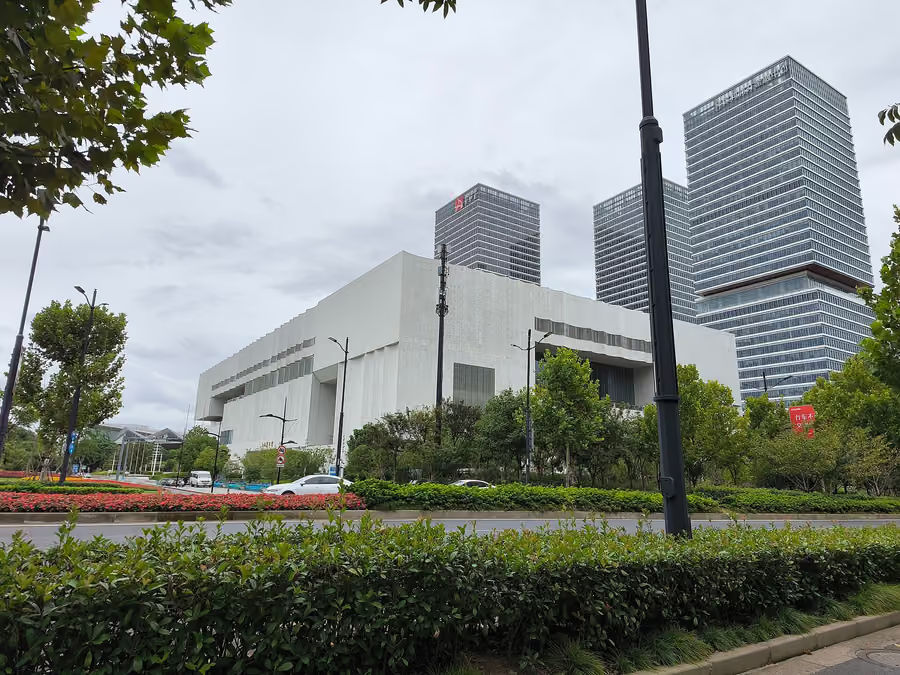
The museum's enormous Pudong branch, opened in stages from 2024, where the permanent collection finally has room to breathe across some 20 galleries plus an open 'visible' conservation studio. Chinese visitors now rate it above the original building.
Free (special exhibitions ticketed separately)
Opening hours, booking and how to get there →
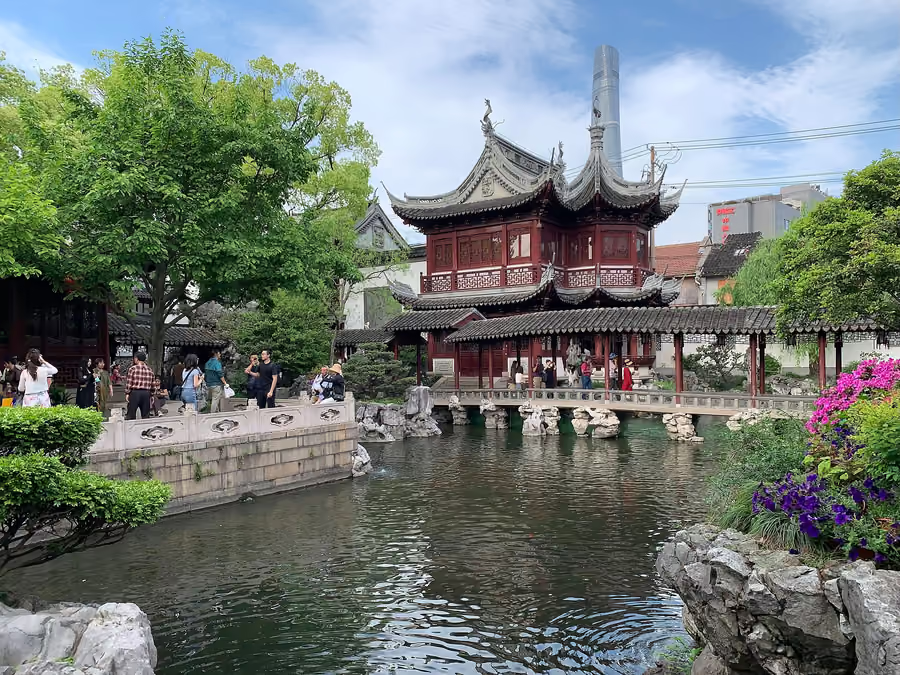
豫园
A compressed Ming-dynasty scholar's garden of rockeries, pavilions and dragon-topped walls, walled off inside the old city. It is the only classical garden in central Shanghai, and the surrounding bazaar is the city's busiest snack and souvenir warren.
¥30–40 adult (sources differ), ¥15 concession; the Yuyuan Bazaar around it is free to walk
≈ US$2.23–4.47Opening hours, booking and how to get there →
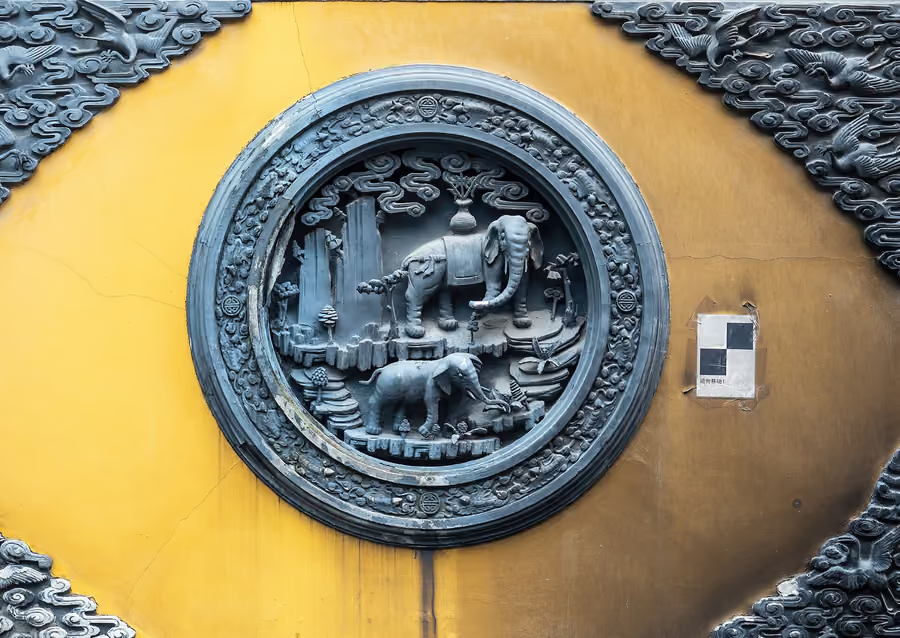
玉佛禅寺
A working Chan monastery of about seventy monks, built in 1882 around two Buddha figures carved from Burmese white jade. A major 2017-2021 engineering project slid the whole main hall 30 metres sideways to open up the courtyard, and the vegetarian restaurant is a destination in itself.
¥20 general admission reported, with an extra ¥10 for the Jade Buddha Chamber; some recent listings show free general entry, so check at the gate
≈ US$1.49–2.98Opening hours, booking and how to get there →
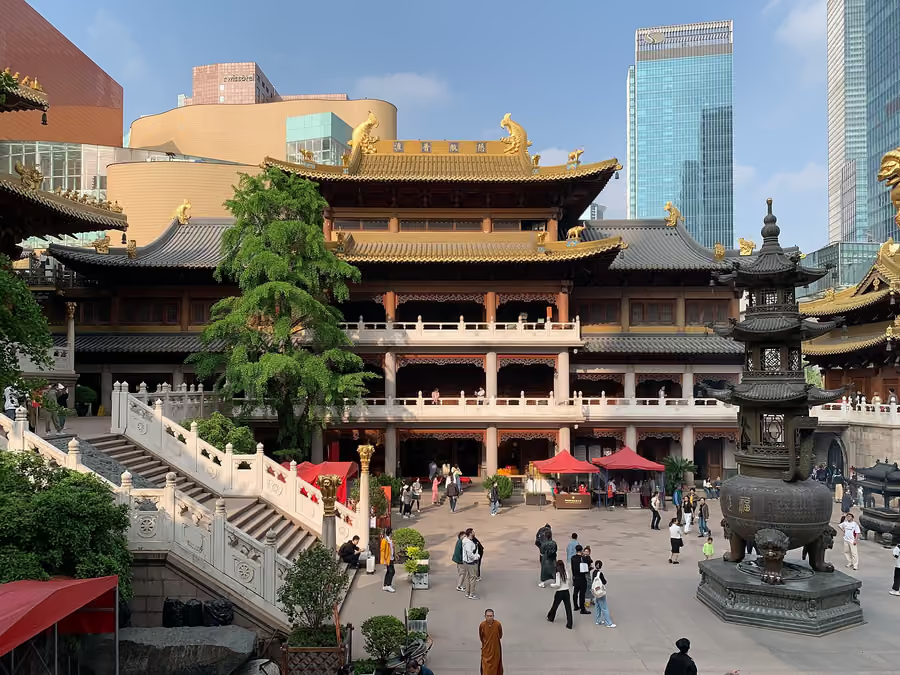
静安寺
A gilded, teak-and-stone temple complex rebuilt in the 2000s and now wedged between luxury malls on Nanjing West Road - the single best image of how old and new Shanghai sit on top of each other. Floodlit at night on weekends.
¥50 incense ticket (香花券); doubled at Lunar New Year, and occasionally free on Buddhist festival days
≈ US$7.45Opening hours, booking and how to get there →
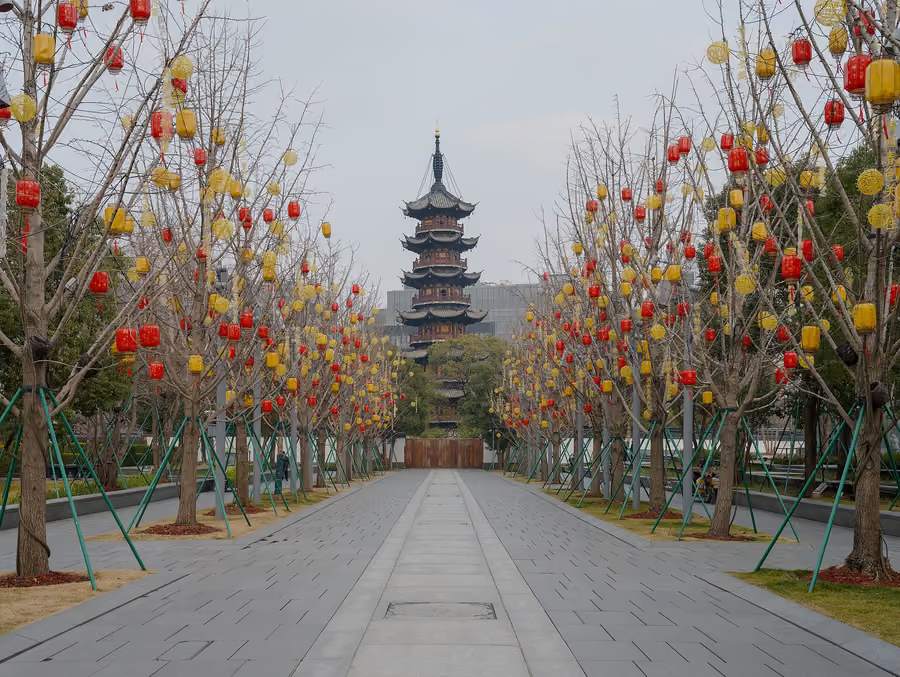
龙华寺 / 龙华塔
Shanghai's largest and oldest temple compound, traced back some 1,700 years, with a leaning Song-dynasty brick pagoda outside the walls. Almost no foreign tour groups come here, so you get an actual working monastery rather than a photo stop.
Admission has long been ¥10; several recent Chinese listings show free entry - confirm at the gate (ticket enquiries 021-64571440)
≈ US$1.49Opening hours, booking and how to get there →
武康大楼 / 武康路
A 1924 flat-iron apartment block by Hungarian architect Ladislaus Hudec, shaped like a ship's prow where six streets collide - now the most photographed building in Shanghai for Chinese visitors and the anchor of the plane-tree-shaded Wukang Road conservation street.
Free
Opening hours, booking and how to get there →
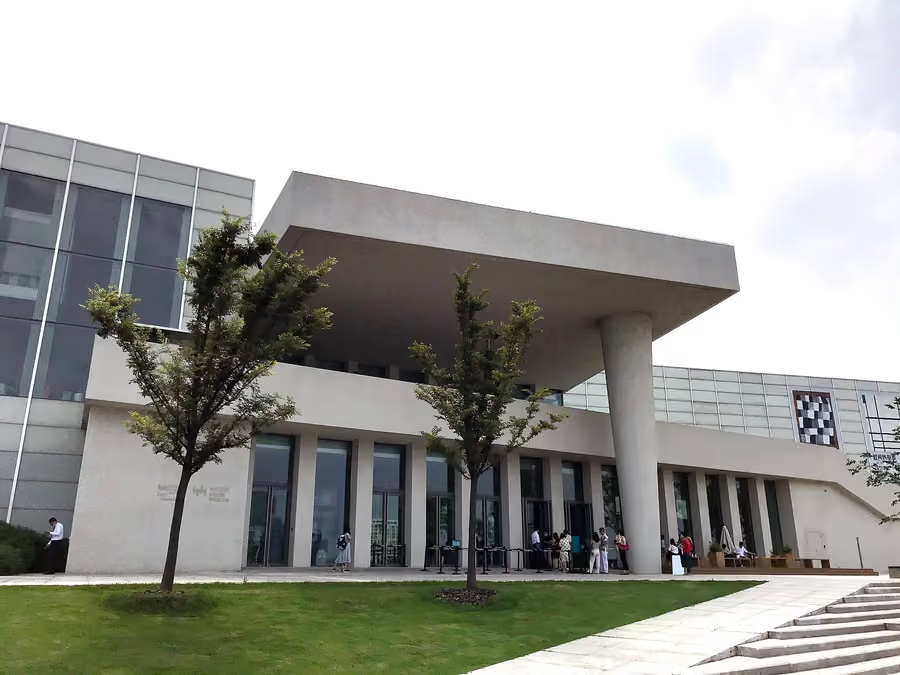
西岸美术馆
A David Chipperfield-designed riverside museum running a long-term exhibition partnership with the Centre Pompidou, so you see twentieth-century European modernism in Shanghai. The free ground floor and riverfront terrace are worth the trip on their own.
From ¥120 per exhibition; combined tickets for two shows have run around ¥180
≈ US$18–27Opening hours, booking and how to get there →
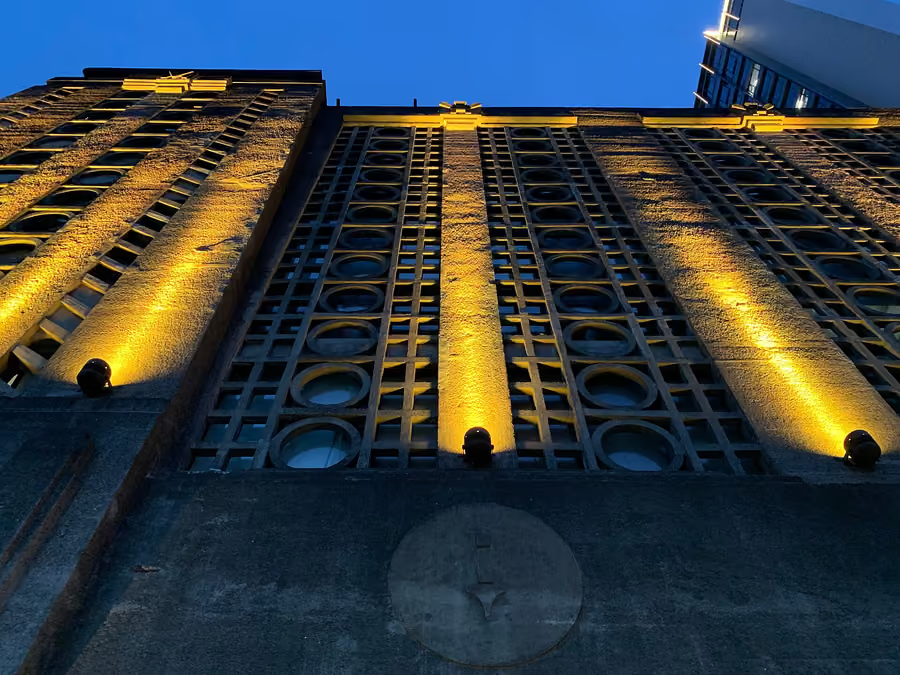
1933老场坊
The former Shanghai Municipal Council abattoir of 1933, the only one of three such buildings worldwide still intact, now a creative complex. Inside is a concrete labyrinth of umbrella columns, flying ramps and the spiralling 'cattle ways' once used to drive animals upstairs.
Free
Opening hours, booking and how to get there →
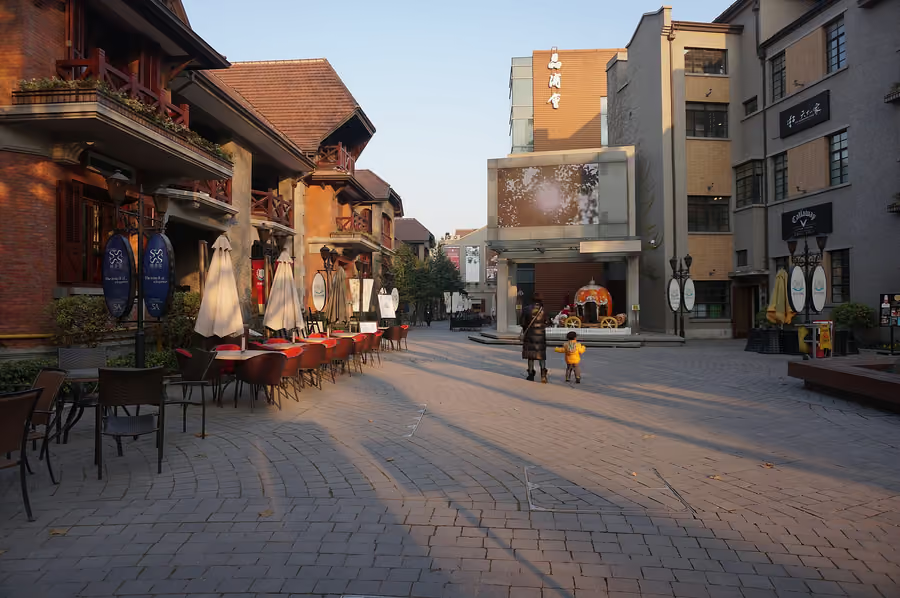
思南公馆
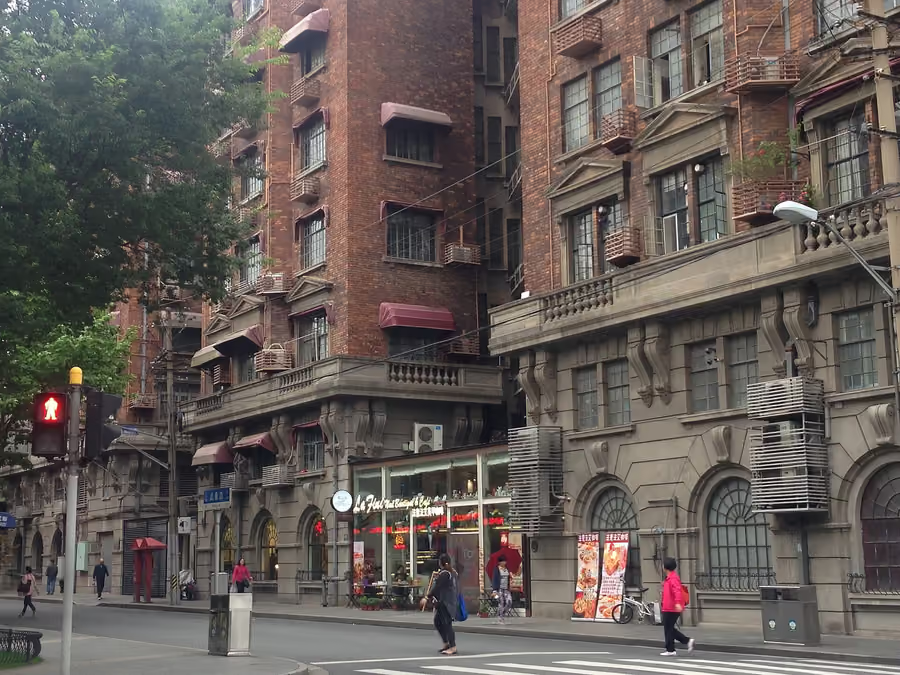
A restored block of 51 garden villas from the 1920s French Concession, now a quiet open-air precinct of bookshops, cafes and small museums. It is the easiest place in Shanghai to see what the concession's villa streets actually looked like, without a ticket or a tour group.
Free to walk the precinct; the Zhou Enlai residence (周公馆) at 73 Sinan Road charges a small separate admission
Opening hours, booking and how to get there →
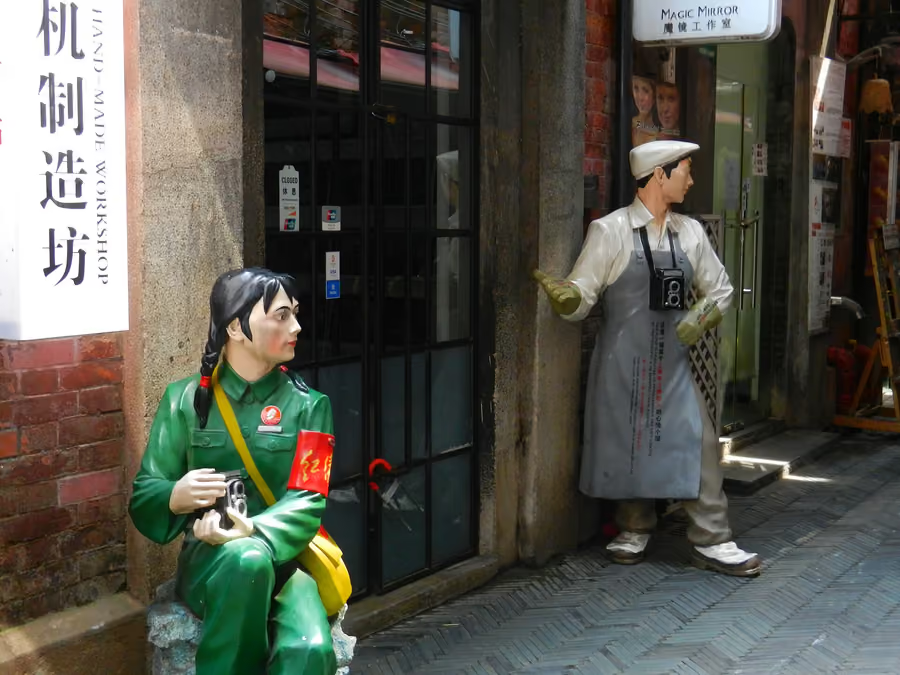
田子坊
A warren of 1930s shikumen lane houses off Taikang Road, converted from a street market into studios, galleries and independent cafes from 1998. Smaller and grubbier than Xintiandi, and much more like the real lane-house Shanghai that is disappearing.
Free
Opening hours, booking and how to get there →
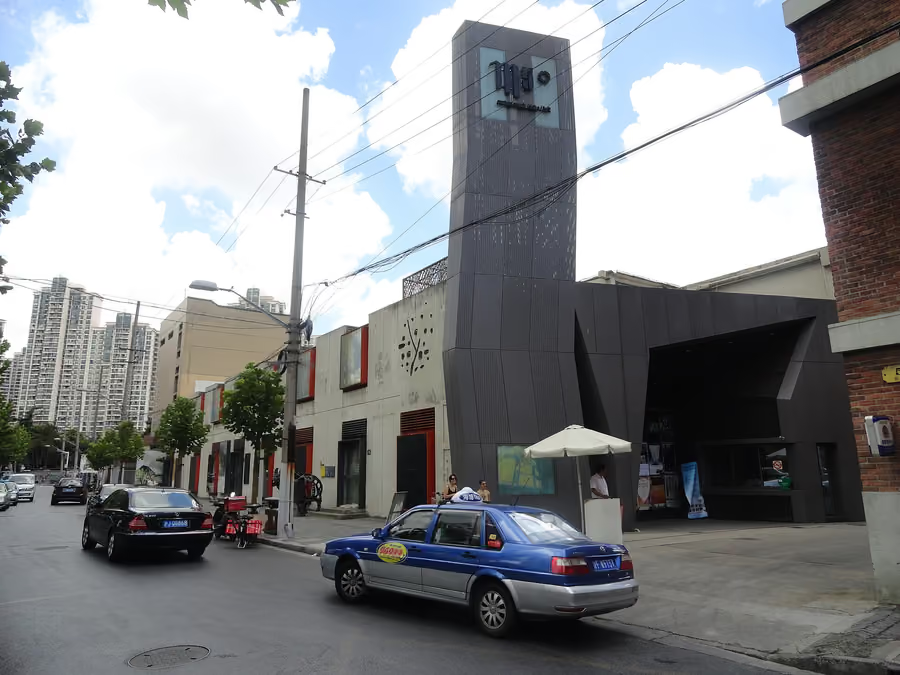
M50创意园
Shanghai's original gallery district, in the old Chunming wool mill on a bend of Suzhou Creek, with over a hundred studios and commercial galleries plus a long run of street graffiti along the approach. Entry and most exhibitions are free.
Free
Opening hours, booking and how to get there →
朱家角古镇
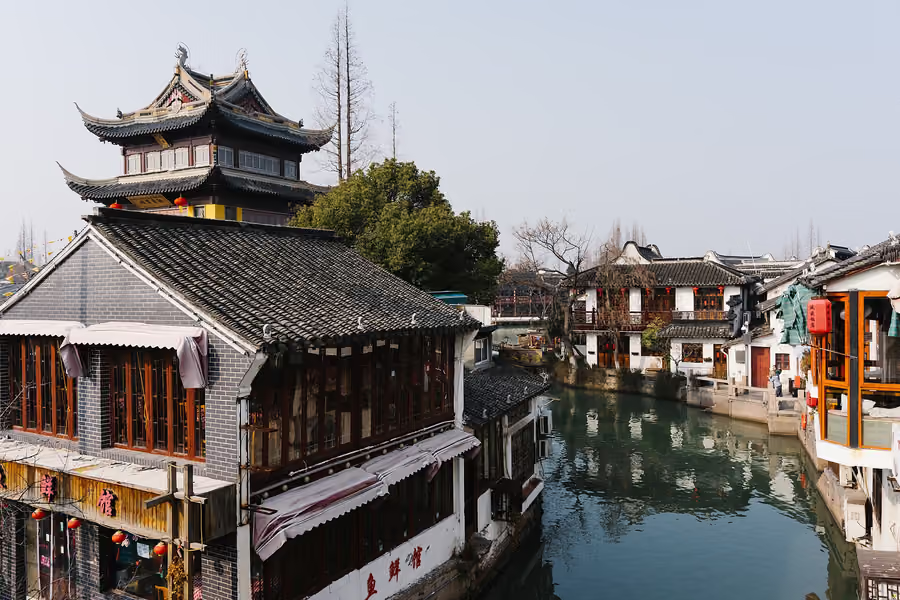
A canal town of stone bridges, whitewashed lanes and a Qing-dynasty post office, founded in the Song and the only real water town you can reach on the Shanghai metro. The 1571 Fangsheng Bridge is the largest stone arch bridge in the region.
Free to enter the town; a combined ticket to the paid sites (Kezhi Garden, Yuanjin Temple, the Qing post office and others) has been around ¥55, cheaper booked ahead on Ctrip
≈ US$8.19Opening hours, booking and how to get there →
杨浦滨江
A 5.5km continuous riverside park built into Shanghai's old industrial waterfront, threading past the castellated 1883 Yangshupu Waterworks, the former Shanghai Shipyard and a string of reused mill buildings. Chinese design media call it the city's best piece of post-industrial landscape; almost no foreign guidebook mentions it.
Free
Opening hours, booking and how to get there →
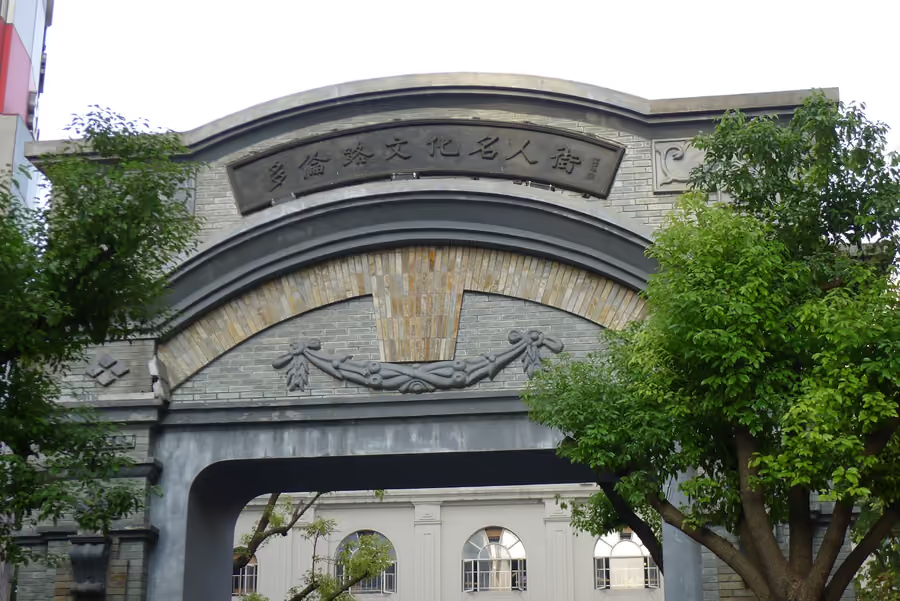
多伦路文化名人街
A 550m street in Hongkou lined with twenty-odd 1910s-1920s mansions in English, French, Japanese, Dutch, Spanish and Islamic styles, where Lu Xun and the League of Left-Wing Writers met in the Gongfei cafe. Named China's first historical cultural celebrities street in 2010 and still almost entirely free of tourists.
Free to walk the street; individual house museums charge small separate admissions
Opening hours, booking and how to get there →
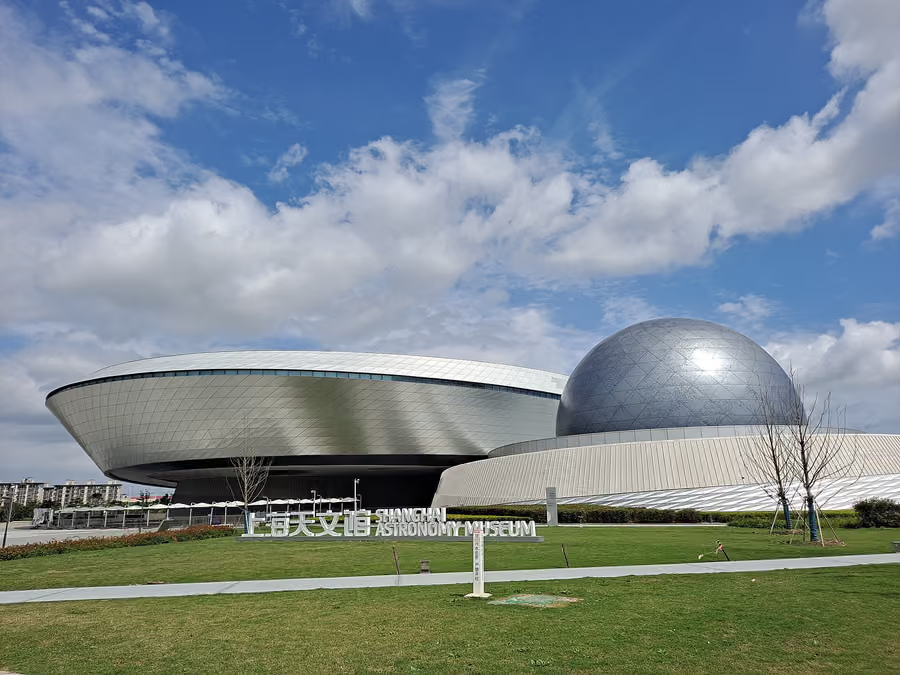
上海天文馆
The largest purpose-built planetarium in the world, opened in 2021 out at Lingang, with no straight lines anywhere in the building and a genuinely spectacular orbital design. Chinese families rate it among the best museums in the country; foreign visitors rarely make the trip.
¥30 adult; ¥25 age 60-69; ¥15 student; free for over-70s, serving military and some other categories (free tickets still need online registration)
≈ US$2.23–4.47Opening hours, booking and how to get there →
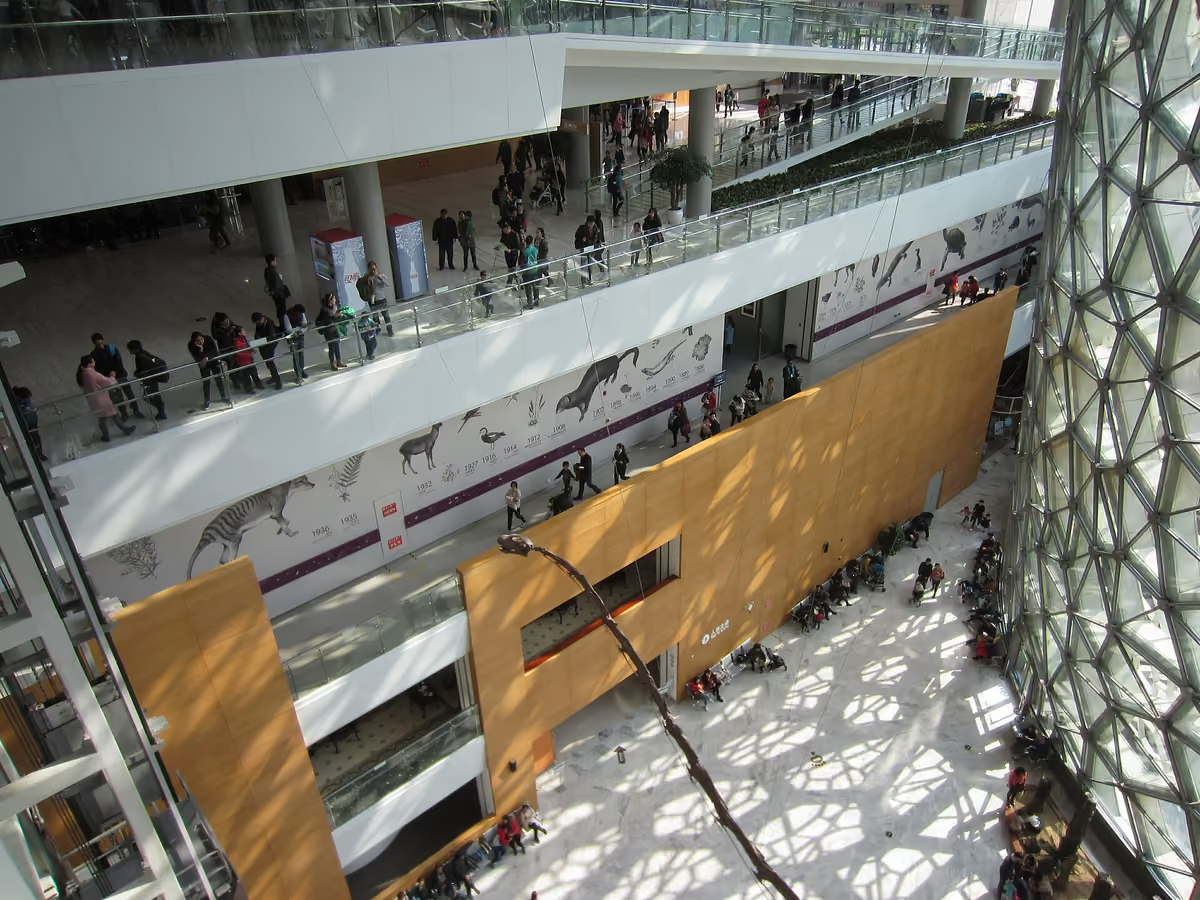
上海自然博物馆
A spiral, nautilus-shaped building sunk into Jing'an Sculpture Park holding some 270,000 natural specimens, with strong Chinese dinosaur material and an excellent Africa diorama hall. Central, cheap and good on a rainy day.
¥30 adult; ¥12 student; free for over-70s and children 6 and under
≈ US$1.79–4.47Opening hours, booking and how to get there →
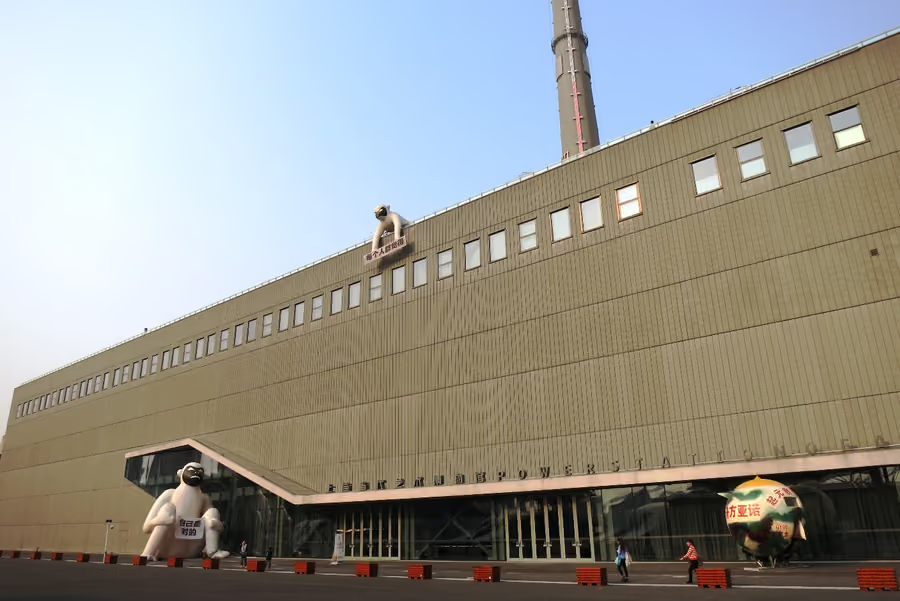
上海当代艺术博物馆
Mainland China's first public contemporary art museum, built in 2012 inside the former Nanshi power station with its 165m chimney kept as a clock tower. It hosts the Shanghai Biennale, and the permanent displays are free.
Free for the standing collection; special exhibitions typically around ¥60
≈ US$8.94Opening hours, booking and how to get there →
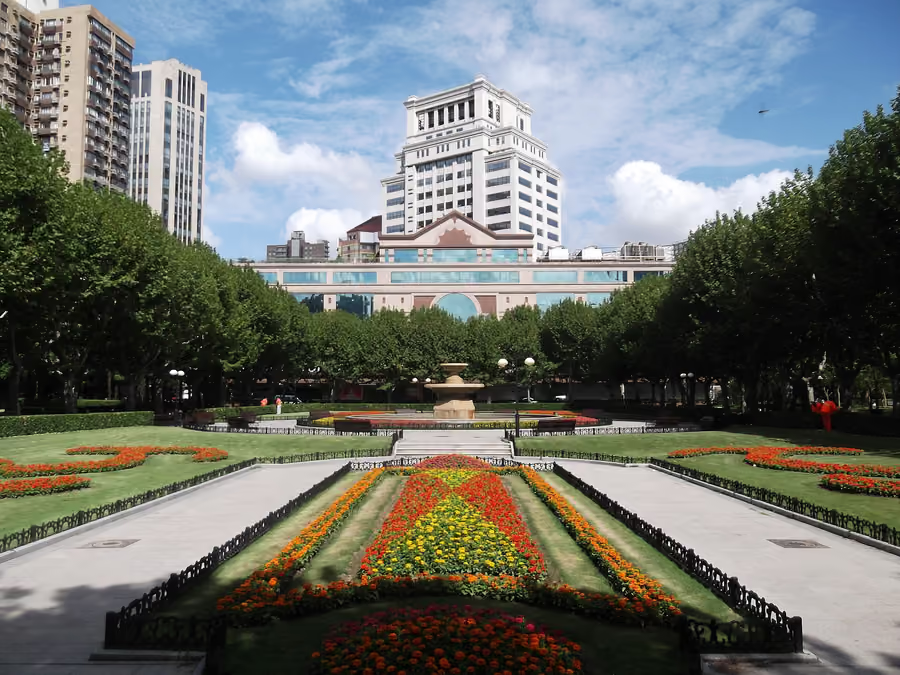
复兴公园
The only surviving French formal garden in Shanghai, laid out in the old concession and still the city's best place to watch early-morning tai chi, ballroom dancing and amateur opera under enormous plane trees. Free, and a five-minute walk from Sinan Mansions.
Free
Opening hours, booking and how to get there →
What to eat in Shanghai
If you eat only two things in Shanghai, make them hongshao rou (red-braised pork belly) and a basket of xiaolongbao soup dumplings. Both are mild and sweet-savoury rather than spicy, and sum up the local 'heavy oil, red sauce' style. A bowl of scallion-oil noodles is the cheap fallback at any hour.
Soup dumplings
小笼包xiǎolóngbāo
Thin-skinned steamed dumplings filled with minced pork and a jellied stock that melts into soup during steaming. Eaten by nibbling a hole, drinking the broth, then dipping in slivered ginger and black vinegar.
Tastes like: Delicate, savoury-sweet pork broth with sharp ginger-vinegar
Not on the menu but in it: The soup is set with pork-skin aspic — a gelatine most visitors do not expect. Premium versions add crab roe and crab meat, so shellfish allergy sufferers must avoid anything labelled 蟹粉 (xiefen).
Might not be for you: The aspic filling is jellied pork skin; crab-roe versions have a strong marine smell.
Where to eat it
- Nanxiang Mantou Dian (City God Temple) · Michelin Bib Gourmand 2026 · ¥40–120 per person · Huangpu, 85 Yuyuan Road at the City God Temple; Yuyuan Garden metro station (Lines 10 and 14) is the nearest stop
- Jingmei Wuxi Noodles · Michelin Bib Gourmand 2026 · ¥25–60 per person · Jingan, 128 Yanping Road
Where: Specialist xiaolong shops in Huangpu around Jinxian Road and Yu Garden, and the better chain branches in any mall
Watch videos of Soup dumplings →Pan-fried pork buns
生煎包shēngjiān bāo
Thick-skinned yeasted buns filled with pork and soup, crowded into a flat pan and fried until the base is deep brown, then finished with sesame and spring onion.
Tastes like: Crisp fried base, fluffy bread, hot juicy pork, sesame on top
Not on the menu but in it: Pork-skin aspic again, and the filling is normally enriched with lard. Fried in a shared pan.
Might not be for you: The soup inside is scaldingly hot and squirts — a real burn hazard on the first bite.
Where: Breakfast and snack shops all over Huangpu, Jing'an and Xuhui; also sold by the pair from street windows
Watch videos of Pan-fried pork buns →Red-braised pork belly
红烧肉hóngshāo ròu
Cubes of skin-on pork belly slow-braised with soy sauce, rock sugar and rice wine until the sauce reduces to a sticky mahogany glaze.
Tastes like: Sweet-salty, glossy, very rich; the Shanghai version is noticeably sweeter than elsewhere in China
Not on the menu but in it: Large amounts of rock sugar and dark soy; often finished with a splash of Shaoxing wine, so it is not alcohol-free.
Might not be for you: Alternating layers of soft fat and wobbly skin — the fat is the point, not a flaw.
Where to eat it
- Lan Xin (Jinxian Road) · Michelin Bib Gourmand 2026 · ¥80–150 per person · Huangpu, 130 Jinxian Road, between South Shaanxi Road and Maoming Road
- Fu 1088 · Michelin 1 star 2026 · ¥600–1000 per person · Jingan, 375 Zhenning Road
- Fu 1015 · Michelin 1 star 2026 · ¥700–1200 per person · Changning, 1015 Yuyuan Road
Where: Any benbang (local Shanghainese) restaurant; the small family-run places along Jinxian Road do the best-known versions
Watch videos of Red-braised pork belly →Scallion oil noodles
葱油拌面cōngyóu bànmiàn
Thin wheat noodles tossed in oil in which spring onions have been slowly fried to a dark crisp, plus soy sauce and a little sugar. Often served with dried shrimp on the side.
Tastes like: Deeply oniony, salty-sweet, oily and simple
Not on the menu but in it: The classic version is topped with kaiyang (dried shrimp), and some shops render the oil with lard. Ask if you need it strictly vegetarian or shellfish-free.
Where to eat it
- Jia Jia Tang Bao (Huanghe Road) · ¥30–60 per person · Huangpu, 127 Huanghe Road; People's Square metro (Lines 1, 2 and 8) is a short walk away
- Jingmei Wuxi Noodles · Michelin Bib Gourmand 2026 · ¥25–60 per person · Jingan, 128 Yanping Road
Where: Noodle counters everywhere; the old-style shops in Huangpu and Hongkou are the benchmark
Watch videos of Scallion oil noodles →Drunken crab / drunken shrimp
醉蟹 / 醉虾zuìxiè / zuìxiā
Raw freshwater crab or river shrimp cured in Shaoxing wine, salt and spices and served cold, uncooked.
Tastes like: Cool, sweet, salty and strongly winey
Not on the menu but in it: Contains raw shellfish and a substantial quantity of rice wine. Not pasteurised.
Might not be for you: It is genuinely raw seafood with a soft, almost custardy texture, and carries a real food-safety risk for visitors with no local exposure. Many travel doctors advise skipping it.
Where: Benbang restaurants and cold-dish counters; seasonal peak in autumn
Watch videos of Drunken crab / drunken shrimp →Hairy crab
大闸蟹dàzháxiè
Chinese mitten crab from the lakes near Shanghai, simply steamed and eaten with ginger-vinegar dip. In season roughly October to December; the roe and the creamy male gonad are the prized parts.
Tastes like: Sweet, intensely rich roe; the meat itself is delicate and sparse
Not on the menu but in it: The dip is black vinegar with ginger and sugar. Warm yellow wine is pressed on you as the traditional accompaniment.
Might not be for you: Extremely fiddly to eat, with a lot of shell for little meat; the orange roe has a strong, almost custard-like richness that divides people.
Where: Autumn-only crab menus at benbang restaurants, and crab specialists in Huangpu and Pudong
Watch videos of Hairy crab →Smoked fish
熏鱼xūnyú
Despite the name it is not smoked: slices of grass carp are deep-fried, then soaked in a sweet spiced soy marinade and served cold as a starter.
Tastes like: Sweet, dark, aromatic with five-spice; firm and slightly chewy
Not on the menu but in it: Marinade contains sugar, soy and usually rice wine.
Might not be for you: Served cold with bones still in the slices.
Where: Cold-dish counters of benbang restaurants and deli windows of old-brand food shops
Watch videos of Smoked fish →Four-happiness braised wheat gluten
四喜烤麸sìxǐ kǎofū
Spongy baked wheat gluten braised with wood-ear fungus, dried lily buds, peanuts and bamboo shoots in sweet soy, served cold.
Tastes like: Sweet, soy-dark, spongy and absorbent
Not on the menu but in it: Contains peanuts as standard — an easily missed allergen in a dish that looks purely vegetable. Pure wheat gluten, so unsuitable for coeliacs.
Might not be for you: The sponge texture of kaofu is unfamiliar — it soaks up sauce like a wet loofah.
Where: Starter section of any benbang restaurant
Watch videos of Four-happiness braised wheat gluten →Oil-exploded river shrimp
油爆虾yóubào xiā
Small whole river shrimp flash-fried in very hot oil until the shells crisp, then glazed with sweet soy. Eaten shell and all, or with the shell slipped off in the mouth.
Tastes like: Sweet, salty, crunchy, lightly caramelised
Might not be for you: Heads, legs and shells are all left on.
Where: Benbang restaurants and the small Jinxian Road eateries
Watch videos of Oil-exploded river shrimp →Bamboo shoot, pork and salt-pork soup
腌笃鲜yāndǔxiān
A milky-white spring soup simmered from fresh pork, cured salt pork and tender bamboo shoots, often with knotted tofu skin.
Tastes like: Clean, savoury, salty-sweet with a strong cured-ham depth
Not on the menu but in it: Built entirely on pork and cured pork — there is no vegetarian version of this dish, however vegetable-heavy it looks.
Where to eat it
- Lan Xin (Jinxian Road) · Michelin Bib Gourmand 2026 · ¥80–150 per person · Huangpu, 130 Jinxian Road, between South Shaanxi Road and Maoming Road
Where: Benbang restaurants, best in spring when the bamboo shoots are new
Watch videos of Bamboo shoot, pork and salt-pork soup →Sizzling eel strips
响油鳝丝xiǎngyóu shànsī
Shredded freshwater eel stir-fried in dark sweet sauce, piled up with a well of white pepper and garlic in the middle, then finished at the table with smoking-hot oil poured over.
Tastes like: Sweet-savoury and peppery, with a slippery-tender texture
Might not be for you: Eel's soft, slightly slippery texture and river-fish aroma put off some visitors.
Where: Benbang restaurants; also a Suzhou-Wuxi regional speciality found across the Shanghai area
Watch videos of Sizzling eel strips →Crab-shell pastry
蟹壳黄xièkéhuáng
A small round flaky sesame-topped baked pastry named for its crab-shell colour, not its contents; fillings are savoury (spring onion and pork) or sweet (red bean, sugar).
Tastes like: Buttery-flaky, toasty sesame, mildly savoury or sweet
Not on the menu but in it: The flaky layers are traditionally made with lard, including in the sweet versions — a common surprise for vegetarians.
Where: Old-brand bakeries and breakfast windows in Huangpu, Jing'an and Hongkou
Watch videos of Crab-shell pastry →Where to eat in Shanghai
- Dianping (大众点评) — the real ratings. Chinese only, but photos, prices and a 4.5+ score survive translation. Its 必吃榜 "Must-Eat" list is the mainstream benchmark.
- Black Pearl (黑珍珠) — China's own fine-dining guide, published annually by Meituan and taken more seriously domestically than Michelin.
- Michelin covers only a few Chinese cities, so its absence means nothing outside them.
- Xiaohongshu (小红书) — what is actually busy this month, rather than this year.
Lan Xin (Jinxian Road) 兰心餐厅(进贤路)
¥80–150 per person≈ US$12A converted front room on Jinxian Road serving benbang cai, the home-style Shanghai cooking of soy, sugar, rice wine and slow braising. Nine tables, laminated surfaces, a queue down the pavement most evenings, and the single best-value introduction to the city's own food. This is what Shanghainese people mean when they talk about eating at home.
Order: Red-braised pork belly (红烧肉), Braised duck in brown sauce (红烧鸭) and 2 more
What to order, booking and allergens →
Chun 春
¥200–400≈ US$30Legendary minuscule home-style benbang restaurant on Jinxian Road with no printed menu — the owner decides what you eat.
What to order, booking and allergens →
Mao Long 茂隆
¥90–160≈ US$13Another Jinxian Road benbang stalwart doing the classic repertoire — braised pork, eel, smoked fish — at neighbourhood prices.
What to order, booking and allergens →
A Niang Noodle Shop 阿娘面馆
¥30–60≈ US$4.47Decades-old noodle counter famous for eel noodles and scallion-oil noodles in a bowl of brown broth.
What to order, booking and allergens →
Tasty Congee & Noodle Wantun Shop 正斗粥面专家
¥60–120≈ US$8.94Hong Kong-style wonton noodle and congee specialist, an easy and consistently good low-risk meal in the financial district.
What to order, booking and allergens →
Rong Cuisine (Huangpu) 榕意
¥150–300≈ US$22Fujianese restaurant known for clay-pot soups, Buddha-jumps-over-the-wall style broths and fish-ball dishes.
What to order, booking and allergens →
Shanghai Old Restaurant 上海老饭店
¥200–400≈ US$30A 19th-century institution at Yu Garden, the textbook place to try the full benbang canon in a formal setting.
What to order, booking and allergens →
Lü Bo Lang 绿波廊
¥180–350≈ US$27Yu Garden landmark known for its dim-sum-style Shanghainese pastries and state-banquet history.
What to order, booking and allergens →
Nanxiang Mantou Dian (City God Temple) 南翔馒头店(城隍庙)
¥40–120 per person≈ US$5.96The most famous xiaolongbao address in China, trading at the edge of Yuyuan Garden since 1900 and renamed Nanxiang Mantou Dian in 1949. It works as a vertical hierarchy: a ground-floor takeaway window with the longest queue, a second-floor dining room with crab-roe baskets, and an upper floor with garden views, tea sets and private rooms. Be honest with yourself about why you are here, which is the building and the history rather than the single best dumpling in the city.
Order: Pork xiaolongbao (鲜肉小笼包), Crab-roe xiaolongbao (蟹粉小笼包) and 2 more
What to order, booking and allergens →
Jia Jia Tang Bao (Huanghe Road) 佳家汤包(黄河路店)
¥30–60 per person≈ US$4.47A tiny, scuffed shop on Huanghe Road, a minute north of People's Square, that opened in 1986 and is the answer most Shanghai locals give when you ask where they actually eat xiaolongbao. You queue on the pavement, order a basket or two at the counter, and eat elbow to elbow at a shared table. If you want to settle the Nanxiang question: go to Nanxiang for the building and the history, come here for the dumpling.
Order: Pork xiaolongbao (鲜肉汤包), Crab-roe and pork xiaolongbao (蟹粉汤包) and 2 more
What to order, booking and allergens →
Da Hu Chun (Middle Sichuan Road) 大壶春(四川中路店)
¥20–50 per person≈ US$2.98Shanghai's shengjianbao specialist, opened on this street in 1932, moved away and eventually returned to it. Shengjianbao are not xiaolongbao: they are thicker-skinned, yeasted buns pan-fried base-down in a flat iron pan until the bottom is lacquered and crunchy, then eaten with the crisp side up. Da Hu Chun belongs to the drier, more bready school rather than the soup-filled one, which locals argue about endlessly.
Order: Pork pan-fried buns (鲜肉生煎), Shrimp pan-fried buns (虾仁生煎) and 3 more
What to order, booking and allergens →
Jingmei Wuxi Noodles 京梅无锡四方面馆
¥25–60 per person≈ US$3.72A small, plain noodle house in Jingan serving the cooking of Wuxi, two hours up the railway line, where the sweetness that Shanghai is teased for is taken even further. The core order is a bowl of noodles, in soup or dressed with scallion oil, topped with soy-braised pork ribs. It is the kind of place that seats twenty people and has no interest in impressing anyone.
Order: Wuxi soy-braised pork rib noodle soup (无锡排骨面), Scallion oil noodles with pork ribs (葱油拌面加排骨) and 3 more
What to order, booking and allergens →
Yunhe Noodle (Huangpu) 耘和面馆(黄浦店)
¥80–180 per person≈ US$12A noodle shop on Changle Road with a deliberately dull shopfront and an interior of neon signs and graffiti, which tells you it is aimed at young Shanghai rather than at nostalgia. The noodles are made in house and the headline bowls are dressed with fresh picked crabmeat or seasonal river shrimp. A good bridge between the ¥30 noodle stall and a proper sit-down dinner.
Order: Crabmeat and crab-roe noodles (蟹粉面), River shrimp noodles (虾仁面) and 2 more
What to order, booking and allergens →
Fu 1088 福1088
¥600–1000 per person≈ US$89The best known of the Fu family of Shanghainese restaurants, set in a 1920s townhouse on Zhenning Road with the original tiled entrance, wood panelling and period light fittings intact. There is no dining room as such: sixteen private rooms, each booked whole, with a minimum spend and a dedicated server. It is benbang cooking at its most refined and the clearest window a visitor gets onto old Shanghai.
Order: Made-to-order sauteed river shrimp (清炒河虾仁), Smoked mackerel belly in a sweet glaze (熏鲳鱼) and 2 more
What to order, booking and allergens →
Fu 1015 福1015
¥700–1200 per person≈ US$104The Fu group's villa on Yuyuan Road, fifteen private rooms in a historic house done out in old Shanghai style. Where Fu 1088 is a la carte, 1015 leans on two set menus, one of benbang classics and one that follows the season. If you want one special Shanghainese dinner and the choice between the Fu addresses is paralysing, 1015 is the easier decision because the kitchen makes it for you.
Order: Sauteed river shrimp with crabmeat and crab roe (蟹粉河虾仁), Red-braised pork belly (红烧肉) and 2 more
What to order, booking and allergens →
Fu He Hui 福和慧
¥800–1200 per person≈ US$119A vegetarian tasting-menu restaurant on Yuyuan Road run on Zen principles, where the austerity of the rooms is part of the argument. Set menus only, rotating with the season, built on local produce and on vegetarian recipes recovered from older Chinese cooking rather than on Western plant-based cuisine. The tea list is treated as seriously as a wine list elsewhere.
Order: Seasonal vegetarian set menu (时令素食套餐), Historic recipes recreated vegetarian (古法素菜) and 1 more
What to order, booking and allergens →
Taian Table 泰安门
¥1800–2800 per person≈ US$268Chef Stefan Stiller's restaurant, open since 2016 and now Shanghai's only three-star kitchen. Guests sit at a counter around an open island and watch the whole meal being cooked. The format is a ten- or twelve-course set menu that changes every few weeks, German technique bent towards Asian flavours such as kimchi and curry. It is the single most ambitious meal in the city and the hardest table to get.
Order: Ten- or twelve-course tasting menu (十道或十二道品鉴菜单), Wine pairing from the house list (侍酒师配酒)
What to order, booking and allergens →
Sole 唯
¥400–800 per person≈ US$60A Cantonese dining room in the Shanghai Centre on West Nanjing Road, opened in 2023 with an all-Cantonese brigade under a chef of more than twenty years' standing. The menu is long and classical: dim sum, roast meats, seafood, double-boiled soups and stir-fries. Useful as the non-Shanghainese entry on a short trip, and one of the easier star restaurants in the city to book and to bring a group to.
Order: Scallop dumpling with crab roe (蟹籽带子饺), Cantonese barbecue platter (烧味拼盘) and 2 more
What to order, booking and allergens →
See Shanghai
Other people's videos, on YouTube — we link, we don't host. Worth knowing: YouTube is blocked in mainland China, so watch these at home, or download them in the YouTube app before you fly.
- American Family visits China for the First TimeAn American family's first days in China, including airport arrival and getting around Shanghai.Adam and Linds · opens on YouTube
- First Impressions of SHANGHAI, CHINA! Travel VlogFirst-time arrival in Shanghai, walking the Bund and Pudong and reacting to the city.Doug Barnard · opens on YouTube · Auto-generated subtitles
- First Impressions of Shanghai China! This City Is UNBELIEVABLE...First impressions walking around central Shanghai, covering transport, prices and the skyline.Paul Lee · opens on YouTube · Auto-generated subtitles
- First Impressions of Shanghai, China 🇨🇳Street-level first day in Shanghai showing neighbourhoods, metro and food as a newcomer.Travelwithchris · opens on YouTube · Auto-generated subtitles
Videos belong to the channels credited above. We have no affiliation with them and earn nothing from these links.