Discover Shanghai
Power Station of Art
上海当代艺术博物馆
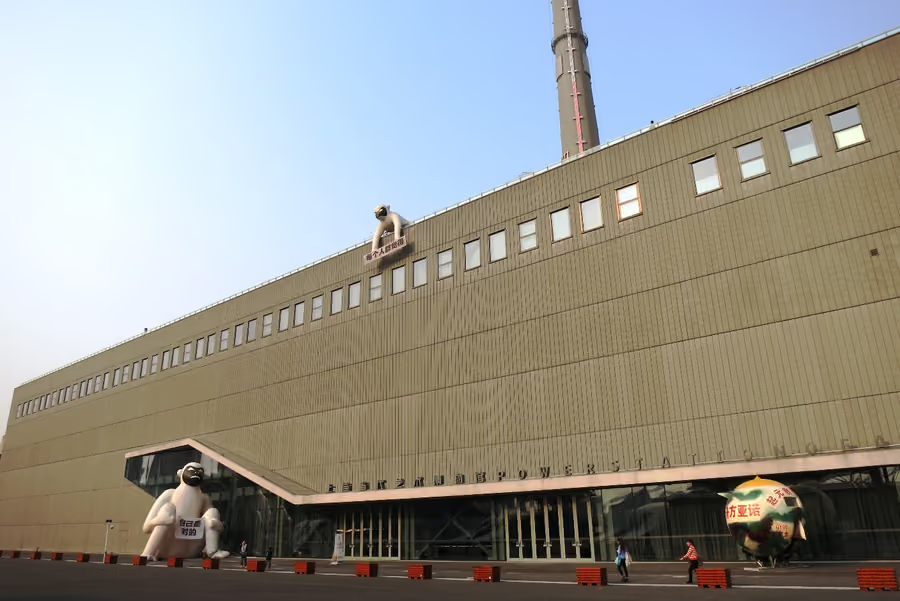
Mainland China's first public contemporary art museum, built in 2012 inside the former Nanshi power station with its 165m chimney kept as a clock tower. It hosts the Shanghai Biennale, and the permanent displays are free.
The story
What makes this place special
The building was the Nanshi Electric Plant - the company was founded in 1897 and moved to this riverside site in 1935 - and its 165m chimney is still the landmark. It served as the Pavilion of Future for Expo 2010, and after about nine months of conversion opened as a museum on 1 October 2012, at a reported cost of $64 million to the Shanghai government. It is China's first state-owned contemporary art museum, with over 41,000m² in total and around 15,000m² of exhibition space, and it has hosted the Shanghai Biennale since the ninth edition in 2012. Entry to its exhibitions is free. The conversion deliberately kept the chimney, the rooftop generators and the plant's layout.
What you’ll discover
A vast industrial hall with its machinery halls, gantries and concrete structure left visible, used for very large installations, plus floors of smaller galleries reached by stairs and lifts, a design wing, a bookshop and a cafe. The chimney has been turned into a visitable element with a display inside. Exhibitions are temporary and change entirely, so the building is the constant: this is the best piece of industrial reuse in Shanghai and the only place in the city where art is shown at that scale.
A little local insight
Good to know before you go
- Check what is on first - everything here is temporary, the galleries go dark between exhibitions, and a changeover week means a long trip to a closed museum.
- Go up the chimney and out onto the terraces. The river view and the view back over the building are part of the visit and most people stay inside on the gallery floors.
- Entry to the permanent displays is free, though big-name international shows are ticketed separately. You can walk in and see the building for nothing.
- If your dates fall in a Biennale year, this is the venue - the Shanghai Biennale is the most substantial contemporary art event in China and it fills the whole plant.
- It is on the riverside about a kilometre from the nearest metro, in a stretch of former Expo land with almost nothing else around it, so bring something to do with the walk or take a taxi to the door.
- Pair it with the West Bund museums downstream rather than with the Bund - the whole south bank of the Huangpu is now a line of converted industrial art spaces along a continuous riverside walk.
When to come
Weekday afternoons. It is indoors and air-conditioned, so it is one of the best options in a Shanghai heatwave or a rainy spell. Biennale autumns are the time to come if you can choose.
Getting around
Very good. It was converted as a modern public museum: lifts to every floor, wide level galleries, step-free entry from the forecourt, accessible toilets and plenty of seating, with the scale of an old power hall meaning no narrow spaces. The chimney viewing level is lift-served. The only real friction is the distance from public transport and the exposed, under-developed approach from the metro.
Worth knowing before you go
The top-floor cafe and the chimney viewing level give a free, uncrowded view back across the Huangpu - a much calmer alternative to the Bund. Pair it with the China Art Museum one metro stop away in the old Expo pavilion.
Compare established providers
Check live tours and tickets
Search for Power Station of Art in Shanghai. Prices, availability, payment and confirmation are handled by the booking provider.
China Travel Select does not take payment or create the reservation. Confirm the exact name, dates, inclusions and cancellation rules on the provider’s page.
Take a closer look
Maps, videos & more
Prices and hours change. These are the places to check on the day.