Discover Hangzhou
Su Causeway (Spring Dawn at Su Causeway)
苏堤春晓
A nearly 3 km tree-lined dyke built by the poet-governor Su Dongpo that cuts straight across the lake, crossing six arched bridges. It is the single best walk in Hangzhou and one of the classic Ten Scenes of West Lake.
The story
What makes this place special
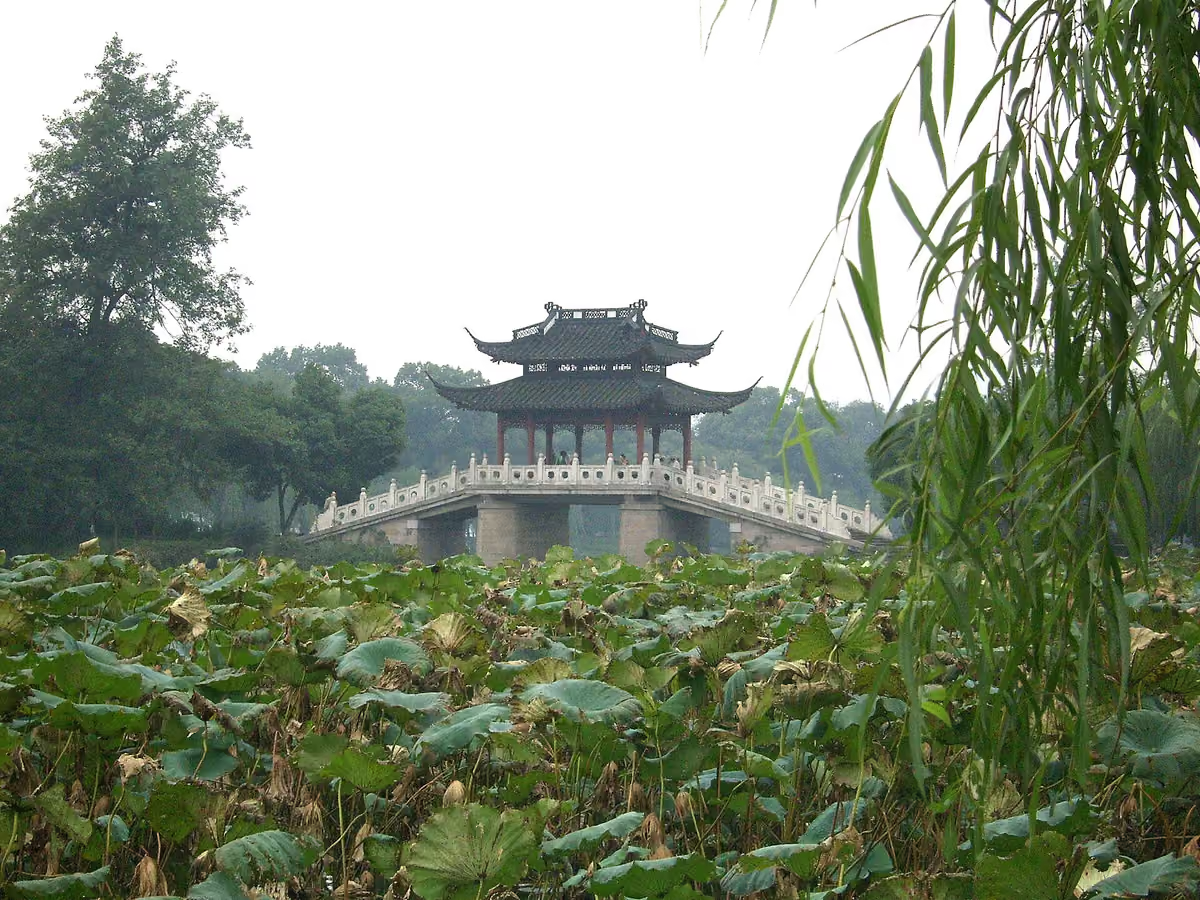
The Su Causeway was built in 1089 by Su Shi while he was prefect of Hangzhou, from silt dredged out of the lake - the lake was silting into a swamp and the causeway is the spoil heap from saving it. It runs from Quyuan on the north shore to Huagang in the south, dividing the Inner Lake from the outer lake, and carries six bridges built so boats could still pass. 'Spring Dawn at Su Causeway' is the first of the classical Ten Scenes, named in the Song and later carved on steles in the Qianlong emperor's calligraphy.
What you’ll discover
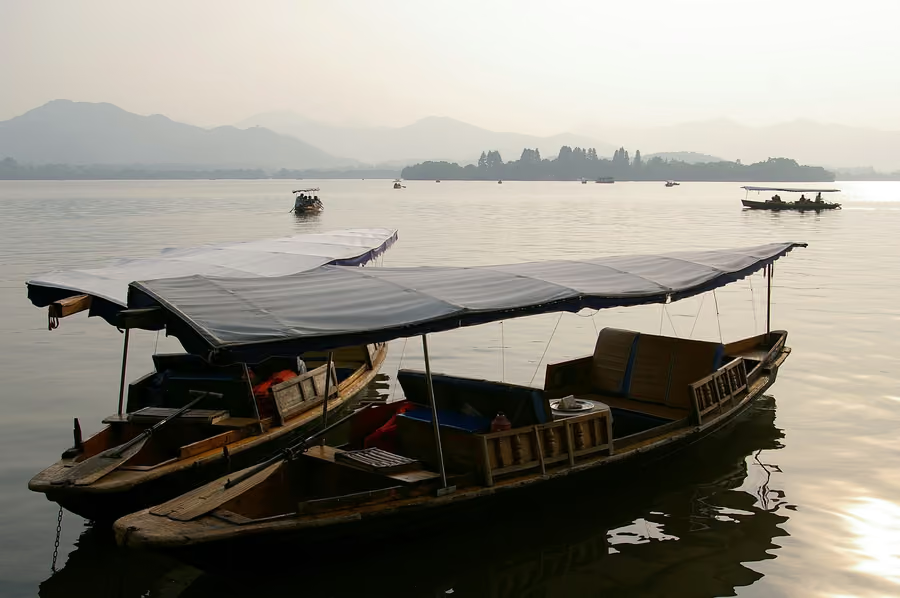
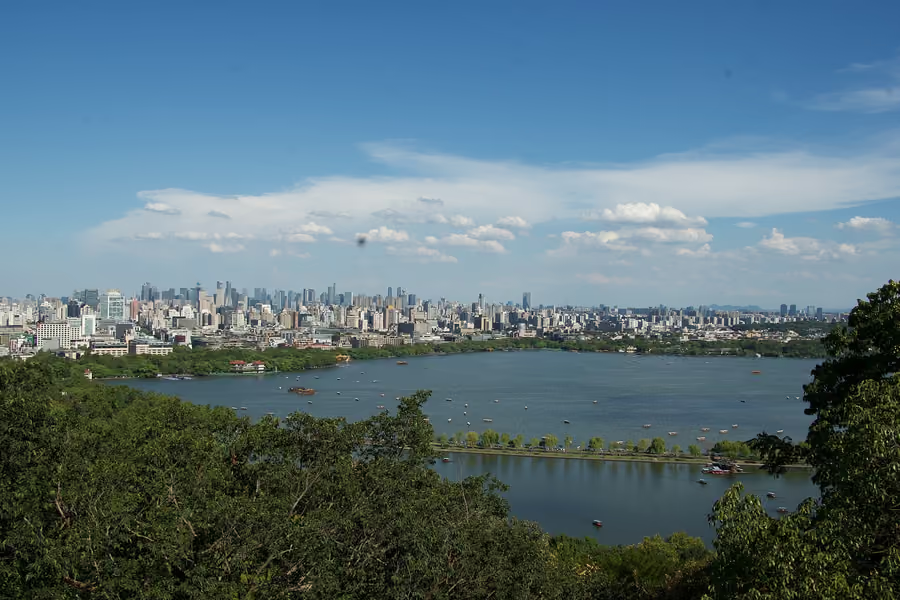
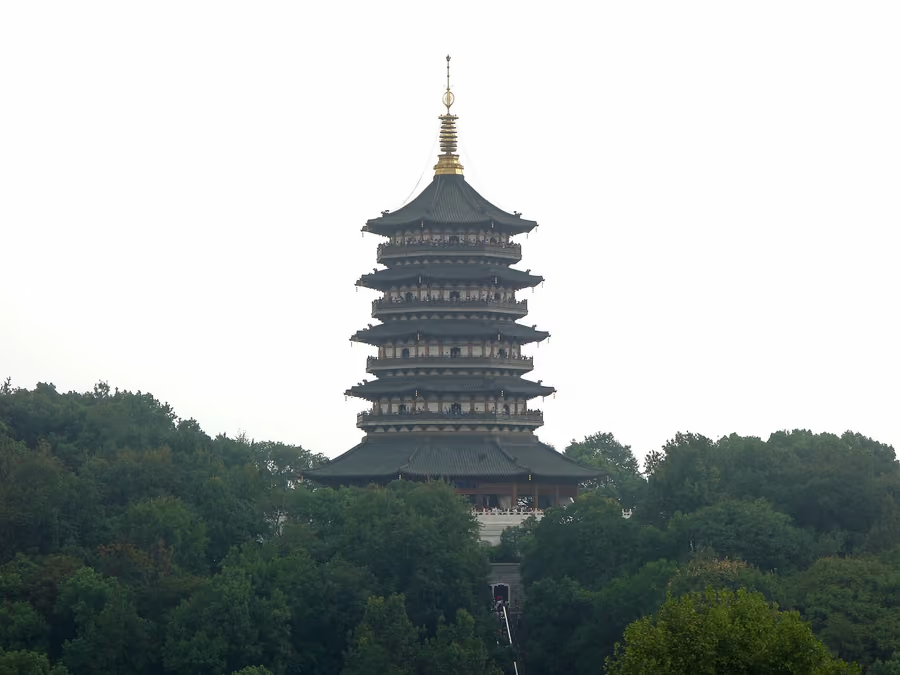
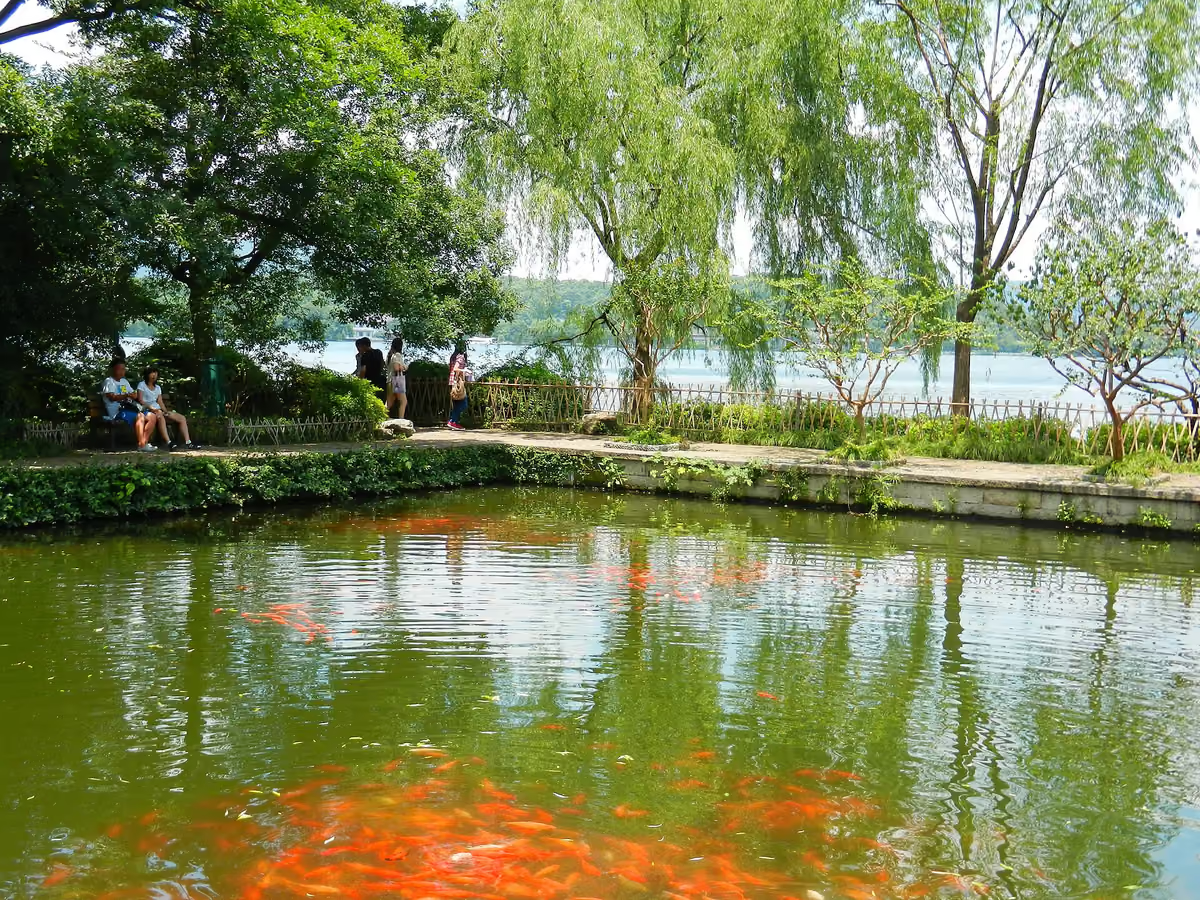
A tree-lined embankment running almost three kilometres across the open water from north-west to south, with the lake on both sides the whole way and six humpbacked bridges stepping over the channels. It is planted with peach and willow alternately, which is the point of the 'spring dawn' name - peach blossom and new willow together. From the deck of the causeway you look east across the main lake to the city and Leifeng Pagoda, and west into the quieter Inner Lake and the hills.
A little local insight
Good to know before you go
- Allow 45 minutes to an hour to walk it one way, and know that there is no shortcut off it once you are on - it is a causeway. People start it casually at the Huagang end and discover they are committed.
- Walk it north to south in the morning, with the light behind you and the city across the water; south to north in the late afternoon. Facing into the sun across open water for three kilometres is the usual mistake.
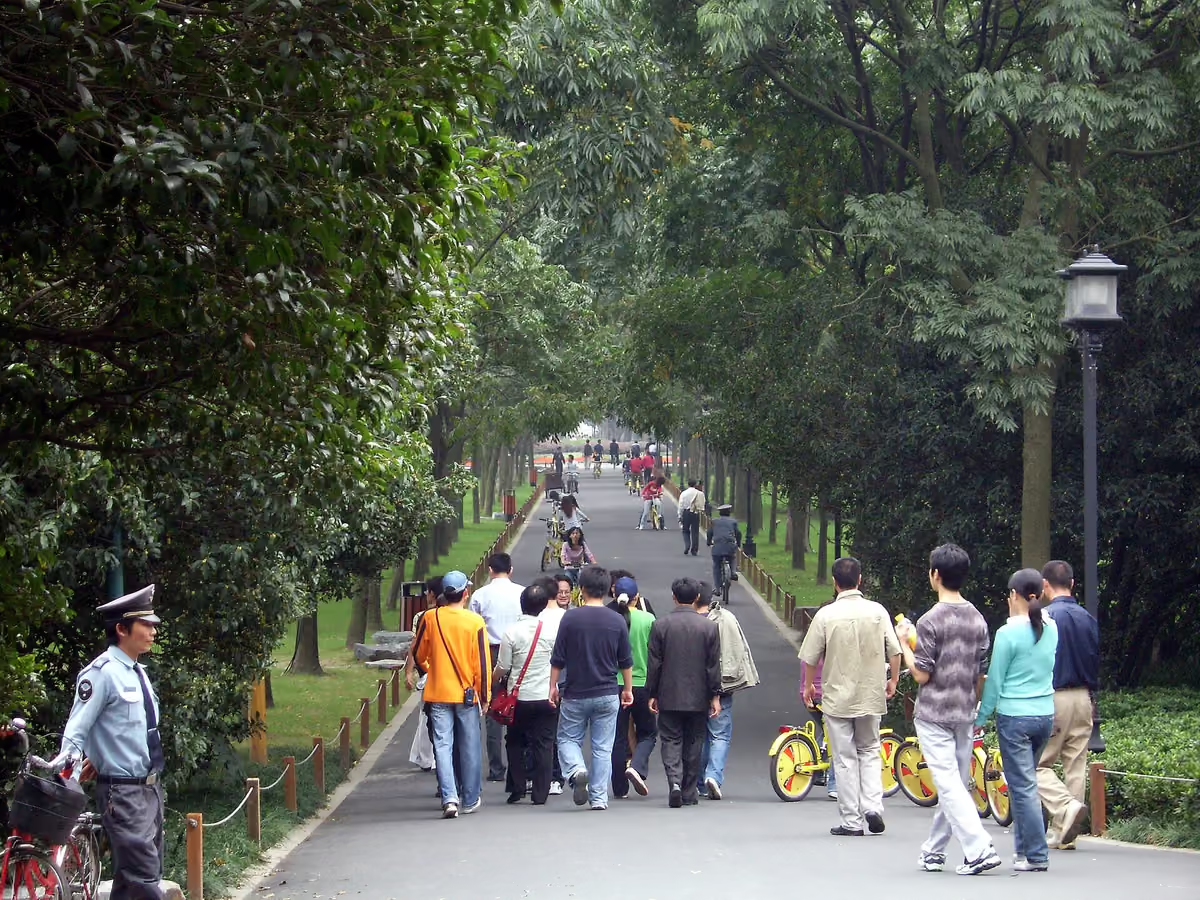
- Cycle it. Bikes are the local way to do the causeway and turn a one-hour trudge into fifteen minutes, which frees the day for the sights at either end.
- The six bridges are the only gradients and each one is a viewpoint - stop on the crown of each rather than powering over it. The second and third from the north give the classic look down the line of the causeway.
- At dawn in spring it is full of locals doing tai chi and the blossom is out with nobody else there. By 10am in blossom season it is a slow-moving column of people.
When to come
Dawn in late March and early April, which is literally the named scene: peach blossom, new willow and mist. Otherwise early morning or the hour before sunset. Midsummer is hot and shadeless in the middle stretches despite the trees.
Getting around
Level paved path for its whole length with no steps, so a wheelchair can use it; the only gradients are the six shallow bridge humps. The difficulty is purely distance and the fact that there is no exit partway, so a return trip is around six kilometres. There are no lakeside shuttle buses on the causeway itself, only on the shore roads at either end. Benches and toilets exist but are spaced out.
Worth knowing before you go
Walk it from south to north in the early morning; by 10am tour groups fill the bridges. In late March the peach blossom and willow combination along the causeway is the reason the scene is called 'Spring Dawn'.
Compare established providers
Check live tours and tickets
Search for Su Causeway (Spring Dawn at Su Causeway) in Hangzhou. Prices, availability, payment and confirmation are handled by the booking provider.
China Travel Select does not take payment or create the reservation. Confirm the exact name, dates, inclusions and cancellation rules on the provider’s page.
Take a closer look
Maps, videos & more
Prices and hours change. These are the places to check on the day.