Discover Hangzhou
Three Pools Mirroring the Moon (Lesser Yingzhou Island)
三潭印月 / 小瀛洲
The island-within-a-lake garden printed on China's one-yuan note, reached only by boat. Three stone lanterns stand in the water offshore; on the mid-autumn full moon candles are lit inside them.
The story
What makes this place special
Lesser Yingzhou is an artificial island, built up from dredged sediment in the Ming and Qing on the site of an earlier lake temple. The three small stone pagodas standing in the water off its southern side descend from markers Su Shi proposed in 1090 to fence off the area where water chestnut planting was silting the lake - they began as a boundary line, not as scenery. Those were lost; three were rebuilt in 1621 and the present hollow, bottle-shaped stone pagodas, each about two metres tall with five round openings, are generally dated to the Kangxi reign. The 'mirroring the moon' effect comes from putting candles inside the pagodas at mid-autumn and covering the holes with thin paper, so the openings throw moon-like reflections on the water. The scene was printed on the back of the 1-yuan note.
What you’ll discover
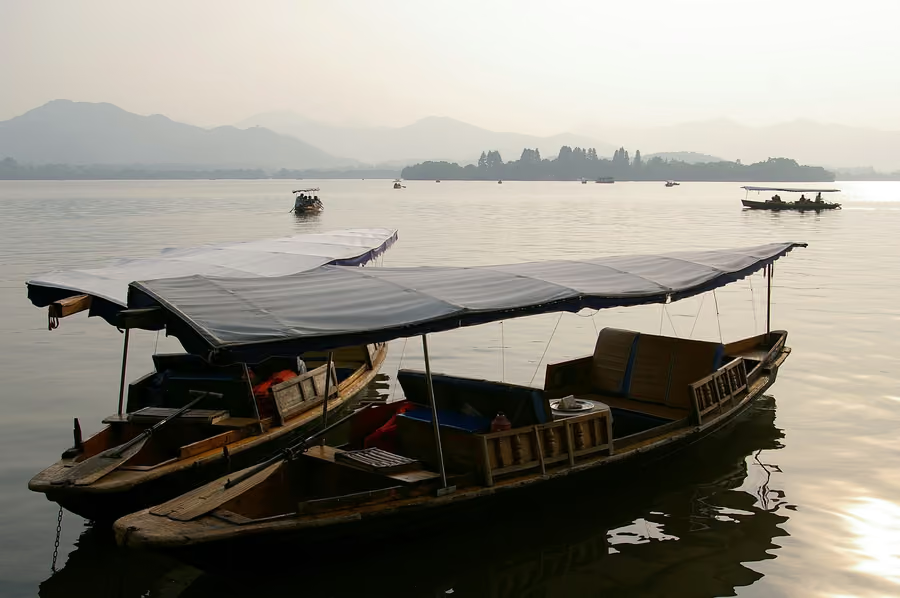
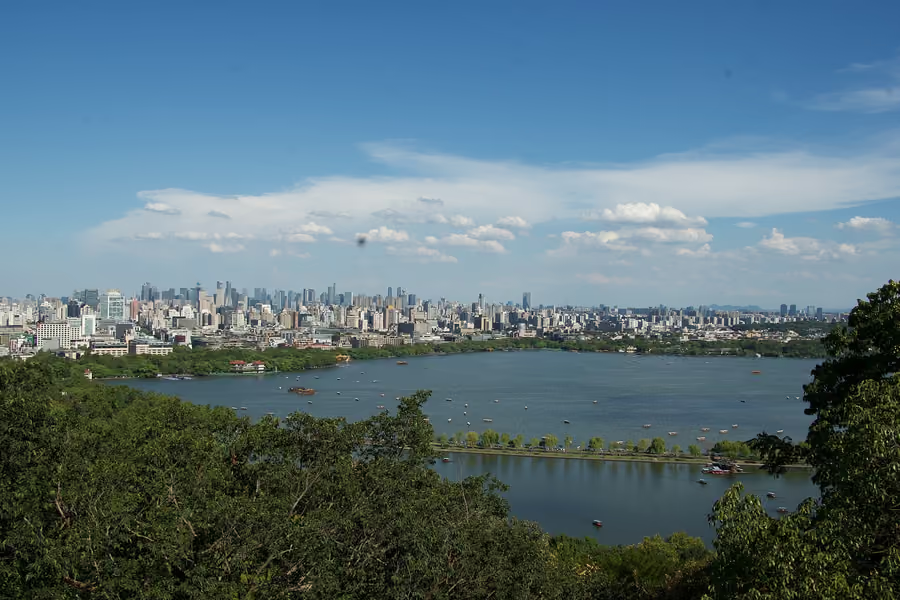
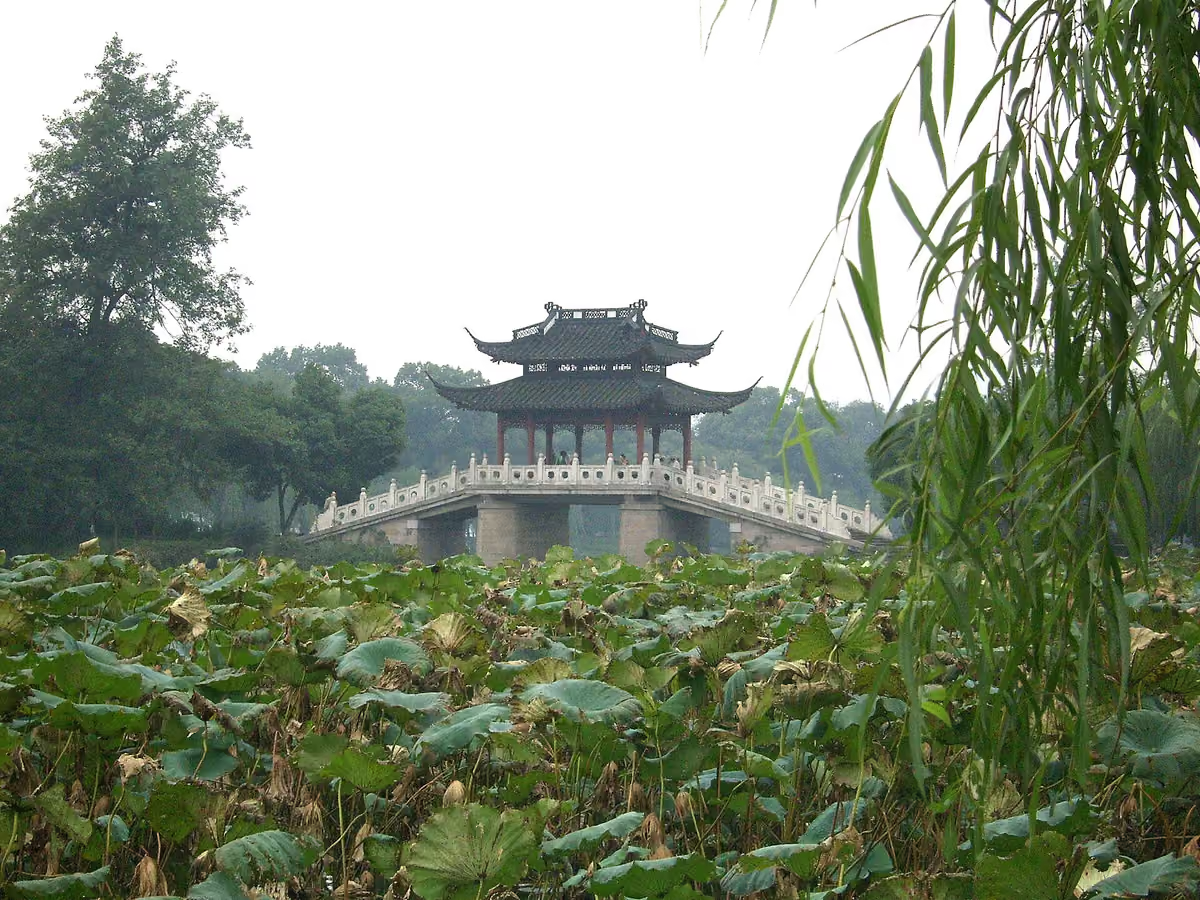
You can only get here by boat, and the island is a garden built inside the lake: a figure-of-eight of causeways and zigzag bridges enclosing inner ponds, so that you are walking on water with water on both sides - 'a lake within a lake, an island within an island'. The circuit takes in the Nine Lion Stone, the open 'Wo Xin Xiang Yin' pavilion looking out at the three pagodas, lotus ponds and a tea house. The pagodas themselves are out in the open water to the south and are seen from the island, not visited.
A little local insight
Good to know before you go
- The boat fare and the island are the visit - you cannot reach the pagodas. People expect to go to them.
- The moon effect is a mid-autumn festival event with candles lit in the pagodas, not an everyday sight. On any other night the pagodas are just three stone shapes in the water.
- Take a 1-yuan note with you and hold it up at the pavilion on the south side. That is the exact composition, and it is a far better keepsake photograph than the generic one.
- Boats run from several jetties (Hubin on the east shore, Huagang in the south, Gushan in the north) and the ticket usually includes the island. Boarding from the quieter southern or northern jetties saves a long queue at the central Hubin piers in the afternoon.
- Allow an hour on the island, not twenty minutes. Most people walk straight across and reboard; the inner pond circuit, which is the clever part of the design, takes the extra half hour.
When to come
Late afternoon, when the light is low across the water and the pagodas cast reflections, and because the boat queues are shortest. Mid-Autumn Festival is the authentic occasion but is extremely crowded. July and August for lotus in the inner ponds.
Getting around
Difficult because of the boat. Boarding involves a step down from the pontoon into a hull with a narrow doorway and no ramp. Once ashore, the island paths are flat paved causeways and bridges with only a few shallow steps, so the island itself is largely manageable, but the bridges are narrow and railings are low. A wheelchair user would need help at both the boarding and landing stages; with a bad knee it is fine once aboard.
Worth knowing before you go
The big cruise boats and the hand-rowed sampans leave from different jetties and cost different amounts; the ¥70 ticket is the big-boat package that includes landing on the island. Confirm the price at the window before paying.
Compare established providers
Check live tours and tickets
Search for Three Pools Mirroring the Moon (Lesser Yingzhou Island) in Hangzhou. Prices, availability, payment and confirmation are handled by the booking provider.
China Travel Select does not take payment or create the reservation. Confirm the exact name, dates, inclusions and cancellation rules on the provider’s page.
Take a closer look
Maps, videos & more
Prices and hours change. These are the places to check on the day.