Discover Suzhou
Canglang Pavilion (Surging Waves Pavilion)
沧浪亭
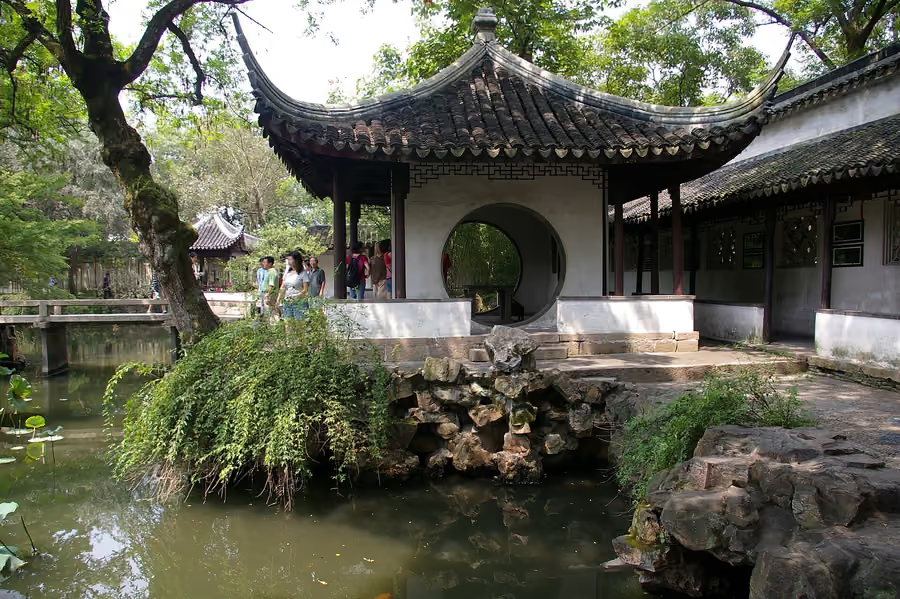
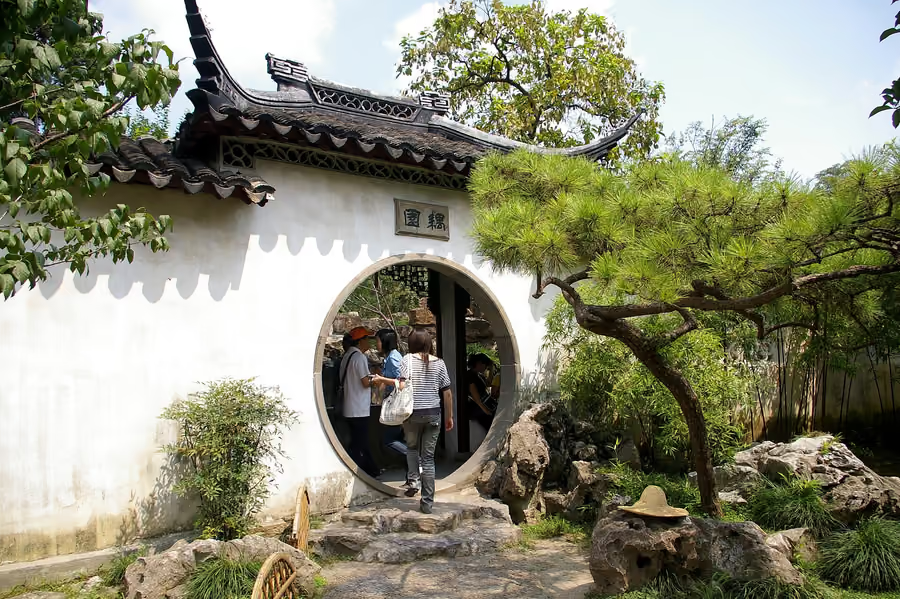
The oldest surviving Suzhou garden, from the Northern Song, and the cheapest of the UNESCO five. It opens outward onto a canal instead of walling itself in, and its double-sided latticed corridor is a famous piece of garden design.
The story
What makes this place special
The oldest of Suzhou's World Heritage gardens. The Song poet Su Shunqin built it in 1044 on the site of an imperial flower garden of about 960, and took its name from a classical line about an honest official withdrawing from a corrupt court - he had just been dismissed from office, so the name is a statement. It passed through many hands, was restored in 1696 by the Jiangsu governor Song Luo, and again under Tao Zhu in 1827 and Zhang Shusheng in 1873. Tao Zhu built the Temple of Five Hundred Sages in 1827 to hold his collection of 584 engraved portraits of notable Suzhou men from the Spring and Autumn period to the Qing. It opened to the public in 1955.
What you’ll discover
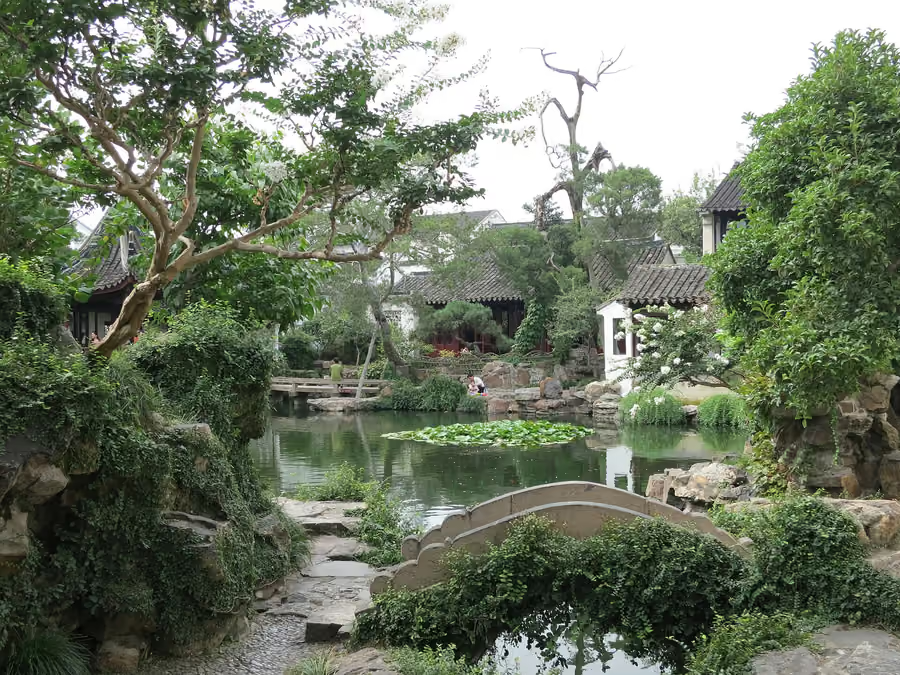
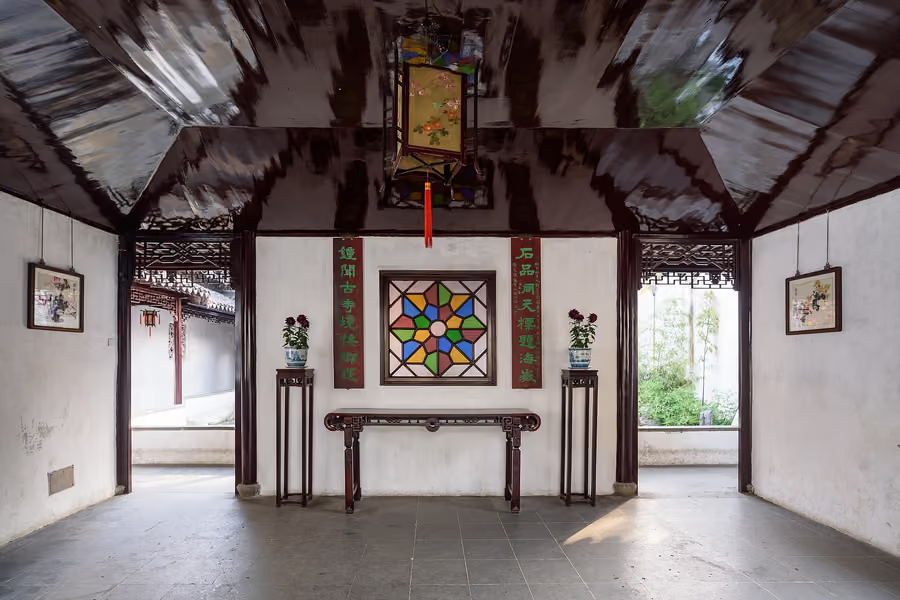
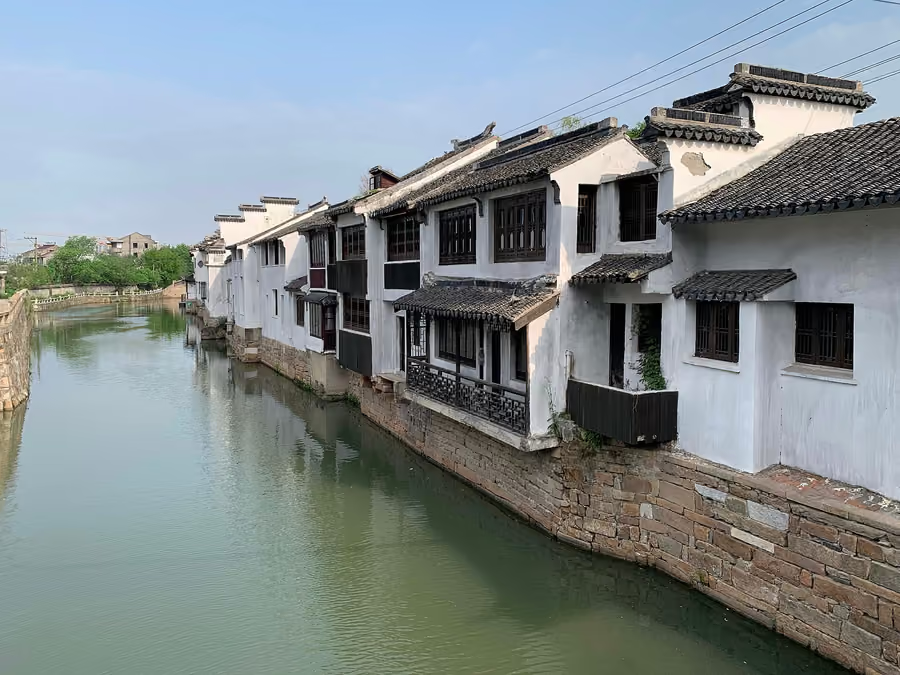
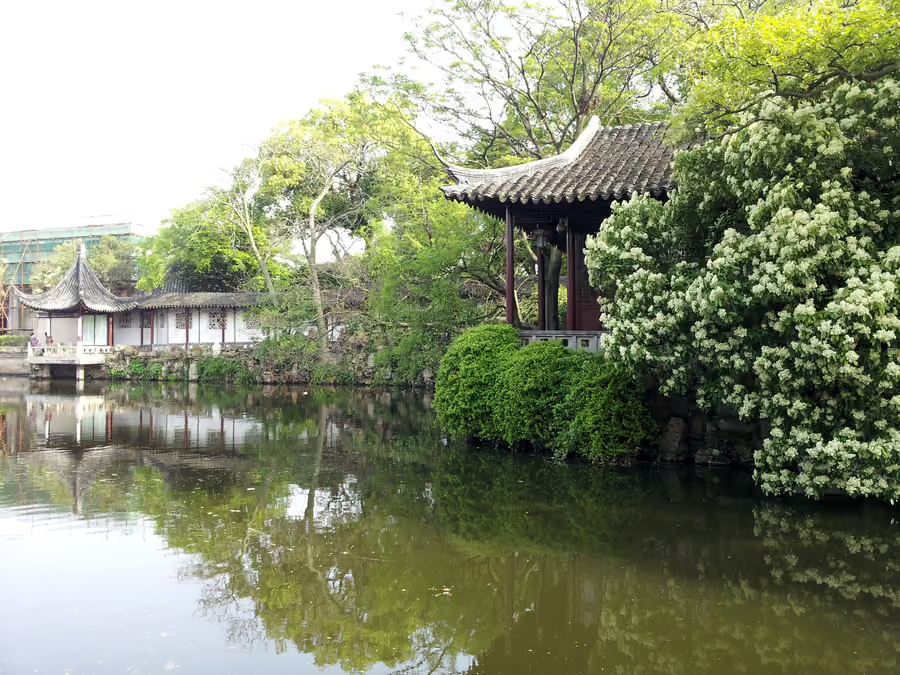
About 1.6 hectares in two sections, and uniquely among Suzhou gardens it faces outwards: the water is outside the wall, a branch of the Fengxi stream forming a lotus pond, and the Fish Watching Place is a detached pavilion beyond the garden wall linked back by a double-roofed covered walkway over a rockery. Inside, the ground is raised into a wooded hill with the Canglang Pavilion itself on top, and the circuit runs through the Temple of Five Hundred Sages with its wall of engraved portraits, the Hall of the Bright Way, and a long run of lattice windows - the garden has an unusually varied set of window patterns.
A little local insight
Good to know before you go
- The design idea is worth knowing before you go: every other Suzhou garden turns inward around its own pond, and this one borrows water it does not own. Walk along the outside of the wall by the canal before you go in.
- It is the quietest of the major gardens and much the cheapest-feeling in crowd terms, because it sits south of the centre away from the Humble Administrator's cluster. On a busy weekend it is the one to head for.
- The hall of five hundred sages is the oddest thing in any Suzhou garden - a gallery of 584 carved portraits - and groups walk straight past it.
- Count the windows. The lattice patterns here are a recognised set and photographing them is the connoisseur's reason to come.
- It pairs with the Master of the Nets Garden and the old south-city streets, both within walking distance, rather than with the northern sights.
When to come
Early morning or late afternoon on a weekday. Summer for the lotus in the outer pond; autumn for the hill's trees.
Getting around
Mixed. The entrance courtyards, the covered walkway and the halls including the Five Hundred Sages gallery are on flat paving and are reachable, and the outer canal path is level. The central feature, however, is an artificial wooded hill, and getting up to the Canglang Pavilion itself is by irregular stone steps with no alternative route. A wheelchair user can do perhaps two thirds of the garden but not the pavilion; a bad knee is fine except for that climb.
Worth knowing before you go
Far quieter than the headline gardens. Combine it with the adjacent Kunqu Opera Museum and Pingtan Museum, both free and both a short walk away.
Compare established providers
Check live tours and tickets
Search for Canglang Pavilion (Surging Waves Pavilion) in Suzhou. Prices, availability, payment and confirmation are handled by the booking provider.
China Travel Select does not take payment or create the reservation. Confirm the exact name, dates, inclusions and cancellation rules on the provider’s page.
Take a closer look
Maps, videos & more
Prices and hours change. These are the places to check on the day.