Discover Suzhou
Humble Administrator's Garden
拙政园
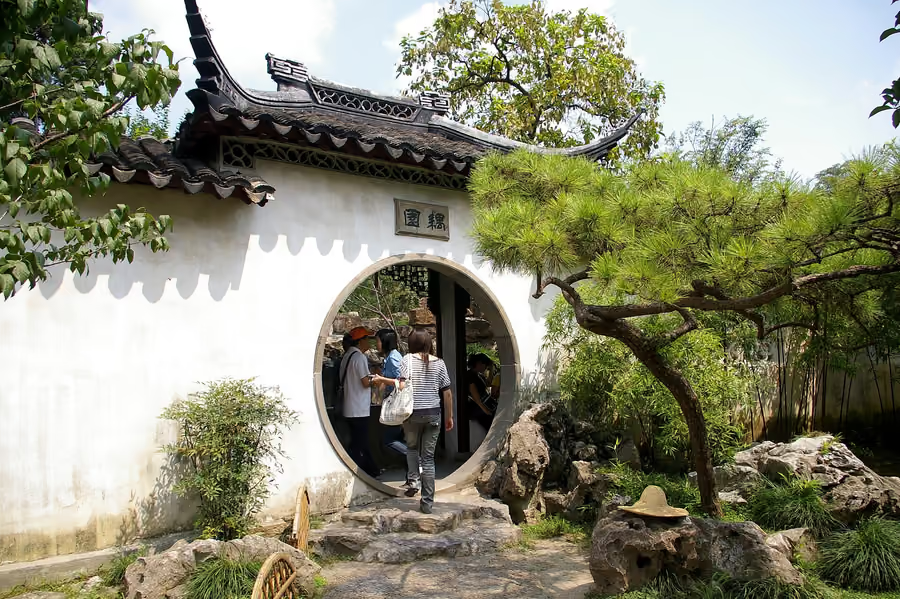
The largest and most celebrated of the classical Suzhou gardens, a UNESCO World Heritage site laid out around a broad pond with islands, zigzag bridges and borrowed views of a distant pagoda. If you only see one Chinese garden in your life, this is the benchmark.
The story
What makes this place special
A garden stood on this site in the Shaoxing period of the Southern Song, between 1131 and 1162, but the garden that matters was made by the Ming official and poet Wang Xianchen on the ruins of Dahong Temple in the early 1500s - sixteen years of work, finished in 1526 - and the name, taken from a line about a modest man watering his own vegetable patch, is Wang's sardonic comment on his own forced retirement. His friend Wen Zhengming painted and wrote about it in 1533 and 1551. Wang's son lost it in gambling debts; from the 1630s its three parts were owned separately, and the central part became the residence of the Taiping prince Li Xiucheng in 1860. The government reunited the three in 1949 and restored them in 1952. Cao Xueqin is believed to have lived here as a teenager, and scholars think it fed the garden scenery of Dream of the Red Chamber. At 5.2 hectares it is the largest garden in Suzhou and was inscribed by UNESCO in 1997.
What you’ll discover
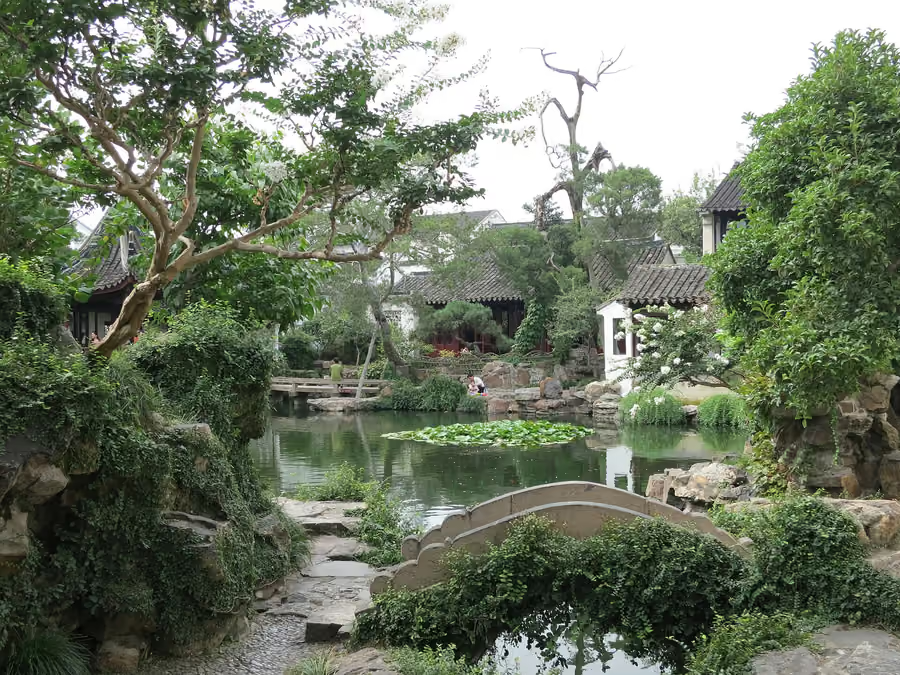
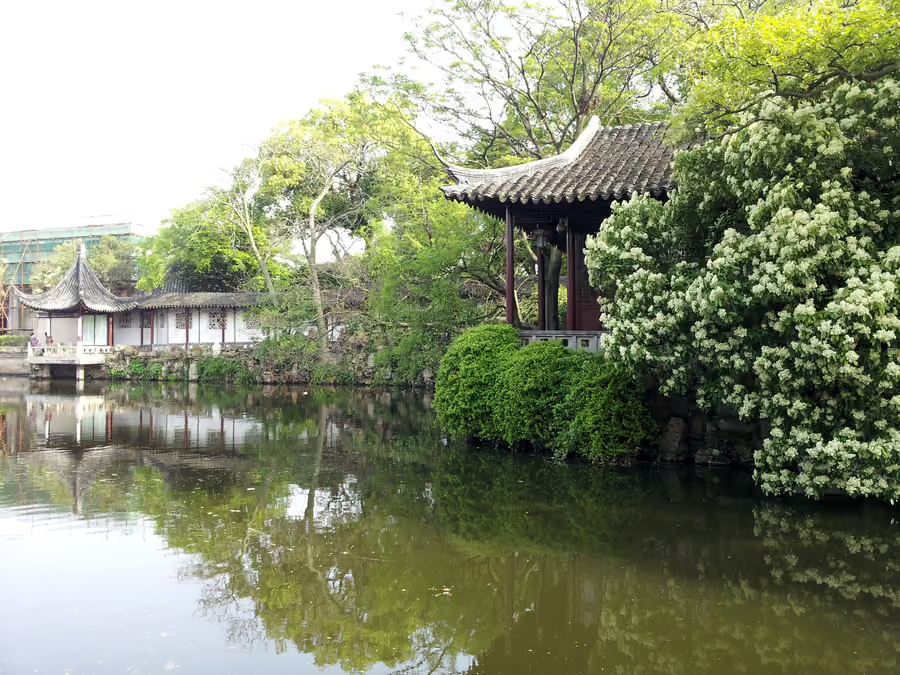
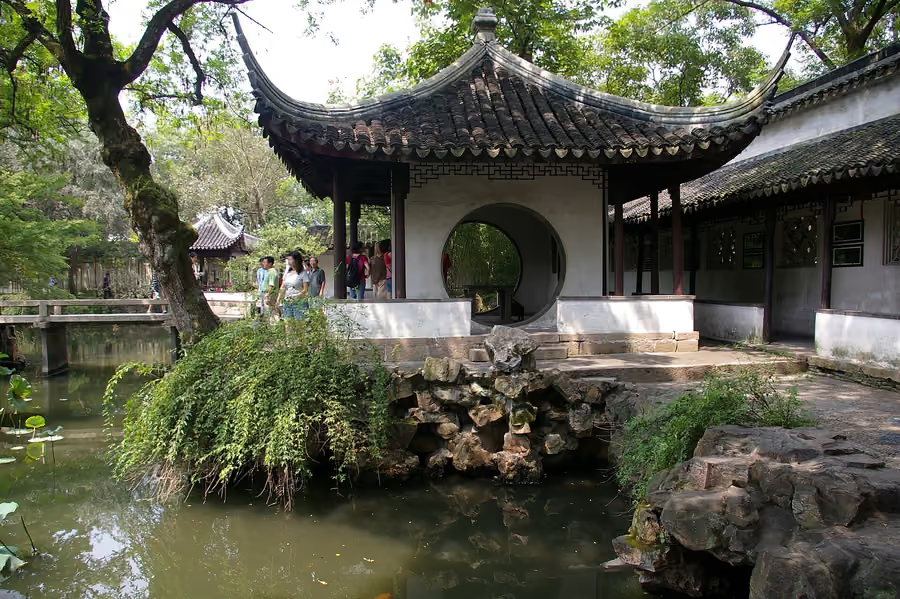
Three gardens around one large body of water, with the house at the southern end, and around a third of the whole site is water - this is the water garden, where the Lion Grove is the rock garden. The central garden is the masterpiece: scenes arranged around Surging Wave Pond with three islands standing for the mythical isles of the eastern sea, the Distant Fragrance Hall sited to catch the scent of the lotus, and the Flying Rainbow Bridge, the only arched bridge in any Suzhou garden. The western garden, about half the size, turns on a long north-south pond with an islet and holds the Hall of 36 Mandarin Ducks and 18 Camellias, which was used for Kunqu performances. The eastern garden is the most open, buildings scattered round a lawn and pond ringed with crape myrtle. There are 48 buildings, 101 inscribed tablets, 40 steles, 21 protected ancient trees and over 700 Suzhou-style penjing.
A little local insight
Good to know before you go
- Go in at opening and go straight to the central garden. This is the most visited garden in Suzhou and by mid-morning the narrow waterside walks in the central section are a one-way queue, which destroys the composed views the whole design depends on.
- Enter from the east and work west. Most groups are funnelled the same way through the central garden; the eastern garden is the least interesting and the least crowded, and doing it first lets the central section empty slightly.
- Read the tablet over each hall and then look where the hall is looking. Every named building is a framed view with a line of poetry attached - the 'With Whom Shall I Sit?' Pavilion, the Distant Fragrance Hall - and ignoring the names turns a designed sequence into a pretty park.
- July and August for lotus. The central pond is a lotus garden and the Distant Fragrance Hall was positioned for its scent, so the garden in high summer is doing what it was built to do.
- Do it with the Suzhou Museum and the Lion Grove, which are both a few minutes' walk along the same street, and leave the Lingering Garden for a different day - it is across town.
- If the queue at the gate is long and you have not booked, the Lingering Garden or Canglang Pavilion will give you a better garden experience the same morning.
When to come
At opening on a weekday, and in July or August for the lotus, or late autumn for the maples and the penjing. Rain thins the crowds dramatically and the covered walkways make it workable.
Getting around
Moderate. The site is flat and large, and the main paths through the three gardens and the residence are paved, so a good deal is reachable in a wheelchair - the central pond circuit, the halls and the main walkways. Against that: high timber thresholds at the hall doorways, a number of short step runs between levels, stepped ornamental bridges including the Flying Rainbow Bridge, and the rockeries and islet approaches. Distance is also a factor at 5.2 hectares. A bad knee is fine with a slow pace; a wheelchair user will need help at thresholds and will miss the bridges and rockwork.
Worth knowing before you go
Arrive at opening or after 15:30; between 10am and 2pm the famous corridors are shoulder-to-shoulder. The west and east sections are far quieter than the central pond. Two verification passes disagreed on the peak price — ¥80 against ¥90 — though both gave ¥70 off-peak. Budget ¥90.
Compare established providers
Check live tours and tickets
Search for Humble Administrator's Garden in Suzhou. Prices, availability, payment and confirmation are handled by the booking provider.
China Travel Select does not take payment or create the reservation. Confirm the exact name, dates, inclusions and cancellation rules on the provider’s page.
Take a closer look
Maps, videos & more
Prices and hours change. These are the places to check on the day.