Your destination guide 苏州
Suzhou
The finest classical gardens in China
Twenty-five minutes from Shanghai and the best single day trip in the country. The gardens are the draw, but Pingjiang Road after dark and a canal boat are what people come back talking about.
Getting there
No airport of its own — use Shanghai's, or Wuxi (WUX) about 40 minutes away. Suzhou Railway Station is the central one, walkable to Pingjiang Road and the Humble Administrator's Garden; Suzhou North is further out.
When to go
Late March to May for magnolia and wisteria, and October to early November. July and August run over 35°C and humid.
How long: 2–4 days
Give it 2 days for the headline sights, or up to 4 to see it properly and eat your way around.
Two covers two gardens and Pingjiang Road. Four lets you see the gardens at opening when they are empty, add Tongli or Zhouzhuang, and eat the seasonal dishes rather than whatever is on the picture menu.
Hangzhou and Suzhou: lake, gardens, and the easiest days in China
Two cities under an hour from Shanghai by train, both largely free to walk, and both with the fiddliest free-ticket bookings in the country.
Make a few good memories
What to see in Suzhou
Researched largely from Chinese-language sources, so it goes beyond the usual shortlist. Dollar figures are approximate, at the rate on 2026-10-08.
拙政园
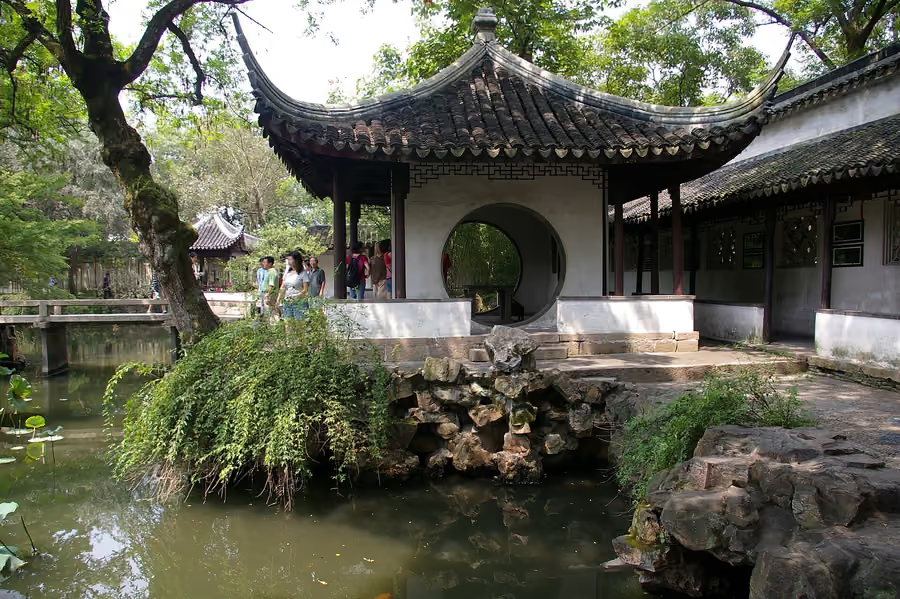
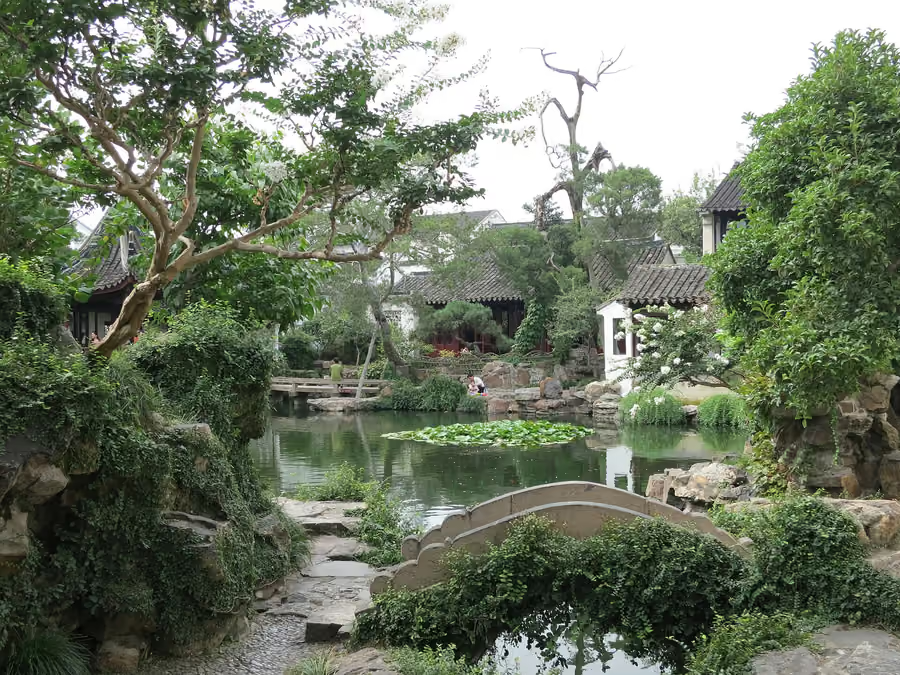
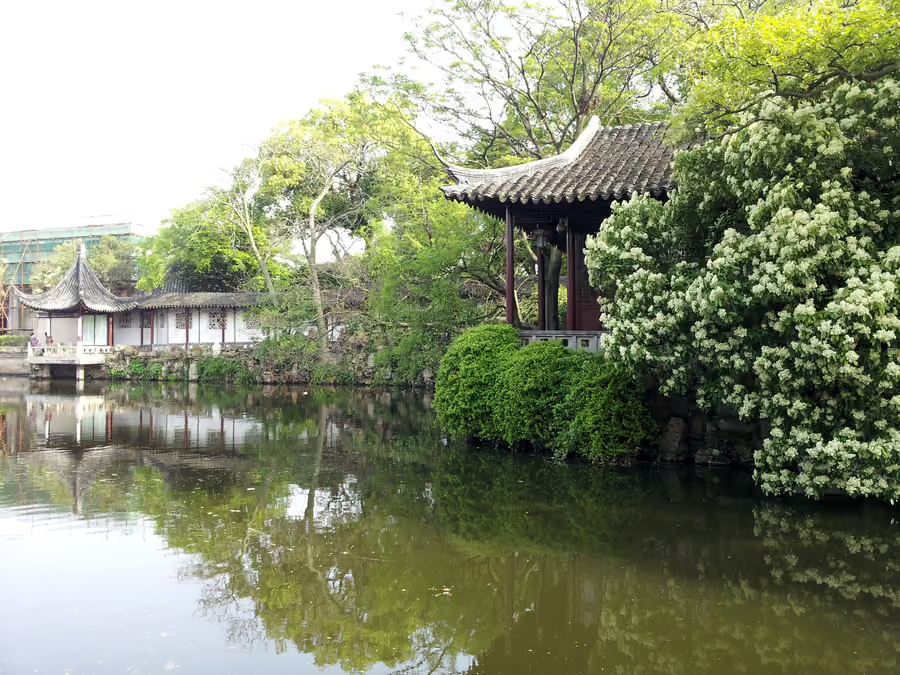
The largest and most celebrated of the classical Suzhou gardens, a UNESCO World Heritage site laid out around a broad pond with islands, zigzag bridges and borrowed views of a distant pagoda. If you only see one Chinese garden in your life, this is the benchmark.
¥80 peak season (April, May, July-October), ¥70 off-peak; separate night show 'Zhuozheng Wenya' ticket
≈ US$10–12Opening hours, booking and how to get there →
留园
A UNESCO-listed garden famous for its 700-metre covered walkway and its collection of grotesque Taihu limestone rocks, including the 6.5-metre Cloud-Capped Peak. Architecturally it is the most inventive of the Suzhou gardens.
¥55 peak season, ¥45 off-peak
≈ US$6.70–8.19Opening hours, booking and how to get there →
网师园
The smallest of the great Suzhou gardens and, for many, the most perfect - a scholar's residence under half a hectare where every window frames a composed view. The Met in New York copied one of its courtyards.
¥40 peak season, ¥30 off-peak; the separate evening garden programme is around ¥100
≈ US$4.47–15Opening hours, booking and how to get there →
狮子林
A UNESCO-listed Yuan dynasty garden built around a maze of limestone rockeries riddled with caves and tunnels that you climb through rather than look at. Chinese families bring children here precisely because it is a playable garden.
¥40 peak season, ¥30 off-peak
≈ US$4.47–5.96Opening hours, booking and how to get there →
沧浪亭
The oldest surviving Suzhou garden, from the Northern Song, and the cheapest of the UNESCO five. It opens outward onto a canal instead of walling itself in, and its double-sided latticed corridor is a famous piece of garden design.
¥20 peak season (reported), roughly half that for seniors
≈ US$2.98Opening hours, booking and how to get there →
耦园
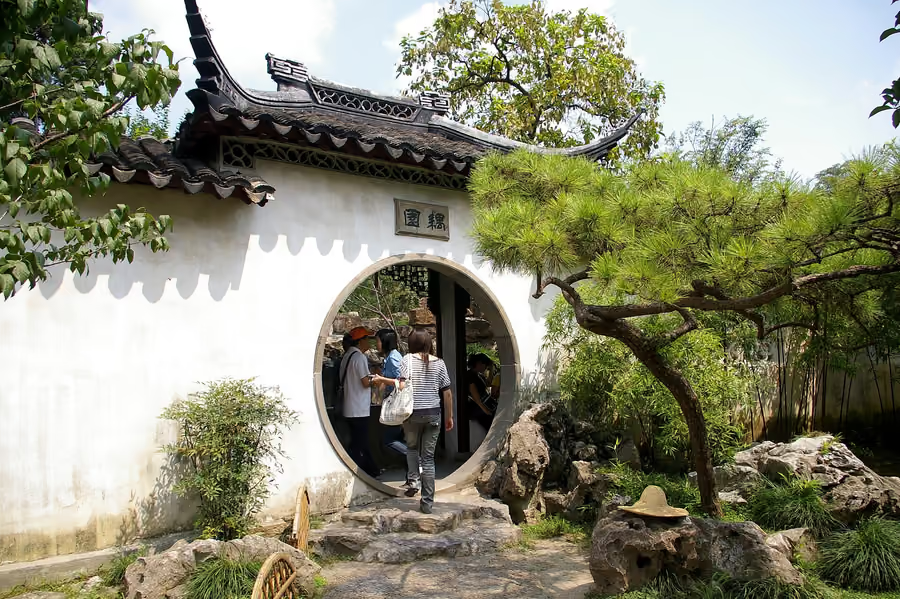
A UNESCO-listed garden built as a married couple's double retreat, with an east garden for him and a west garden for her, water on three sides and almost no tour groups. It is the easiest classical garden in Suzhou to have largely to yourself.
Around ¥25 peak season (reported)
≈ US$3.72Opening hours, booking and how to get there →
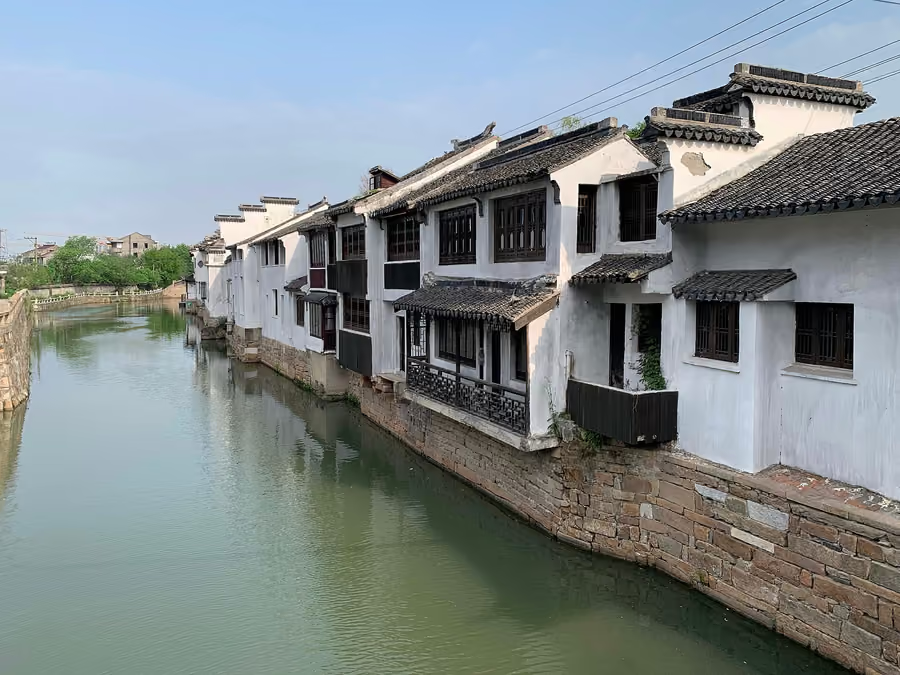
虎丘
A wooded hill topped by a 1,000-year-old brick pagoda that leans noticeably off vertical - Suzhou's Leaning Tower. Beneath it lies the supposed tomb of King Helu of Wu, guarded by the Sword Pool gorge.
¥70 peak season (16 Apr - 30 Oct), ¥60 off-peak
≈ US$8.94–10Opening hours, booking and how to get there →
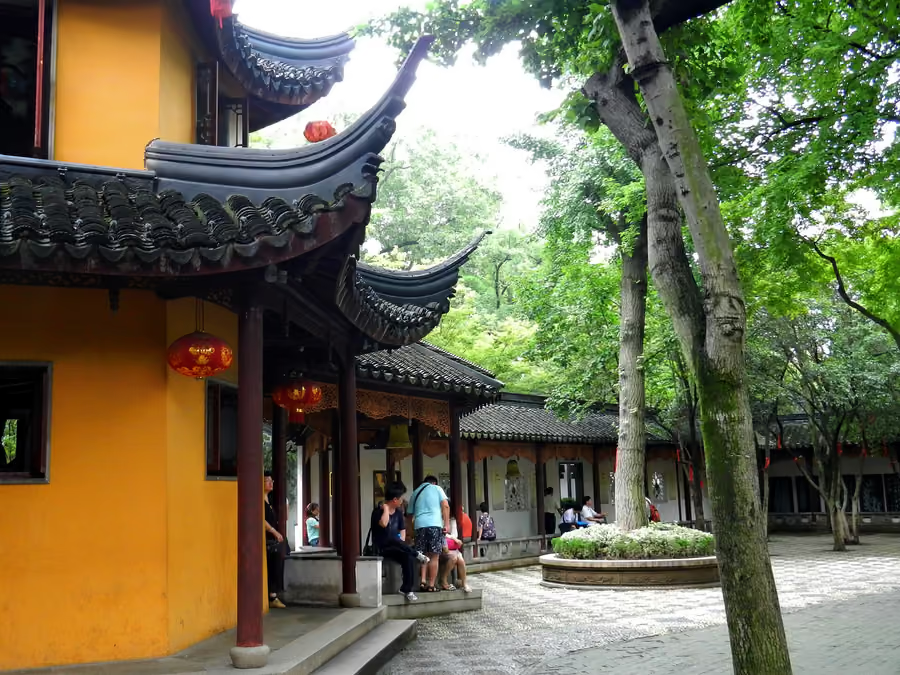
寒山寺
A working Buddhist temple that every educated Chinese person knows from a four-line Tang poem about hearing its midnight bell from a moored boat. The yellow walls and the bell tower beside Maple Bridge are the images that poem created.
¥20 (around ¥18 booked online); ringing the great bell costs extra
≈ US$2.68–2.98Opening hours, booking and how to get there →
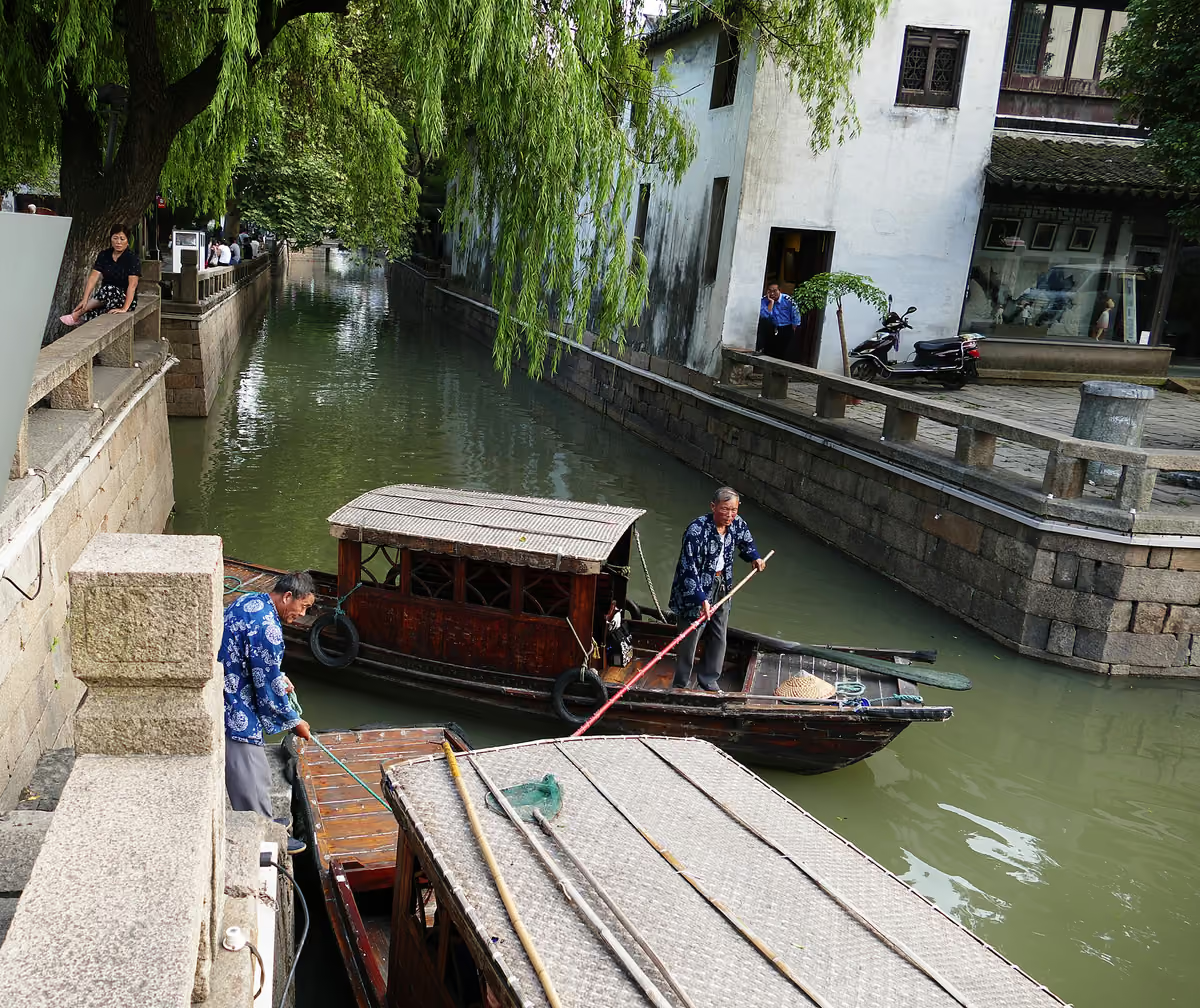
平江路
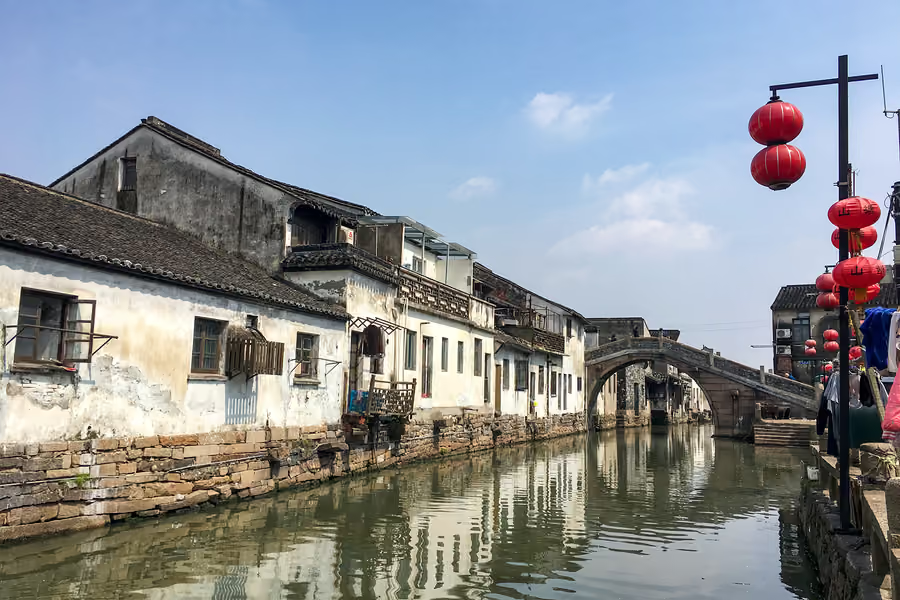
An 800-year-old canal street that matches the layout on a Song dynasty stone map of the city, now lined with teahouses, Pingtan ballad parlours and small shops. It is the most atmospheric free walk in Suzhou.
Free (side gardens and museums charge separately)
Opening hours, booking and how to get there →
山塘街
A 3.5 km canal and street dug by the Tang poet-governor Bai Juyi to link the city to Tiger Hill. The eastern end is a lit-up tourist strip; walk west and it becomes a working residential canal.
Free to walk; a small central ticketed section and boat rides cost extra
Opening hours, booking and how to get there →
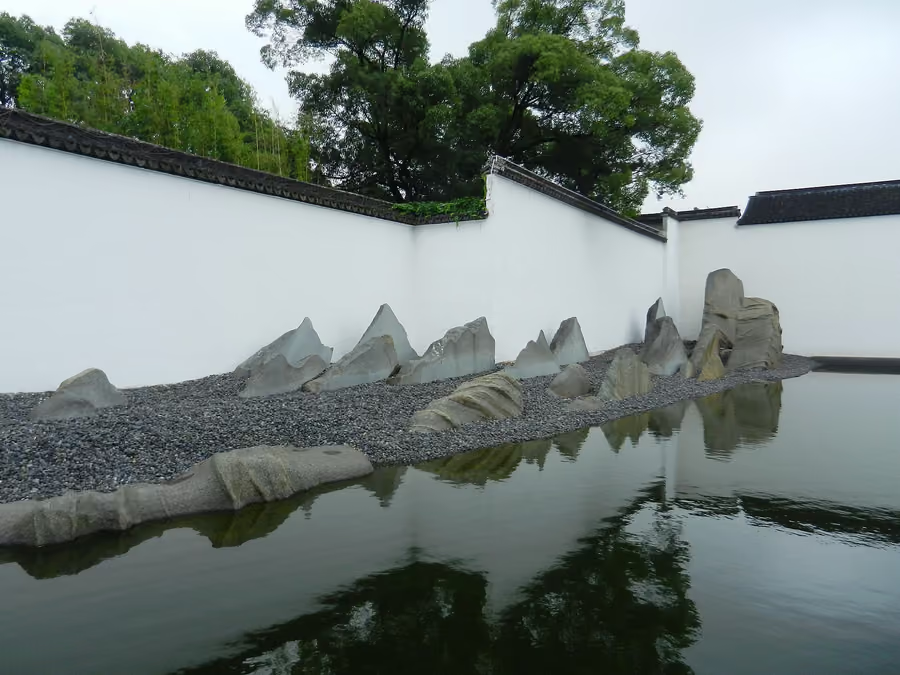
苏州博物馆
I. M. Pei's late-career masterpiece, a white-and-grey building that reinterprets Suzhou's garden architecture in modern geometry, holding Wu-kingdom bronzes, Ming paintings and a famous Buddhist reliquary. The building is as much the exhibit as the collection.
Free
Opening hours, booking and how to get there →
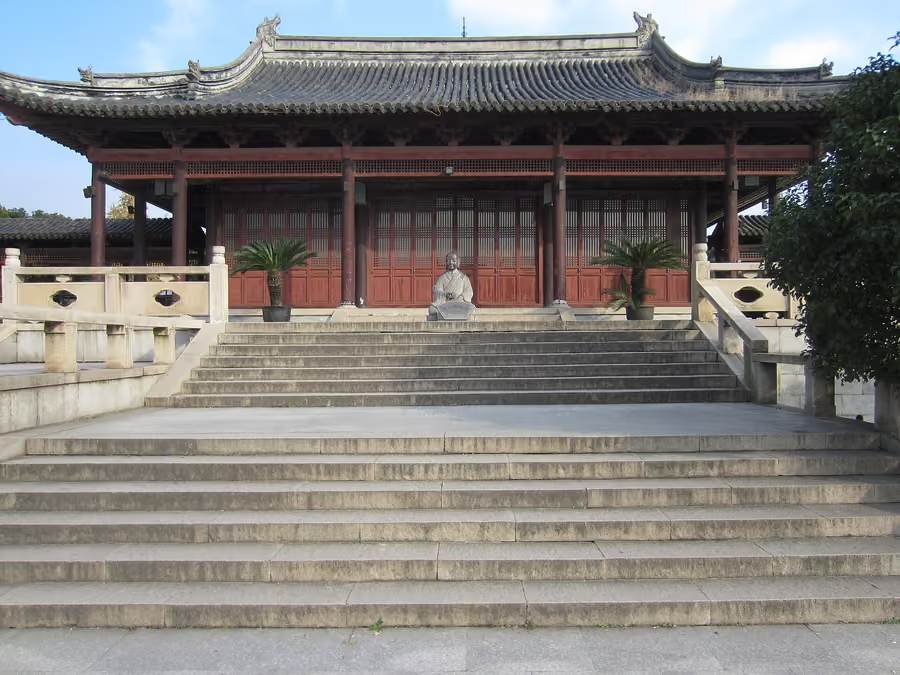
盘门三景
The only surviving combined land-and-water city gate in China, with its original double gate, barbican and canal locks, plus the Ruiguang Pagoda and the humpbacked Wumen Bridge. It is the clearest surviving evidence of how a Chinese walled canal city actually worked.
¥20 (reported)
≈ US$2.98Opening hours, booking and how to get there →
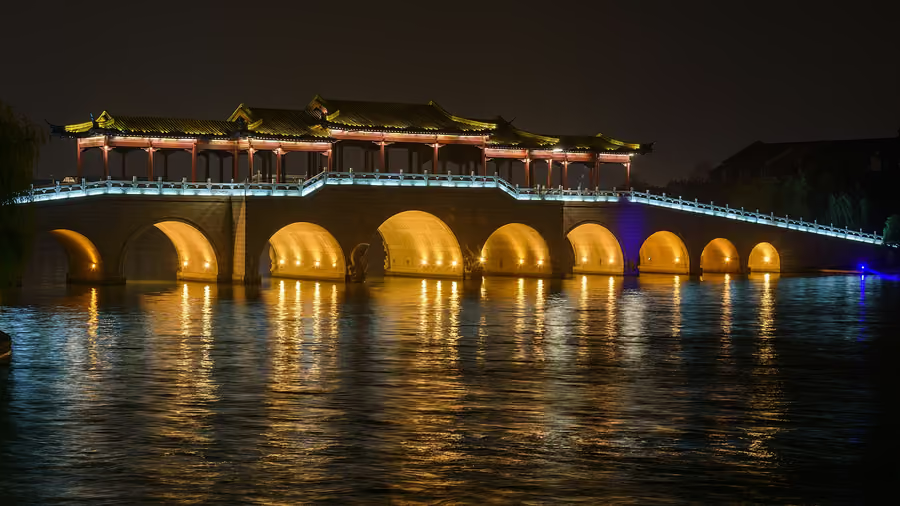
金鸡湖
The giant lake at the centre of Suzhou Industrial Park, ringed by a free open park, the ring-shaped 'Gate of the Orient' tower and a nightly music fountain. It is the modern counterweight to the old city and a free, uncrowded evening.
Free (lakeside park); boat trips and the Ferris wheel charge separately
Opening hours, booking and how to get there →
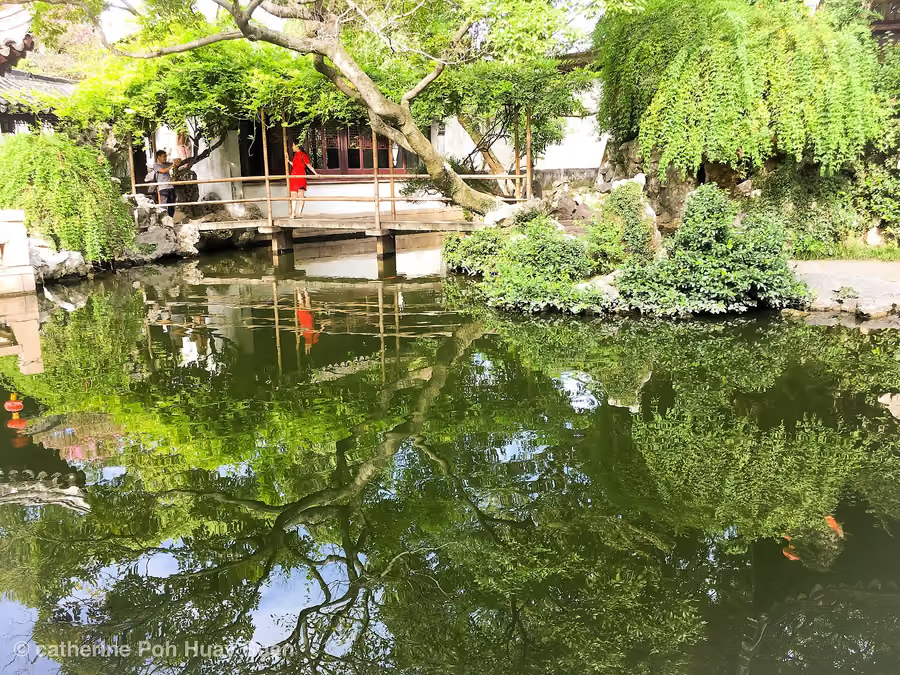
同里古镇
A canal town 20 km from Suzhou with 49 stone bridges and the UNESCO-listed Retreat and Reflection Garden inside the ticket. It is less commercialised than Zhouzhuang and is where most Suzhou locals send visiting friends.
List price ¥100; commonly sold online from about ¥75
≈ US$11–15Opening hours, booking and how to get there →

周庄古镇
The most famous of the Jiangnan canal towns, built on islands with the 500-year-old Double Bridge that a Chen Yifei painting made internationally famous. It is busy, but the stone-bridge-and-whitewashed-wall image of China starts here.
List price ¥100; discounted online rates are common
≈ US$15Opening hours, booking and how to get there →
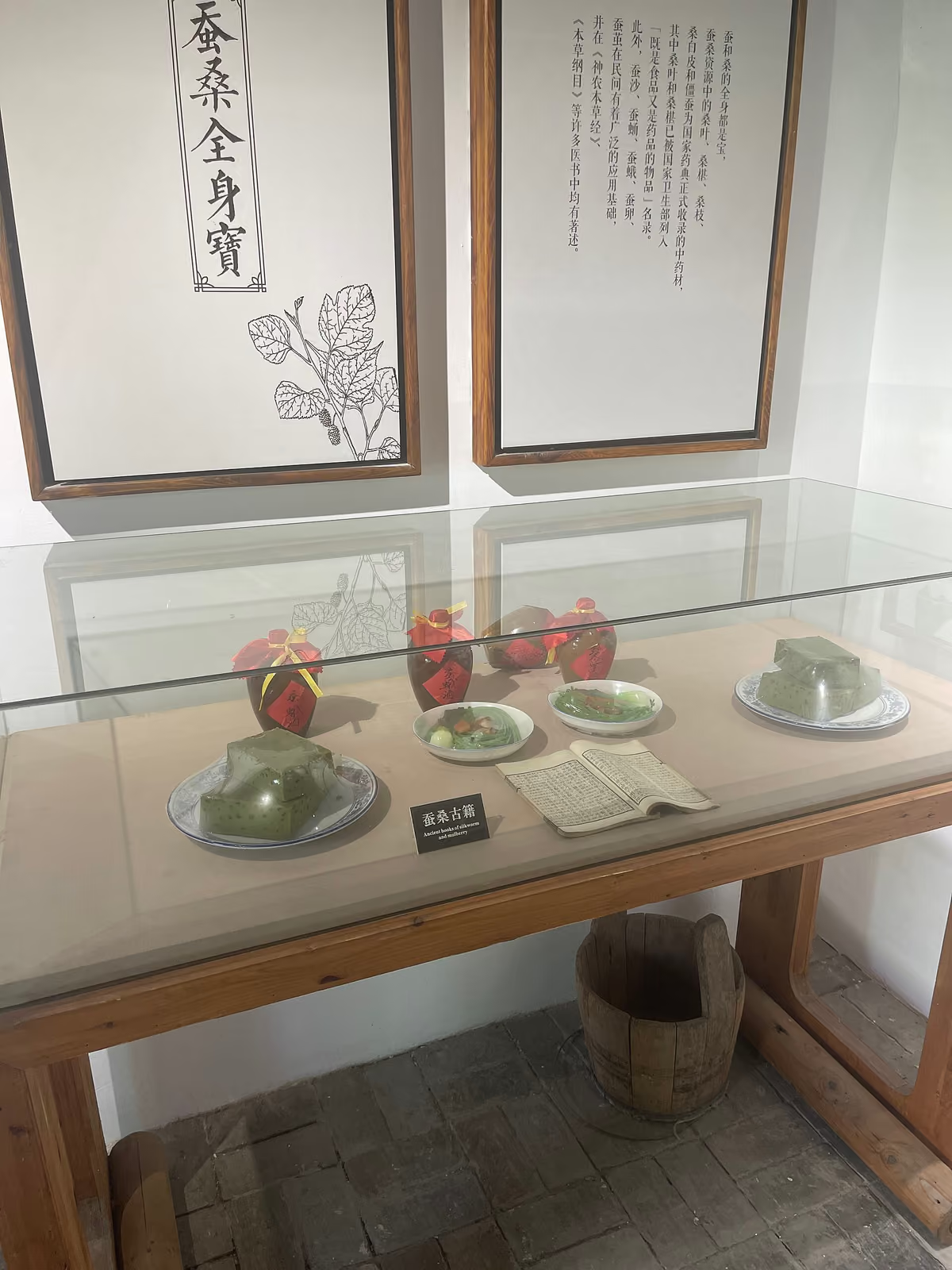
苏州丝绸博物馆
A free museum tracing 4,000 years of Chinese silk, with a live mulberry-and-silkworm room and working antique looms weaving reproduction court brocades. Suzhou was the imperial silk workshop, and this explains why.
Free
Opening hours, booking and how to get there →
What to eat in Suzhou
Suzhou cooking (苏帮菜) is the sweetest of China's major regional cuisines — even savoury braises and some noodle broths carry noticeable sugar — and it is built on freshwater produce from the lakes and canals: mandarin fish, eel, river shrimp, hairy crab, water-shield, lotus root and water caltrop. It is almost never chilli-hot. The city runs on a strict seasonal calendar: hairy crab from roughly October to November, spring shoots and green-plum sweets in March and April, and seasonal noodle toppings that appear for a few weeks and vanish. Breakfast is a bowl of noodles, eaten early — the famous noodle houses sell out of the best toppings before 9am. Allergy-wise the quiet risks are shellfish (dried shrimp and crab roe used as seasoning), egg (fish and shrimp are velveted in egg white) and lard, which is the traditional fat for pastry and noodle broth. Strict vegetarians should look for the Buddhist vegetarian kitchens attached to the city's temples rather than trying to adapt a Suzhou menu. Pingjiang Road and Shantang Street are the scenic snack streets but are tourist-priced; better food is one street back.
Squirrel-shaped mandarin fish
松鼠桂鱼sōngshǔ guìyú
A boned mandarin fish scored in a criss-cross pattern, deep-fried so the flesh opens like a pine cone, then doused at the table with a hot sweet-and-sour sauce that sizzles as it lands.
Tastes like: Sweet first, then sour, over very crisp fried fish and soft flesh beneath
Not on the menu but in it: The coating is starch and often egg; the sauce uses a lot of sugar plus tomato paste and vinegar, and sometimes a light chicken stock. Fried in shared oil with other seafood.
Might not be for you: It is much sweeter than Westerners expect from a fish dish — closer to a dessert glaze. The head is usually left on and presented.
Where to eat it
- Songhelou · local institution · ¥150–250 · Gusu, Guanqian Street in the old town
Where: The old-town institutions around Guanqian Street; it is a banquet-sized dish for a group
Watch videos of Squirrel-shaped mandarin fish →Sizzling eel in oil
响油鳝糊xiǎngyóu shànhú
Shredded freshwater eel braised in a dark, glossy sauce, with a well of white pepper and garlic in the middle over which smoking-hot oil is poured at the table so it crackles.
Tastes like: Rich, dark-sweet and peppery, with a slippery, soft meat
Not on the menu but in it: Lard is often used alongside the oil; sauce contains sugar, dark soy and rice wine.
Might not be for you: Eel has a soft, slightly slimy texture and a distinct muddy-river flavour. The appearance — dark shreds in oil — puts some visitors off before they taste it.
Where to eat it
- Bai Sheng Ren Jia (Wuzhong) · Michelin Bib Gourmand 2026 · ¥¥ on the MICHELIN price scale (moderate); exact per-head price unconfirmed · Wuzhong district, 45 Dongqing Road, on the Grand Canal. Nearest metro unconfirmed.
Where: Classic 苏帮菜 restaurants in the old town
Watch videos of Sizzling eel in oil →Aozao noodles
奥灶面àozào miàn
Kunshan's famous noodle bowl, now found across Suzhou: fine wheat noodles in either a red broth made from fish bones and offal or a white broth from duck, topped with fried eel or braised duck.
Tastes like: Deeply savoury, slightly sweet, with a thick, concentrated broth
Not on the menu but in it: The red broth is built from fish bones and fish offal; the white broth from duck carcasses. Lard is added to the bowl. There is no vegetarian version of a true Aozao broth.
Might not be for you: The red broth has a pronounced fishy depth that some find strong at breakfast time.
Where to eat it
- Wei Ji Ao Mian Guan (East Baita Road) · Michelin Bib Gourmand 2026 · ¥ on the MICHELIN price scale (lowest band); expect a cheap single-bowl meal, exact figure unconfirmed · Gusu district, 266 East Baita Road, near the Pingjiang historic quarter.
Where: Kunshan originally; Aozao noodle houses across Suzhou, early morning
Watch videos of Aozao noodles →Three-shrimp noodles
三虾面sān xiā miàn
A short-season luxury: noodles topped with three parts of the river shrimp — the meat, the roe and the fat from the head — hand-picked and stir-fried. On menus roughly from late May to July.
Tastes like: Intensely sweet-savoury shrimp flavour, with a sandy pop from the roe
Not on the menu but in it: Lard in the noodle broth; shrimp velveted with egg white and starch.
Might not be for you: The shrimp roe has a granular, slightly gritty texture that divides opinion. It is expensive for a bowl of noodles.
Where to eat it
- Wan Tai Xing · Michelin Bib Gourmand 2026 · ¥ on the MICHELIN price scale (lowest band) for standard bowls; the three-shrimp noodles are priced well above the rest of the menu, exact figure unconfirmed · Gusu district, 670 Shiquan Street, in the old city near the Humble Administrator's Garden side of town.
Where: The city's famous noodle houses, early summer only; book or go early
Watch videos of Three-shrimp noodles →Braised pork belly, Suzhou style
焖肉 / 苏式焖肉面mèn ròu
A square of pork belly braised until the fat dissolves, usually laid on top of a plain bowl of noodles so it melts into the broth.
Tastes like: Sweet, soy-rich and extremely soft, almost dissolving
Not on the menu but in it: Heavy rock sugar and rice wine; the noodle broth beneath it is pork or chicken stock plus lard.
Might not be for you: The fat is barely held together and the skin is gelatinous — visitors expecting firm pork are often surprised.
Where: Any old noodle house at breakfast
Watch videos of Braised pork belly, Suzhou style →Hairy crab
大闸蟹dàzháxiè
Yangcheng Lake mitten crab, steamed whole and eaten with a ginger-vinegar dip. The prized part is the roe and the orange fat, not the meat. Season runs roughly October to November.
Tastes like: Sweet, rich and custardy from the roe; the meat itself is delicate
Not on the menu but in it: The dipping sauce is rice vinegar with ginger and sugar; warming yellow rice wine is served alongside.
Might not be for you: You dismantle it yourself with small tools and it takes 20 minutes per crab for very little meat. The roe is soft and creamy, more like an organ than seafood. Gills and stomach must be discarded — ask staff to show you.
Where to eat it
- Xi Ding Jia Yan · Michelin 1 star 2026 · ¥¥¥ on the MICHELIN price scale (upper-middle band); exact per-head price unconfirmed · Suzhou. Exact address and district unconfirmed.
Where: Restaurants near Yangcheng Lake (阳澄湖) in autumn, or any old-town restaurant in season
Watch videos of Hairy crab →Pan-fried pork buns
生煎shēngjiān
Small yeasted buns filled with pork and jellied stock, fried flat-bottomed in a covered pan so the base crisps while the top steams.
Tastes like: Savoury-sweet pork with a burst of hot soup, against a crunchy fried base
Not on the menu but in it: The soup inside is set pork-skin aspic; sesame seeds and spring onion on top; often finished in lard.
Might not be for you: The scalding soup inside burns mouths — bite a small hole first and let it cool.
Where: Breakfast stalls and the Michelin-listed shengjian shops in the old town
Watch videos of Pan-fried pork buns →Crab-shell sesame pastry
蟹壳黄xièkéhuáng
A small round flaky pastry baked until it is the colour of a crab shell, in sweet (sugar, red bean) or savoury (spring onion, pork) versions. Contains no crab.
Tastes like: Toasty and sesame-fragrant, shatteringly flaky
Not on the menu but in it: The flaky layers are traditionally made with lard, including in the sweet versions — a common trap for vegetarians. Savoury ones contain pork and may use dried shrimp.
Where: Old bakeries in the old town and on Shantang Street
Watch videos of Crab-shell sesame pastry →Suzhou-style mooncakes and sweet pastries
苏式糕点 / 鲜肉月饼Sūshì gāodiǎn / xiānròu yuèbǐng
Flaky, non-syrup pastries that define the Suzhou style, including the famous hot pork mooncake eaten straight from the oven rather than as a gift box.
Tastes like: Buttery-flaky shell; fillings range from sweet bean and rose to a hot savoury pork patty
Not on the menu but in it: Lard in the pastry almost without exception; nut and seed fillings (walnut, pine nut, melon seed) in the traditional sweet varieties.
Where: Old-brand confectioners around Guanqian Street; queues for fresh pork mooncakes
Watch videos of Suzhou-style mooncakes and sweet pastries →Green rice balls
青团qīngtuán
Glutinous rice dumplings coloured green with mugwort or barley grass juice, filled with sweet bean paste or, in modern versions, salted egg yolk and pork floss. A spring (Qingming) speciality.
Tastes like: Grassy and faintly herbal outside, sweet and dense inside
Not on the menu but in it: Traditional bean-paste versions are usually vegetarian, but modern fillings contain egg yolk, pork floss or custard (dairy). Check which filling you are buying.
Might not be for you: Very sticky and dense; the mugwort flavour is unusual to Western palates.
Where: Bakeries and street counters in March and April
Watch videos of Green rice balls →Watershield soup
莼菜羹chúncài gēng
A clear, light soup of water-shield — a lake plant whose young leaves are coated in a natural clear jelly — usually with shredded chicken or fish.
Tastes like: Very mild and clean, mostly texture
Not on the menu but in it: Chicken stock is standard even when no meat is visible; often thickened with starch and egg white.
Might not be for you: The leaves are coated in a slippery, mucilaginous jelly — the texture is the whole point and many visitors find it unpleasant.
Where: Traditional Suzhou restaurants, spring and summer
Watch videos of Watershield soup →Bi Luo Chun shrimp
碧螺虾仁Bìluóchūn xiārén
River shrimp stir-fried with Dongting Bi Luo Chun green tea leaves grown on the hills beside Lake Tai — Suzhou's answer to Hangzhou's Longjing shrimp.
Tastes like: Sweet shrimp with a light floral, grassy tea note
Not on the menu but in it: Egg white and starch coating on the shrimp; a little lard for gloss in some kitchens.
Where: Upmarket Suzhou restaurants, spring
Watch videos of Bi Luo Chun shrimp →Where to eat in Suzhou
- Dianping (大众点评) — the real ratings. Chinese only, but photos, prices and a 4.5+ score survive translation. Its 必吃榜 "Must-Eat" list is the mainstream benchmark.
- Black Pearl (黑珍珠) — China's own fine-dining guide, published annually by Meituan and taken more seriously domestically than Michelin.
- Michelin covers only a few Chinese cities, so its absence means nothing outside them.
- Xiaohongshu (小红书) — what is actually busy this month, rather than this year.
Songhelou 松鹤楼
¥150–250≈ US$22Founded in 1757 and the address most associated with squirrel-shaped mandarin fish; the canonical Suzhou banquet restaurant.
Order: Squirrel mandarin fish (松鼠鳜鱼, also written 松鼠桂鱼), Braised pork belly, Suzhou style (樱桃肉) and 1 more
What to order, booking and allergens →
Deyuelou 得月楼
¥130–200≈ US$19A Ming-dynasty-rooted old brand known for 'boat cuisine' and its Wu-style banquet menu.
What to order, booking and allergens →
Dingshan · Jiangyan (Xiangcheng) 鼎膳·匠宴
¥¥¥ on the MICHELIN price scale (upper-middle band); exact per-head price unconfirmedAn unlikely one-star: a light-filled room on the 33rd floor of an office tower in Xiangcheng, well north of the old city, with panoramic lake views and a kitchen doing careful, produce-led Suzhou cooking. The menu turns over with the seasons rather than the calendar, so the same dish arrives with bamboo shoots in spring and chestnuts in autumn. Easier to get into than Pingjiangsong and considerably cheaper.
Order: Suzhou claypot rice with braised pork and green garlic (砂锅菜饭), House chilli sauce with beef and dried fish (自制辣酱) and 1 more
What to order, booking and allergens →
Pingjiangsong 平江颂
¥¥¥¥ on the MICHELIN price scale (top band); exact per-head price unconfirmedA restored Qing-era mansion on a lane inside the Pingjiang historic quarter, with a classical Suzhou garden attached and the city's only serious tasting-menu kitchen. The cooking is season-driven Su cuisine — the most technically fussy of the Chinese regional styles — given modern plating without being turned into fusion. It is the single best argument that Suzhou food deserves the same respect as Hangzhou's or Yangzhou's.
Order: Mantis shrimp with soft roe in fermented rice-lees marinade, topped with caviar (糟醉虾蛄), Duck soup with ham and fox nuts (火腿芡实老鸭汤) and 1 more
What to order, booking and allergens →
A Cheng Restaurant 阿成饭店
¥80–150≈ US$12A no-frills local favourite doing home-style Suzhou dishes at everyday prices.
What to order, booking and allergens →
Tong De Xing (Jiayu Fang) 同得兴
¥ on the MICHELIN price scale (lowest band); exact figure unconfirmedThe most famous noodle house in Suzhou, in a red-columned, lantern-hung building off Renmin Road. Its reputation rests on one strictly seasonal bowl: fengzhen noodles, served only from roughly May to October, in a pale white broth loaded with umami and finished with homemade wine lees. Out of season it switches to braised pork in a soy broth. Turn up in the wrong month and you have eaten a different restaurant.
Order: Fengzhen-style pork noodles, May-October only (枫镇大肉面), Braised pork noodles in soy broth, the winter bowl (红汤焖肉面) and 1 more
What to order, booking and allergens →
Yaba Shengjian 哑巴生煎
¥15–35≈ US$2.23The city's most famous pan-fried pork bun shop, a Suzhou breakfast institution.
What to order, booking and allergens →
Jiangnan Ya Chu (Ligongdi) 江南雅厨(李公堤店)
¥300–500≈ US$45Polished modern Suzhou cooking on the Jinji Lake waterfront, a reliable upmarket choice in the new district.
What to order, booking and allergens →
Xi Ding Jia Yan 喜鼎家宴
¥¥¥ on the MICHELIN price scale (upper-middle band); exact per-head price unconfirmedThe newest of Suzhou's three starred restaurants, awarded on its first appearance in the 2026 regional guide. It cooks banquet-register Suzhou food — jia yan means 'family banquet' — in a modern dining room rather than a heritage courtyard.
Order: The seasonal banquet set, which is the house format (家宴套餐), Whatever the kitchen is running in hairy-crab season (大闸蟹时令菜)
What to order, booking and allergens →
Xin Ju Feng Cai Guan (Taijianlane) 新聚丰菜馆
¥¥¥ on the MICHELIN price scale (upper-middle band); exact per-head price unconfirmedA Suzhou name since 1904, with this upstairs branch in a busy shopping lane off the old centre trading for more than twenty years. It is the kind of place where the seasonal specialities actually arrive on time: crab roe sautéed fresh each morning in autumn, river fish in wine lees the rest of the year. Two short service windows a day and no pretension at all.
Order: Sautéed crabmeat and roe, made fresh daily (炒蟹粉), Chinese sleeper fillet in wine-lees sauce (糟汁塘鳢鱼) and 1 more
What to order, booking and allergens →
Su Cheng Jia Yan (Ligongdi Road) 苏城家宴
¥¥ on the MICHELIN price scale (moderate); exact per-head price unconfirmedOn the Jinji Lake waterfront in the Industrial Park, the modern half of Suzhou, with a terrace over the water. The kitchen does a restrained, modern reading of Su cuisine — less oil, less sugar, better produce — which makes it the easiest entry point on this list for a visitor who finds classic Suzhou braises cloying.
Order: Lion's head meatball soup with Berkshire pork, longsnout catfish and water chestnut (狮子头), Seasonal river produce from the lake menu (时令河鲜)
What to order, booking and allergens →
Bai Sheng Ren Jia (Wuzhong) 百盛人家
¥¥ on the MICHELIN price scale (moderate); exact per-head price unconfirmedA straightforward Jiangsu restaurant on the Grand Canal in Wuzhong, doing regional classics well and without ceremony. It is where you go for the canonical Suzhou dishes — crisp fried eel in sweet-and-sour sauce, claypot rice — at a price that lets you order four of them.
Order: Suzhou-style deep-fried eel in sweet-and-sour sauce (响油鳝糊 / 脆鳝), Claypot rice with braised pork, bamboo shoot and potato (砂锅菜饭)
What to order, booking and allergens →
Wei Ji Ao Mian Guan (East Baita Road) 伟记奥面馆
¥ on the MICHELIN price scale (lowest band); expect a cheap single-bowl meal, exact figure unconfirmedA small, clean noodle shop near the Pingjiang quarter serving aozao noodles — a Kunshan speciality now listed as intangible cultural heritage, built on a long-simmered red broth with the noodles cooked firm and the topping added on. Suzhou's noodle culture is the thing locals are most quietly proud of, and this is the cheapest good introduction to it.
Order: Aozao noodle soup in red broth (奥灶面 / 红汤), Fried eel strips as the topping, the most popular choice (爆鱼 / 鳝丝浇头) and 1 more
What to order, booking and allergens →
Wan Tai Xing 万泰兴
¥ on the MICHELIN price scale (lowest band) for standard bowls; the three-shrimp noodles are priced well above the rest of the menu, exact figure unconfirmedA revival of a 1931 noodle stall, now a whitewashed two-storey building on Shiquan Street with ornate traditional interiors. Suzhou noodles come three ways here — soy-based red broth, clear broth, or dry with sauce — with a long list of toppings to combine. The reason to come is the shrimp trio.
Order: Shrimp trio — shrimp meat, roe and tomalley together (三虾面), Red-broth noodles with braised pork (红汤焖肉面) and 1 more
What to order, booking and allergens →
San Xing Yang Rou Guan 三星羊肉馆
¥¥ on the MICHELIN price scale (moderate); exact per-head price unconfirmedA mutton house of the Cangshu tradition from Wuzhong district, the one Suzhou food that has nothing to do with sugar and river fish. Cangshu mutton is goat, stewed in tall fir-wood tubs — nearly a metre high, called pentang locally — so the timber scent soaks into the meat. It is strictly a cold-weather food: the Wuzhong goat market's slaughter volume jumps roughly fifty per cent from September to October as the season opens.
Order: White-stewed mutton (白汤羊肉), Mutton noodle soup (羊肉面) and 1 more
What to order, booking and allergens →
See Suzhou
Other people's videos, on YouTube — we link, we don't host. Worth knowing: YouTube is blocked in mainland China, so watch these at home, or download them in the YouTube app before you fly.
- We Only Had 11 Hours in Suzhou.. | The Best Shanghai Day TripAn eleven-hour Suzhou day trip from Shanghai covering the classical gardens, canals and old-town streets at a realistic pace.ivyluvv · opens on YouTube · Auto-generated subtitles
- 苏州平江路到底有多好吃?枫镇大肉面、梅花糕、桂花糖粥一路吃下来|Eating Through Suzhou’s Pingjiang RoadA Chinese-language food walk down Pingjiang Road, ordering and tasting Suzhou specialities stall by stall.键盘侠TV Explore China with K · opens on YouTube · In Chinese — turn on auto-translated subtitles in the player
- 蘇州3日vlog|打卡景點拙政園,平江路,西園寺,第一絲廠|吃蘇式麵,生煎,披薩,蘇式綠豆湯,甜粥|逛菜市場葑門橫街,石路商圈|AnAn vlogA three-day Chinese-language Suzhou vlog taking in the Humble Administrator's Garden, Pingjiang Road, temples, a silk mill and local wet markets, with author-made subtitles in twenty languages.散步的安安 · opens on YouTube · In Chinese, with English subtitles
Videos belong to the channels credited above. We have no affiliation with them and earn nothing from these links.