Discover Xinjiang
Kashgar Old City
喀什古城
The largest surviving old quarter in Xinjiang: mud-brick and timber Uyghur houses, carved doors, coppersmiths, hat-makers and pottery lanes, much of it rebuilt in the 2000s-2010s under an earthquake-safety programme that also displaced many residents. It remains the most atmospheric urban walk in China's far west, and it is free.
The story
What makes this place special
Kashgar sits at the western end of the Tarim basin and was the junction of the northern and southern Silk Road routes round the Taklamakan; its old quarter was a dense warren of mud-brick and timber courtyard houses, some with upper storeys bridging the lanes. A redevelopment programme was launched in February 2009, reported at the time at around 3 billion yuan over five years, with the stated aims of improving infrastructure and reducing earthquake risk, and involving the resettlement of a figure reported as roughly 50,000 households; demolition began in July 2009. Estimates of how much of the old fabric was removed differ substantially between sources, ranging from around 70 per cent reported in 2009 to 85 per cent cited in later accounts, with the remainder renovated and the quarter developed as a managed visitor area. The result is that most of what you walk through now is post-2009 construction in traditional style.
What you’ll discover
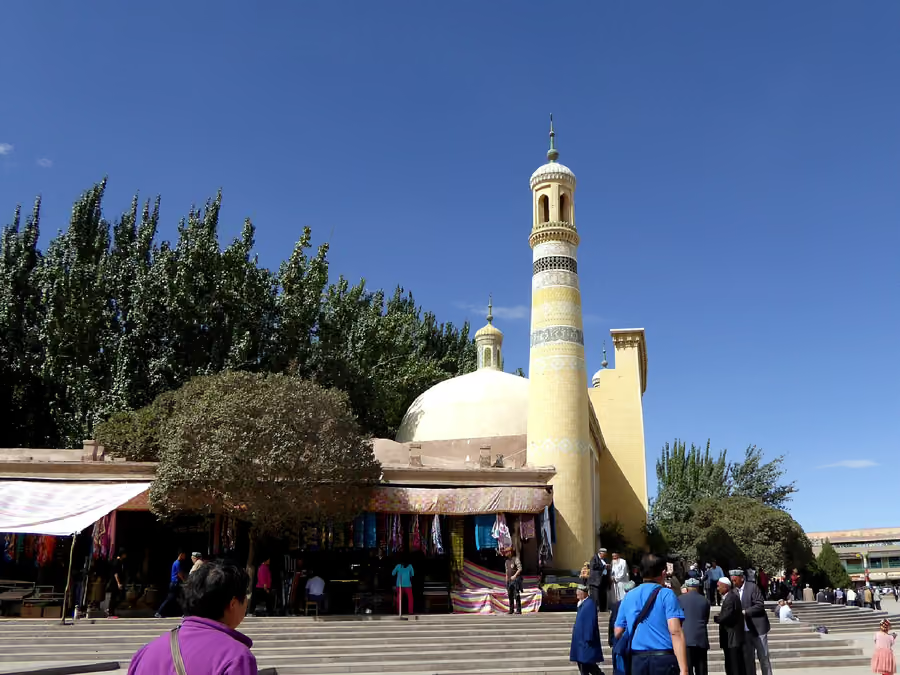
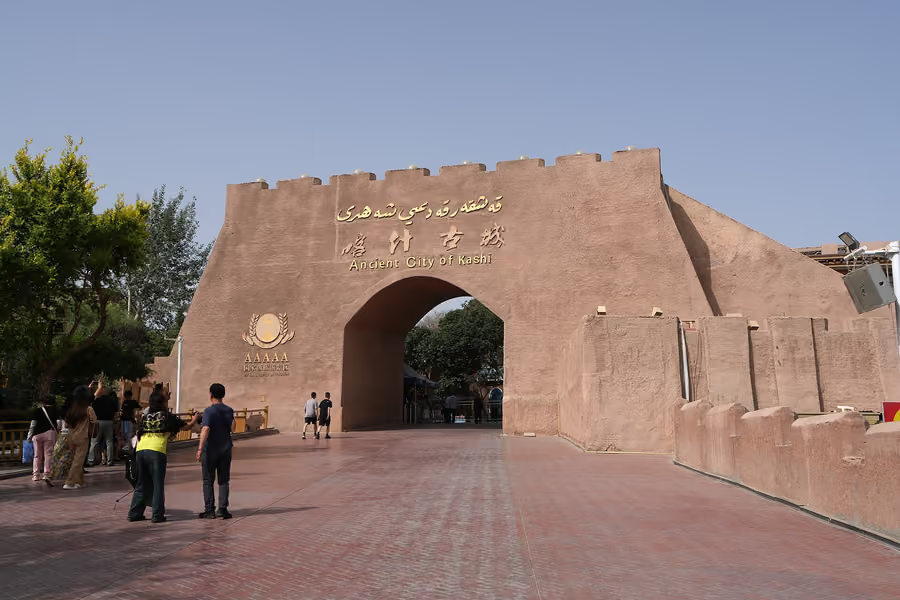
Narrow lanes of ochre and buff brick with carved wooden doors, balconies, bay windows and tiled panels, opening into small squares with mulberry trees. There are craft lanes where coppersmiths, hat-makers, woodturners and instrument makers work in open-fronted shops, bread ovens turning out nan, and a constant street life of children, handcarts and tea stalls. The quarter has formal gates with an archway and a costumed opening ceremony in the morning, and the main thoroughfares are smoothly paved and uniform, while a few back lanes are older, rougher and shaded.
A little local insight
Good to know before you go
- Know what you are looking at. The great majority of the quarter is reconstruction carried out after 2009, built in traditional idiom on the old street pattern, with estimates of how much original fabric was removed differing between sources. The street layout and the crafts are real; most of the walls are not old.
- Walk away from the paved main streets. The lanes to the north and east of the central axis, where the paving turns rough and the shops stop, are where people still live rather than sell, and they get almost no visitors.
- There is a visible security apparatus and you will pass through it. Expect ID and passport checks at quarter gates, bag and body screening at the entrances to squares and markets, and police posts at junctions. Carry your passport at all times. Do not photograph police, checkpoints, screening equipment, government buildings or uniformed personnel; cameras pointed at those will be challenged and images may be deleted.
- Ask before photographing people, especially women and inside workshops, and expect some refusals. The craftsmen in the instrument and copper lanes are generally used to it and will often let you watch at length if you buy something or simply wait.
- Start at about 08:00 local solar time rather than Beijing time. Kashgar runs about two hours behind Beijing in practice, so shops open and the lanes come alive around 10:00 or 11:00 by the clock, and an early start by Beijing time means empty streets.
- Eat from the bread ovens and the kebab stalls, not the restaurants on the gate streets. Nan straight off the oven wall, baked samsa and cold noodles are the local eating, and they cost a fraction of the visitor-facing menus.
When to come
April to June and September to October, when the heat is bearable and the light is good; mid-summer in Kashgar is extremely hot and the lanes offer little shade. Mid-morning onwards by the clock, which is early morning by local practice, for workshops and street life.
Getting around
Better than most old towns in China, because of the rebuilding. The main lanes are newly laid, smooth and broadly level, so a wheelchair can cover the central quarter, and there are few steps on the principal routes. The older back lanes are uneven, stepped and narrow. House and workshop interiors are entered over raised sills. A bad knee will manage the quarter easily; the heat is a bigger constraint than the ground.
Worth knowing before you go
Go early morning, before the tour groups and before the heat - the craft lanes are working workshops at 08:00 and a stage set by midday. Note Xinjiang officially runs on Beijing time but daily life runs about two hours later, so 'early' here means about 09:30 local habit.
Compare established providers
Check live tours and tickets
Search for Kashgar Old City in Xinjiang. Prices, availability, payment and confirmation are handled by the booking provider.
China Travel Select does not take payment or create the reservation. Confirm the exact name, dates, inclusions and cancellation rules on the provider’s page.
Take a closer look
Maps, videos & more
Prices and hours change. These are the places to check on the day.