Your destination guide 新疆
Xinjiang
Kashgar, Turpan and the Tianshan — and a lot of checkpoints
The old Silk Road, and the least like the rest of China anywhere in the country: Uyghur bazaars, a desert depression that is the hottest place in China, and mountains on three borders. It is also the most heavily policed region you can visit, and four governments have something specific to say about it. Read that first, below.
What travel advisories say about Xinjiang
As of 8 October 2026, none of these four governments advises against travel to Xinjiang. All four flag it — usually alongside Tibet — as an area of unusually heavy security, surveillance and arbitrary detention risk, and none assigns it a 'do not travel' or 'reconsider travel' level. The UK is the only one that says in terms that its embassy's ability to help its nationals in Xinjiang is limited. Both of those facts matter, and summaries elsewhere tend to drop one or the other.
United Kingdom (FCDO)
Read it yourself →No advice against travel to Xinjiang. Covered by the general China advice, with a dedicated 'Regional risks' section.
The Regional risks page states that 'Violent unrest in Xinjiang has resulted in deaths' and that 'There have been widespread arbitrary arrests and extra-judicial detentions in Xinjiang.' It notes a significant security presence throughout the region and tells visitors to expect airport-style security measures, including passport and security checks, at shopping centres, markets and parks. On photography: do not photograph or film protests, large crowds, security officials or installations. On consular help it is explicit: 'The ability of the British Embassy to help British nationals in Xinjiang Uyghur Autonomous Region is limited.'
As that page read on 2026-08-27.
United States (Department of State)
Read it yourself →Level 2 — Exercise Increased Caution. Applies to mainland China as a whole; Xinjiang gets no separate level.
Mainland China is Level 2 because of the arbitrary enforcement of local laws, the use of exit bans without a fair and transparent legal process, and the risk of unjust arrest or detention. Xinjiang is singled out within that: extra security measures, higher levels of police presence and surveillance are described as common in Xinjiang, Tibet and the Tibetan Autonomous Prefectures, and authorities may impose curfews and travel restrictions on short notice. The advisory also warns travellers to assume Chinese security services can read emails, texts and social media sent to or from China.
We could not read this page directly — it blocked us. The wording above comes from search results, so check the link before you rely on it.
Australia (DFAT / Smartraveller)
Read it yourself →Exercise a high degree of caution — overall for China, and for Xinjiang and Tibet specifically.
Smartraveller advises a high degree of caution in Tibet and Xinjiang because of the security situation and the measures that go with it. It says increased security measures are in place in Xinjiang, that people of Uyghur descent are particularly affected, that security checks in major Xinjiang cities are common and that you should be ready to show photo ID if asked. It notes that violent incidents causing deaths and injuries have occurred there, and that the government may restrict movement and communications with little warning.
We could not read this page directly — it blocked us. The wording above comes from search results, so check the link before you rely on it.
Canada (Global Affairs Canada)
Read it yourself →Exercise a high degree of caution — overall for China, and as a regional advisory for the Xinjiang Uyghur Autonomous Region.
The regional advisory states: 'Local authorities have put in place invasive security measures in the Xinjiang Uyghur Autonomous Region.' It adds that Chinese authorities are increasingly detaining ethnic and Muslim minorities in the region without due process, and reports extrajudicial internment and forced labour camps. It warns that travellers with familial or ethnic ties to Xinjiang may face arbitrary detention, and describes heightened security presence, frequent security checks and significant travel delays. Canada states explicitly that its consular support in Tibet is limited; it does not make that same statement for Xinjiang.
As that page read on 2026-08-31.
Permits, checkpoints and hotels
A valid Chinese visa is normally all a foreign visitor needs for the main circuit — Urumqi, Turpan, Korla, Kashgar, Hotan. There is no general 'Xinjiang permit' and no legal requirement for a guide. A separate border permit is needed for some border areas including Tashkurgan, which is the road to Karakul Lake; that rule has changed repeatedly, so confirm it before booking. Independent travel is legal and possible, but consistently slower than elsewhere in China: expect passport checks at motorway on- and off-ramps, city entry points, stations, airports, hotel check-in and the entrances to bazaars and some scenic sites. Many visitors to Kashgar and the border zones hire a licensed local driver for that reason rather than because the law demands one. Do not photograph police, checkpoints, military installations or crowds.
These practical notes come from traveller-facing guides rather than a government source, and the border-permit rule in particular has changed more than once. Treat them as what to ask about, not as confirmation.
We publish the wording and the links rather than a verdict. Whether to go is your decision, and your own government's advice is the one that affects your insurance and your consular cover.
Getting there
Flying is the realistic option. Urumqi (URC) is about 4 hours from Beijing and 3.5 from Xi'an; Kashgar has its own international airport, 2 hours on from Urumqi, with direct flights from several eastern cities. The rail distances are enormous — Beijing to Urumqi is about 30 hours on the fastest through train, Xi'an about 14 — although Urumqi to Turpan is an hour on the high-speed line. Urumqi to Kashgar is a 20–24 hour sleeper with no high-speed service, which is why almost everyone flies it. Book a hotel that states it accepts foreign guests: unlicensed ones will turn you away, which is a real constraint in Kashgar and smaller towns.
When to go
May to early June, and September to mid-October. July and August bring over 40°C in the Turpan Depression, the hottest place in China, plus peak domestic tourism and timed-entry limits at Tianchi — though high summer is the only time Kanas, the Ili valley and the high Karakoram roads are reliably open. September is excellent for Kashgar and the grape harvest. Mid-November to March is bitterly cold: Urumqi well below −20°C, the Karakoram Highway and many mountain roads closed.
How long: 8–16 days
Give it 8 days for the headline sights, or up to 16 to see it properly and eat your way around.
Eight covers Urumqi, Turpan and a few days in Kashgar, flying between them. Sixteen opens the Ili valley, Kanas, the Karakoram Highway to Tashkurgan and the southern Silk Road towns — the distances here are enormous and every leg costs you most of a day.
Xinjiang: distances, two clocks, and the permits that decide your route
Xinjiang is a sixth of China, runs on two clocks two hours apart, and needs a border permit for Tashkurgan and a licensed hotel everywhere. This guide covers the practical mechanics, a ten-day shape through Urumqi, Turpan and Kashgar, and why Uyghur food is the easiest in China for a foreign palate.
Make a few good memories
What to see in Xinjiang
Researched largely from Chinese-language sources, so it goes beyond the usual shortlist. Dollar figures are approximate, at the rate on 2026-10-08.
喀什古城
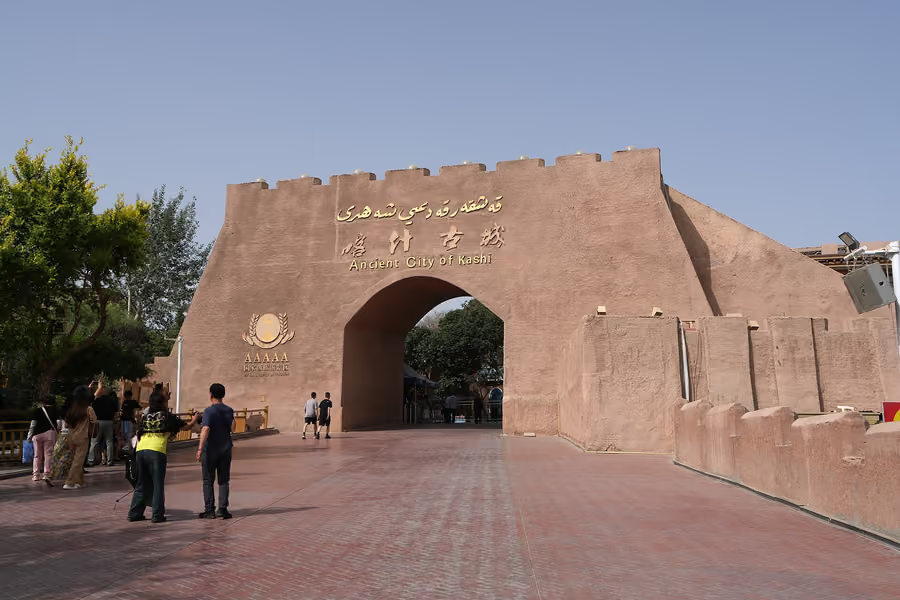
The largest surviving old quarter in Xinjiang: mud-brick and timber Uyghur houses, carved doors, coppersmiths, hat-makers and pottery lanes, much of it rebuilt in the 2000s-2010s under an earthquake-safety programme that also displaced many residents. It remains the most atmospheric urban walk in China's far west, and it is free.
Free
Opening hours, booking and how to get there →
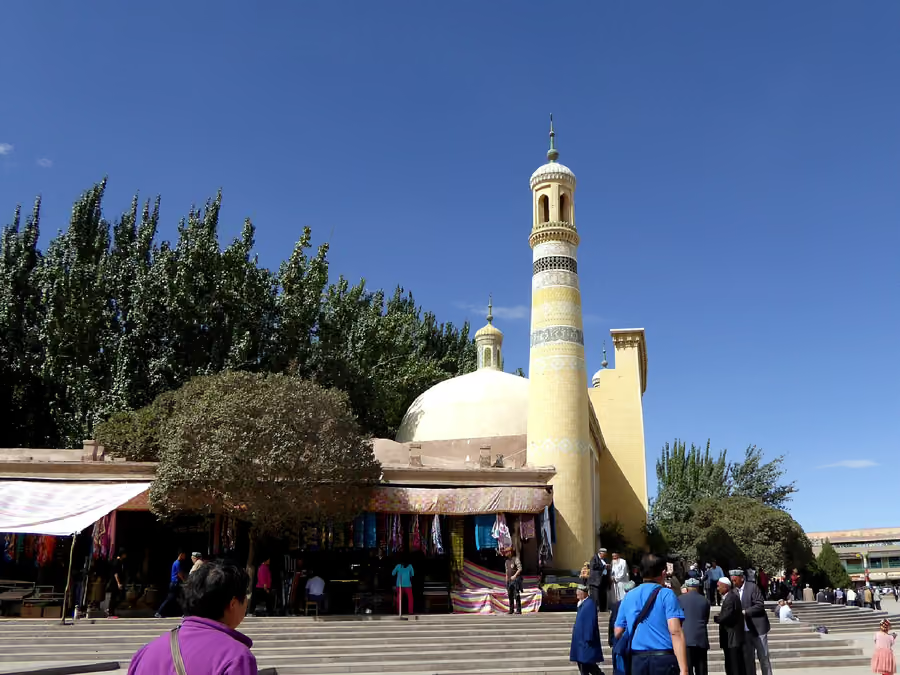
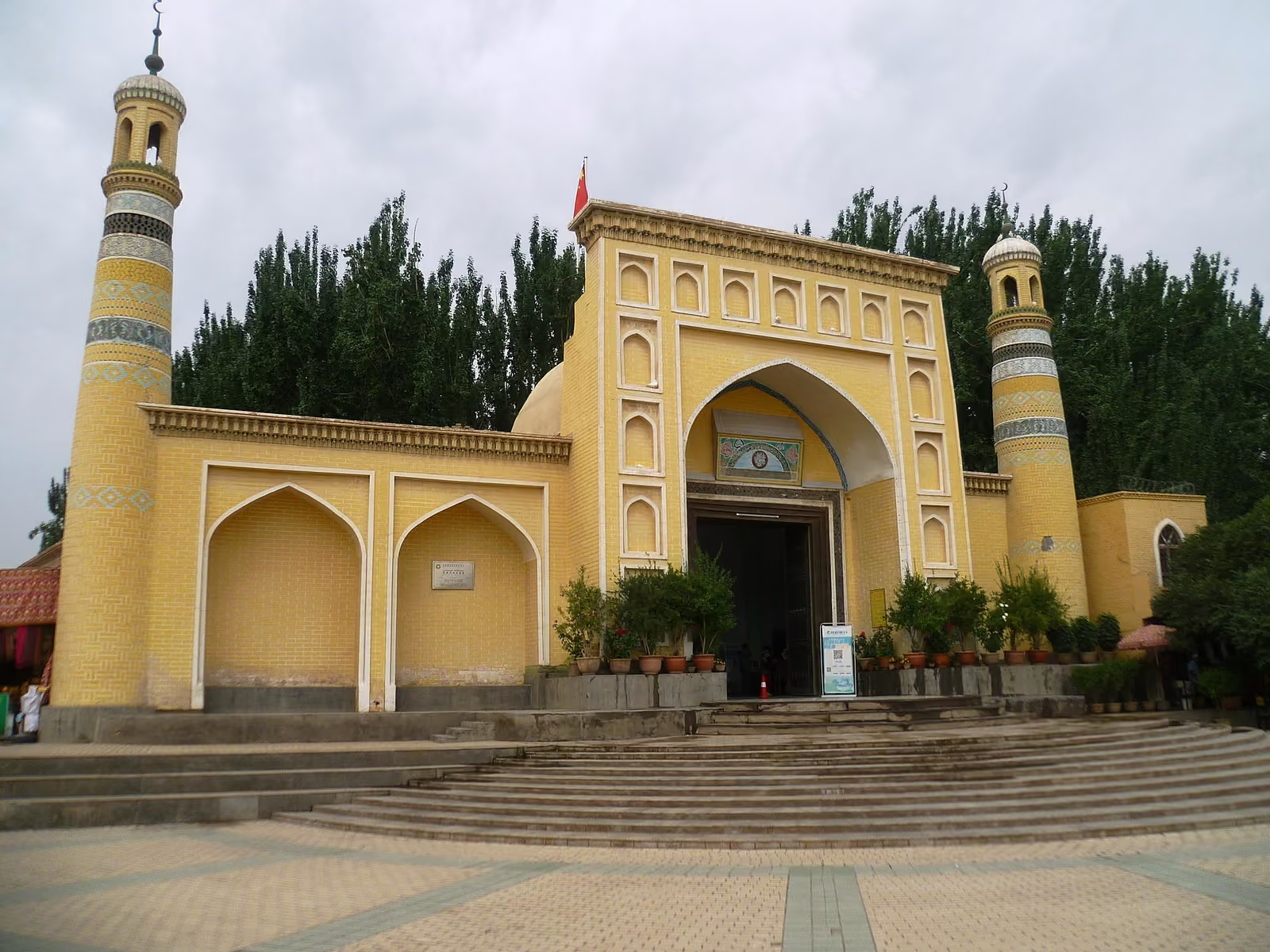
艾提尕尔清真寺
China's largest mosque and the religious heart of Kashgar, founded in the 1440s and fronting the city's main square. The yellow-tiled gatehouse and the long poplar-shaded prayer courtyard are the standard image of Kashgar; it is the one paid site in the old city.
¥45
≈ US$6.70Opening hours, booking and how to get there →
喀什牛羊大巴扎
A genuine working animal market on the city's north-eastern edge, where several thousand farmers and herders come in to trade sheep, cattle, horses and donkeys, haggle in Uyghur, and eat lamb from open-air pits. It is the least touristic thing in Kashgar and the best reason to time your visit to the right day.
Free
Opening hours, booking and how to get there →
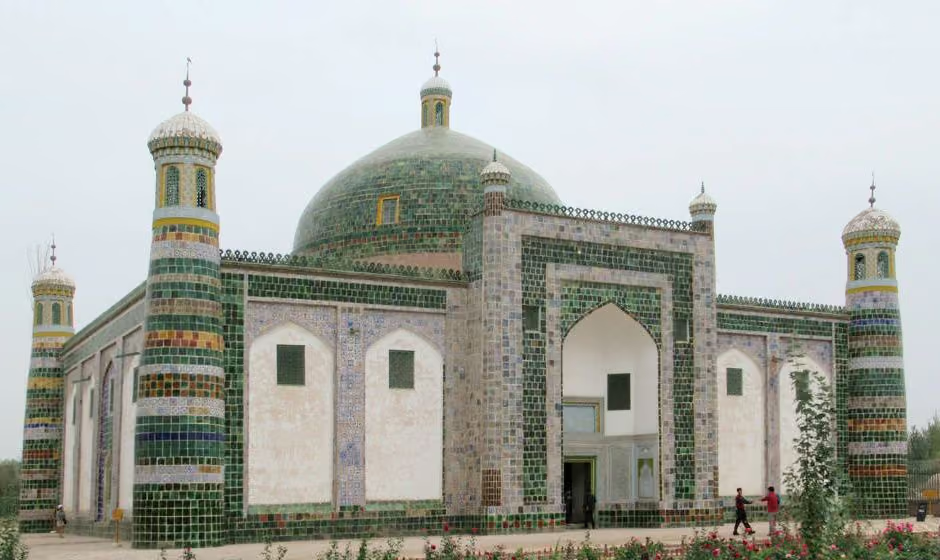
香妃墓 (阿帕克霍加麻扎)
A green- and blue-tiled 17th-century Islamic tomb complex holding five generations of a powerful Kashgar religious family, with a mosque, a madrasa and a cemetery around it. It is the finest piece of surviving Islamic architecture in the Kashgar area, and Chinese visitors know it by the legend attaching it to the 'Fragrant Concubine' of the Qianlong emperor.
¥30 adult; ¥15 senior and student. A folk performance is ¥68, or ¥97 combined with entry
≈ US$2.23–14Opening hours, booking and how to get there →
卡拉库里湖
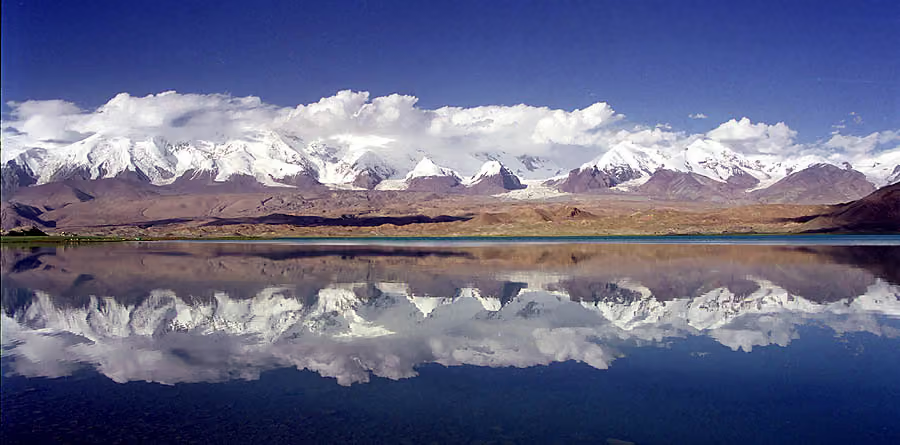
A dark glacial lake at about 3,600 m on the Karakoram Highway, with the 7,509 m ice dome of Muztagh Ata rising straight out of the far shore. The drive up from Kashgar through the Ghez canyon is as good as the destination, and Kyrgyz families run yurt stays by the water.
Entry has been reported bundled into tour prices from around ¥118; the lake itself has at times been free with charges for the viewing platform and yurt stays — not confirmed
≈ US$18Opening hours, booking and how to get there →
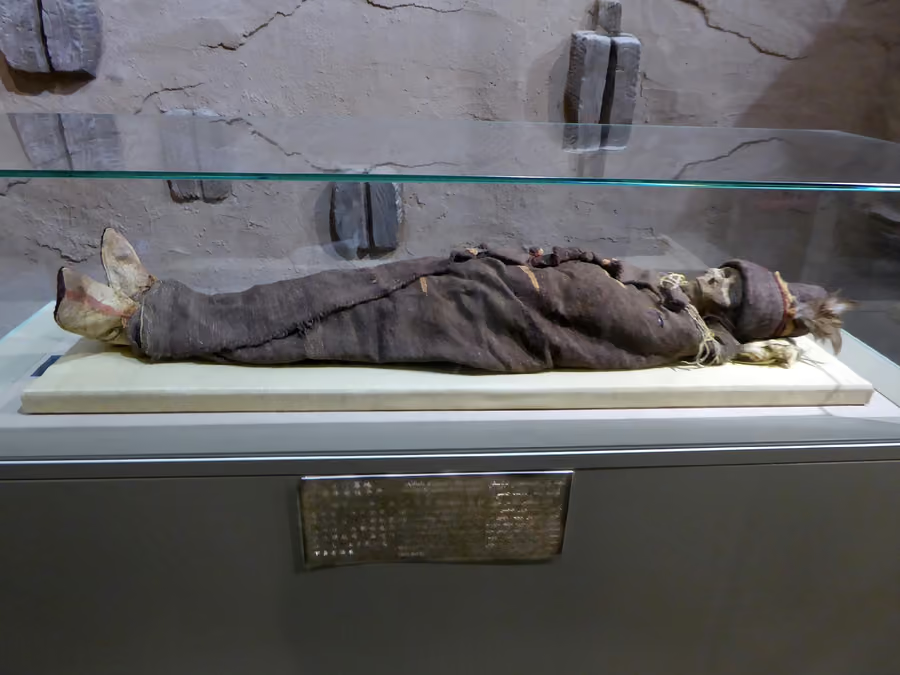
新疆维吾尔自治区博物馆
The regional museum in Urumqi, and the single most useful stop before heading out to the Silk Road sites. Its famous holdings are the desert mummies recovered from the Tarim Basin - including the so-called Loulan Beauty - alongside Silk Road textiles, documents in long-dead scripts, and ethnographic halls on Xinjiang's peoples.
Free
Opening hours, booking and how to get there →
天山天池
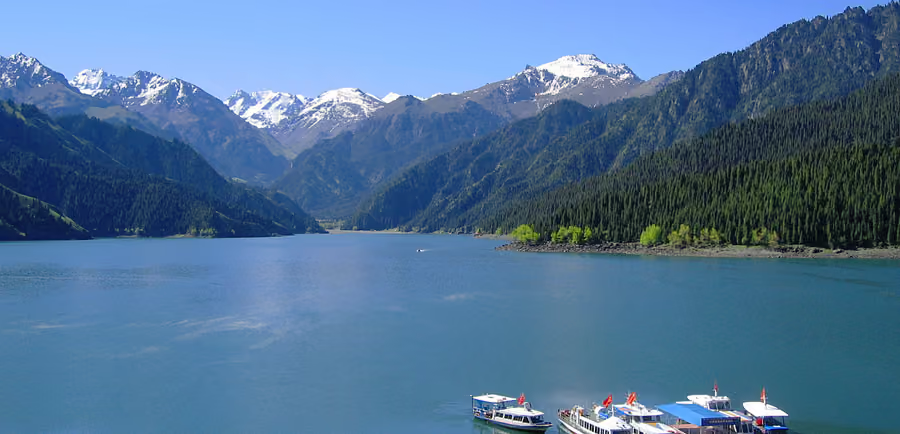
An alpine lake at about 1,900 m under the snow of Bogda Peak, ringed by spruce forest and Kazakh summer pastures. It is Urumqi's standard day trip and a UNESCO World Heritage site - genuinely beautiful, and genuinely crowded in July and August.
¥95 entry plus ¥60 for the compulsory shuttle bus (the ticket office is about an hour's shuttle ride from the lake)
≈ US$8.94–14Opening hours, booking and how to get there →
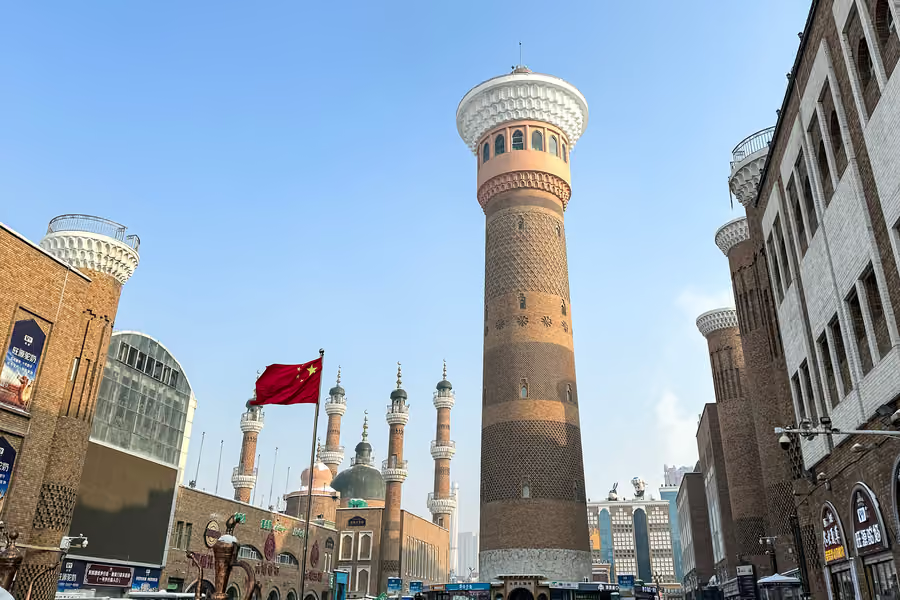
新疆国际大巴扎
Urumqi's landmark covered market, built in 2003 in an Islamic revival style around an 80-metre observation tower. It is a shopping and dining complex rather than a historic bazaar, but it is the easiest place in the city to eat Xinjiang food, hear the music and buy dried fruit and knives without leaving the capital.
Free to enter the bazaar and the square. The evening song-and-dance show is ticketed separately at roughly ¥199–479 depending on seating zone and performance.
≈ US$30Opening hours, booking and how to get there →
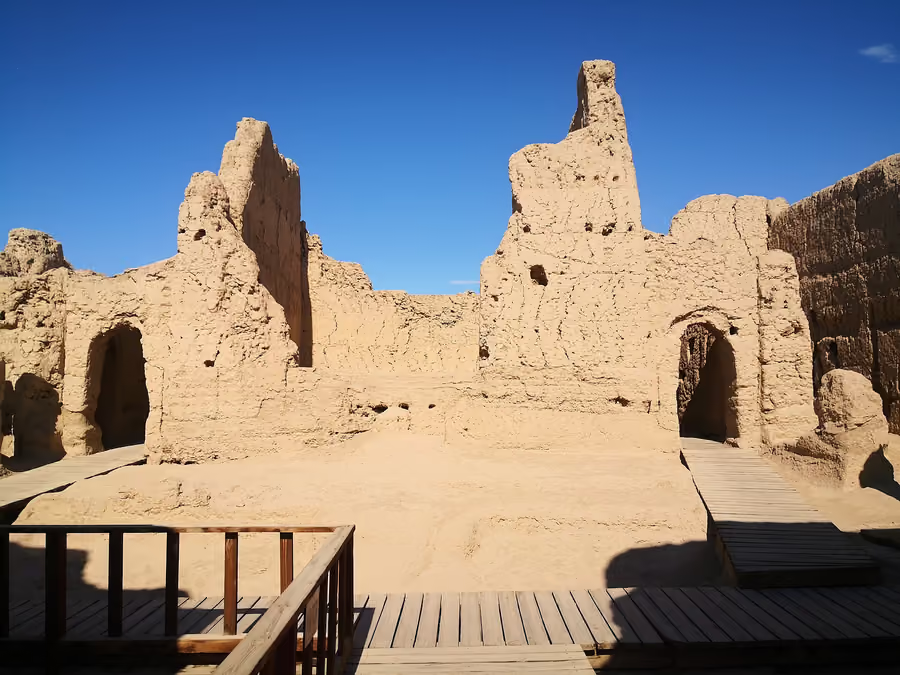
交河故城
A 2,000-year-old city carved downwards into a loess plateau between two rivers, abandoned after the Mongol wars and preserved by the desert climate. You walk the original sunken streets past temple foundations and a stupa grove - one of the best-preserved earthen cities anywhere, and a UNESCO Silk Road World Heritage site.
¥70
≈ US$10Opening hours, booking and how to get there →
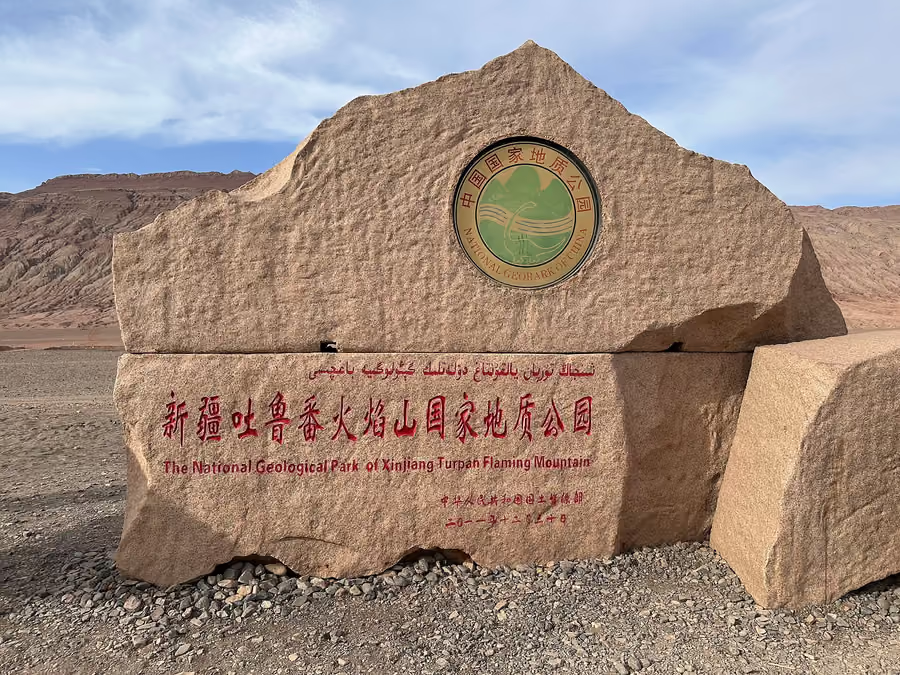
火焰山
A 100 km ridge of barren red sandstone north of Turpan, furrowed by erosion so that it appears to be burning in the afternoon sun, and immortalised as an obstacle in the novel Journey to the West. The visitor centre is dug underground and has a giant thermometer recording surface temperatures that regularly pass 70C.
¥40, plus about ¥10 for the internal shuttle cart
≈ US$1.49–5.96Opening hours, booking and how to get there →
苏公塔 (额敏塔)
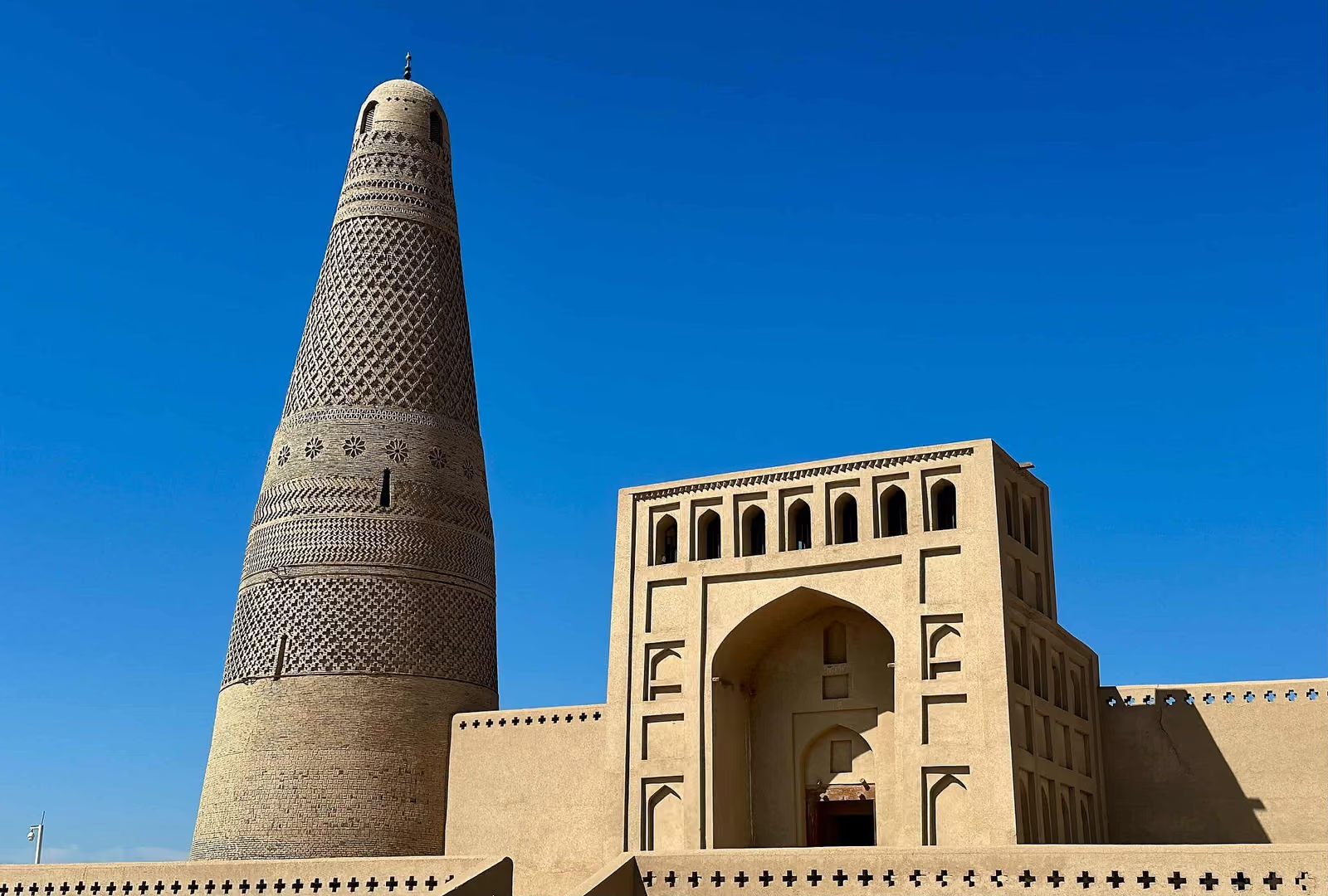
A 44-metre tapering brick minaret finished in 1778, its surface worked into fifteen different geometric brick patterns, attached to a still-used mosque. It is the tallest minaret in China and the most purely beautiful single building in Turpan.
Price not confirmed
Opening hours, booking and how to get there →
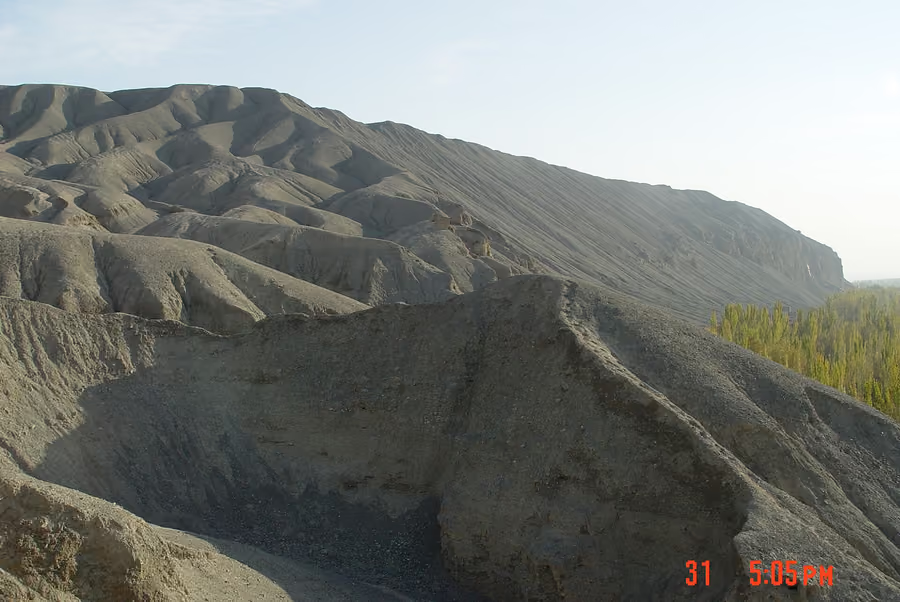
葡萄沟
A green gorge cut into the Flaming Mountains where Turpan's grapes are grown and dried, with vine-shaded walkways, drying houses of pierced brick, and Uyghur farm courtyards serving fruit and tea. The contrast with the scorched rock a kilometre away is the point.
¥60
≈ US$8.94Opening hours, booking and how to get there →
What to eat in Xinjiang
Xinjiang eats Central Asian, not Chinese: wheat in the form of hand-pulled noodles and tandoor-baked nan is the staple, rice appears mainly as pilaf, and lamb and beef do the work that pork does elsewhere in China. Uyghur food is halal, so there is no pork anywhere in a Uyghur kitchen, and the seasoning vocabulary is cumin, chilli, black pepper, onion and tomato rather than soy sauce and Sichuan pepper. For most foreign visitors this is the easiest food in China to walk into cold - skewers, flatbread, pilaf and noodle-and-stew dishes are all familiar formats, portions are generous and the flavours are direct. Two practical points: order one dish fewer than you think you need, because portions in Urumqi are enormous, and leave room for the fruit, which in Turpan and Hami is the point of the trip as much as the cooking is.
Laghman hand-pulled noodles
拉条子 / 拌面Lā tiáo zi / Bàn miàn
A lump of rested wheat dough is rolled into a rope, coiled, then swung and stretched by hand into long round noodles and boiled. They arrive plain in one bowl with a stir-fried topping in another - lamb or beef with onion, green pepper, tomato and sometimes celery or garlic shoots - and you tip the topping over the noodles and mix hard at the table. In Xinjiang a refill of plain noodles (加面) is usually free, which visitors almost never realise.
Tastes like: Chewy, substantial noodles under a tangy tomato-and-cumin sauce; savoury and warming rather than hot.
Not on the menu but in it: Ask for 加面 and you get a second helping of noodles at no charge - it is standard practice, not a cheek. The topping is often cooked in lamb fat, so even a vegetable version may not be vegetarian.
Where to eat it
- Xiao Gazi Xinjiang Cuisine · Ranked No. 12 on Ctrip's Urumqi must-eat list · ¥70–90 · 1F Mingyuan Huoyanshan, junction of Mingyuan West Road and Youhao South Road, Shayibake District, Urumqi.
- Jinzhu Dapanji · Price not confirmed · Branches across Urumqi and Xinjiang; confirm which one
Polo (Uyghur pilaf)
手抓饭Shǒu zhuā fàn
Mutton on the bone is fried with sliced onion and a large quantity of yellow and orange carrot, then rice is layered on top and the whole pot is steamed until every grain is separate and stained orange with carrot and fat. Raisins or dried apricots go in in some versions. The name means 'hand-grabbed rice' because it was traditionally eaten with the fingers, and it is served with a bowl of plain yoghurt or a raw onion and vinegar salad to cut the richness.
Tastes like: Rich, sweet from the carrot and faintly fruity, with soft lamb and glossy rice; one of the gentler dishes in the repertoire.
Not on the menu but in it: It is cooked in a lot of mutton fat, which is what makes it glossy, so it is heavier than it looks. The yoghurt served alongside is dairy, and the sweetness comes from carrot and raisin rather than sugar.
Where to eat it
- Xiao Gazi Xinjiang Cuisine · Ranked No. 12 on Ctrip's Urumqi must-eat list · ¥70–90 · 1F Mingyuan Huoyanshan, junction of Mingyuan West Road and Youhao South Road, Shayibake District, Urumqi.
- Hanba Bazaar night market · ¥30–60 per person · Kashgar; Hanba Bazaar night market (汉巴扎夜市)
Lamb kebabs
烤羊肉串Kǎo yáng ròu chuàn
Cubes of lamb threaded onto flat metal skewers - or, in the south of Xinjiang, onto stripped red willow branches that scent the meat - deliberately alternating lean and fat, grilled over charcoal and dusted with cumin, chilli powder, white pepper and salt as they cook. Eaten straight off the skewer, counted and paid for by the stick. The willow-branch version (红柳烤肉) carries far more meat per skewer than the metal kind.
Tastes like: Smoky, cumin-heavy and deeply savoury, with pockets of rendered fat between the lean cubes.
Not on the menu but in it: The alternating cubes of pure fat are intentional and are considered the best part; asking for lean-only is possible but changes the dish. Chilli is applied generously by default - say 不要辣 if you want it plain.
Watch videos of Lamb kebabs →Nan flatbread
馕Náng
Leavened wheat dough slapped onto the inside wall of a clay tandoor (馕坑) and baked until blistered. It comes in many forms: the big thin everyday disc stamped in the centre and topped with sesame or black cumin seed, the small thick bagel-shaped girde with a hard crust, onion or oil-enriched versions, and sweet ones. Bought by the piece, torn by hand, eaten with everything or dipped into tea or soup. It keeps for days, which is why it exists.
Tastes like: Crisp-edged, chewy and plainly wheaty, with a toasted sesame top; the thick versions are closer to bread than to a flatbread.
Not on the menu but in it: Sesame and black cumin seed on top are near-universal. Richer versions are laminated with mutton fat or butter rather than vegetable oil, so not every nan is vegetarian.
Watch videos of Nan flatbread →Samsa
烤包子Kǎo bāo zi
Unleavened dough is rolled thin, folded into a square parcel around diced (not minced) lamb, chopped onion, cumin and pepper, and slapped onto the wall of the tandoor to bake. The result is a crisp, layered pastry full of juice that will run down your wrist if you bite it carelessly. Sold singly from the nan pit; eat it standing, hot.
Tastes like: Flaky and blistered outside, with hot, fatty, cumin-scented lamb and sweet softened onion inside.
Not on the menu but in it: The filling is cubed lamb with a deliberate proportion of fat, plus a great deal of onion - not a minced-meat pasty. The inside is scalding and liquid when fresh.
Where to eat it
- Hanba Bazaar night market · ¥30–60 per person · Kashgar; Hanba Bazaar night market (汉巴扎夜市)
Big plate chicken
大盘鸡Dà pán jī
A whole chicken chopped through the bone and braised with potato, green pepper, dried chilli, star anise and beer or stock until the potatoes start to dissolve into the sauce, served in a metal platter the size of a bicycle wheel. When the meat is gone you ask for belt noodles (皮带面) to be added to the remaining sauce, which is the proper ending. A twentieth-century Han-Uyghur hybrid rather than a traditional Uyghur dish, with two rival regional styles, Shawan and Chaiwopu.
Tastes like: Savoury-spicy and slightly numbing, with sweet collapsed potato and a sauce the noodles soak up completely.
Not on the menu but in it: The noodles are a separate order you have to ask for - most restaurants will not offer. The chicken is chopped through the bone, so every piece has splinters. Beer is a common braising liquid.
Where to eat it
- Xiao Gazi Xinjiang Cuisine · Ranked No. 12 on Ctrip's Urumqi must-eat list · ¥70–90 · 1F Mingyuan Huoyanshan, junction of Mingyuan West Road and Youhao South Road, Shayibake District, Urumqi.
- Xiao Lizi Dapanji (Blood Bank branch) · ¥50–70 per person · Shuimogou District, Karamay Road (水磨沟区克拉玛依路) 76
- Jinzhu Dapanji · Price not confirmed · Branches across Urumqi and Xinjiang; confirm which one
Göshnan (meat-stuffed griddle bread)
馕包肉Náng bāo ròu
Two names cover two related things. Göshnan proper is a large flat pie of dough stuffed with minced lamb and onion and cooked slowly in a covered pan until both sides are browned, then cut into wedges. Nangbaorou is the restaurant version: braised lamb on the bone served on top of a torn-up nan so the bread soaks the sauce. Both are eaten by hand and shared.
Tastes like: Crisp, greasy, onion-sweet pastry with dense lamb filling; the braised version is softer and heavily sauced.
Not on the menu but in it: The pan-fried version is cooked in a substantial amount of fat. Nangbaorou's sauce is usually soy-and-tomato based.
Watch videos of Göshnan (meat-stuffed griddle bread) →Thin-skinned dumplings
薄皮包子Bó pí bāo zi
Steamed dumplings, called manta in Uyghur, with a wrapper rolled so thin the filling shows through, pleated into a small parcel around diced lamb and onion and steamed. They are often eaten sitting on top of a plate of polo, so the dumpling juice runs into the rice. Variants include pitir manta with the thinnest wrapper, boiled versions, and small tortellini-shaped chöchüre in tomato broth.
Tastes like: Delicate skin giving way to peppery lamb and a mouthful of hot juice; onion-sweet and much lighter than it looks.
Not on the menu but in it: The filling is diced, not minced, lamb plus a lot of onion; the juice inside is rendered fat. Vegetable versions with spinach or cabbage exist but are not the default.
Watch videos of Thin-skinned dumplings →Shorpa (lamb broth)
羊肉汤Yáng ròu tāng
Lamb on the bone simmered long and slow with onion, carrot, potato, chickpeas or turnip into a clear, barely seasoned broth, served in a bowl with the vegetables and a hunk of meat still on the bone. Salt, pepper and chopped coriander go in at the table. Nan is torn into it. In parts of Xinjiang the same idea is served in an individual enamel mug as 缸子肉, cooked on top of a stove.
Tastes like: Clean, mild and restorative, tasting of lamb and sweet root vegetables with nothing else competing.
Not on the menu but in it: Deliberately under-seasoned so you adjust it yourself - the salt and pepper on the table are not decoration.
Where to eat it
- Abula's Father's Tinned Meat · Price not confirmed · Kashgar old city, near the Id Kah Mosque (艾提尕尔清真寺) area
Cold pepper-numbed chicken
椒麻鸡Jiāo má jī
A poached chicken is torn into strips by hand and dressed cold in a broth-based sauce loaded with green Sichuan pepper, chilli, coriander and raw onion, then served with the poaching liquid and usually a tangle of cold noodles or vermicelli to go underneath. Despite the Sichuan-sounding name it is a Xinjiang restaurant staple and appears on almost every menu in Urumqi.
Tastes like: Cold, savoury and sharply numbing from the green pepper, with a fresh coriander-and-onion lift.
Not on the menu but in it: The numbing comes from green Sichuan peppercorn and is much stronger than the chilli - people who order it expecting only 'spicy' get a tingling, slightly anaesthetic mouth instead. Usually contains soy and sometimes sesame oil.
Where to eat it
- Loulan Mikao · Ranked No. 2 on Ctrip's Urumqi must-eat list · ¥70–90 · 256 Qinyuan Road, Shuimogou District, Urumqi; also a branch at Qidaowan.
- Xiao Gazi Xinjiang Cuisine · Ranked No. 12 on Ctrip's Urumqi must-eat list · ¥70–90 · 1F Mingyuan Huoyanshan, junction of Mingyuan West Road and Youhao South Road, Shayibake District, Urumqi.
- Xiao Lizi Dapanji (Blood Bank branch) · ¥50–70 per person · Shuimogou District, Karamay Road (水磨沟区克拉玛依路) 76
- Pang Laohan Xinjiang Numbing Chicken · ¥65–90 per person · Urumqi, Henan East Road branch (河南东路店)
Matang nut cake
玛仁糖 / 切糕Mǎ rén táng / Qiē gāo
Walnuts, raisins, almonds, sesame and sometimes dates are bound with boiled sugar or honey syrup and pressed into a dense slab, then sliced off a block to order. It is extremely heavy for its size, which is the whole problem: it is sold by weight, and a slice that looks like a small piece of cake can weigh a kilogram and cost far more than a visitor expects.
Tastes like: Intensely sweet and sticky, dominated by walnut, with a firm chewy set.
Not on the menu but in it: Heavily nut-based - walnut and almond above all - so a serious allergy risk sold loose, uncovered, at street stalls with no labelling.
Watch videos of Matang nut cake →Turpan grapes and raisins
吐鲁番葡萄 / 葡萄干Tǔlǔfān pútáo / Pútáo gān
Turpan sits in a desert basin below sea level with extreme heat and almost no rain, which concentrates sugar in the fruit; grapes have been grown here for over two thousand years. The dominant variety is the seedless white (无核白), harvested from mid-July into early September and dried in the open-walled brick drying houses you see all over the valley to make the pale green raisins sold everywhere. Grape Valley (葡萄沟) is the place to eat them fresh off the vine.
Tastes like: Fresh grapes are startlingly sweet with thin skins; the dried seedless white raisins are honeyed and much softer than supermarket raisins.
Not on the menu but in it: Dried fruit sold loose in bazaars is often lightly sulphured to keep its colour, and some is sugar-coated. Buying raisins by weight carries the same overcharging risk as matang - confirm price per jin before anyone bags it.
Watch videos of Turpan grapes and raisins →Hami melon
哈密瓜Hāmì guā
A netted-skin muskmelon grown in the east of Xinjiang around Hami and Turpan, where a huge gap between day and night temperatures drives the sugar up. It is sold whole in bazaars and by the wedge from carts, usually chilled, and is the standard way to finish a meal of lamb and noodles. Many varieties exist, with flesh from pale green to deep orange.
Tastes like: Very sweet, perfumed and crisp rather than soft - noticeably firmer and sweeter than a European cantaloupe.
Not on the menu but in it: Nothing, though pre-cut melon from unrefrigerated street carts in summer heat is a reasonable stomach risk - buy from a busy stall with ice.
Watch videos of Hami melon →Kvass
卡瓦斯Kǎ wǎ sī
A lightly carbonated, very low-alcohol drink fermented from cereal - usually bread or wheat - and flavoured with honey, fruit or herbs, brought into Xinjiang from Russia and Central Asia and now made locally and sold in bottles and on draught. Served cold with grilled meat, it does the job beer does elsewhere. Xinjiang also produces its own beers and, in Turpan, wine from vineyards documented since the Tang dynasty.
Tastes like: Malty, sour-sweet and faintly bready with a soft fizz; closer to a dark soft drink than to beer.
Not on the menu but in it: Made from fermented bread or cereal, so it contains gluten and a trace of alcohol, typically well under one percent - worth knowing if you avoid alcohol entirely for religious or medical reasons. Commercial versions can be very sweet.
Watch videos of Kvass →Where to eat in Xinjiang
- Dianping (大众点评) — the real ratings. Chinese only, but photos, prices and a 4.5+ score survive translation. Its 必吃榜 "Must-Eat" list is the mainstream benchmark.
- Black Pearl (黑珍珠) — China's own fine-dining guide, published annually by Meituan and taken more seriously domestically than Michelin.
- Michelin covers only a few Chinese cities, so its absence means nothing outside them.
- Xiaohongshu (小红书) — what is actually busy this month, rather than this year.
Abula's Nan 阿布拉的馕
¥10–20≈ US$1.49A long-established Urumqi nan bakery turning out golden tandoor-baked flatbread all day, and the simplest way to understand why nan rather than rice underpins eating in Xinjiang. Buy a couple of shapes to compare; the thick girde-style ones keep best for a train journey.
Order: Sesame nan (芝麻馕), Thick pit nan (窝窝馕) and 2 more
What to order, booking and allergens →
Loulan Mikao 楼兰秘烤
¥70–90≈ US$10One of Urumqi's best-regarded grill houses, built around its signature small kebabs cooked over charcoal with the house spice mix. A full Xinjiang grill dinner here means skewers, nan, a cold dish and a plate of noodles between a few people.
Order: Lamb kebabs (烤肉串), Grilled lamb ribs (烤羊排) and 2 more
What to order, booking and allergens →
Xiao Gazi Xinjiang Cuisine 小尕子·新疆菜
¥70–90≈ US$10A reliable sit-down Xinjiang restaurant chain in Urumqi whose calling card is the cold numbing-pepper chicken, alongside the full standard repertoire of noodles, pilaf and grilled lamb and a proper pot of salted milk tea.
Order: Cold numbing chicken (椒麻鸡), Laghman, hand-pulled noodles (拉条子) and 2 more
What to order, booking and allergens →
Nurman Fig Pilaf 努日曼无花果抓饭快餐
¥35–50≈ US$5.21A fast, cheap pilaf specialist where the rice comes out with every grain separate, which is the local test of a good polo. Canteen format - order at the counter, eat quickly, leave - and the best-value proper meal on this list.
What to order, booking and allergens →
Lovely Xinjiang Silk Road Banquet 可爱的新疆·丝路宴
¥130–180≈ US$19The showpiece option: a large Silk Road banquet restaurant where whole roast lamb is prepared on site and the room is set up for a full evening with music and dance. The right choice if you want the spectacle version of Xinjiang dining in one sitting.
What to order, booking and allergens →
Xiao Lizi Big Plate Chicken 小李子血战大盘鸡
¥50–70≈ US$7.45A dedicated big-plate-chicken house using local free-range birds with potato, green pepper and red chilli. Order the plate, work through the chicken, then ask for belt noodles to be dropped into what is left of the sauce.
What to order, booking and allergens →
Mubarak Restaurant 穆巴拉克餐厅
¥50–70≈ US$7.45A Turpan standby for charcoal-grilled lamb skewers, glossy and heavily cumined, with the usual supporting cast of nan and noodles. A straightforward sit-down place to eat in a town where most visitors are on a tight sightseeing schedule.
What to order, booking and allergens →
Hanbazha Night Market, Kashgar Old Town 汗巴扎夜市
¥40–80≈ US$5.96Not a restaurant but the single best eating stop in Kashgar: a street of stalls on the east side of the old town, across the road from the Id Kah Mosque, selling red-willow-branch kebabs, whole roast lamb, grilled fish, grilled eggs, tandoor pies, cold liangpi noodles and yoghurt-and-rice sweets. Busiest after dark and strongly local in feel despite the visitors.
What to order, booking and allergens →
Xiao Lizi Dapanji (Blood Bank branch) 血站小李子大盘鸡
¥50–70 per person≈ US$7.45Urumqi's most argued-over dapanji restaurant, trading for around thirty years and known by the landmark it sits near rather than a street name. Big plate chicken is a Xinjiang invention from the Shawan and Chaiwopu roads: chicken braised with potato, chilli and Sichuan pepper, with wide hand-pulled belt noodles dropped into the remaining sauce at the end. This is the version locals send people to.
Order: Big plate chicken (大盘鸡), Belt noodles for the sauce (皮带面) and 2 more
What to order, booking and allergens →
Jinzhu Dapanji 金柱大盘鸡
Price not confirmedThe other big dapanji name in Urumqi, thirty years old and now with more than a hundred branches across Xinjiang. Its distinguishing habit is braising each plate to order in a small pot rather than batch-cooking, which keeps the chicken juicier. The most reliable choice if you are not near the Shuimogou branch of Xiao Lizi.
Order: Big plate chicken (大盘鸡), Belt noodles (皮带面) and 2 more
What to order, booking and allergens →
Pang Laohan Xinjiang Numbing Chicken 胖老汉新疆特色椒麻鸡
¥65–90 per person≈ US$9.68A single-dish specialist devoted to jiaomaji, which in Xinjiang is eaten as a shared cold plate with beer and nan rather than as a main course. Going to a place that does only this one thing is the quickest way to understand why locals rate it above dapanji.
Order: Cold numbing chicken (椒麻鸡), Belt noodles to go under it (皮带面) and 2 more
What to order, booking and allergens →
The Hundred-Year Tea House 百年老茶馆
Price not confirmedA first-floor timber tea house above a street corner in Kashgar's old city, open since the late Qing when it served Central Asian traders working the Silk Road, and run by three generations of the same family without ever closing. Old men sit with brick tea and nan for hours; musicians play in the afternoons. You go for tea, bread and the room, not for a meal, and it is the single best hour you will spend in Kashgar.
Order: Brick tea with rose or herbs (药茶/砖茶), Nan bread (馕) and 1 more
What to order, booking and allergens →
Abula's Father's Tinned Meat 阿布拉老爸罐罐肉
Price not confirmedA Kashgar old-city shop that has been making guanguanrou since 1947: lamb with carrot and onion sealed into old enamelled tins and slow-cooked, the tins themselves salvaged from the mid-century. It is a genuinely unusual regional dish you will not meet in Urumqi, and the shop is a short walk from the Id Kah Mosque.
Order: Tinned lamb with carrot and onion (罐罐肉), Nan to eat it with (馕) and 1 more
What to order, booking and allergens →
Hanba Bazaar night market 汉巴扎夜市
¥30–60 per person≈ US$4.47The Kashgar night market locals name when asked where to actually eat, as opposed to the more photographed tourist food streets. Expect kebab grills, nan pits, hand-pulled rice, roast pigeon, baked eggs, roast buns and hand-churned ice cream, all at street prices. The honest advice for Kashgar is that the best food is at stalls rather than restaurants, and this is where to go looking.
Order: Lamb kebabs (烤肉), Roast stuffed buns from the pit oven (烤包子) and 3 more
What to order, booking and allergens →
See Xinjiang
Other people's videos, on YouTube — we link, we don't host. Worth knowing: YouTube is blocked in mainland China, so watch these at home, or download them in the YouTube app before you fly.
- Xinjiang Travel Guide | Silk Road, Tian Shan Mountains, Kashgar & Pamir PlateauAn overview of Xinjiang covering the Silk Road towns, the Tian Shan mountains and Kashgar.Ink Voyages · opens on YouTube
- Our First Time in URUMQI, CHINA 🇨🇳 Exploring Xinjiang Uyghur Autonomous RegionA first visit to Urumqi, giving a sense of the checkpoints and the practical texture of travelling there.Flora and Note · opens on YouTube
- I Don’t Trust The Media, So I Flew To Xinjiang, China Myself 🇨🇳A traveller going to Xinjiang specifically to see the region first-hand rather than read about it.Ken Abroad · opens on YouTube
- I Visited China’s Most Restricted RegionA widely watched account of visiting Xinjiang, including the security presence visitors encounter.Drew Binsky · opens on YouTube
Videos belong to the channels credited above. We have no affiliation with them and earn nothing from these links.