Discover Xinjiang
Xinjiang Uygur Autonomous Region Museum
新疆维吾尔自治区博物馆
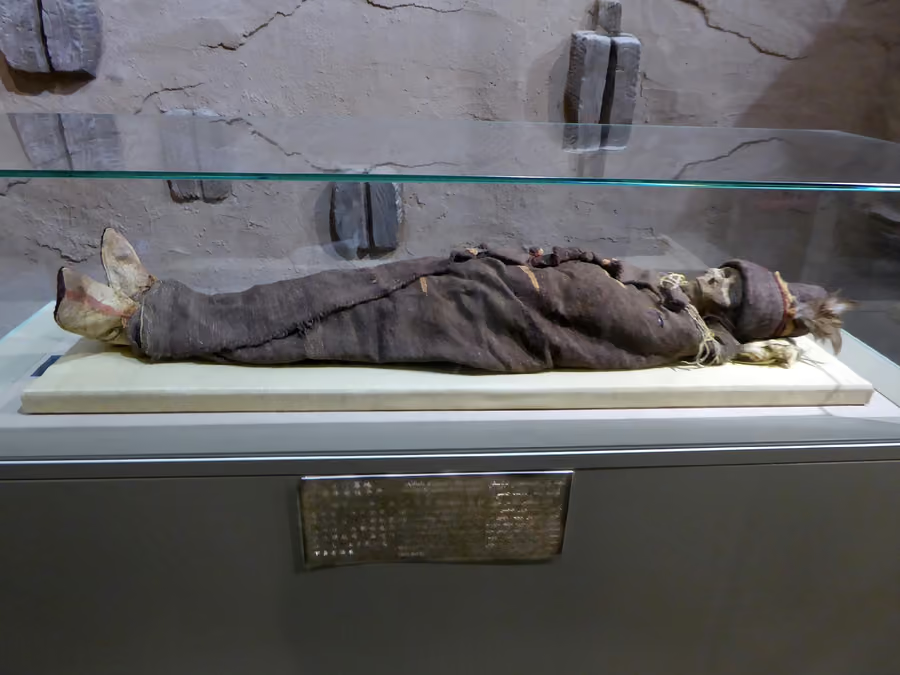
The regional museum in Urumqi, and the single most useful stop before heading out to the Silk Road sites. Its famous holdings are the desert mummies recovered from the Tarim Basin - including the so-called Loulan Beauty - alongside Silk Road textiles, documents in long-dead scripts, and ethnographic halls on Xinjiang's peoples.
The story
What makes this place special
The Xinjiang Uygur Autonomous Region Museum is at 581 Xibei Road in Saybag District, Urumqi. It was established in August 1959 and its present building opened to the public on 20 September 2005. It holds more than 40,000 relics and specimens, including 381 objects graded first-class nationally, and was included in the first batch of China's national first-grade museums in May 2008. Four main permanent displays cover historical relics, the customs of Xinjiang's peoples, the region's ancient mummies, and revolutionary history. Objects on show include Kharosthi-script documents, a Greco-Bactrian statuette from a third-century BC burial, a wooden bar inscribed in Old Uyghur, the Yingpan man, and tomb paintings from the Astana cemetery.
What you’ll discover
The reason to come is the mummy gallery: naturally desiccated bodies recovered from the Tarim basin, preserved by the dryness of the desert with hair, eyelashes, tattoos, woollen twill clothing and felt boots intact, several of them thousands of years old. Beyond that, the historical galleries cover the Silk Road oases with documents in Kharosthi, Sogdian, Tocharian, Old Uyghur and Chinese, Buddhist sculpture and wall painting from Kucha and Turpan, and the ethnography floor covers the costume and material culture of the region's peoples.
A little local insight
Good to know before you go
- Come here first, before Turpan and Kashgar. The wall paintings, manuscripts and grave goods in this building are what was taken out of Jiaohe, Gaochang and the cave temples, which are now largely empty, and seeing them first makes those sites legible.
- The mummies are the one thing you cannot see anywhere else, and the gallery is small relative to the rest of the building. Do it first, while you are still fresh, and go back a second time if you have the hour.
- The multilingual documents on display are the single best demonstration of what the Silk Road actually was: five or six scripts in use in the same oases at the same time. The labels undersell them.
- Bring your passport for the ticket desk, and expect security screening at the entrance as at all public buildings in Urumqi.
- English labelling exists but is uneven. A translation app on the Chinese captions is worth having, particularly in the manuscript and Buddhist art rooms.
- It is indoors and air-conditioned, which makes it the right call on an Urumqi summer afternoon or in the deep cold of January.
When to come
A weekday morning, with the mummy gallery done first. Being indoors it is the obvious choice in Urumqi's extreme summer heat and winter cold; check the current closing day before going.
Getting around
Good. A modern museum building with lifts, level galleries, ramps at the entrance and accessible toilets; a wheelchair can see the whole display. Seating in the galleries is limited, so a bad knee should plan where to rest.
Worth knowing before you go
The 10:30 opening is not a mistake - Urumqi runs on Beijing time officially but on local time in practice, and most institutions here open late and close late.
Compare established providers
Check live tours and tickets
Search for Xinjiang Uygur Autonomous Region Museum in Xinjiang. Prices, availability, payment and confirmation are handled by the booking provider.
China Travel Select does not take payment or create the reservation. Confirm the exact name, dates, inclusions and cancellation rules on the provider’s page.
Take a closer look
Maps, videos & more
Prices and hours change. These are the places to check on the day.