Discover Chengdu
Dujiangyan Irrigation System
都江堰
An irrigation works built around 256 BC that splits the Min River without a dam and still waters the Chengdu plain 2,300 years later - the engineering achievement that made Sichuan rich. A UNESCO site with suspension bridges and river views.
The story
What makes this place special
Dujiangyan is a river-management scheme begun around 256 BC under Li Bing, the Qin governor of Shu, and it is still irrigating the Chengdu plain today - which is the point of it. Li Bing's decision was to divide and channel the Min River rather than dam it, so the waterway stayed navigable and the silt kept moving; his engineers cut the Baopingkou channel through solid rock by heating it with fire and cracking it with water. The plain's agricultural wealth, and therefore Sichuan's historical importance, rests on this system, and it was inscribed by UNESCO in 2000 together with Mount Qingcheng.
What you’ll discover
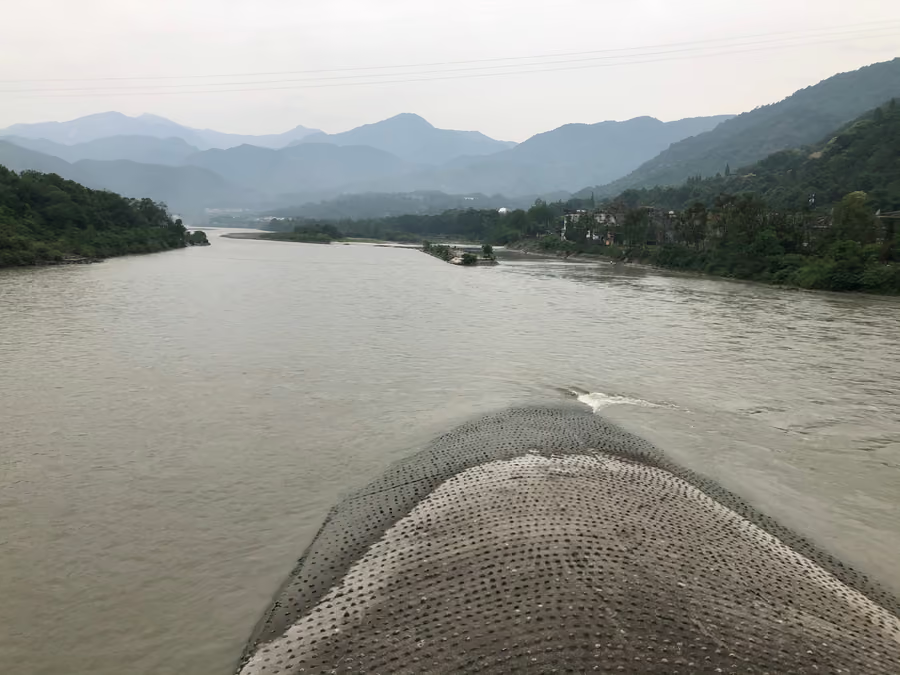
The works are three connected pieces you walk between. Yuzui, the Fish Mouth, is the levee nose in midstream that splits the river into an inner channel for irrigation and an outer one for flood discharge, taking roughly 60 per cent inside in low water and 40 per cent in flood. Feishayan, the Flying Sand Weir, is the deliberately low spillway that throws surplus water and gravel back into the outer river, and Baopingkou is the narrow rock gate that meters what reaches the plain. Above them on the slope of Mount Yulei sit Fulong Temple and the Erwang (Two Kings) Temple built to Li Bing and his son, and the Anlan suspension bridge crosses the river on cables between them.
A little local insight
Good to know before you go
- Walk the site downhill, not uphill. Enter at the Lidui Park / south gate end and you climb; most people have more energy for the temples first, and it is easier to take the shuttle or the hill path up to Erwang Temple and then come down through the bridge and the weirs to the Fish Mouth.
- The engineering only makes sense from above. Climb to the viewing terrace on Yulei Mountain or the Erwang Temple terraces and the whole split of the river reads in one glance; from the river bank you are just looking at water.
- The Anlan bridge sways hard and is single-file in a crowd. If anyone in the group dislikes heights or movement underfoot, there is a modern solid bridge further down that gets you to the same bank.
- Two engineering details are worth looking for and nearly everyone misses them: the six-character maxim attributed to Li Bing, 'dig the channel deep, build the weir low', carved on stone by the works, and the annual-maintenance marker stones. The system survives on yearly dredging in the winter low-water season, not on the original build.
- It pairs with Mount Qingcheng, not with central Chengdu. Both are on the same high-speed line out of Chengdu, and doing Dujiangyan in the morning and Qingcheng in the afternoon is a long but normal day.
When to come
Early morning, before the tour-group coaches arrive mid-morning. Flood season in summer is when the weir is actually working and the water is loudest and most impressive; in winter the river is low, the engineering is easier to read and the site is quiet, but the annual dredging works may be in progress.
Getting around
Mixed. The riverside sections around Baopingkou, the weir and the Fish Mouth are largely level paved walkway and are manageable, and electric shuttle carts run between the far ends of the park, which is what makes the full length possible with a bad knee. The Erwang Temple and Fulong Temple are built up a hillside on long flights of stone steps and are not wheelchair accessible; the Anlan suspension bridge has stepped approaches and a moving deck. A wheelchair user can see the three main waterworks and should plan to skip the temples.
Worth knowing before you go
Foreign passport holders cannot pass the ID-scanning gates and must use the staffed manual channel - have your passport, and the booking confirmation, ready.
Compare established providers
Check live tours and tickets
Search for Dujiangyan Irrigation System in Chengdu. Prices, availability, payment and confirmation are handled by the booking provider.
China Travel Select does not take payment or create the reservation. Confirm the exact name, dates, inclusions and cancellation rules on the provider’s page.
Take a closer look
Maps, videos & more
Prices and hours change. These are the places to check on the day.