Discover Chengdu
Wuhou Shrine Museum
武侯祠博物馆
A walled garden complex honouring Zhuge Liang, the strategist of the Three Kingdoms period, alongside the tomb of the Shu emperor Liu Bei. If you know the Three Kingdoms stories - or want to - this is where Chinese visitors come to pay respects, under some beautiful old cypresses and red walls.
The story
What makes this place special
The site began in 223 CE as Huiling, the tomb of Liu Bei, founder of the Shu Han state, and the temple to him is properly called the Han Zhaolie Temple. A separate shrine to his chancellor Zhuge Liang - the Marquis Wu, hence Wuhou - stood alongside it from before the Tang. In the early Ming the prince of Shu, Zhu Chun, argued that ruler and minister should be housed together and had Zhuge Liang's image moved into Liu Bei's temple, producing the arrangement that survives: the only temple in China where a sovereign and his minister are worshipped jointly. Ordinary people have always called the whole complex Wuhou Shrine rather than Zhaolie Temple, because Zhuge Liang mattered more to them than the emperor did.
What you’ll discover
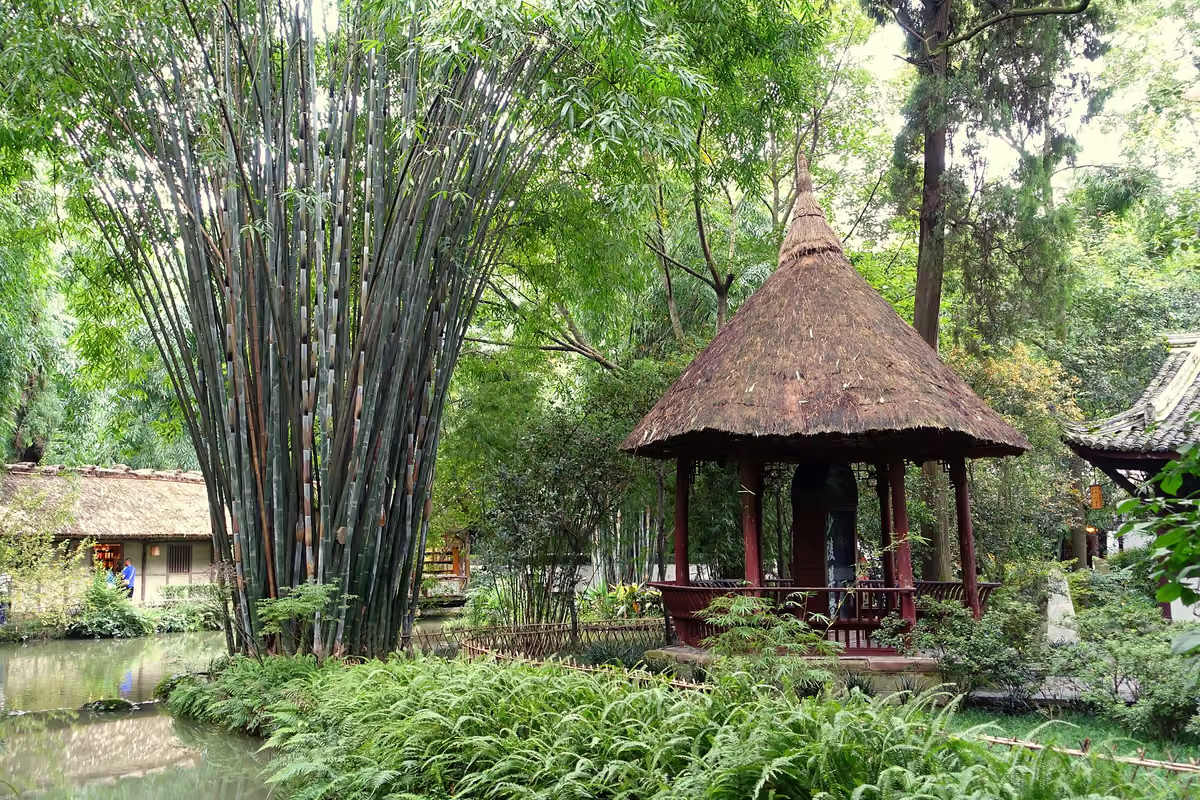
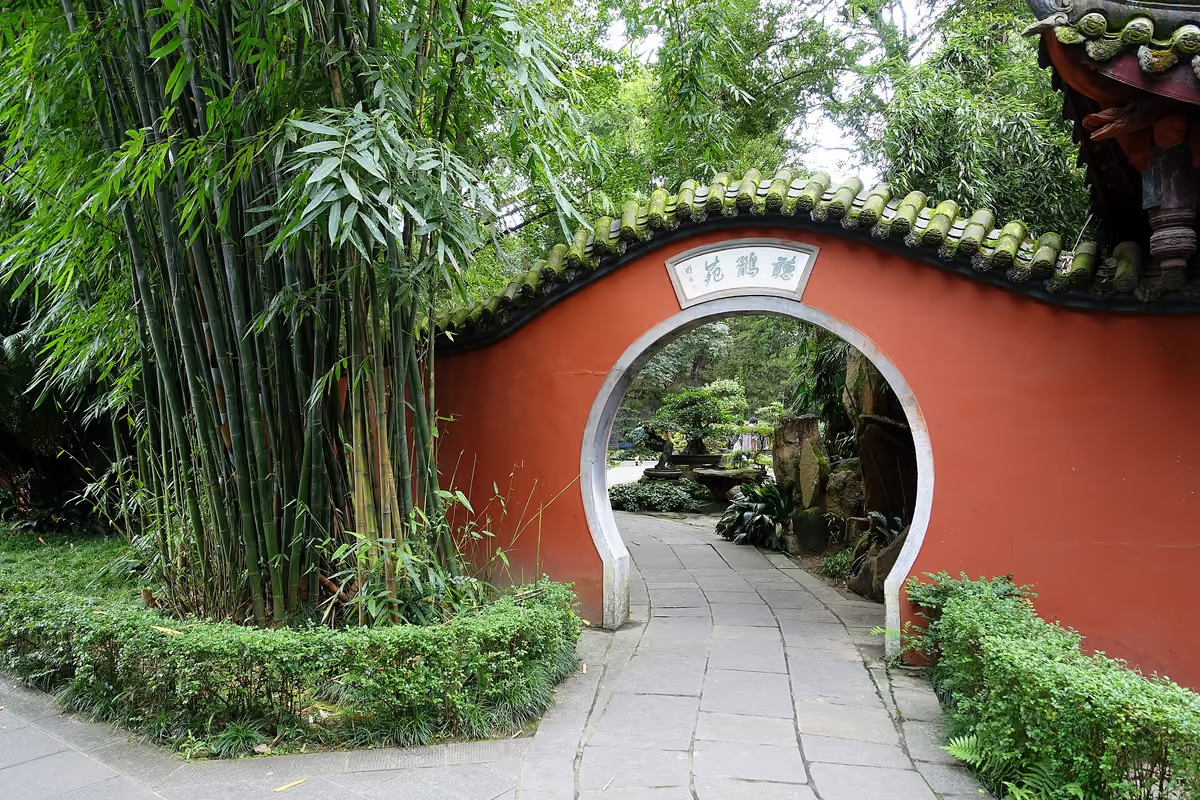
Through the gate marked Han Zhaolie Temple you pass the Tang stele known as the Three Perfections, praised for its text, calligraphy and carving alike, then the Liu Bei hall, then the flanking corridors holding twenty-eight statues of Shu Han officials - civil ministers in the east gallery, generals in the west. Behind and lower down is the Zhuge Liang hall, with three bronze drums in front said to date from his southern campaigns, and beyond that the Sanyi Temple to the oath of Liu Bei, Guan Yu and Zhang Fei, moved here in 1997-98 from its original Kangxi-era site. At the back is Huiling, Liu Bei's burial mound, approached by the red-walled bamboo corridor that is now the most photographed spot in the complex.
A little local insight
Good to know before you go
- The red wall corridor on the approach to Huiling - tall bamboo leaning in over a crimson wall - is the one image everyone wants, and by mid-morning there is a photo queue. Go first thing and it is yours.
- Read the Three Perfections stele before the halls. It is the oldest object on the site by several hundred years and nearly everyone walks past it to get to the statues.
- The galleries of twenty-eight statues are the part to slow down for if you know the Three Kingdoms at all - they are a who's who of the novel, and the Chinese visitors standing in front of them are recognising characters, not reading history.
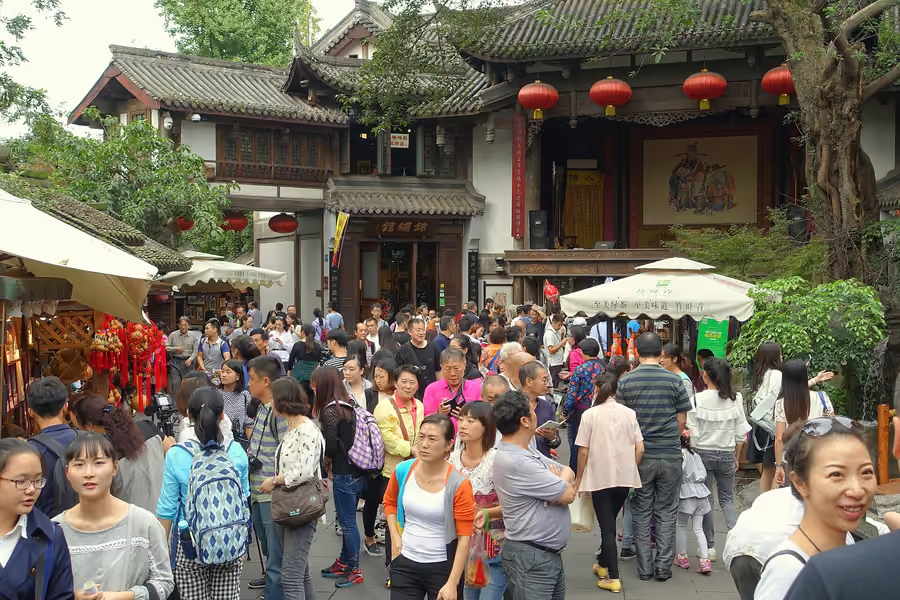
- Jinli is right next door and shares a wall, so plan them as one visit, with the shrine in the morning and Jinli for lunch or the evening.
- Around Chinese New Year the shrine hosts the Chengdu Temple Fair with lanterns and ritual re-enactments - transformative if you are here then, and impossible to get round if you only wanted the temple.
When to come
Early morning for the red-wall corridor and the halls before the coach parties. Autumn and spring are most pleasant; the complex is heavily shaded, which makes it one of the better options in Chengdu's humid summer.
Getting around
Reasonably good. The complex is flat, laid out on a single level across courtyards and garden paths, with broad paved surfaces, and the distances are modest. The obstacles are the raised stone thresholds and a few steps up into each hall, and the red-wall corridor and bamboo garden paths are paved but uneven in places. A wheelchair user can cover most of the site and reach Huiling, needing help at hall doorways; a bad knee is a non-issue here.
Worth knowing before you go
The red-wall bamboo corridor near the Sanyi Temple side is the photo everyone queues for - go in the first hour after opening to get it empty. Jinli street exits directly from the shrine's east side, so do them together.
Original visit planner
Decide before you cross the city
Does Wuhou Shrine Museum deserve 1.5-2 hours in this itinerary, after transport, entry checks and the next stop are counted?Best forTravellers whose priority matches this verified description: A walled garden complex honouring Zhuge Liang, the strategist of the Three Kingdoms period, alongside the tomb of the Shu emperor Liu Bei. If you know the Three Kingdoms stories - or want to - this is where Chinese visitors come to pay respects, under some beautiful old cypresses and red walls.
Reconsider ifReconsider the same-day plan if buy at the gate or online the same day; no advance booking needed conflicts with another fixed booking, or if the documented movement conditions do not suit the least mobile person in the group.
- Before
Buy at the gate or online the same day; no advance booking needed
The record is dated and admission conditions can change; a screenshot from an unofficial listing is not enough.
- Arrive
Line 3 to Gaoshengqiao, then about a 10-minute walk; or Line 4 to Tonghuimen plus a short bus ride
The last part of a journey often creates more friction than the intercity leg.
- Visit
Protect 1.5-2 hours and decide the one feature you most want to understand before entering.
A clear priority makes it easier to cut secondary rooms, paths or viewpoints if queues or fatigue build.
- Continue
Choose the next stop in the same district where possible and keep the final stop optional.
This prevents a late visit from turning into an unnecessary cross-city transfer.
Six checks for this visit
- Recheck price (¥60; ¥30 student; family package around ¥120), opening hours and any closed day on the linked source.
- Carry the same physical passport used for the reservation.
- Allow 1.5-2 hours, plus security, queues, the walk from transport and an exit buffer.
- Reasonably good. The complex is flat, laid out on a single level across courtyards and garden paths, with broad paved surfaces, and the distances are modest. The obstacles are the raised stone thresholds and a few steps up into each hall, and the red-wall corridor and bamboo garden paths are paved but uneven in places. A wheelchair user can cover most of the site and reach Huiling, needing help at hall doorways; a bad knee is a non-issue here.
- Save the venue name, address and return destination offline in case data or translation fails.
- Use the nearby alternatives on this page if the visit is closed, sold out or no longer suitable.
This planning panel is original editorial analysis built from the sourced Wuhou Shrine Museum record. It contains no copied itinerary, map artwork or third-party photograph.
Compare established providers
Check live tours and tickets
Look up Wuhou Shrine Museum in Chengdu on the provider’s site. These links may open a destination or search page; check the exact property or attraction before choosing dates.
How to compare the total price fairly
- Use the same dates, number of travellers and currency on every site.
- Match the attraction or route, start time, ticket type, guide language and included transfers.
- Check the final checkout total, including taxes, booking charges and optional extras.
We do not receive live price feeds or rank these providers by price. Compare the final offer yourself; the lowest headline price may cover different inclusions.
China Travel Select does not take payment or create the reservation. Confirm the exact name, dates, inclusions and cancellation rules on the provider’s page.
Take a closer look
Maps, videos & more
Prices and hours change. These are the places to check on the day.