Discover Chengdu
Qingyang Palace
青羊宫
The oldest and largest Daoist temple in south-west China, supposedly where Laozi preached, with an unusual eight-trigram pavilion built without a single nail and two bronze goats that locals rub for luck. Far less visited than the Buddhist temples.
The story
What makes this place special
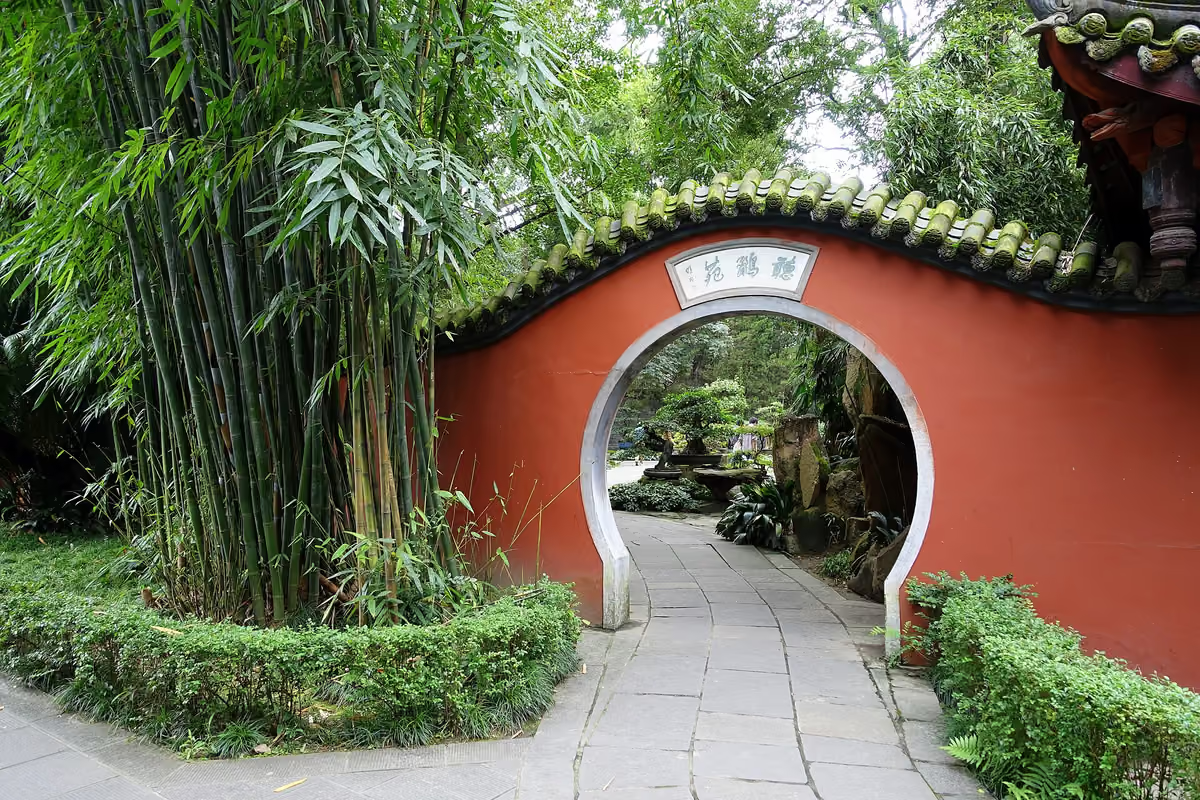
Qingyang Gong is Chengdu's principal Taoist temple and claims a very long descent - traditionally from a market called Qingyangsi, with a Three Kingdoms-era shrine called Qingyang Guan and a Tang renaming to Xuanzhong Guan. In 881 the Tang emperor Xizong, fleeing Huang Chao's rebellion, sheltered in Shu and used the site as a temporary palace, and in 883 he decreed the present name. Its Tang buildings were destroyed in the fighting at the end of the Ming, and most of what stands is a Kangxi-era Qing rebuilding. The temple's association is with Laozi, who in the legend met Yin Xi here. It also holds the woodblocks of the Daozang Jiyao, a Taoist canon compilation, held to be the most complete surviving set anywhere.
What you’ll discover
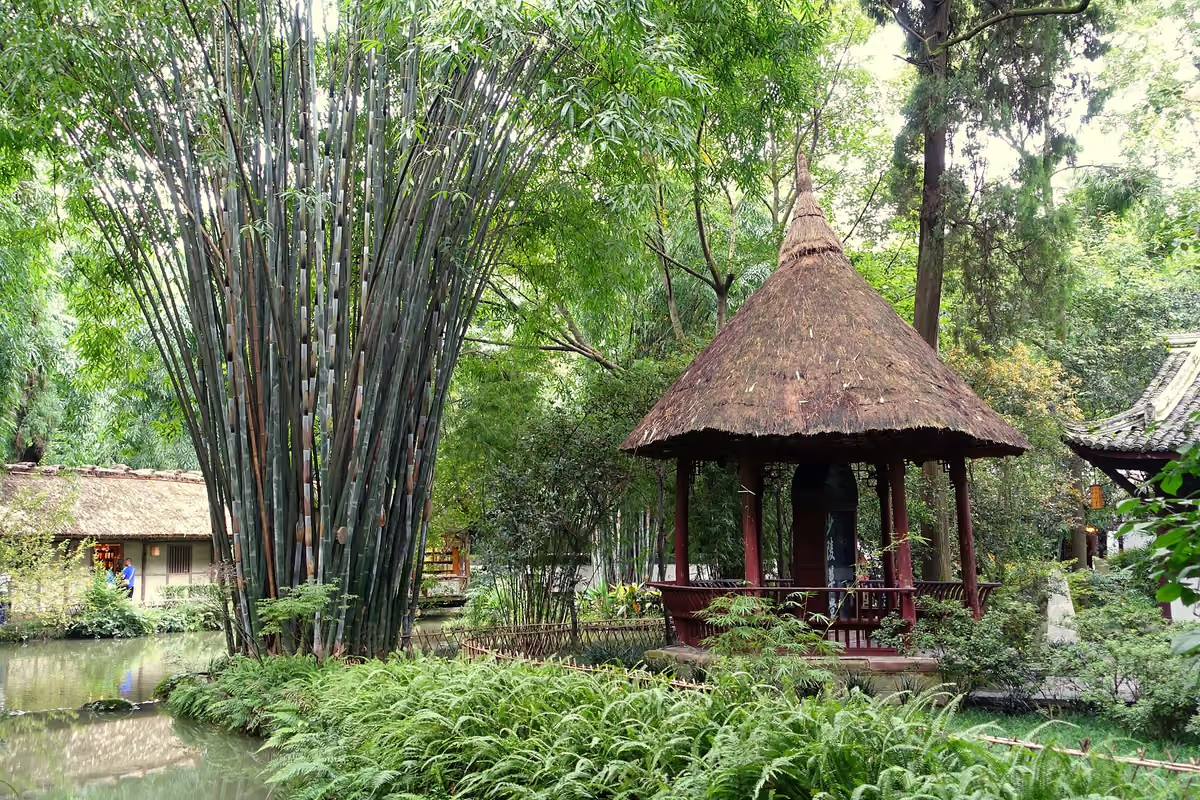
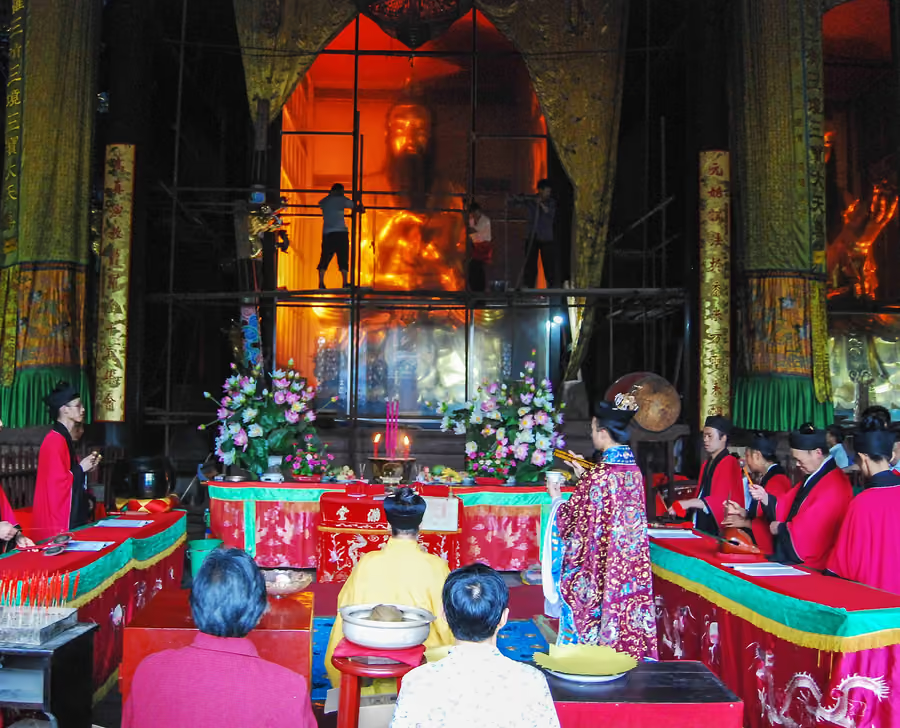
A working Taoist temple of courtyards on an axis: the mountain gate, the Hunyuan Hall with Laozi as the Supreme Lord Lao, the octagonal Bagua Pavilion - the most elaborate building on the site, with a statue of Laozi riding his ox under a double roof on carved stone columns - and behind it the Sanqing Hall, the main hall to the Three Pure Ones, where the drum and bell are struck on the first and fifteenth of the lunar month and at festivals. In front of the Sanqing Hall stand the temple's two bronze goats: a single-horned one donated by the grand secretary Zhang Pengge in 1723, whose body combines features of all twelve zodiac animals, and a two-horned one given in 1829. There are also gardens and a tea house.
A little local insight
Good to know before you go
- Look closely at the single-horned bronze goat. It is not a goat - the body is assembled from parts of all twelve zodiac animals, and local people rub particular parts of it for luck. It is the most interesting single object in the temple and visitors photograph it without noticing.
- Come on the first or fifteenth of the lunar month if you want the temple in use, with drums, bells and worshippers; otherwise early morning, when there are more Taoists than tourists.
- The tea house in the grounds is cheap, shaded and used by locals, and is a quieter alternative to the famous teahouses.
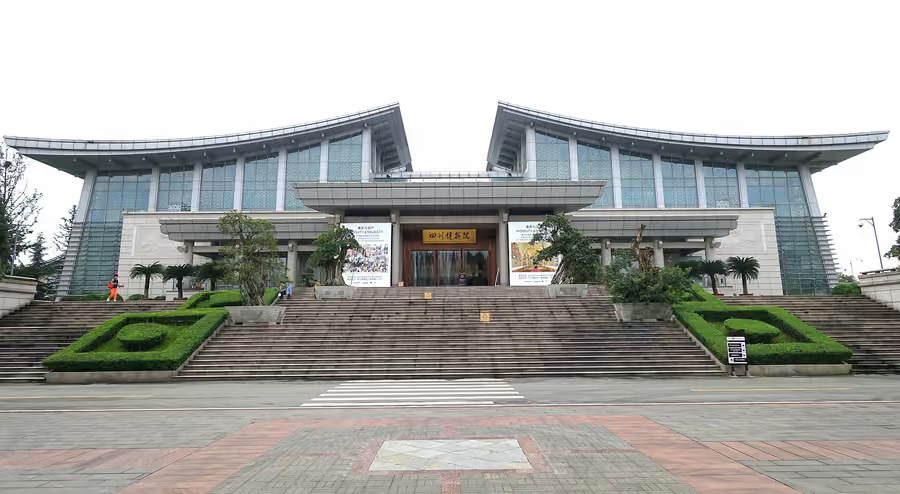
- It is minutes from the Sichuan Museum and the Du Fu Thatched Cottage, so the three make a coherent half-day on that side of the city.
- This is Taoist, not Buddhist, and the difference is visible: the Three Pure Ones instead of Buddhas, trigrams and zodiac imagery instead of bodhisattvas, priests in blue with topknots. If you have seen Wenshu Monastery, coming here makes the contrast obvious.
When to come
Early morning, especially on the first or fifteenth of the lunar month. There are flower-festival and Double Ninth events during the year. Shaded courtyards make it bearable in summer.
Getting around
Fairly good. Flat courtyards on one level, broad paved surfaces and short distances, so a wheelchair can get round most of the temple and reach the bronze goats and the Bagua Pavilion exterior. The obstacles are the raised stone thresholds and two or three steps up into each hall, and the Bagua Pavilion sits on a stepped stone platform. A bad knee is not a problem here.
Worth knowing before you go
One of the two bronze goats is a chimera assembled from parts of all twelve zodiac animals - look closely before you join the queue to rub it. Pair with Du Fu's Thatched Cottage, 15 minutes' walk away.
Compare established providers
Check live tours and tickets
Search for Qingyang Palace in Chengdu. Prices, availability, payment and confirmation are handled by the booking provider.
China Travel Select does not take payment or create the reservation. Confirm the exact name, dates, inclusions and cancellation rules on the provider’s page.
Take a closer look
Maps, videos & more
Prices and hours change. These are the places to check on the day.