Discover Dali
Dali Ancient Town
大理古城
A walled Bai town between Cangshan's peaks and Erhai Lake, with Ming street grid, marble-trimmed courtyard houses and a long history as China's backpacker refuge. Lower, warmer and more relaxed than Lijiang, it works best as a base rather than a single sight.
The story
What makes this place special
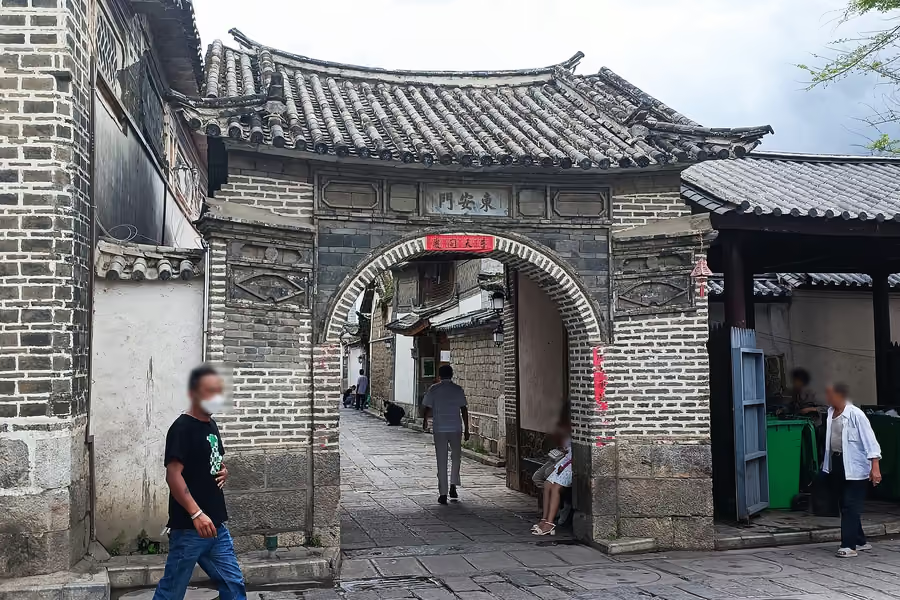
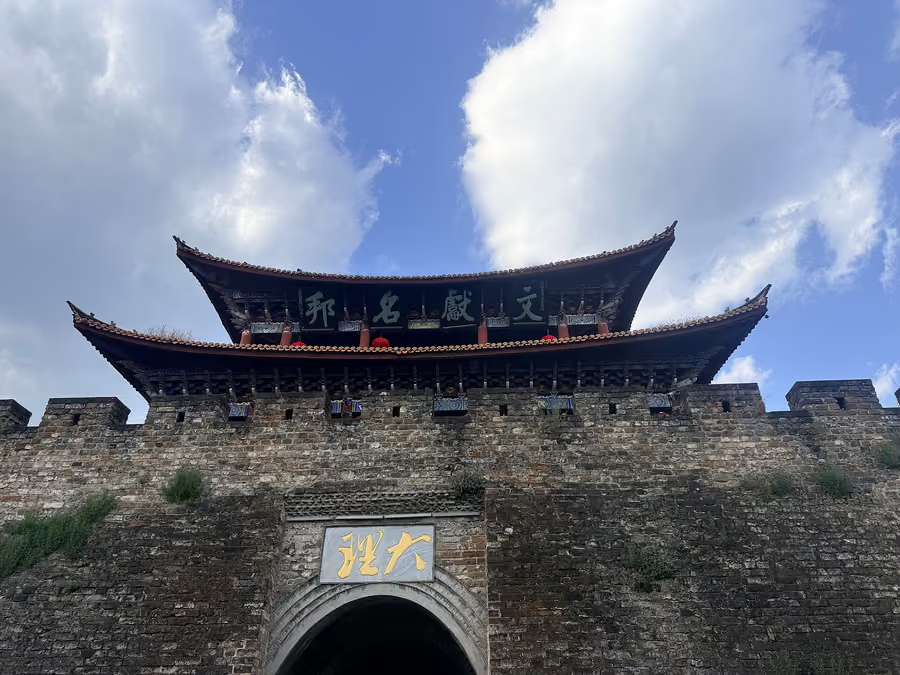
The walled town you walk through today is not the old Dali capital. The Nanzhao kingdom ruled from Taihe City from 739 to 779 and then from Yangjumie City, which served as capital of Nanzhao and of the Dali Kingdom for nearly five centuries until Kublai Khan destroyed the Dali state. After the Ming conquered Yunnan in 1381 they abandoned Yangjumie and built a new prefectural town just to its east: that is the present old town. It had four gates and a wall 1,850m north to south by 1,500m east to west, rebuilt in 1692 under the Qing. Only about 300m of original wall survives; the south and north gates were rebuilt in 1984, the west gate in 2001 and the east gate in 2002.
What you’ll discover
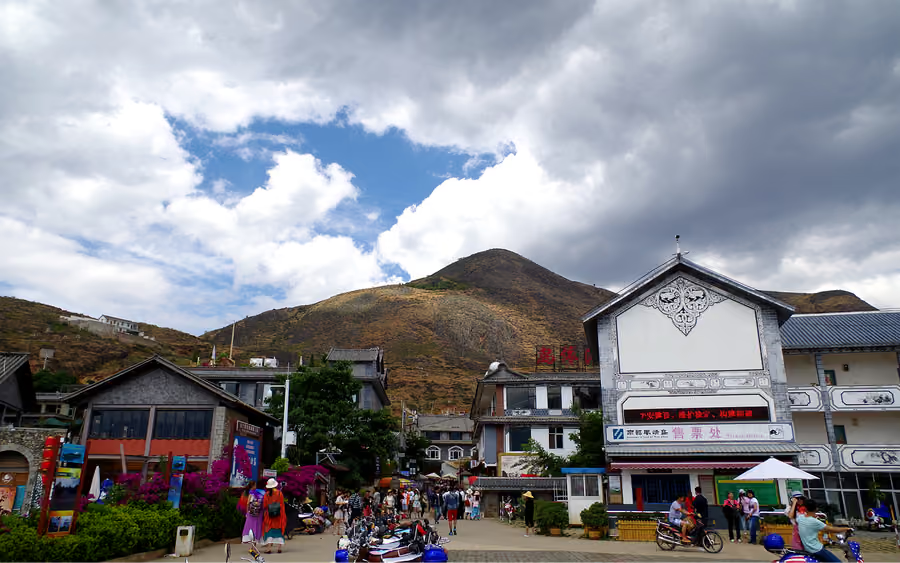
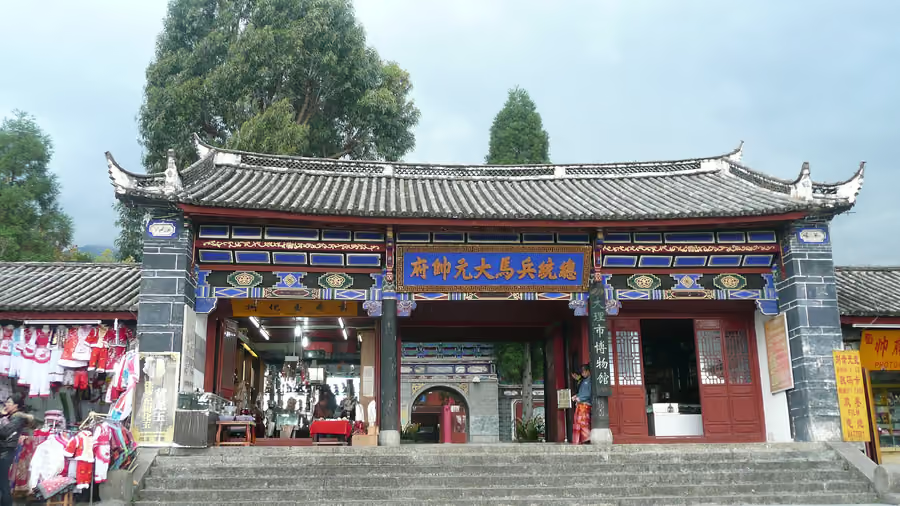
A flat grid with the mountain wall of Cangshan on one side and Erhai on the other, which makes orientation easy. Fuxing Road runs the length of the town between the rebuilt south and north gates, past the Wuhua Tower, the city god temple, the Confucian temple and Dali Museum in the old Du Wenxiu marshal's residence. Huguo Road, universally called Foreigner Street, runs west from Fuxing Road and is the bar strip; the lanes north and west of it still hold low Bai courtyard houses, vegetable sellers and small workshops.
A little local insight
Good to know before you go
- The gates and towers are 1980s and 2000s reconstructions. Judge the town by its street grid, its Bai courtyard houses and the mountain backdrop, not by the walls, and do not expect Nanzhao-era fabric anywhere inside it.
- This is the flat old town. Compared with Lijiang it is easier to walk, less intensely commercial and has more residents; it is also less photogenic. If you have time for one, pick on that basis.
- Walk one block off Fuxing Road or Foreigner Street in any direction and the shops stop. The northwest quarter towards the old wall section is where people actually live.
- Dali Museum on Fuxing Road is free, has the Du Wenxiu rebellion material and is skipped by nearly everyone walking past it.
- Dali Ancient Town is 40 minutes from Dali railway station and about 15km from Xiaguan, the modern city centre; much of what is listed online as hotels in Dali is in Xiaguan, not here. Check which one your booking means.
- At 1,900m the sun is strong and the UV is high even when the air feels cool. The afternoon wind down from Cangshan is a local constant; bring a windproof layer.
When to come
Early morning for empty lanes and clear Cangshan, or late afternoon when the light comes down the mountain. March to May and September to November are dry; the June to August rains bring daily downpours.
Getting around
Among the best of the old towns for mobility. The street grid is level and the main roads are smooth paving, so a wheelchair can cover Fuxing Road, Foreigner Street and most of the centre. Side lanes are cobbled and uneven, and the gate towers have internal stairs only. A bad knee can manage the whole town.
Worth knowing before you go
Dali has two centres and travellers book the wrong one constantly — the ancient town is not Xiaguan (Dali City proper, where the trains and long-distance buses arrive). Check which one your hotel is in before booking.
Compare established providers
Check live tours and tickets
Search for Dali Ancient Town in Dali. Prices, availability, payment and confirmation are handled by the booking provider.
China Travel Select does not take payment or create the reservation. Confirm the exact name, dates, inclusions and cancellation rules on the provider’s page.
Take a closer look
Maps, videos & more
Prices and hours change. These are the places to check on the day.