Discover Dali
Xizhou Old Town
喜洲古镇
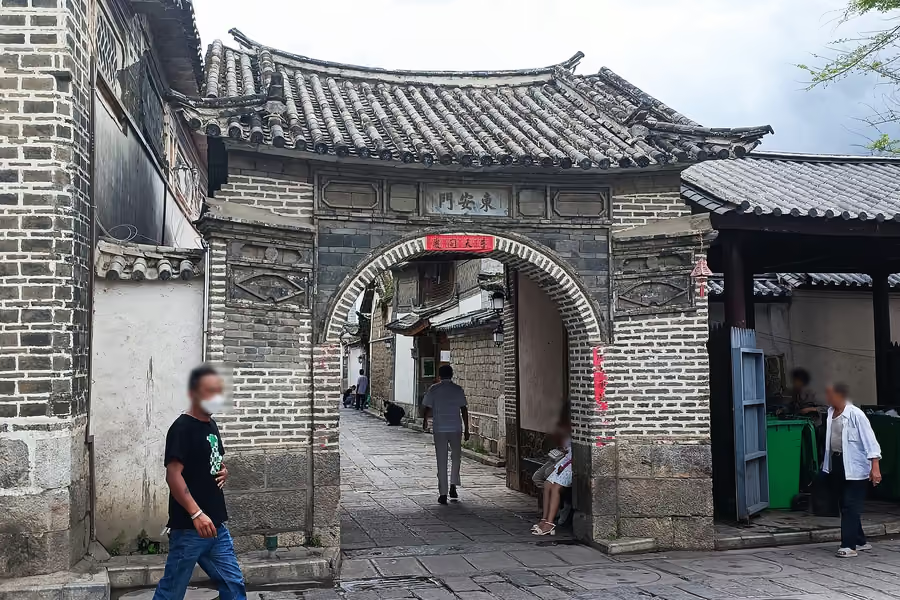
The best-preserved Bai merchant town on Erhai's western shore, 18 km north of Dali, where Republican-era trading families built courtyard mansions with carved screen walls. The rice fields on its edge turn gold in September and draw every photographer in Yunnan.
The story
What makes this place special
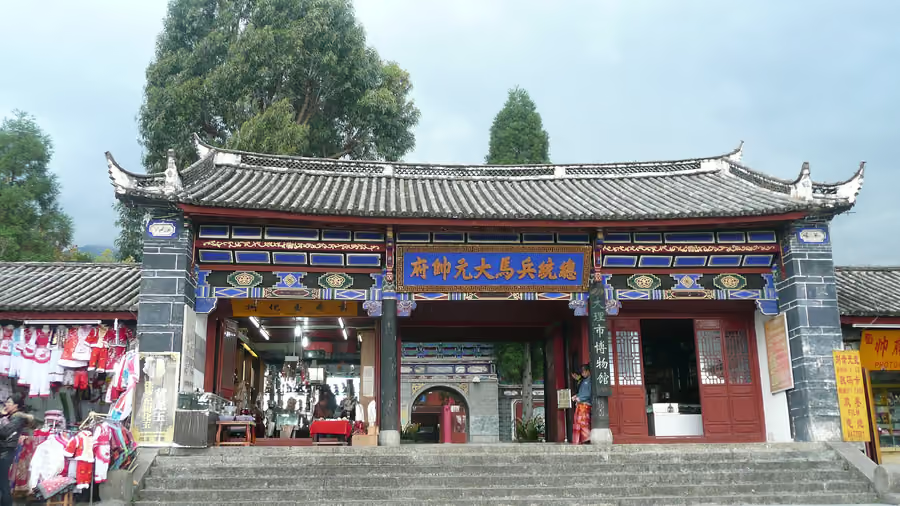
Xizhou, on the western shore of Erhai about 18km north of Dali old town, was Dali Cheng in the Nanzhao period, one of the kingdom's ten administrative districts. In the late Qing and Republican decades it was the home base of the Xizhou merchant houses, Bai traders who ran caravan and import businesses through Burma and built large courtyard mansions with the profits. The Xizhou Bai Ancient Buildings Complex is a national key protected site, and Xizhou and Zhoucheng villages were in the first batch of China's traditional villages in 2012. The compounds follow Bai layouts known as three wings and a screen wall, and four buildings around five courtyards, and the Yan, Yang Pinxiang and Hou family houses visibly mix Bai carpentry with Western construction and detailing.
What you’ll discover
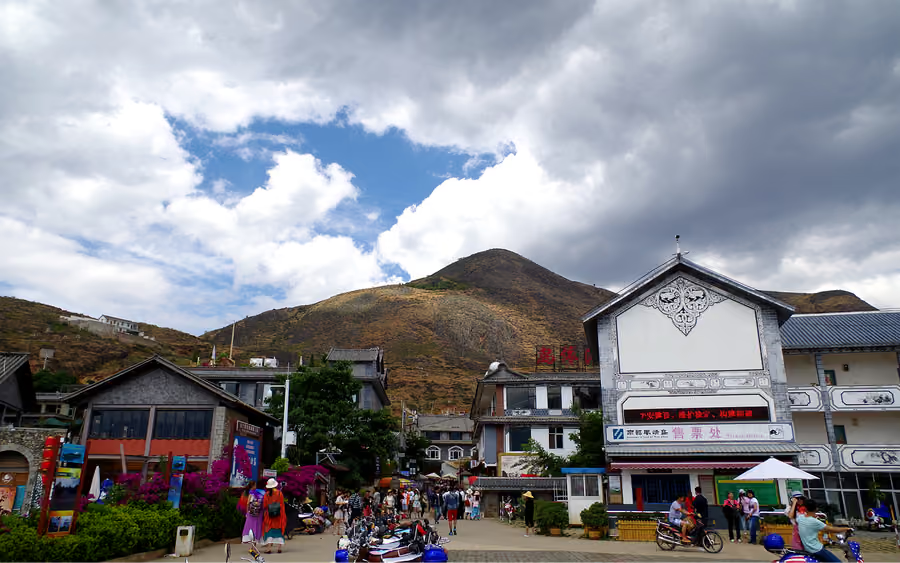
A compact market town with a stone square at its centre, surrounded by whitewashed Bai houses with grey tiled roofs, carved wooden door frames and painted screen walls. The main sights are two or three merchant mansions open as museums, chiefly the Yan family compound, which is a sequence of courtyards with a Western-influenced rear block, and the Dong family compound. Outside the town the fields run down to the lake, and the view from the paddy edge back to Cangshan is the one on the postcards.
A little local insight
Good to know before you go
- Xizhou is the best-preserved Bai domestic architecture in the Dali basin and it is still a working town, with a morning market that has nothing to do with tourists. Arrive before 09:00 for the market on the main square.
- The screen walls are the thing to look at. Each compound's whitewashed wall opposite the gate carries painted and inscribed panels, and reading the inscriptions tells you which trading family built it and when.
- Eat a Xizhou baba, the local flatbread baked between coals, from a street oven rather than a tourist stall. It comes sweet or savoury and is made to order.
- The paddy fields on the lake side, around Haishe Road, have been built up with cafes and photo props since about 2020, and drone and photo-shoot crowds gather there at sunset. The quieter fields are north towards Zhoucheng.
- It is an easy stop on the Erhai ecological corridor: ride or drive from Caicun, see the town, and continue to Zhoucheng for tie-dye in the same half day.
When to come
Early morning for the market and low light on the compounds, or late afternoon for the fields. March to May, when the rape and wheat are in the fields; October to November for clear weather.
Getting around
The town centre and main square are flat, and the paved streets are manageable with a wheelchair or a bad knee. The merchant compounds are the problem: each courtyard is entered over raised stone sills and the upper floors are reached by steep wooden stairs with no alternative. Expect to see the ground floors only.
Worth knowing before you go
Buy a xizhou baba (the local griddle flatbread, sweet or savoury) from the stalls on Sifang Square — the queue at the best-known stand moves fast and costs a few yuan.
Compare established providers
Check live tours and tickets
Search for Xizhou Old Town in Dali. Prices, availability, payment and confirmation are handled by the booking provider.
China Travel Select does not take payment or create the reservation. Confirm the exact name, dates, inclusions and cancellation rules on the provider’s page.
Take a closer look
Maps, videos & more
Prices and hours change. These are the places to check on the day.