Discover Hangzhou
China National Tea Museum
中国茶叶博物馆
A free, well-made museum in the middle of the Longjing tea hills covering Chinese tea history, processing and ceremony, with two sites (Shuangfeng and Longjing) connected by tea terraces. The best explanation in the country of what you are drinking.
The story
What makes this place special
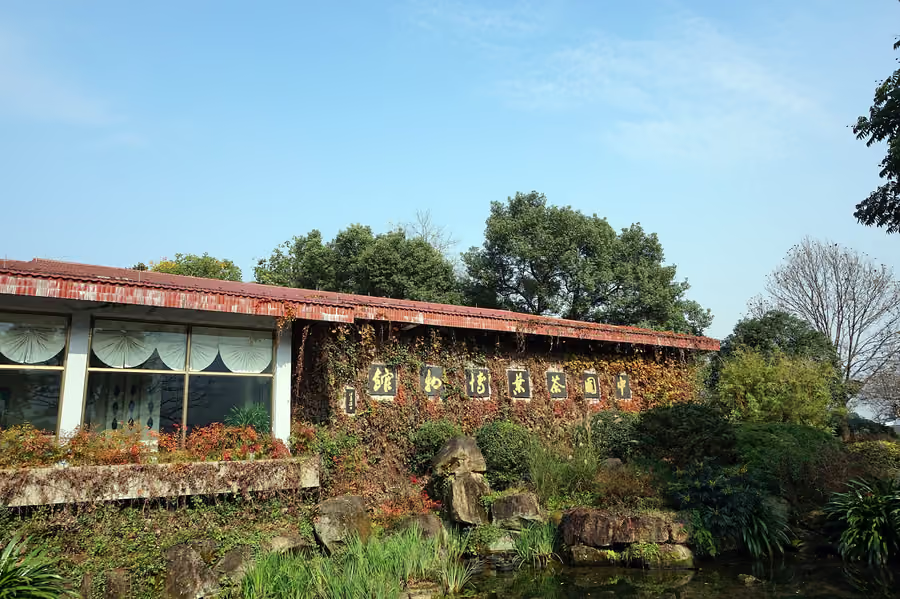
The China National Tea Museum opened in 1991 and is the only national first-grade museum in China devoted to tea, with over five thousand items - tea ware, books, processing tools, tea samples, paintings and inscribed steles. It has two sites: the original Shuangfeng hall, backed by Jiqing Hill and facing the Wulao peaks with tea gardens on all sides, and the Longjing hall at 268 Wengjiashan, opened on 1 May 2015 on the former Longjing Hill garden - over 70,000 square metres, about seventy per cent of it wooded hillside and tea terraces. The two are linked by a restored Qianlong imperial path through the Longjing hills.
What you’ll discover
At Shuangfeng, a Jiangnan garden-style group of low buildings set among working tea terraces, with the permanent Chinese Tea Culture exhibition laid out in five rooms - tea history, tea varieties, tea affairs, tea ware and tea customs - which won a national display award in 2003. At the Longjing site, galleries on world tea, Chinese tea brands and Longjing itself, in a much larger landscaped hillside. Both have tea rooms where you can drink what you have just been reading about, and both are surrounded by the tea slopes rather than looking at them.
A little local insight
Good to know before you go
- Walk between the two sites on the Qianlong imperial path through the tea hills rather than driving round. The walk through the terraces is better than either building.
- Free entry, and far emptier than any West Lake sight. It is the obvious thing to do on a day when the lake is unbearable.
- Drink the tea in the museum tea room before buying any in the villages. Tasting good Longjing with someone explaining the grades is the cheapest education available, and it changes what you are willing to pay for in Longjing village.
- Combine it with Longjing or Meijiawu village and the Nine Creeks valley - they are all in the same hills and the museum is the piece that explains the other two.
- The weekly closing day is reported inconsistently between sources and the two sites may differ - check before setting out, because it is a long way up into the hills to find a closed door.
When to come
Late March to April, when the tea around the museum is being picked and the gardens are in use. Otherwise any clear day; weekday mornings are near-empty.
Getting around
Mixed. The exhibition buildings at both sites are modern and largely level with ramped access, and the main courtyards and paths around Shuangfeng are paved and gently graded, so a wheelchair user can see the displays. The surrounding tea terraces and the imperial path between the two sites are hillside tracks with steps and uneven surfaces and are not accessible. Get dropped at the gate rather than walking up.
Worth knowing before you go
The Longjing branch is the prettier of the two and has the tasting rooms; the Shuangfeng branch has the main historical displays. Walking between them through the tea fields takes about 20 minutes and is the nicest part.
Compare established providers
Check live tours and tickets
Search for China National Tea Museum in Hangzhou. Prices, availability, payment and confirmation are handled by the booking provider.
China Travel Select does not take payment or create the reservation. Confirm the exact name, dates, inclusions and cancellation rules on the provider’s page.
Take a closer look
Maps, videos & more
Prices and hours change. These are the places to check on the day.