Discover Dali
Zhoucheng Village and Bai Tie-Dye Workshops
周城白族扎染(璞真扎染博物馆)
Zhoucheng is the Bai tie-dye village, where indigo-dyed cloth hangs drying in courtyards and the craft is a national intangible heritage item. At the Puzhen Tie-Dye Museum you can watch the whole stitching-and-dyeing process and make a piece yourself.
The story
What makes this place special
Zhoucheng is a Bai village about 25km north of Dali old town, backed against Cangshan, described as the largest single Bai settlement in China, and it is the centre of Bai tie-dye. The craft, bandian or Bai zharan, was listed in the first national batch of intangible cultural heritage, registered to Dali. Its indigo comes from woad root, processed into a wet indigo paste. Zhang Shishen, the first nationally recognised bearer of the technique, began learning in 1956 and ran the Zhoucheng tie-dye factory from 1987, expanding the stitching repertoire from five patterns to twenty-six. The Duan family's Puzhen dye house traces back about 500 years and was incorporated in 2015; its Bai Tie-Dye Museum is a national demonstration base for productive heritage protection and reports close to 200,000 visitors a year. A younger workshop, Lanxu, founded by a returning local, keeps to plant dyes only. Reports note that industrial production has displaced some traditional methods and that woad supply has been tight.
What you’ll discover
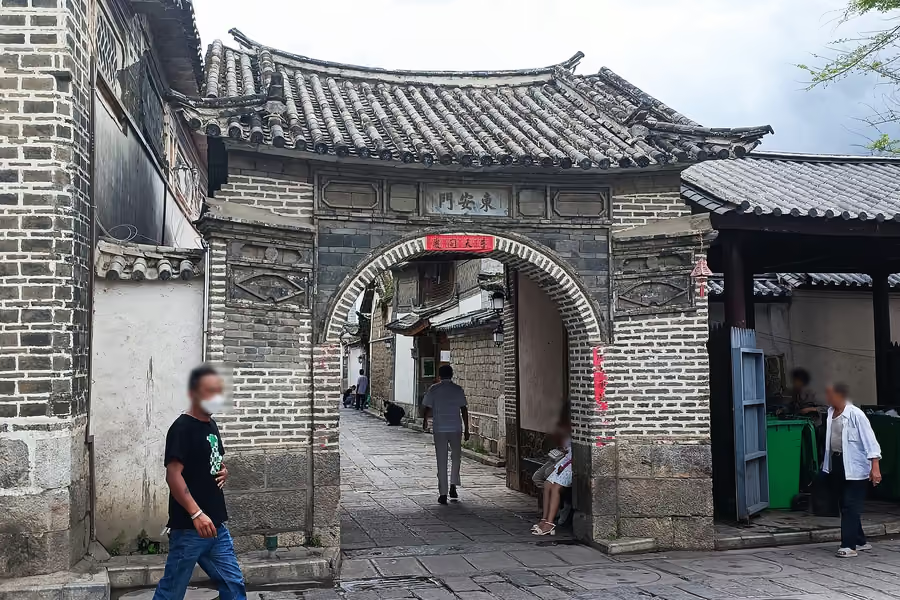
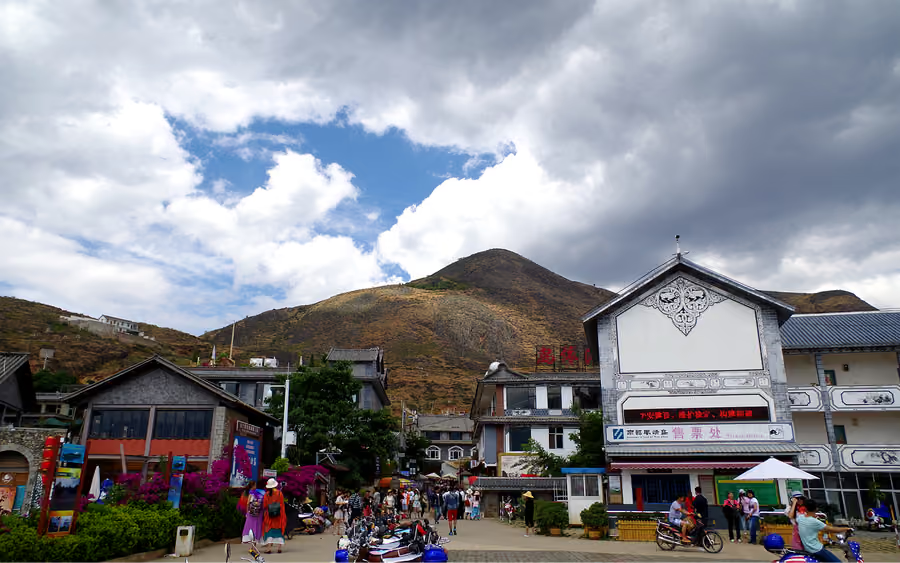
A real village rather than a visitor site: a sloping market square under a huge old tree, lanes of whitewashed Bai houses, and courtyards hung with lengths of indigo cloth drying in the sun, which is the image people come for. In the workshops you can watch the sequence: stitching or clamping the pattern into white cotton, repeated dipping into sunken indigo vats, then unpicking the stitches to reveal the white resist. Several houses run hands-on sessions where you tie and dye a scarf yourself.
A little local insight
Good to know before you go
- Go to a working dye house, not a shop. Puzhen has the museum and the full process on display; Lanxu is smaller and plant-dye only. Both are in the village lanes rather than on the main road, and both take walk-ins.
- You can tell real indigo from printed imitation by smell and by the back of the cloth: genuine vat-dyed work smells faintly of fermentation and the dye penetrates both faces, while screen-printed copies are crisp on one side only. Most roadside stalls in Dali sell the printed kind.
- The dye bath stains. Wear clothes you do not care about to a workshop session and expect blue hands for a day.
- A piece needs to dry, so a hands-on session takes two to three hours including drying, or you arrange to collect or post it. Do not arrive at 16:00 expecting to leave with a finished scarf.
- Zhoucheng also has a lively morning market and is 10 minutes from Butterfly Spring and 15 from Xizhou, so the three combine into one half day on the western shore.
When to come
Morning, when the market is on and the dyed cloth is being hung out to dry in the courtyards. Dry months, March to May and October to November; in the rains the cloth is dried indoors and you lose the sight.
Getting around
The village is on a slope with narrow, uneven cobbled lanes and the square itself is tilted, so a wheelchair is hard work and needs a companion. Workshop courtyards are entered over sills and the vats are sunk into the floor with uneven stone around them. A bad knee can manage with care on short distances.
Worth knowing before you go
Real indigo takes several dips and the cloth comes out wet — ask the workshop how long yours needs to dry before you plan an onward bus, and expect dyed hands for a day.
Compare established providers
Check live tours and tickets
Search for Zhoucheng Village and Bai Tie-Dye Workshops in Dali. Prices, availability, payment and confirmation are handled by the booking provider.
China Travel Select does not take payment or create the reservation. Confirm the exact name, dates, inclusions and cancellation rules on the provider’s page.
Take a closer look
Maps, videos & more
Prices and hours change. These are the places to check on the day.