Discover Harbin
Daowai Chinese Baroque quarter
道外中华巴洛克历史文化街区
Harbin's birthplace district, where Chinese merchants in the 1920s copied the European facades of the Russian quarter but kept traditional courtyards behind them. The largest surviving ensemble of this hybrid style anywhere in China, and free to wander.
The story
What makes this place special
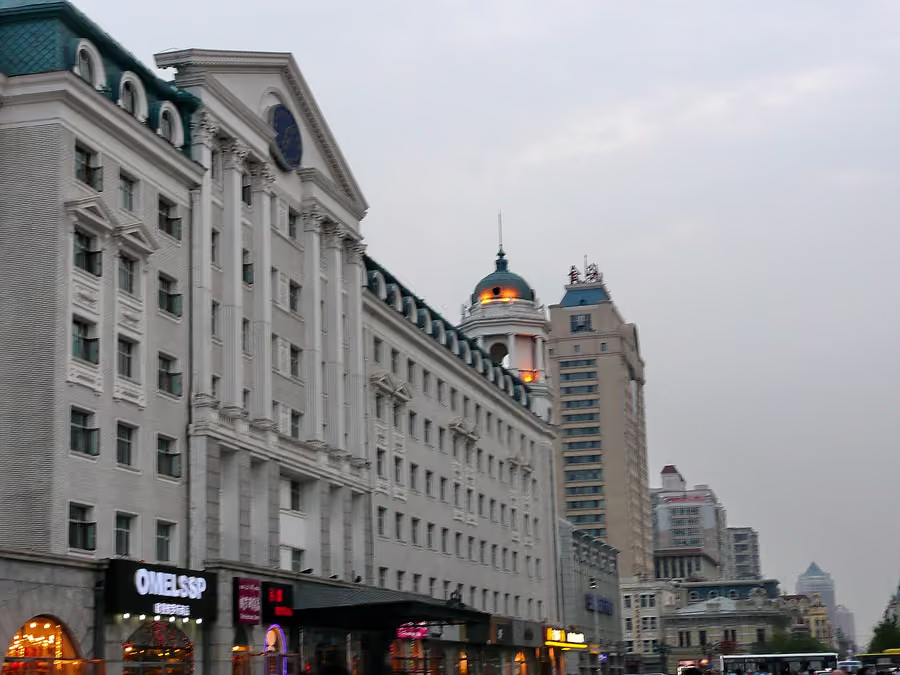
Daowai was the Chinese district, outside the Russian-administered concession, and its merchants built in a hybrid style now called Zhonghua Baroque: European facades - pilasters, pediments, scrolled parapets - copied from the Russian quarter, but with Chinese auspicious motifs carved into them (bats, pomegranates, peonies) and traditional courtyard houses behind the street wall. It is described as the largest surviving concentration of this style in China, and much of it was restored in the 2000s and 2010s around Jingyu Street.
What you’ll discover
Streets of two- and three-storey plastered facades that look vaguely Italian until you get close and see the Chinese carving, with archways leading into deep siheyuan-style courtyards full of laundry, bicycles and residents. The restored blocks around Jingyu Street are polished and partly commercial; walk a few streets out and it is a lived-in neighbourhood with crumbling plaster and old shopfronts. This is a walking and looking visit, with no ticketed sights.
A little local insight
Good to know before you go
- The whole point is to step through the archways into the courtyards. From the street this looks like faded European architecture; the surprise is the Chinese courtyard behind every facade, and most visitors never go in.
- Go beyond the restored Jingyu Street blocks. Two or three streets north and east the quarter is unrenovated and far more interesting.
- Look up at the parapets for the carved bats, pomegranates and peonies - the detail that makes the style hybrid is all above the shopfronts.
- Daowai is where Harbin's old food is: the long-standing dumpling, sausage and pastry shops here predate anything on Central Street.
- Combine it with the Hongzhuan Street morning market, which is in the same part of town, and do both in one early morning.
- This is a residential district, not an attraction. Courtyards are people's homes; look, do not photograph through windows.
When to come
Morning, when the courtyards are active and the shops are open. Spring to autumn for walking comfort; in deep winter the side streets are sheet ice.
Getting around
Pavements are narrow, broken and often blocked by parked scooters, and the courtyards are entered through archways with raised thresholds and uneven stone or dirt floors. A wheelchair can manage the main restored street but not the courtyards, which are the reason to come. A bad knee copes if you keep to the main streets and accept missing the interiors. In winter the surfaces are the worst in the city.
Worth knowing before you go
Step through the archways into the inner courtyards - the restored blocks look like Europe from the street and like a Chinese tenement from inside, which is the whole point. This is also the best district in the city for cheap northeastern food.
Compare established providers
Check live tours and tickets
Search for Daowai Chinese Baroque quarter in Harbin. Prices, availability, payment and confirmation are handled by the booking provider.
China Travel Select does not take payment or create the reservation. Confirm the exact name, dates, inclusions and cancellation rules on the provider’s page.
Take a closer look
Maps, videos & more
Prices and hours change. These are the places to check on the day.