Your destination guide 哈尔滨
Harbin
Ice festival, Russian architecture, serious cold
The ice festival is the reason to come north, and its dates are announced late and can end early — the 2026 edition closed three weeks ahead of schedule when the sculptures melted. In summer it is a mild, green, almost tourist-free city.
Getting there
Taiping International (HRB) is on metro Line 3; a taxi into town is about ¥80–120. Harbin West handles high-speed rail, with the central Harbin Station also in use.
When to go
Late December to late February for ice, peaking mid-January to mid-February. July to September is pleasant and empty.
How long: 3–5 days
Give it 3 days for the headline sights, or up to 5 to see it properly and eat your way around.
Three covers Ice and Snow World, Saint Sophia and Central Street. Five adds Sun Island, the Siberian tiger park and the Daowai baroque quarter, with enough warm indoor breaks to make a −25°C day bearable.
Harbin in winter, and why you must check the dates yourself
The ice festival is the reason to go north, and its dates are announced late and can end early. Last season it closed three weeks ahead of schedule when the sculptures melted.
Make a few good memories
What to see in Harbin
Researched largely from Chinese-language sources, so it goes beyond the usual shortlist. Dollar figures are approximate, at the rate on 2026-10-08.
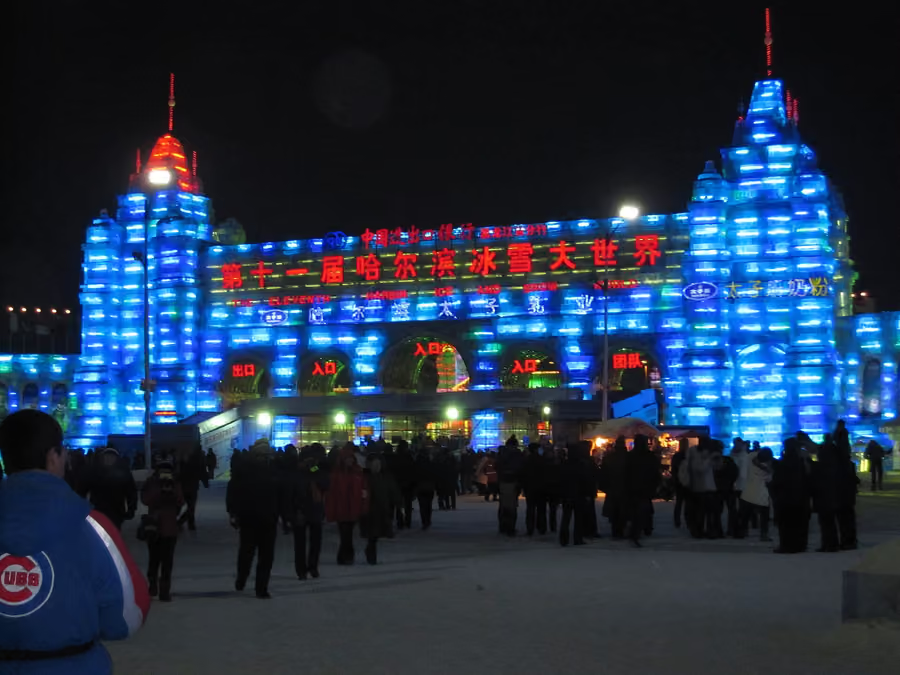
哈尔滨冰雪大世界
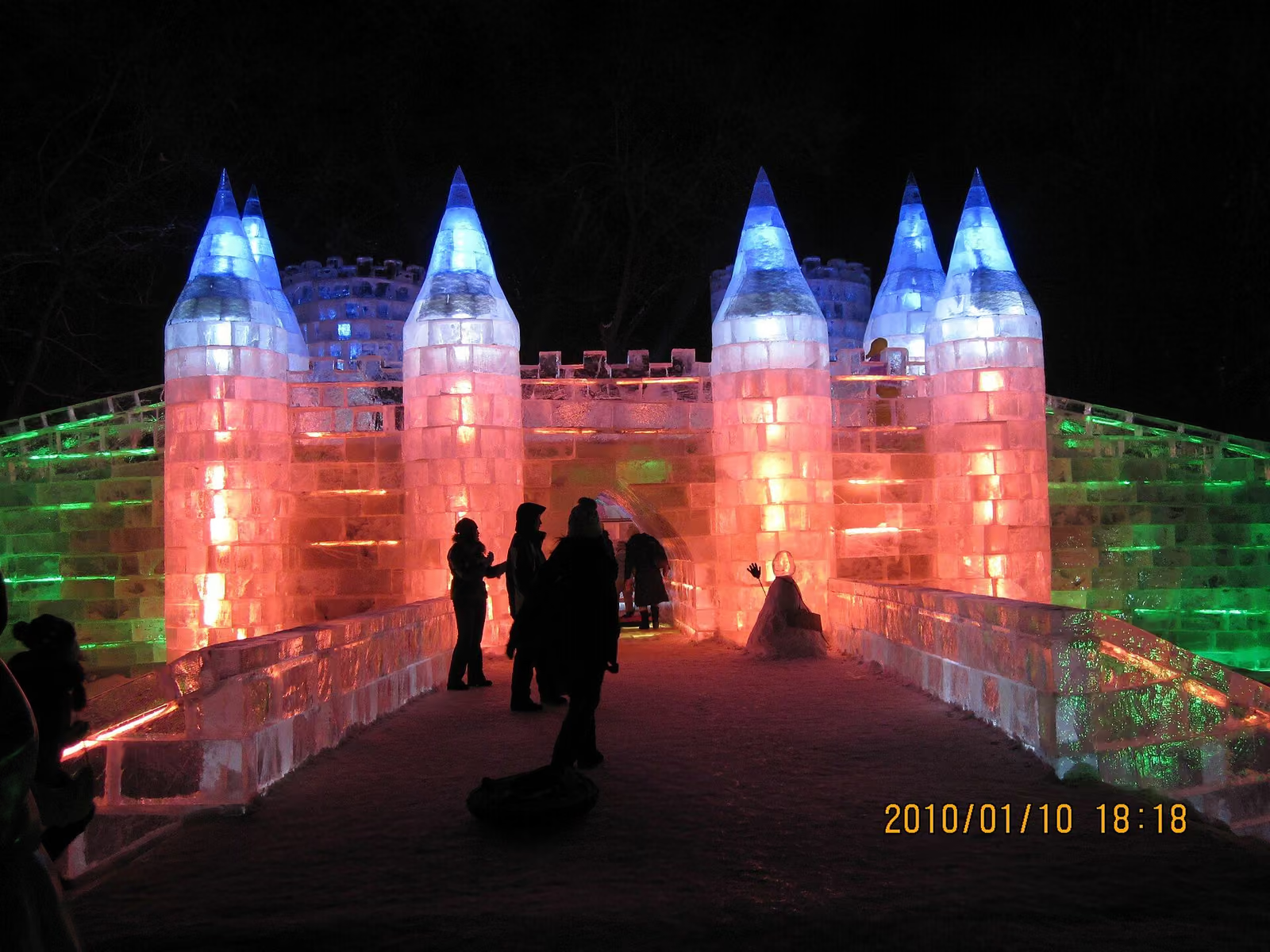
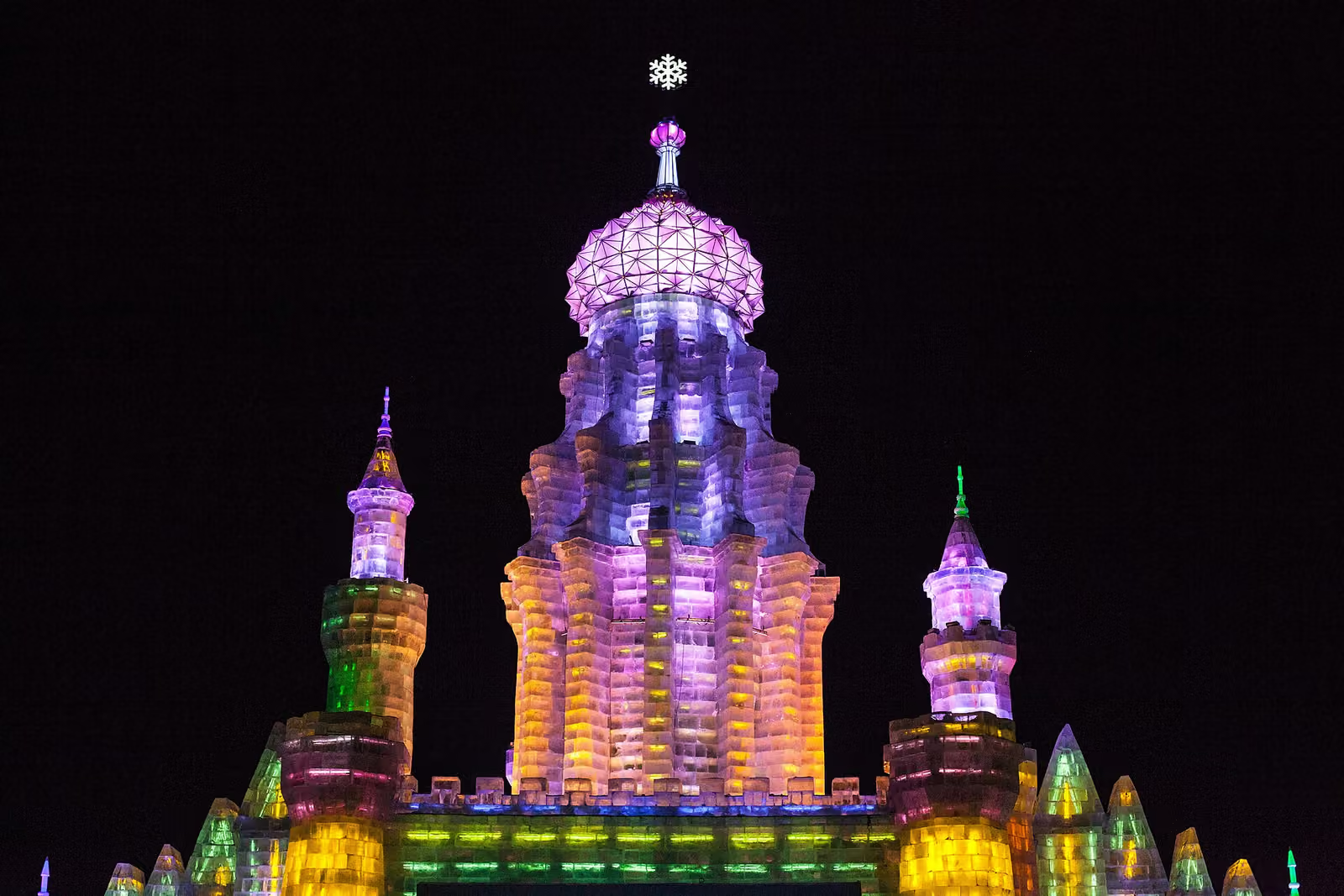
A city of illuminated palaces, towers and slides carved from blocks of Songhua River ice, rebuilt from scratch every winter on a scale nowhere else attempts. For most foreign visitors this single park is the reason to come to Harbin in January.
Not announced for the 2026-27 (28th) edition as of October 2026. For reference, the 27th edition (winter 2025-26) charged ¥328 standard adult, with a ¥298 opening-week promotion; do not assume these carry over
≈ US$44–49Opening hours, booking and how to get there →
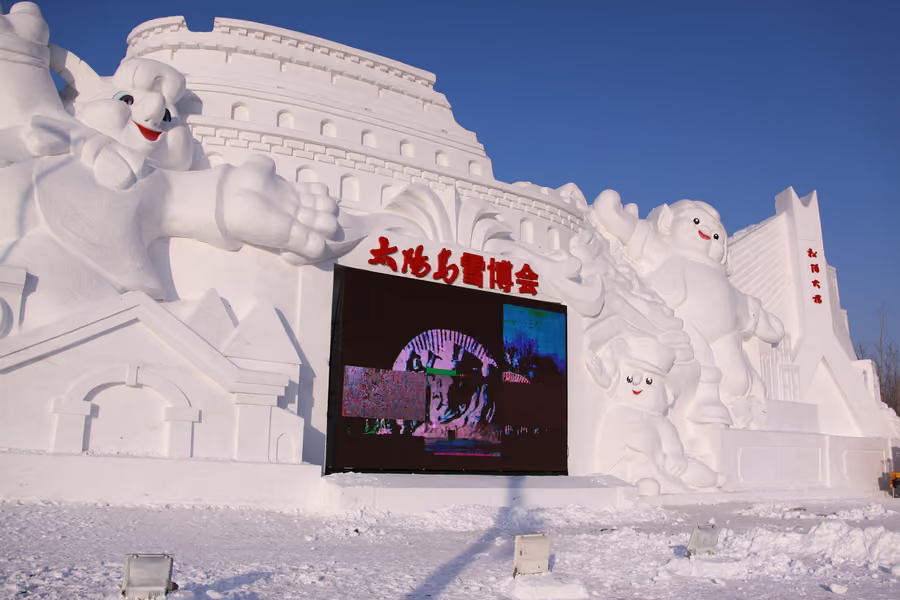
太阳岛雪博会
The snow counterpart to Ice and Snow World: huge white reliefs and figures packed and carved from snow rather than ice, on a river island park. Daytime viewing in natural light makes it a good complement to the after-dark ice park.
¥198 adult; ¥128 concession (children 1.2 m and over or aged 6-18, students, Harbin residents, over-60s) at the most recent (37th) expo. Season-by-season pricing, so reconfirm
≈ US$19–29Opening hours, booking and how to get there →
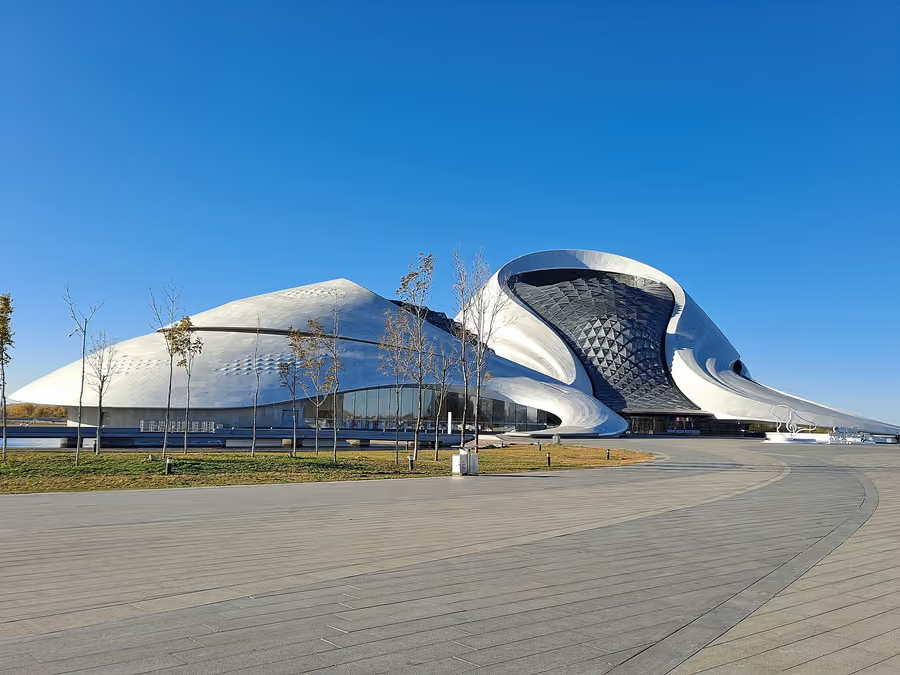
哈尔滨大剧院
MAD Architects' white, dune-like concert hall sitting alone in Songhua River wetland, with a walkable roof ridge and a wood-lined auditorium. One of the most photographed pieces of contemporary Chinese architecture, and you can tour it without buying a concert ticket.
19.¥9 basic daytime visit; a 39.¥9 package adds the 7th-floor viewing deck with fast-track access and a drink. Performance tickets priced separately
≈ US$1.34Opening hours, booking and how to get there →
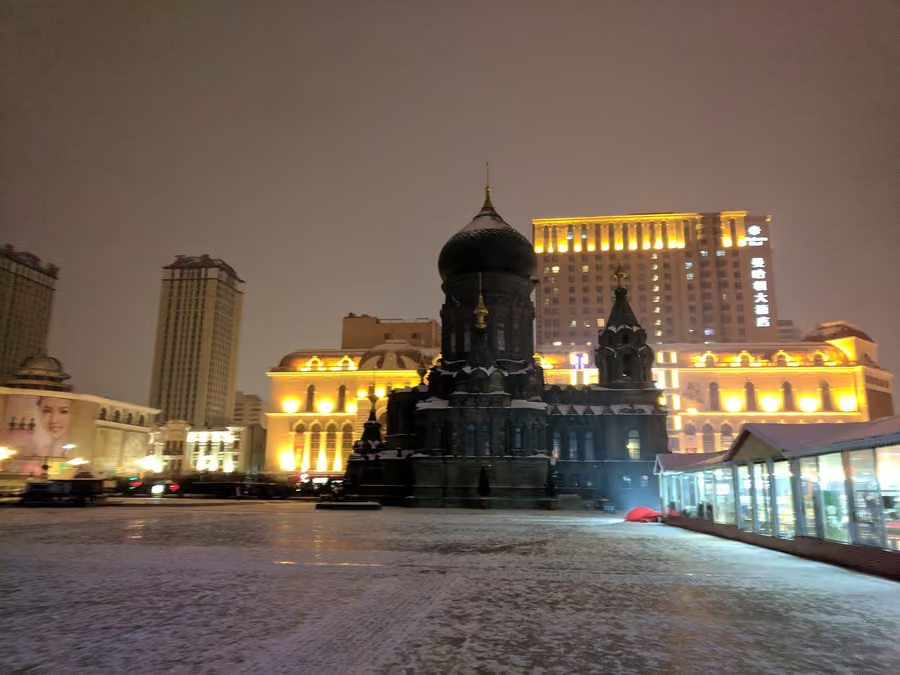
圣索菲亚教堂
A 1907 Russian Orthodox cathedral in dark brick with a green onion dome, built for the workers of the Chinese Eastern Railway and now run as Harbin's Architecture Art Museum. It is the clearest surviving trace of the Russian city Harbin once was.
¥20 interior admission (some Chinese listings still quote ¥15 adult / ¥10 student; a ¥35 combined ticket covers the cathedral, the Architecture Art Square and the Jewish New Synagogue). The surrounding square is free
≈ US$1.49–5.21Opening hours, booking and how to get there →
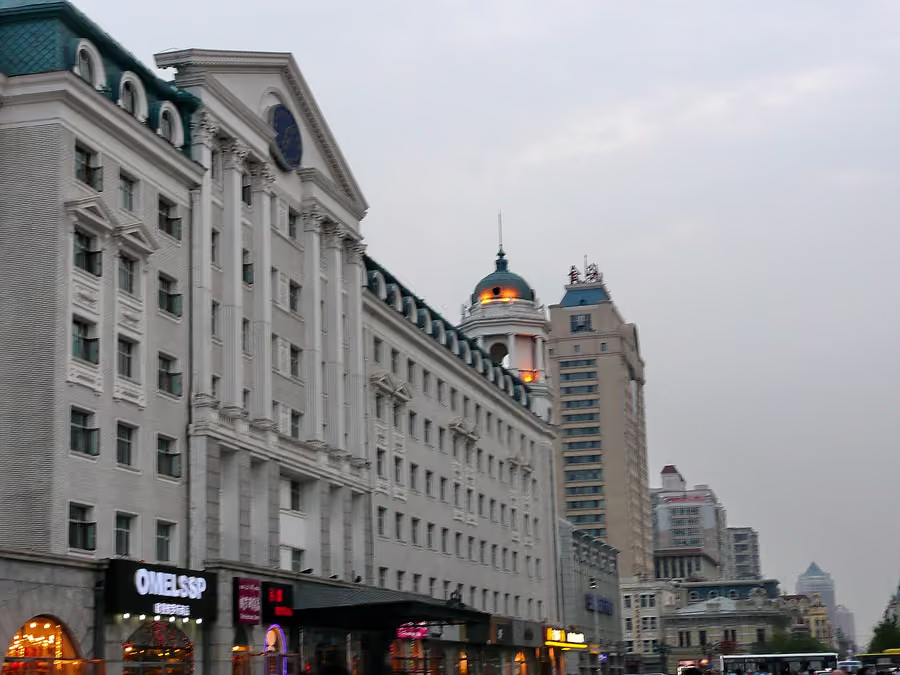
中央大街
A 1.4 km cobbled pedestrian boulevard lined with Renaissance, Baroque and Art Nouveau facades from Harbin's Russian and Jewish merchant era, long billed as the finest street in the Far East. It is the city's spine and the one walk no visitor skips.
Free
Opening hours, booking and how to get there →
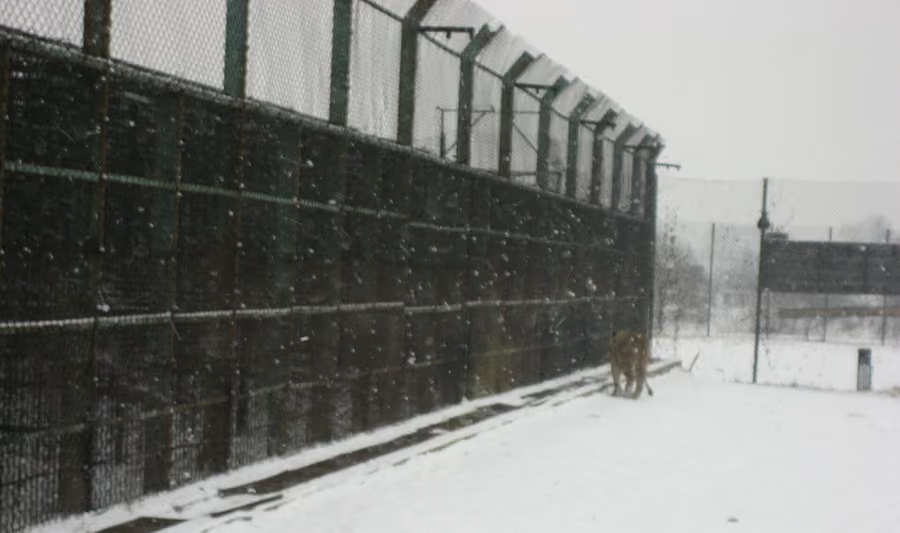
东北虎林园
A 144-hectare breeding reserve north of the city holding well over a thousand Amur tigers, toured from inside a caged bus that drives through the open enclosures. Confronting in places, but it is the easiest place on earth to see this subspecies at close range.
From ¥90 basic entry; ¥125 adult / ¥85 child for the ticket plus the close-range safari bus
≈ US$13–19Opening hours, booking and how to get there →
哈尔滨极地公园
A polar-themed aquarium whose beluga whale and white-whale shows are among the best-known in China, plus penguins and seals across five indoor halls. Mainly a wet-weather or deep-winter option when outdoor sightseeing becomes punishing.
¥130 adult for the five-hall ticket; ¥88 student
≈ US$13–19Opening hours, booking and how to get there →
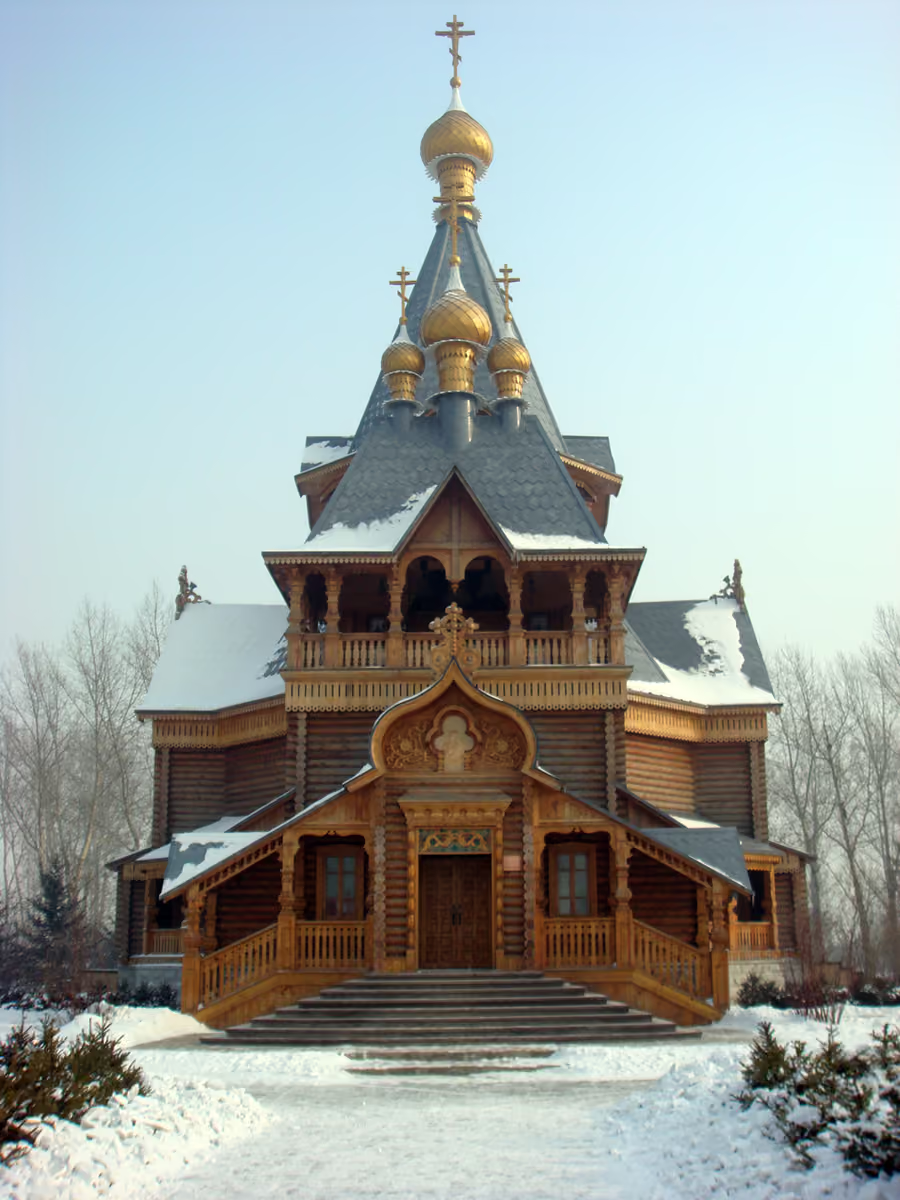
伏尔加庄园
A riverside estate of reconstructed Russian wooden buildings, including a full-size replica of Harbin's lost St Nicholas Cathedral, set in parkland outside the city. Kitsch in places, but it preserves architecture the real city demolished.
¥145 adult; ¥208 with the Russian song-and-dance show; ¥120 student; ¥90 child aged 6-10
≈ US$13–31Opening hours, booking and how to get there →
松花江畔与松花江观光索道
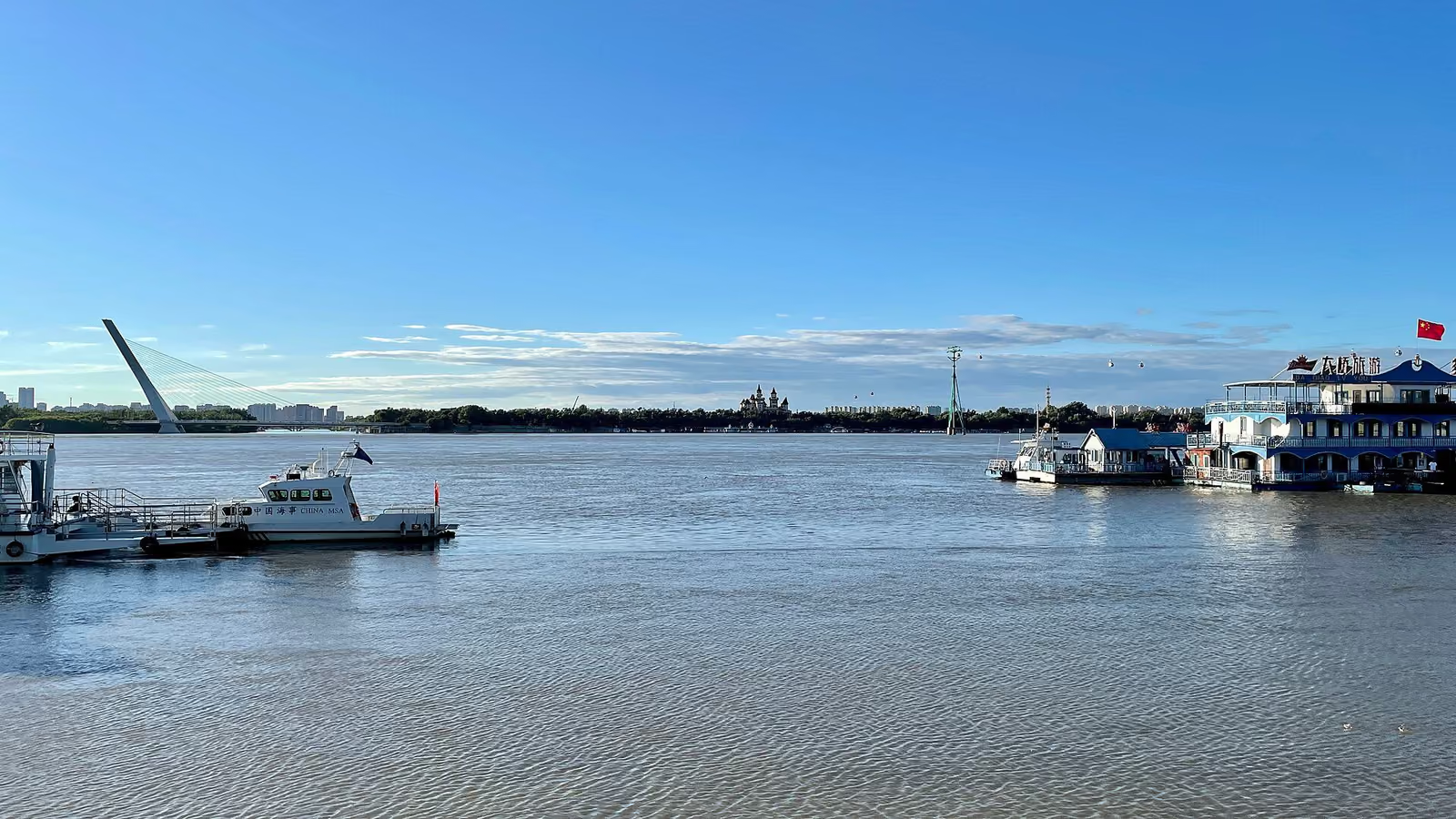
The river at the foot of Central Street is the city's promenade: open water and boats in summer, and from roughly January a frozen surface that locals cross on foot, sled and ice bike. A 1,156-metre cable car runs over it from Tongjiang Square to Sun Island.
Riverfront free. Cable car ¥58 adult one way / ¥96 return; ¥30 child one way / ¥50 return. A passenger ferry across is a couple of yuan in summer
≈ US$4.47–14Opening hours, booking and how to get there →
兆麟公园冰灯艺术游园会
The original Harbin ice festival, running since 1963 and still held in a small downtown park - intimate, hand-carved lanterns rather than the stadium scale of Ice and Snow World. The 52nd edition used about 2,300 cubic metres of ice across six themed zones.
Park free outside the festival; the winter Ice Lantern Fair charges admission but the current rate is not published in the sources checked - confirm on the park's WeChat account before going
Opening hours, booking and how to get there →
道外中华巴洛克历史文化街区
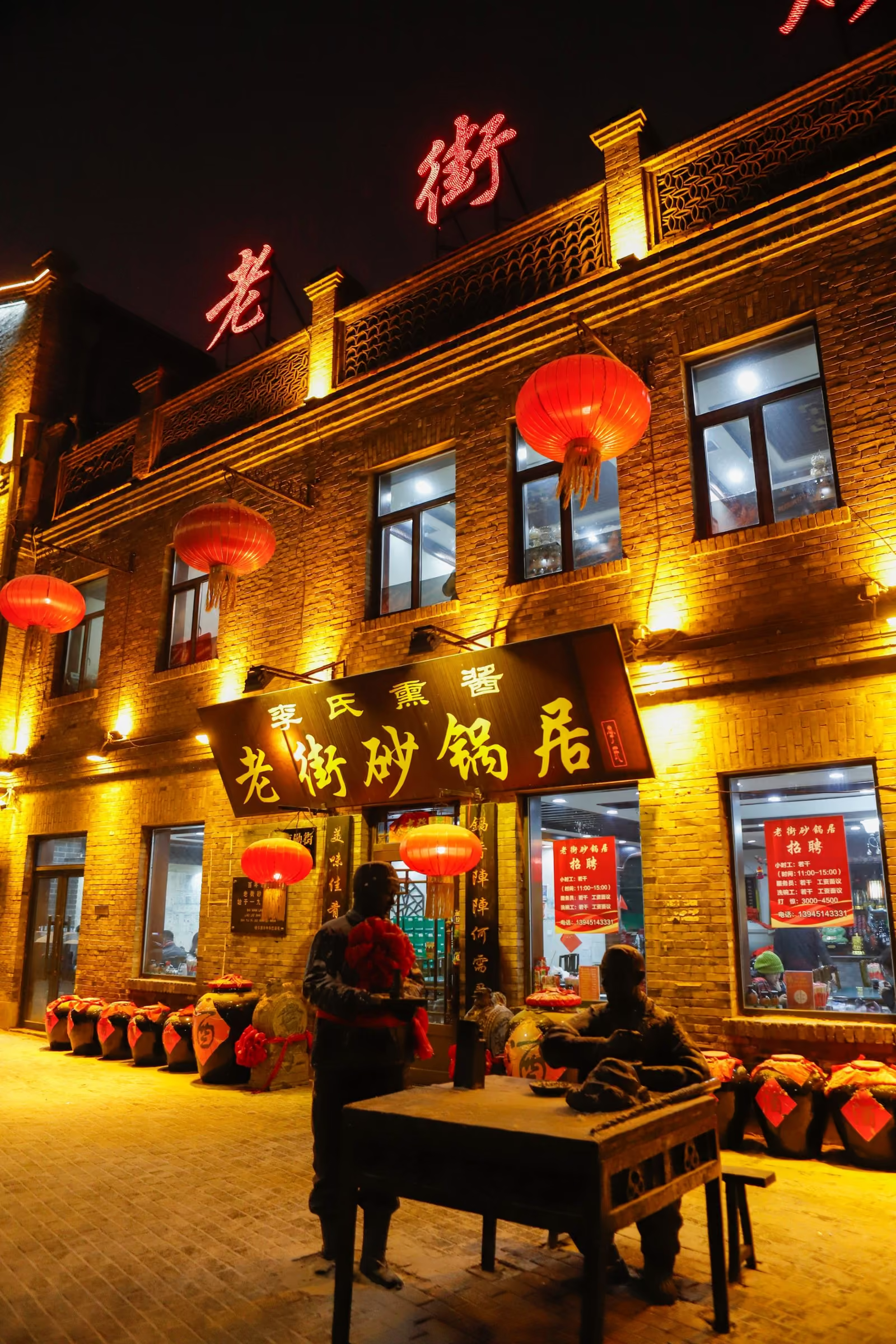
Harbin's birthplace district, where Chinese merchants in the 1920s copied the European facades of the Russian quarter but kept traditional courtyards behind them. The largest surviving ensemble of this hybrid style anywhere in China, and free to wander.
Free
Opening hours, booking and how to get there →
红专街早市
A dense street market that materialises at dawn and is packed away by mid-morning, selling northeastern breakfast food, pickles and frozen produce sold outdoors in winter. The most unvarnished local scene in central Harbin.
Free to enter; food in single-digit yuan
Opening hours, booking and how to get there →
What to eat in Harbin
Order guobaorou — sweet-and-sour battered pork — with a bowl of rice, and you have eaten the dish Harbin invented and still argues about. In deep winter a shared iron-pot stew (tieguo dun) or pickled-cabbage-and-pork casserole is the thing locals eat; portions in Harbin are enormous, so two dishes feed three people.
Sweet and Sour Battered Pork
锅包肉guō bāo ròu
Harbin's signature dish, created in 1907 at the Daotai government office when a Chinese chef reworked a stir-fried pork dish to suit Russian railway officials' taste for sour-sweet food. Pork loin is sliced, battered in potato starch, twice-fried and tossed in a sugar-vinegar glaze with shredded carrot and coriander.
Tastes like: Crisp, golden and tender inside, with a bright sweet-sour glaze — think a far better version of sweet and sour pork, less gloopy and more acidic.
Not on the menu but in it: Pork loin; potato starch batter means it is usually wheat-free but check, as some kitchens add flour. Some versions use a tomato-ketchup glaze instead of pure vinegar-sugar, which locals consider heresy.
Might not be for you: Nothing — this is the single most Western-friendly dish in northeastern China.
Where to eat it
- Lao Chu Jia · Heilongjiang provincial intangible cultural heritage 2013 · roughly ¥70–100 per person · Harbin; the family runs several branches and the flagship location has moved more than once, so confirm the branch before travelling
- Lao Du Yi Chu · ¥50–70 per person · Daoli District, Zhongguo Shisandao Street (中国十三道街) 54
Where: Laochujia (老厨家), whose founding family invented it; also on every Dongbei menu in the city.
Watch videos of Sweet and Sour Battered Pork →Harbin Red Sausage
哈尔滨红肠hā'ěrbīn hóngchang
A smoked sausage brought by Eastern European settlers along the Chinese Eastern Railway: diced fat, lean pork and plenty of garlic in a natural casing, smoked over fruitwood. Eaten cold in slices, as a snack or with bread.
Tastes like: Smoky, garlicky and firmly salty, with a snappy casing and visible cubes of fat — closest to a Lithuanian or Polish smoked sausage.
Not on the menu but in it: Pork and pork fat; some brands add starch binders and nitrites. Garlic content is very high.
Might not be for you: The visible fat cubes and the strong garlic-smoke smell. It is eaten cold straight from the paper, which some visitors find odd.
Where to eat it
- Tadaosi · ¥120–170 per person · Daoli District, Central Avenue (中央大街)
Where: Qiulin Lidaosi (秋林里道斯) and Shangwei (商委) shops along and around Central Street; sold by weight.
Watch videos of Harbin Red Sausage →Pig-Slaughter Stew
杀猪菜shā zhū cài
A farmhouse dish from the countryside around Harbin, now a city speciality: fresh pork belly, blood sausage and fermented sour cabbage stewed together in one pot.
Tastes like: Rich and deeply savoury, with the sour cabbage cutting the fat; the blood sausage is soft and mineral.
Not on the menu but in it: Pig's blood sausage is a core component, not a garnish, and the broth is pork-based throughout.
Might not be for you: Blood sausage plus large slabs of skin-on pork fat. The fermented cabbage has a sharp, sauerkraut-like smell that fills the room.
Where: Dongbei home-style restaurants, especially in winter; a cold-weather dish.
Watch videos of Pig-Slaughter Stew →Dalieba Russian Bread
大列巴dà liè bā
A giant round sourdough loaf — the name is a transliteration of the Russian 'khleb' — baked by long fermentation and often weighing over a kilo. A legacy of Harbin's Russian decades.
Tastes like: Crusty and hard outside, dense and chewy inside, with a distinct sour tang from the long ferment.
Not on the menu but in it: Normally just flour, water, salt and starter — one of the few genuinely vegan items on a Harbin menu.
Might not be for you: Very hard crust and very sour crumb; it is meant to be sliced thin and eaten with sausage or butter, not torn into like a baguette.
Where to eat it
- Qiulin Lidaosi red sausage counters · Chinese time-honoured brand (中华老字号) · ¥40–80 per kilogram band not confirmed — see unverified · Counters across Harbin including Daoli District and Central Avenue; confirm the branch
Where: Qiulin and Maidieer bakeries on and near Central Street (中央大街).
Watch videos of Dalieba Russian Bread →Modern Ice Lolly
马迭尔冰棍mǎdié'ěr bīnggùn
A plain milk ice bar sold from a street window on Central Street by the century-old Modern (Maidieer) Hotel. Harbin residents queue for it in summer and, famously, at minus 25 degrees in winter too.
Tastes like: Simple, very milky and clean-sweet, with a dense firm texture rather than an airy one.
Not on the menu but in it: Milk, cream and usually egg — a real dairy product rather than a water ice, so not suitable for lactose-intolerant visitors.
Might not be for you: Nothing, beyond the surreal experience of eating ice cream outdoors in a Harbin January.
Where to eat it
- Modern Restaurant (Hotel Moderne) · ¥120–170 per person · Daoli District, Central Avenue (中央大街) 89
Where: The Maidieer window on Central Street; also sold at kiosks along the street.
Watch videos of Modern Ice Lolly →Iron Pot Stew
铁锅炖 / 东北乱炖tiě guō dùn / dōngběi luàn dùn
A cast-iron wok set into the table over a fire, filled with goose, fish, pork ribs or chicken plus potato, beans, corn and maize-flour buns stuck to the inside rim to steam.
Tastes like: Hearty, salty and savoury, slightly sweet from the corn; everything tastes of everything else by the end.
Not on the menu but in it: Pork or chicken stock and soy-based seasoning; the rim buns are wheat or maize flour.
Might not be for you: Bones throughout, and fish versions are served whole, head included. Portions are enormous.
Where: Iron-pot restaurants across Daoli and Nangang districts; a group dish.
Watch videos of Iron Pot Stew →Grilled Cold Noodle
烤冷面kǎo lěng miàn
A northeastern street-food invention: a sheet of cold-noodle dough griddled with egg, sausage or ham, brushed with sweet-sour-garlic sauce and chilli, then rolled and cut into strips.
Tastes like: Chewy, sweet-sour-savoury and garlicky, with a smoky edge from the hot plate.
Not on the menu but in it: Sausage or ham is default; the sauce is soy and vinegar based, often with sesame.
Might not be for you: Nothing — a cheap, fast, genuinely good street snack.
Where: Street carts and night-market stalls across the city; 8-15 CNY.
Watch videos of Grilled Cold Noodle →Three Earthly Treasures
地三鲜dì sān xiān
Aubergine, potato and green pepper deep-fried separately then stir-fried together in a glossy garlic-soy sauce. The default vegetable dish of northeastern China.
Tastes like: Savoury, slightly sweet and very garlicky, with silky aubergine and soft potato.
Not on the menu but in it: Looks vegan and usually is, but some kitchens finish it with chicken stock powder or a spoon of lard — worth asking if it matters.
Might not be for you: Nothing; just notably oily.
Where: Every Dongbei restaurant in Harbin; 25-40 CNY.
Watch videos of Three Earthly Treasures →Frozen Pear and Frozen Persimmon
冻梨 / 冻柿子dòng lí / dòng shìzi
Pears and persimmons left outdoors to freeze solid and turn black, then thawed in cold water until the flesh collapses into a sweet slush you suck straight from the skin. A winter-only tradition.
Tastes like: Intensely sweet and winey, with a thin sour edge; texture is slush rather than fruit.
Not on the menu but in it: None known — just fruit.
Might not be for you: They look rotten. The black skin and collapsed flesh put people off, but they are perfectly good.
Where: Winter street stalls and Dongbei restaurants as a post-meal palate cleanser.
Watch videos of Frozen Pear and Frozen Persimmon →Baked Fish in Cream Sauce
奶汁烤鳜鱼nǎizhī kǎo guìyú
A survivor of Harbin's Russian restaurant tradition: mandarin fish baked under a milk-and-cheese sauce, served in the dish it was baked in.
Tastes like: Mild, creamy and comforting — closer to a European gratin than to anything Chinese.
Not on the menu but in it: Butter, milk and a flour-thickened sauce — a surprising amount of dairy for a Chinese city, and a reminder that Harbin's food history is partly Russian.
Might not be for you: Nothing difficult, though the Russian-Chinese hybrid cooking tastes dated rather than refined. Bones remain in the fish.
Where: Huamei Western Restaurant (华梅西餐厅) on Central Street, where it is the signature.
Watch videos of Baked Fish in Cream Sauce →Where to eat in Harbin
- Dianping (大众点评) — the real ratings. Chinese only, but photos, prices and a 4.5+ score survive translation. Its 必吃榜 "Must-Eat" list is the mainstream benchmark.
- Black Pearl (黑珍珠) — China's own fine-dining guide, published annually by Meituan and taken more seriously domestically than Michelin.
- Michelin covers only a few Chinese cities, so its absence means nothing outside them.
- Xiaohongshu (小红书) — what is actually busy this month, rather than this year.
Lao Chu Jia 老厨家
roughly ¥70–100 per person≈ US$10The family restaurant of the Zheng line, descended from Zheng Xingwen, who in 1907 was the official cook at Harbin's Daotai Fu customs office and invented guobaorou there as a sweet-sour dish palatable to the Russian diplomats his bosses had to entertain. The family reopened as a public restaurant in 1922 and took the Lao Chu Jia name around 1930; Zheng Shuguo is the fourth-generation holder of the recipes. It is the one place in Harbin where the sweet-and-sour pork comes with a traceable provenance rather than a legend.
Order: Guobaorou, the original 1907 version (锅包肉), Daotai Fu official-banquet dishes (滨江官膳) and 2 more
What to order, booking and allergens →
Huamei Western Restaurant 华梅西餐厅
¥100–150 per person≈ US$15Harbin's most famous Russian restaurant, trading on Central Avenue since 1925, when a Russian owner opened it as the Mars tearoom on a side street in Daoli. It passed through Russian, German, Polish, Czech and Chinese hands before becoming a state enterprise in 1959 and moving to its present address at Central Avenue 112. It is unashamedly a tourist institution now and service can be brusque, but the first floor's European garden-bar room and the second floor's Kremlin-pastiche private rooms are the best surviving picture of what Harbin's Russian decades actually tasted like.
Order: Clay-pot braised beef (罐焖牛肉), Moscow salad with red sausage (莫斯科沙拉) and 2 more
What to order, booking and allergens →
Qiulin Lidaosi red sausage counters 秋林里道斯
¥40–80 per kilogram band not confirmed — see unverified≈ US$5.96Not a restaurant but the shop you should visit, because Harbin red sausage is the city's single most distinctive food and this is its original maker. The Qiulin trading house was founded by the Russian merchant Ivan Yakovlevich Churin, opened in Harbin in 1900, and set up a sausage workshop in Daoli in 1909 producing a Lithuanian-style smoked sausage that locals shortened to 'red sausage'. The company still smokes over hardwood twice through a long multi-stage process; buy a length, a dalieba rye loaf and eat them on a bench.
Order: Lithuanian-style red sausage (里道斯红肠), Smoked loin sausage (茶肠) and 1 more
What to order, booking and allergens →
Modern Hotel ice lolly window and bakery 马迭尔冰棍 / 马迭尔面包
Price not confirmed — a per-item street window rather than a restaurantThe street window of the 1906 Modern Hotel, selling the milk ice bar that has become a Harbin emblem, plus Russian-style bread.
What to order, booking and allergens →
Modern Restaurant (Hotel Moderne) 马迭尔西餐厅
¥120–170 per person≈ US$18The dining room of the Hotel Moderne, built on Central Avenue in 1906 by the Jewish businessman Joseph Kaspe and the grandest surviving Art Nouveau interior in the city. It trades heavily on nostalgia and on the Modern ice lolly sold from the window outside, which Harbin residents eat outdoors at minus twenty. Worth an evening more for the room and the history than for culinary fireworks.
Order: Modern ice lolly, bought from the street window (马迭尔冰棍), Clay-pot braised beef (罐焖牛肉) and 2 more
What to order, booking and allergens →
Portman 波特曼西餐厅
¥150–200 per person≈ US$22A Nangang District Russian restaurant that locals rate above the Central Avenue names for actual cooking rather than atmosphere, and the one most often picked for a proper night out rather than a sightseeing lunch. The room is dark, wood-panelled and candlelit, and it takes the Russian repertoire more seriously than the tourist strip does.
Order: Clay-pot braised beef (罐焖牛肉), Fried bread with caviar-style garnish (鱼子酱面包) and 2 more
What to order, booking and allergens →
Tadaosi 塔道斯西餐厅
¥120–170 per person≈ US$18A Central Avenue Russian restaurant with a Lithuanian-Russian lineage and a cellar-like dining room hung with old Harbin photographs. It sits in the same cluster as Huamei and draws the same crowds; reviews are more mixed than the queue length suggests, so go for the setting and order conservatively.
Order: Clay-pot braised beef (罐焖牛肉), Moscow salad (莫斯科沙拉) and 2 more
What to order, booking and allergens →
Lao Du Yi Chu 老都一处
¥50–70 per person≈ US$7.45A dumpling house trading since 1923 on Zhongguo Shisandao Street, a short walk off Central Avenue, and the better of the two famous Harbin dumpling institutions if you want something closer to a neighbourhood restaurant than a chain. Dumplings here are the northeastern kind: thick-skinned, boiled, eaten with vinegar and raw garlic.
Order: Pork and cabbage boiled dumplings (猪肉白菜水饺), Three-delicacy dumplings (三鲜饺子) and 2 more
What to order, booking and allergens →
Dongfang Dumpling King 东方饺子王
¥30–50 per person≈ US$4.47A Harbin-born dumpling chain with a branch right on Central Avenue, and the single easiest cheap meal for a visitor in the city: dozens of fillings, a photographic menu, fast service and no ceremony. Not a destination restaurant, but the one address worth knowing when you are cold, hungry and cannot read anything.
Order: Pork and chive dumplings (猪肉韭菜饺子), Three-delicacy dumplings with prawn (三鲜饺子) and 2 more
What to order, booking and allergens →
Lao Chang Spring Pancakes 老昌春饼
Price not confirmedA Harbin chunbing specialist, serving the northeastern habit of wrapping stir-fried dishes into thin wheat pancakes at the table. It is a cheap, filling, very local meal and a good way to try several Dongbei dishes without committing to banquet-sized plates of each.
Order: Thin spring pancakes to wrap (春饼/筋饼), Shredded pork in sweet bean sauce (京酱肉丝) and 2 more
What to order, booking and allergens →
Zhang's Bun Shop 张包铺
Price not confirmedA one-dish shop in the Daowai old quarter making pork-rib-filled steamed buns by old method: meat cut and mixed by hand, filling bound with aged stock, dough risen with alkali, wrapped and steamed to order over a coal fire. Daowai is the pre-war Chinese half of Harbin and the most atmospheric breakfast walk in the city, so pair the buns with the surrounding streets.
Order: Pork spare-rib steamed buns (排骨包子), Thin-skinned pork buns (猪肉包) and 1 more
What to order, booking and allergens →
See Harbin
Other people's videos, on YouTube — we link, we don't host. Worth knowing: YouTube is blocked in mainland China, so watch these at home, or download them in the YouTube app before you fly.
- 5 days in Harbin: Coldest City in China 🇨🇳Five days of winter Harbin - Ice and Snow World after dark, Central Street, the frozen Songhua river and how people dress for minus twenty.Vanessa Huang · opens on YouTube · Auto-generated subtitles
- Visiting China's Giant Ice City before it melts ❄️ HARBIN, CHINA 🇨🇳A walk through the lit ice-block towers and slides of Harbin Ice and Snow World, with the scale of the build and the cold both made obvious.Travis Leon · opens on YouTube · Auto-generated subtitles
- Trip to Harbin in Winter ❄️ | China Travel Vlog | 5-day Itinerary ✨A long five-day winter itinerary around Harbin covering the ice festival grounds plus the ordinary city in snow, filmed continuously on location.Mardi Maen · opens on YouTube · Auto-generated subtitles
- 中国最冷大城市有多震撼?-23℃哈尔滨24小时挑战!东方莫斯科冬天太疯狂了🇨🇳丨红专早市丨圣索菲亚教堂丨道里菜市场丨中央大街丨雪人码头丨人民广场丨松花江丨冰雪嘉年华丨冰雪大世界丨阿树AtlasA Mandarin host spends twenty-four hours in minus twenty-three degree Harbin, hitting the dawn street market, St Sophia, the Daoli food market, Central Street and the frozen Songhua before the ice park at night, with hand-made subtitles in dozens of languages.阿树Atlas Explore China · opens on YouTube · In Chinese, with English subtitles
- 中国斥资8亿元的冰雪奇观!哈尔滨冰雪大世界第一视角实拍🇨🇳(平安夜48分钟沉浸式全程体验)An unbroken first-person walk through the whole of Harbin Ice and Snow World on Christmas Eve, showing the queues, the ice slides and the lit sculptures end to end.阿树Atlas Explore China · opens on YouTube · In Chinese, with English subtitles
Videos belong to the channels credited above. We have no affiliation with them and earn nothing from these links.