Discover Pingyao
Wang Family Courtyard
王家大院
A vast fortified merchant compound of 123 courtyards and over 1,000 rooms climbing a hillside in Lingshi County, sometimes called a civilian Forbidden City. The brick, stone and wood carving is the finest of all the Shanxi merchant houses.
The story
What makes this place special
The Wang Family Courtyard at Jingsheng, in Lingshi county about 35 km south of Pingyao, was built by the Wang merchant clan over roughly three hundred years of the Ming and Qing. It covers more than 250,000 square metres - laid out as five lanes, five forts and five ancestral halls, with the plan following Qing rank hierarchy strictly - and is the largest surviving merchant residence complex in Shanxi. The sections open today, chiefly Hongmen Fort, Gaojiaya and the Wang ancestral hall, are less than a quarter of the whole.
What you’ll discover
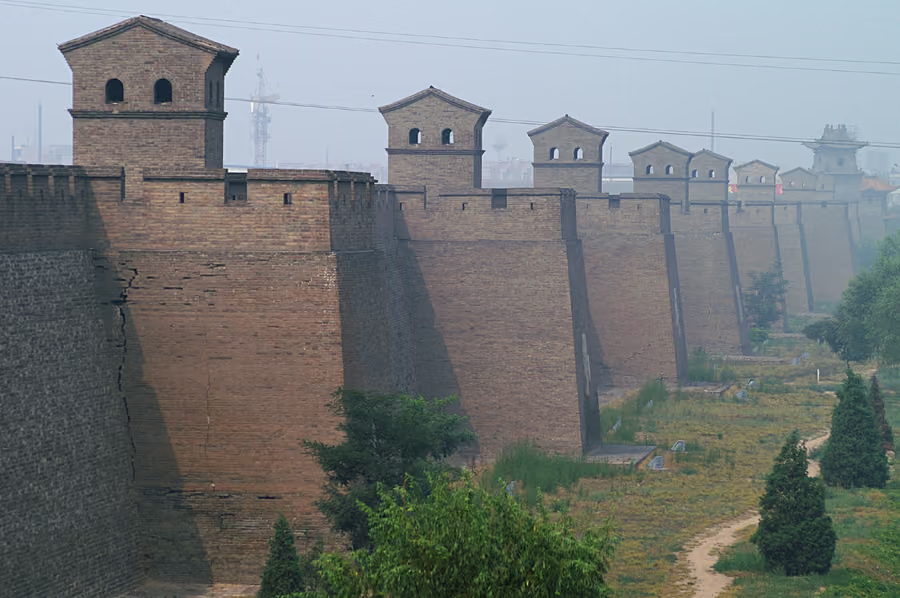
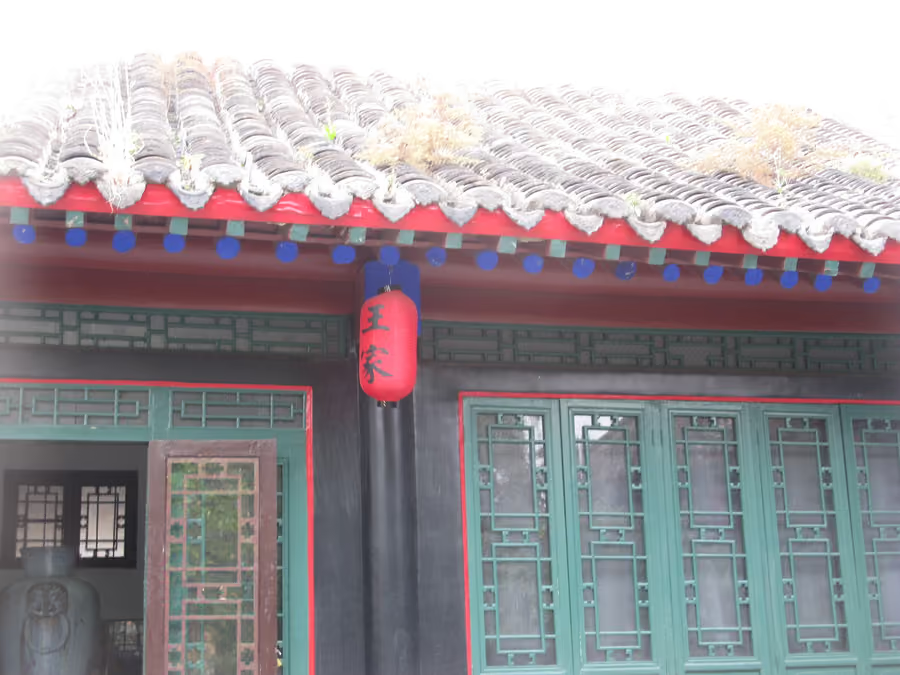
Two walled hillside forts of stacked courtyards connected by lanes, gates and bridges, built up a slope so that courtyards sit above courtyards and you climb through the complex rather than walking across it. The content is the carving: brick, stone and timber relief on every gate, screen wall, column base and window surround, which is what the complex is known for. Hongmen Fort has a strict grid plan you can read from the top of its wall; Gaojiaya is the more decorated half.
A little local insight
Good to know before you go
- Choose Wang or Qiao, not both. They are the same kind of site 40 km apart and doing two in a day is repetitive. Wang is far bigger and architecturally better; Qiao is more famous and much more crowded.
- Walk the top of Hongmen Fort's wall. From up there the grid of courtyards resolves into a plan, and that is the only place the scale of the complex is legible.
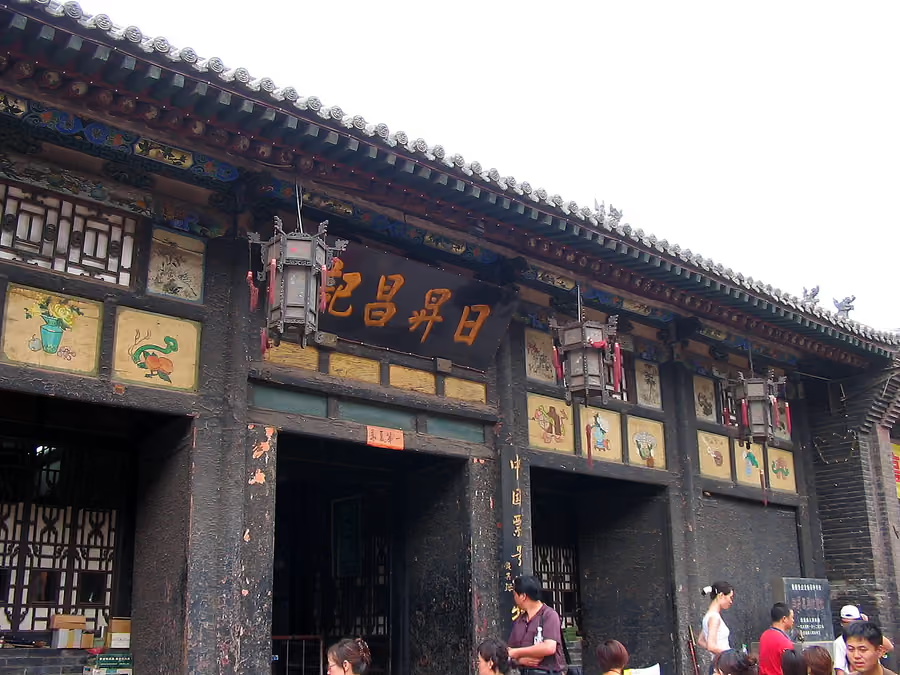
- Look specifically for the three carving crafts - brick, stone and timber - at the gates and screen walls. Visitors walk through courtyards without noticing that the decoration is the point.
- What is open is under a quarter of the site, so do not try to 'finish' it. Pick the two forts and the ancestral hall and leave.
- It is a 45-minute to one-hour drive from Pingyao each way, and awkward on public transport. Hire a car, or take it as a stop on the road between Pingyao and Taiyuan.
- Allow two to three hours on site; it is much larger than people budget for.
When to come
Morning, before coach groups and before the afternoon heat on the open courtyards. April to June and September to October.
Getting around
Poor. The complex is built up a hillside and the experience is climbing stone stairs between courtyard levels, with high thresholds at every gate and no ramps or lifts anywhere. A wheelchair cannot do this site in any meaningful way. A bad knee will find it the hardest thing in the Pingyao area - hundreds of steps over two to three hours - and should consider the Qiao compound instead, which is on one level.
Worth knowing before you go
It is genuinely big and the site map is poor - follow the main up-hill route through the Gaojiaya and Hongmenbao compounds rather than trying to see everything, or you will run out of legs before you reach the best carving.
Compare established providers
Check live tours and tickets
Search for Wang Family Courtyard in Pingyao. Prices, availability, payment and confirmation are handled by the booking provider.
China Travel Select does not take payment or create the reservation. Confirm the exact name, dates, inclusions and cancellation rules on the provider’s page.
Take a closer look
Maps, videos & more
Prices and hours change. These are the places to check on the day.