Discover Lhasa
Barkhor Street
八廓街
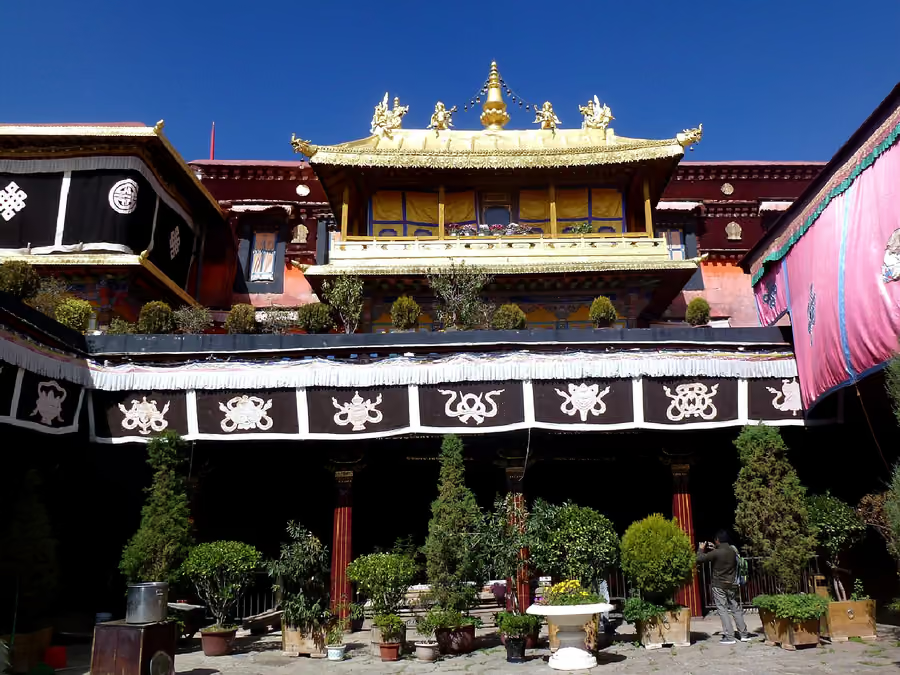
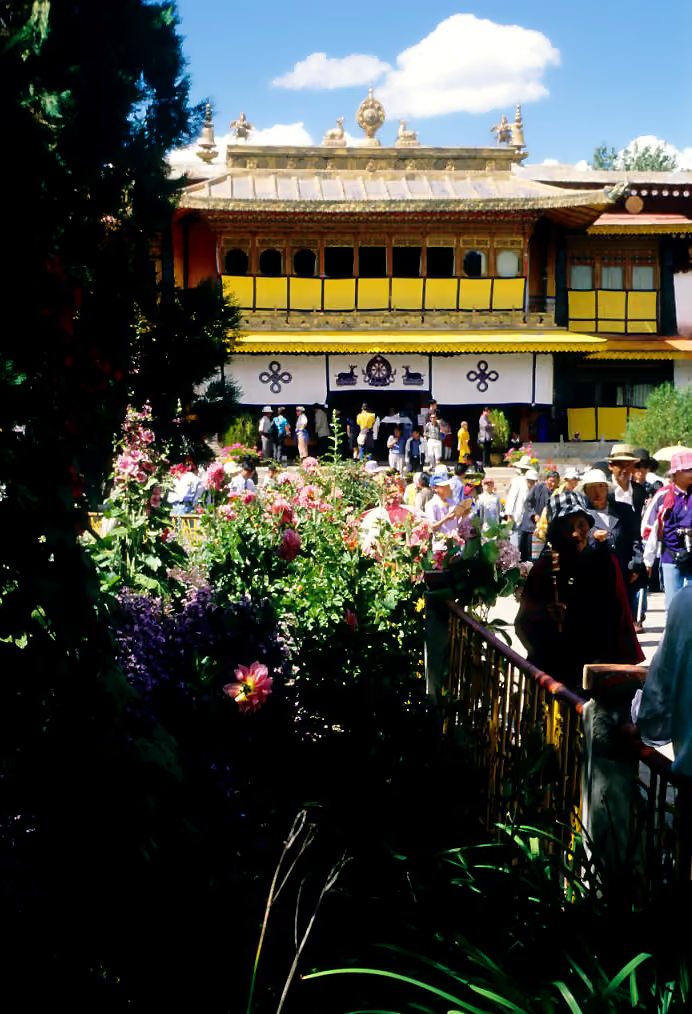
The kora circuit around the Jokhang: a ring of whitewashed buildings, stalls and teahouses where pilgrims from across the Tibetan world walk clockwise with prayer wheels from before sunrise to late at night. It is the living heart of old Lhasa.
The story
What makes this place special
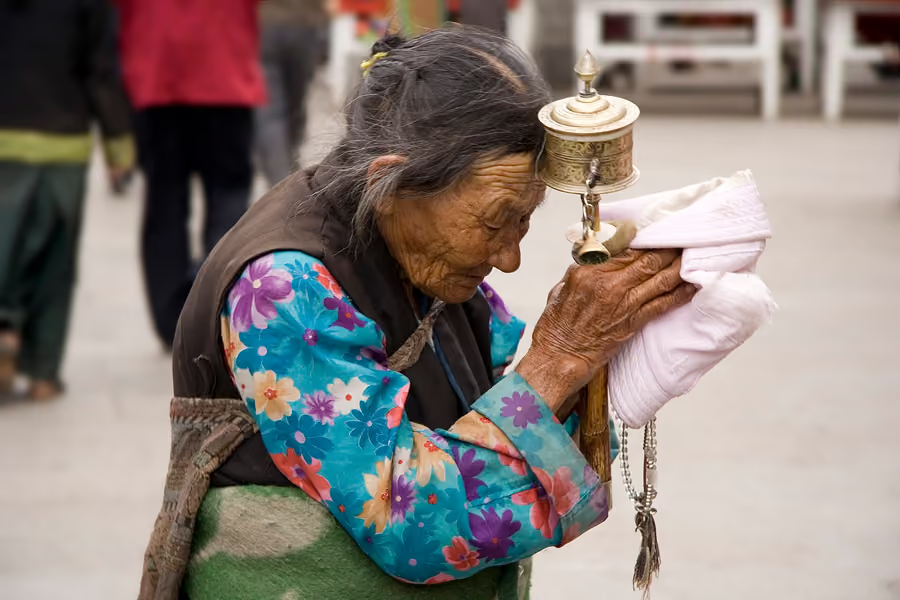
The Barkhor is the circuit around the Jokhang, and the oldest street in Lhasa. It grew out of the pilgrimage route worshippers wore around the temple and became one of the city's three koras, alongside the Lingkhor and the inner Nangkhor. It is about a kilometre round, made up of four streets, east, south, west and north, and dates in origin to the seventh century. Tibetans call it the holy road. It is walked clockwise and is one-way in practice; some pilgrims prostrate their whole body length round the entire circuit. Redevelopment has encroached on Barkhor Square and shortened parts of the historic route.
What you’ll discover
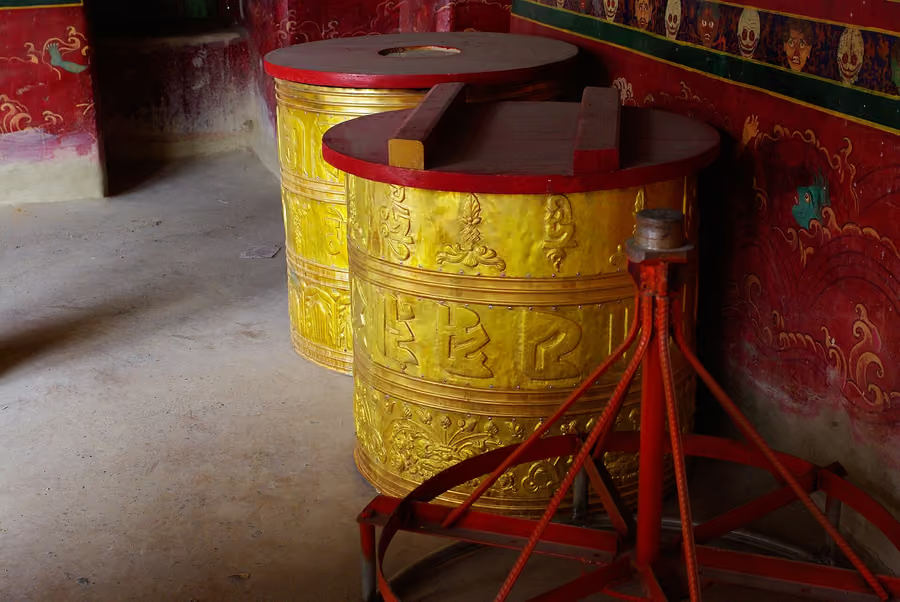
A continuous, slow-moving stream of people circling the temple clockwise, most with prayer wheels or beads, a few measuring the whole kilometre out in prostrations, mixed with Tibetan families, monks, Lhasa residents doing their daily rounds and visitors. The street is lined with whitewashed buildings carrying black window surrounds and awnings, and shops selling prayer wheels, incense, butter, thangkas, turquoise and yak-bone beads. Side alleys lead off into the old city proper, where the buildings are residential and the retail stops abruptly.
A little local insight
Good to know before you go
- Walk clockwise. Going anticlockwise against the kora is both obstructive and read as disrespectful, and you will be swimming upstream through a thousand people.
- Do the circuit twice, once at about 07:00 and once after dark. The early round is almost entirely pilgrims; the evening round is Lhasa residents, lamps and a very different feel. The middle of the day is shopping.
- Leave the circuit. The alleys off the north and east sides, towards Tromsikhang market and the old Muslim quarter, are the part of Lhasa that is still a city rather than a visitor route, and almost nobody steps into them.
- Security is visible and procedural: screening points at the entrances to the square and the circuit, uniformed and plainclothes presence, and passport checks. Carry your passport at all times and expect to open your bag. Do not photograph police posts, checkpoints or security personnel.
- Prices on the circuit are set for visitors and bargaining is expected; the same goods are cheaper in the Tromsikhang area. Much of the turquoise and coral is not what it is called.
- At 3,650m a kilometre at walking pace is more effort than it sounds in your first days. The circuit is flat, which makes it the best first-day activity in Lhasa.
When to come
Early morning, around and before sunrise, for the pilgrim circuit at its fullest, and again in the evening for the lamps. Any season; Tibetan New Year and Saga Dawa fill the circuit to capacity.
Getting around
The best option in Lhasa for limited mobility. The whole circuit is flat, broad, paved stone with no steps, and a wheelchair can complete it; benches are scarce but the shops provide places to stop. The only real obstacles are crowd density at peak pilgrimage hours and the security screening points. A bad knee will have no difficulty beyond the altitude.
Worth knowing before you go
Always walk clockwise — going the other way is both rude and conspicuous. Bring your passport, because the checkpoints into the Barkhor area scan ID on the way in.
Compare established providers
Check live tours and tickets
Search for Barkhor Street in Lhasa. Prices, availability, payment and confirmation are handled by the booking provider.
China Travel Select does not take payment or create the reservation. Confirm the exact name, dates, inclusions and cancellation rules on the provider’s page.
Take a closer look
Maps, videos & more
Prices and hours change. These are the places to check on the day.