Your destination guide 拉萨
Lhasa
Tibet — and rules unlike anywhere else in China
You cannot travel here independently. Every foreign passport needs a Tibet Travel Permit, which only a licensed agency can obtain for you, and you must travel with a guide. Read the permit guide before planning anything else.
Getting there
Gonggar airport (LXA) is about 60 km out at roughly 3,570 m, so you arrive at altitude rather than climbing to it. The Qinghai–Tibet railway from Xining takes 20–22 hours, gains height gradually and carries supplemental oxygen — a much gentler arrival.
When to go
Late April to June and September to October, either side of the July–August monsoon and the domestic peak.
How long: 4–8 days
Give it 4 days for the headline sights, or up to 8 to see it properly and eat your way around.
Four is the minimum and two of those are for acclimatising, not sightseeing — the Potala and the Jokhang will take what is left. Eight lets you add Drepung and Sera, Yamdrok Lake and Ganden, at the slow pace 3,600 metres actually demands.
Visiting Tibet: the permit rules, which are unlike anywhere else in China
You cannot travel independently, you cannot apply for the permit yourself, and you cannot board the train without it. Here is how it actually works, and the timing that catches people out.
Make a few good memories
What to see in Lhasa
Researched largely from Chinese-language sources, so it goes beyond the usual shortlist. Dollar figures are approximate, at the rate on 2026-10-08.
布达拉宫
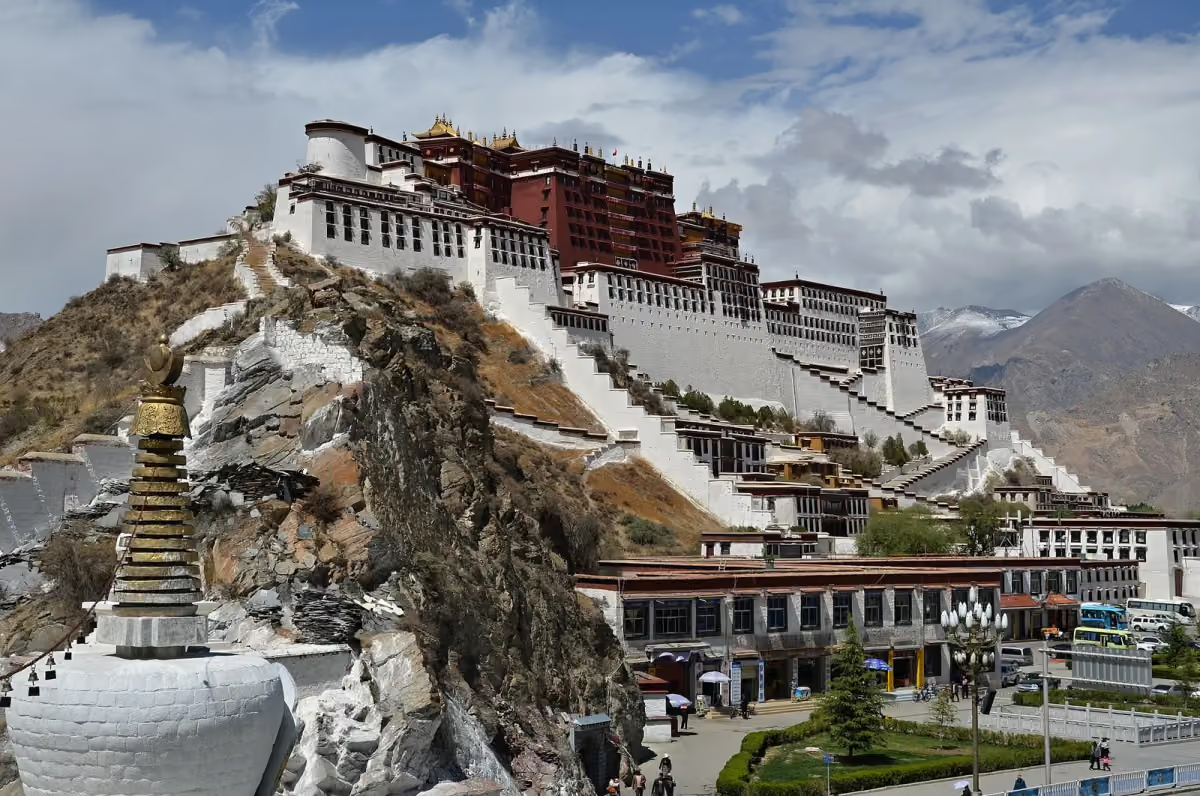
The thirteen-storey winter palace of the Dalai Lamas, rising 300 m above Lhasa on Red Hill and holding the jewelled funerary stupas of eight of them. It is the defining building of Tibet and a UNESCO World Heritage Site.
¥200 in high season (1 May-31 Oct), ¥100 in low season (1 Nov-30 Apr); the Shöl village route is ticketed separately at ¥25 high season / ¥10 low season. Tibet ran a free-admission winter promotion from 1 Nov 2025 to 15 Mar 2026
≈ US$1.49–30Opening hours, booking and how to get there →
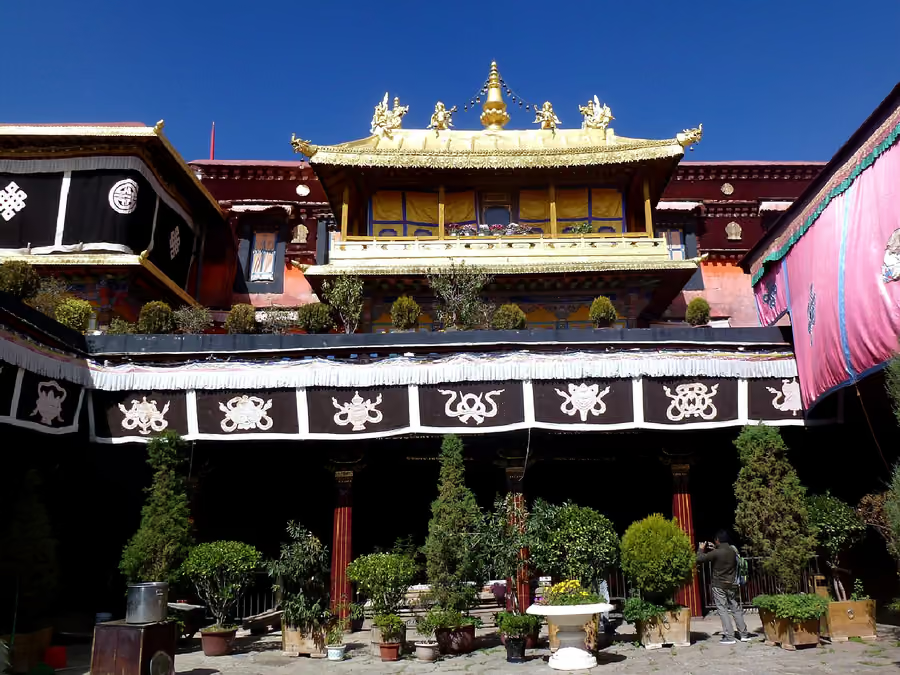
大昭寺
Tibet's holiest temple, founded in the 7th century and built around the Jowo Shakyamuni, the statue that pilgrims cross the plateau to see. Prostrating pilgrims cover the flagstones outside from before dawn.
¥85
≈ US$13Opening hours, booking and how to get there →
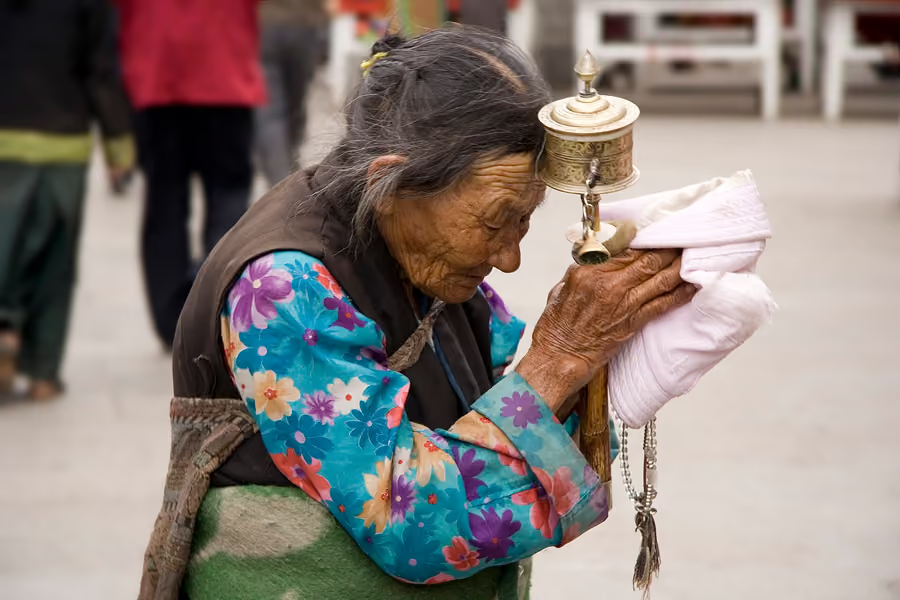
八廓街
The kora circuit around the Jokhang: a ring of whitewashed buildings, stalls and teahouses where pilgrims from across the Tibetan world walk clockwise with prayer wheels from before sunrise to late at night. It is the living heart of old Lhasa.
Free
Opening hours, booking and how to get there →
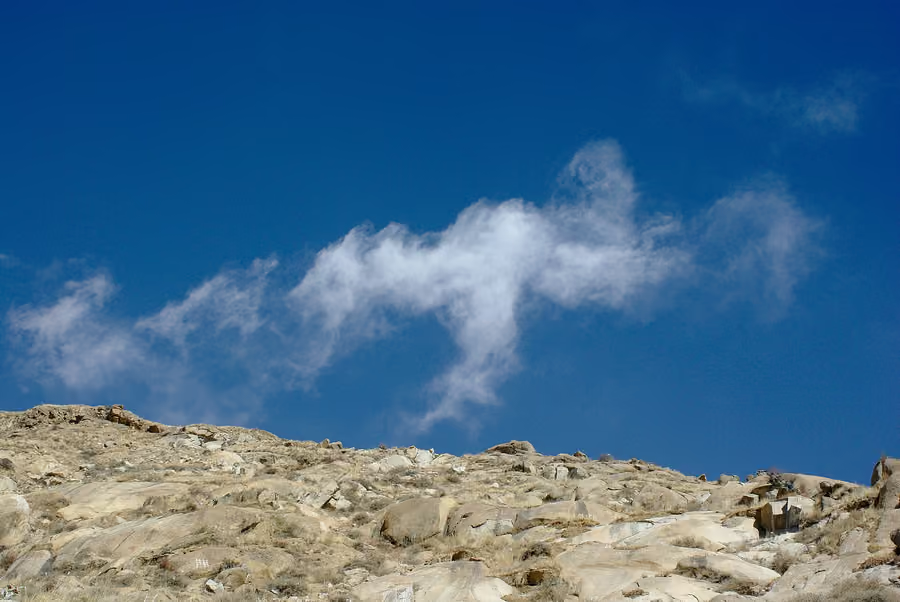
色拉寺
One of the three great Gelugpa monasteries of Lhasa, founded in 1419 beneath a rocky hillside. Its draw is the afternoon debating courtyard, where monks argue scripture with theatrical hand-claps and stamps under the poplar trees.
¥50
≈ US$7.45Opening hours, booking and how to get there →
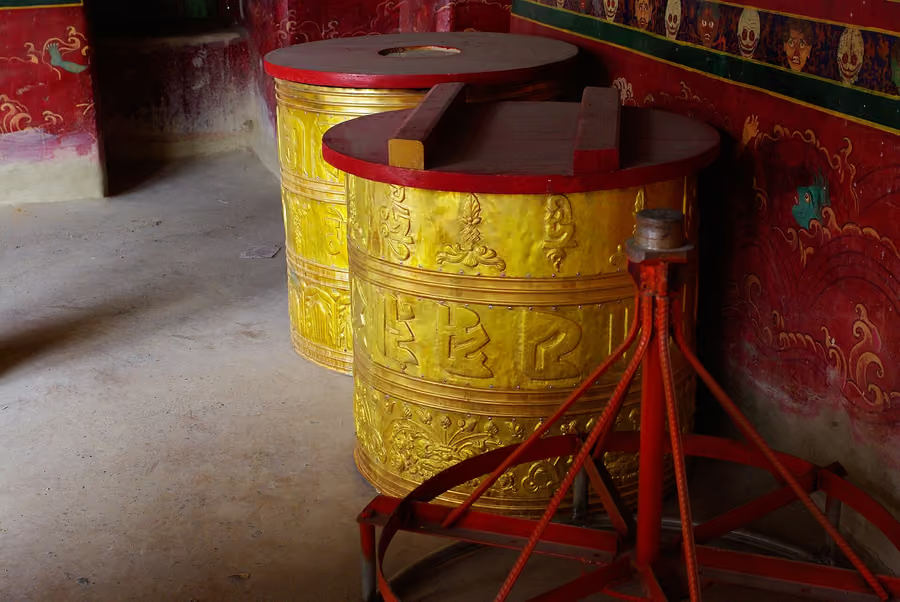
哲蚌寺
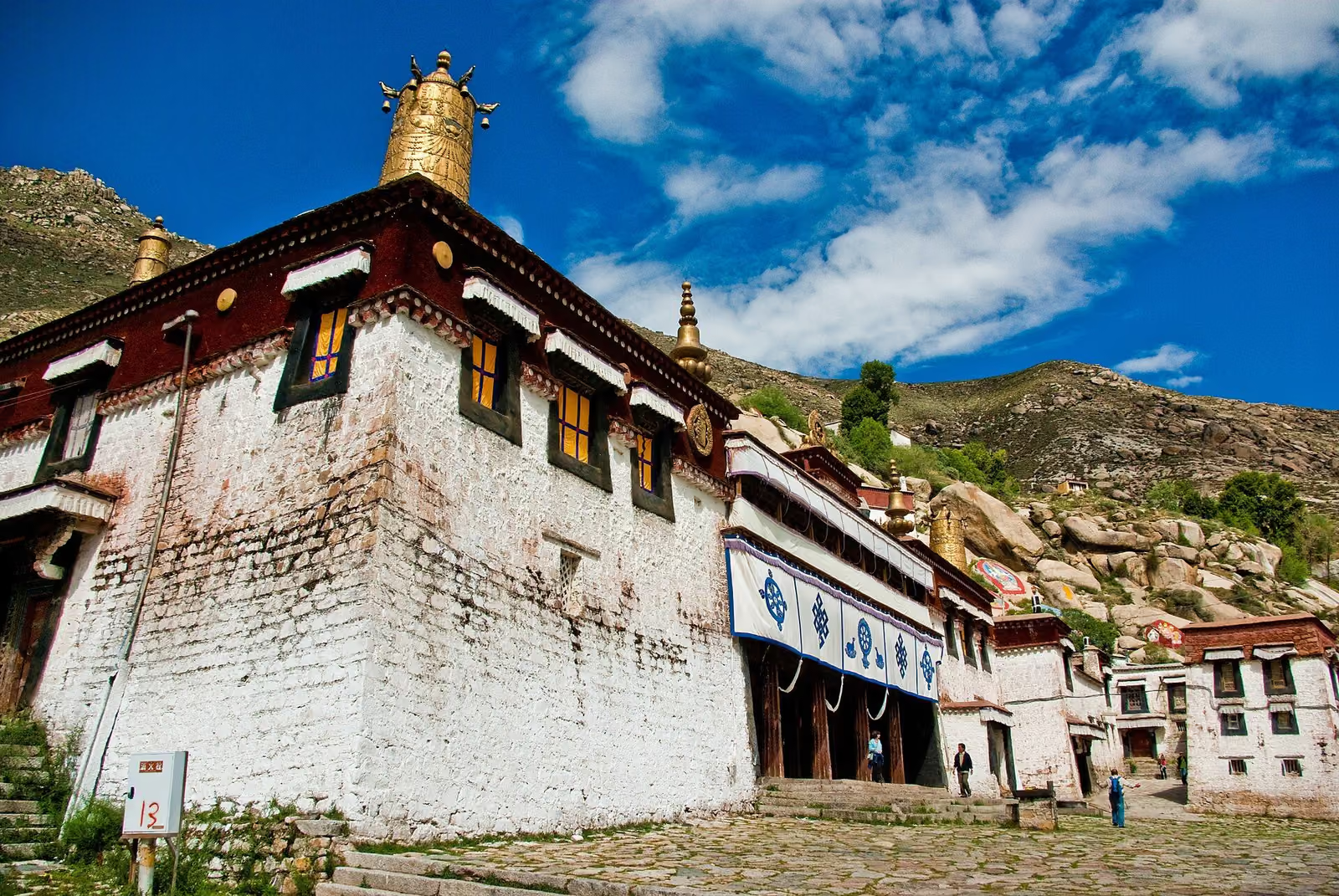
Once the largest monastery on earth, housing around 10,000 monks, it spills white-walled down a mountainside west of Lhasa like a small town. It was the Dalai Lamas' seat before the Potala was built, and it holds its own debating sessions most days.
¥60 (photography inside some chapels is charged separately)
≈ US$8.94Opening hours, booking and how to get there →
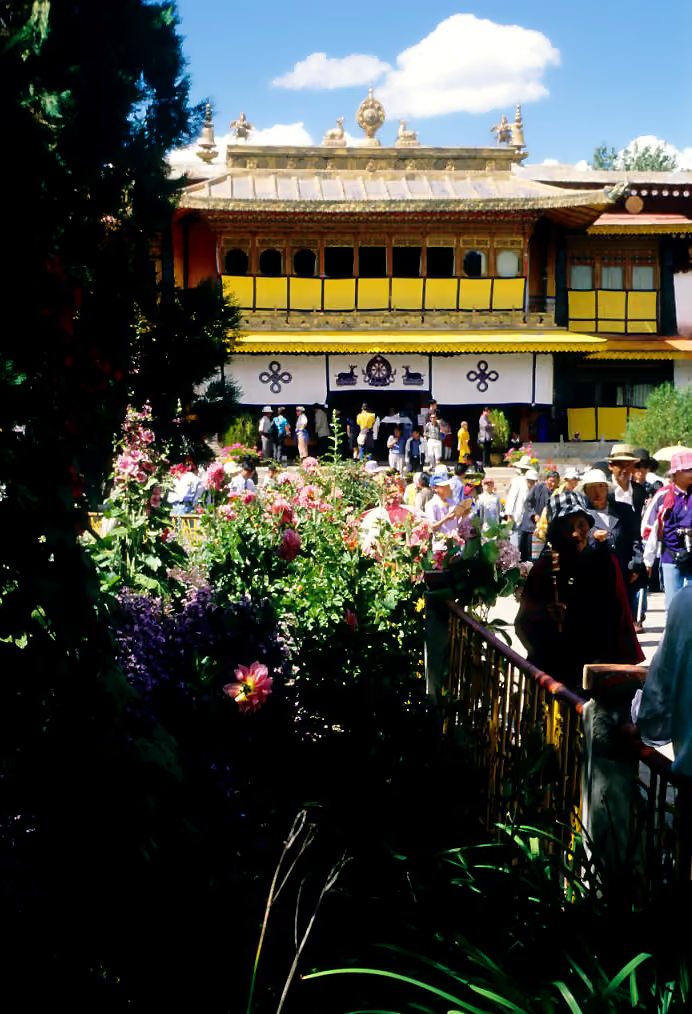
罗布林卡
The Dalai Lamas' summer palace: a walled park of pavilions, ponds and gardens, including the 1950s New Summer Palace with its murals of Tibetan history and the rooms left as the 14th Dalai Lama used them. A UNESCO site and Lhasa's green space.
¥60
≈ US$8.94Opening hours, booking and how to get there →
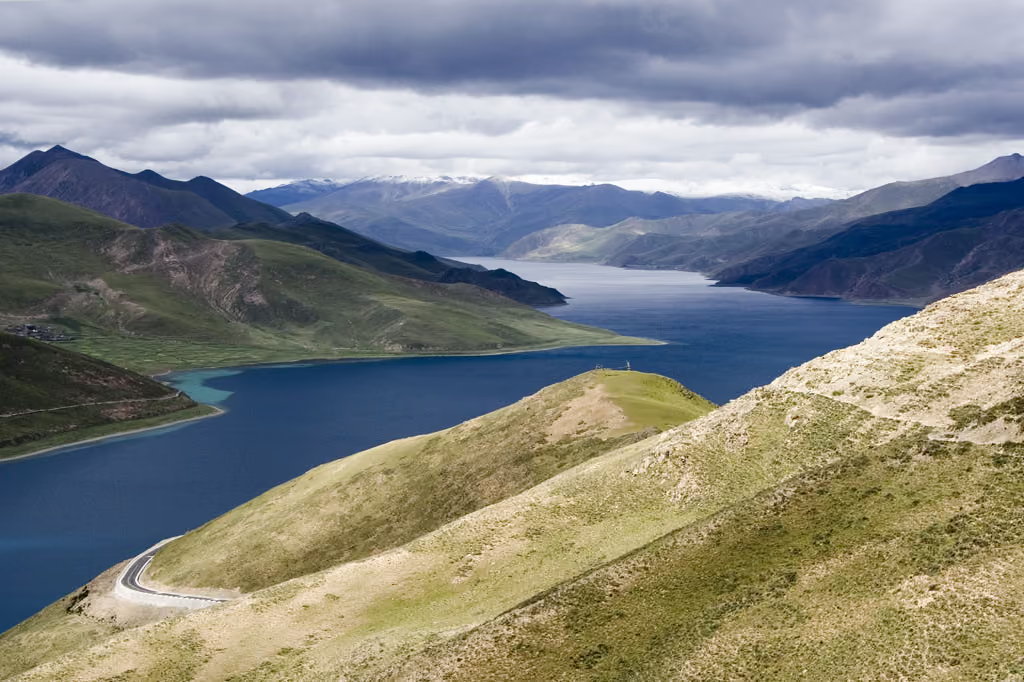
羊卓雍措
One of Tibet's three great sacred lakes, a long turquoise arm of water at 4,440 m seen from the Kamba La pass on the road south from Lhasa. The colour against the bare brown ranges is the image most people carry away from Tibet.
¥100 for the scenic area
≈ US$15Opening hours, booking and how to get there →
甘丹寺
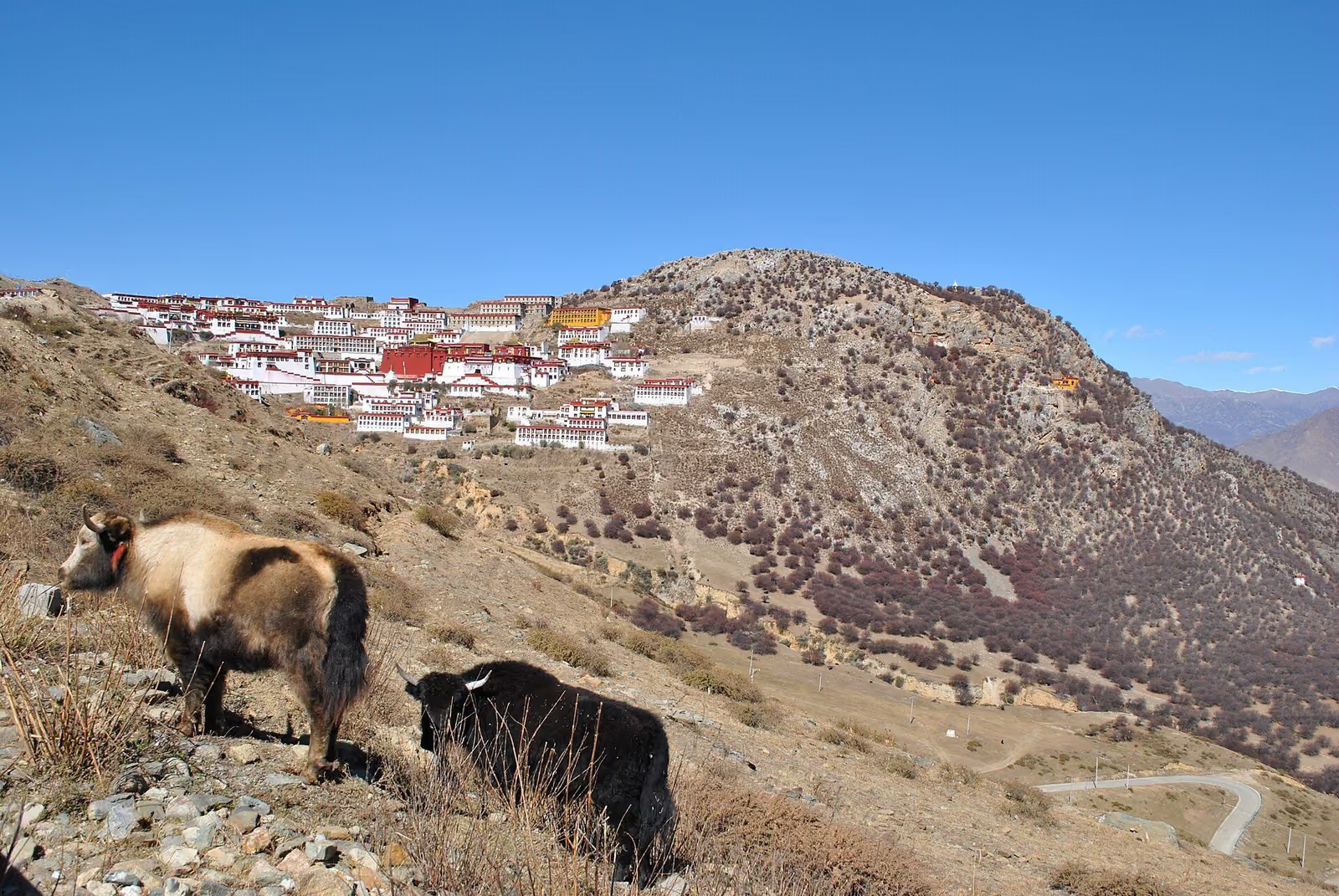
The first and most senior of the Gelugpa monasteries, founded by Tsongkhapa in 1409 on a high ridge above the Kyichu valley. Destroyed in the Cultural Revolution and painstakingly rebuilt, it has the most dramatic setting of the three great monasteries and a superb kora path around the ridge.
Gate ticket charged on site; Chinese sources do not give a consistent current figure, so confirm with your agency when booking
Opening hours, booking and how to get there →
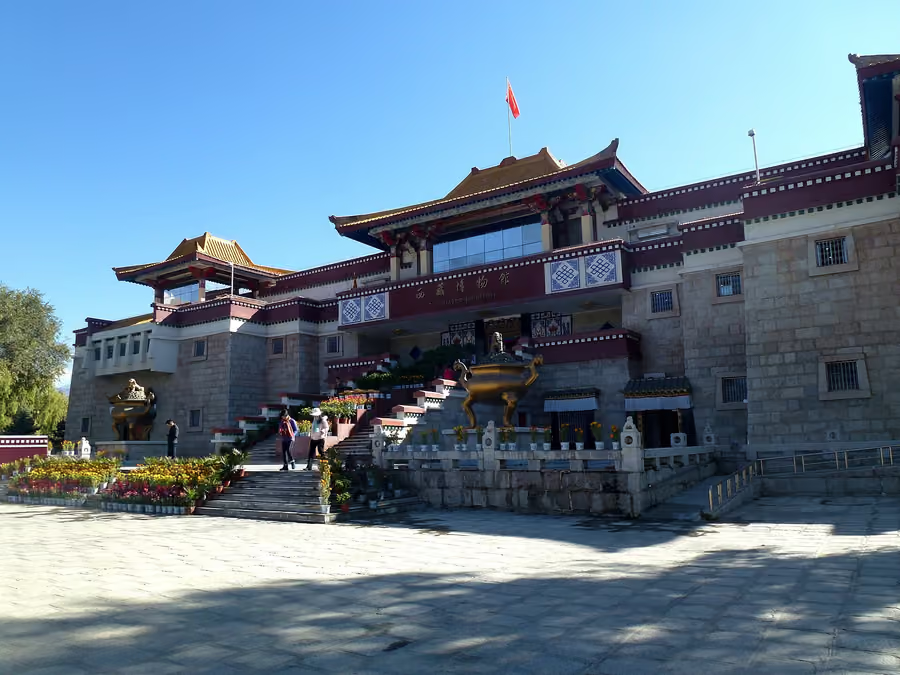
西藏博物馆
The region's main museum, reopened after a long rebuild beside Norbulingka, covering Tibetan prehistory, Buddhist art, thangka painting and folk culture. Useful as a first-morning stop while you are still acclimatising and should not be climbing anything.
Free
Opening hours, booking and how to get there →
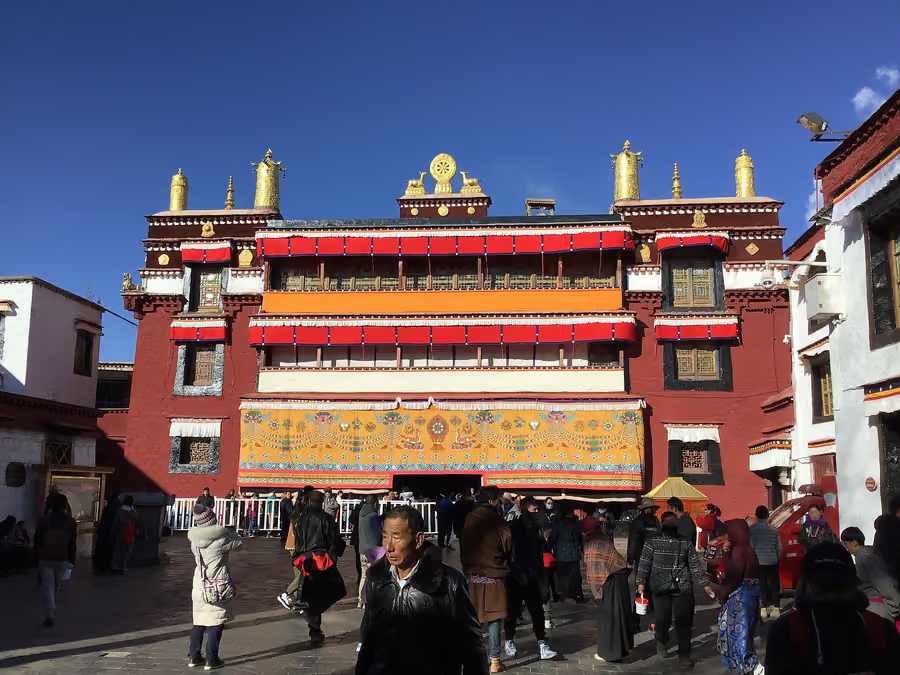
小昭寺
The Jokhang's smaller sister temple, founded in the 7th century by the Chinese princess Wencheng and holding the Jowo Mikyo Dorje, the statue she is said to have brought from Chang'an. Quieter and far less visited than the Jokhang a few streets away.
¥30
≈ US$4.47Opening hours, booking and how to get there →
药王山观景台与布达拉宫广场
The terrace on Chakpori hill gives the exact view of the Potala printed on the 50-yuan note, and the square below is where Lhasa families walk in the evening once the palace is floodlit. Both are free and need no ticket.
Free
Opening hours, booking and how to get there →
扎基寺
Lhasa's wealth-god temple and the city's most purely local religious site: residents come weekly with bottles of barley spirit and white scarves to petition Dorje Shugden's protector deity. No tour group stops here, which is exactly the point.
Free
Opening hours, booking and how to get there →
What to eat in Lhasa
Lhasa sits at about 3,650 m, and for the first two or three days altitude reliably kills your appetite and slows digestion — most visitors feel full after a few bites and bloated afterwards. Eat small and often rather than sitting down to one big meal, favour carbohydrate and soup over fat and meat, drink far more water than feels necessary, and go easy on alcohol. If nothing appeals, a bowl of Tibetan noodles (zang mian) with a glass of sweet milk tea is cheap, warm, gentle on the stomach and available everywhere; a steamed yak-meat momo is the next safest thing.
Tibetan Noodles
藏面zàng miàn
Short, springy wheat noodles, usually par-cooked and dried in advance, served in a clear yak-bone broth with a scattering of minced yak meat and spring onion. The default working breakfast in Lhasa.
Tastes like: Mild, clean and gently meaty — almost under-seasoned by Chinese standards, so you add chilli and vinegar yourself.
Not on the menu but in it: The broth is yak bone, and some tea houses enrich it with a spoon of yak butter. Not vegetarian.
Might not be for you: Nothing difficult. The noodles can be chewier and the portion smaller than you expect.
Where to eat it
- Namaseide (Yutuo Road branch) · No. 2 on Dianping's Lhasa must-visit food list (拉萨美食必打卡榜) · About ¥74 per person · Yutuo Road (宇拓路), Chengguan
- Yangqingcang Tibetan Restaurant · Ctrip Lhasa list No. 4 · ¥85–110 per person · Barkhor Street / Jokhang Temple area (八廓街、大昭寺), Chengguan District
- Old Guangming Gangqiong Sweet Tea House · Local institution · About ¥9 per person · Near Beijing Road, Chengguan
Where: Sweet tea houses across the Barkhor and Beijing Road area; 8-15 CNY a bowl.
Watch videos of Tibetan Noodles →Yak Butter Tea
酥油茶sūyóu chá
Brick tea churned with yak butter and salt into an emulsion, drunk all day and refilled constantly by your host. The everyday fuel of the Tibetan plateau.
Tastes like: Salty, oily and savoury rather than sweet — much closer to a thin buttery broth than to tea.
Not on the menu but in it: Heavy dairy, which catches out visitors who assume Chinese drinks are dairy-free; traditional versions use aged yak butter.
Might not be for you: This is the one most Western visitors struggle with. Older butter develops a sharp rancid-cheese note on top of the saltiness, and the oily mouthfeel sits badly when you are already queasy from altitude. Try a small cup before committing, and know that refusing politely is normal.
Where to eat it
- Yangqingcang Tibetan Restaurant · Ctrip Lhasa list No. 4 · ¥85–110 per person · Barkhor Street / Jokhang Temple area (八廓街、大昭寺), Chengguan District
- Amdo Nuozeng Tibetan Restaurant · Ctrip Lhasa list No. 14 · ¥75–100 per person · Barkhor Street / Jokhang Temple area (八廓街、大昭寺), Chengguan District. Reported address: Balangxue Lane 5 (八朗学五巷), not independently confirmed.
- Jixiang Shengxue Tibetan Restaurant · Ctrip Lhasa list No. 13 · ¥75–100 per person · Zhaji Temple area (扎基寺), Chengguan District
Where: Any Tibetan restaurant or monastery tea house; often sold by the thermos.
Watch videos of Yak Butter Tea →Sweet Milk Tea
甜茶tián chá
Black tea boiled with milk and sugar, served by the glass in Lhasa's tea houses where you leave coins on the table and staff keep topping you up.
Tastes like: Sweet, creamy and comforting — essentially a good Indian-style chai without the spice.
Not on the menu but in it: Milk and often milk powder; sugar levels are high.
Might not be for you: Nothing at all. If butter tea defeats you, order this instead — almost every visitor likes it.
Where to eat it
- Makye Ame · No. 1 on Dianping's Lhasa must-visit food list (拉萨美食必打卡榜) · About ¥89 per person · Barkhor Street (八廓街), Chengguan
- Namaseide (Yutuo Road branch) · No. 2 on Dianping's Lhasa must-visit food list (拉萨美食必打卡榜) · About ¥74 per person · Yutuo Road (宇拓路), Chengguan
- Old Guangming Gangqiong Sweet Tea House · Local institution · About ¥9 per person · Near Beijing Road, Chengguan
- Yibire Dumpling Shop · Ctrip Lhasa list No. 12 · ¥20–35 per person · Barkhor Street / Jokhang Temple area (八廓街、大昭寺), Chengguan District
- Lhasa Snow Lotus View Tibetan Restaurant · ¥80–110 per person · Potala Palace area (布达拉宫), Chengguan District
Where: Old Guangming Gangqiong tea house (老光明岗琼甜茶馆) near Beijing Road and dozens of similar halls; 3-5 CNY a glass.
Watch videos of Sweet Milk Tea →Yak Meat Momo
牛肉包子 / 藏式饺子niúròu bāozi / zàngshì jiǎozi
Pleated wheat dumplings filled with minced yak meat, onion and fat, steamed or sometimes pan-fried. A juice-filled, hand-sized parcel.
Tastes like: Rich and beefy with a mild onion sweetness; the trapped broth is the point.
Not on the menu but in it: Yak fat is mixed into the filling for juiciness. Vegetable momos exist in traveller-facing restaurants but not in local tea houses.
Might not be for you: Bite a small hole first or the hot fat squirts. Yak is gamier and leaner than beef.
Where: Tea houses and Tibetan restaurants everywhere; 2-5 CNY each.
Watch videos of Yak Meat Momo →Tsampa
糌粑zānba
Roasted barley flour kneaded by hand in a bowl with yak butter, tea and sometimes sugar or cheese powder into a stiff dough you eat in pinches. The traditional Tibetan staple.
Tastes like: Nutty, toasty and buttery, lightly salty, with a dry dense texture.
Not on the menu but in it: Yak butter and sometimes dried cheese are mixed in — again, dairy where visitors do not expect it. Barley contains gluten.
Might not be for you: Very dry and dense; it absorbs moisture in the mouth and is hard to swallow without tea. The buttery smell is strong.
Where: Traditional Tibetan restaurants and monastery kitchens; often part of a set meal.
Watch videos of Tsampa →Air-Dried Yak Meat
风干牛肉fēnggān niúròu
Strips of yak meat hung to dry in the cold dry plateau air through winter, then eaten raw as a snack or lightly fried with chilli.
Tastes like: Intensely beefy and concentrated, salty, with a deep aged savour.
Not on the menu but in it: Normally just yak and salt; fried versions use yak butter or vegetable oil.
Might not be for you: Eaten uncooked and extremely tough — some pieces need real chewing. The aged smell is pronounced, and raw air-dried meat is a food-safety judgement call.
Where: Tibetan restaurants and dry-goods shops around the Barkhor; sold by weight.
Watch videos of Air-Dried Yak Meat →Tibetan Hotpot
藏式火锅zàngshì huǒguō
A communal pot of mild yak-bone broth with yak meat, mutton, meatballs, hand-cut noodles, radish, potato and leafy greens — closer to a Northeast Asian stew than to Sichuan hotpot.
Tastes like: Mild, clean and savoury; the broth is barely spiced, and heat comes from a side dish of chilli.
Not on the menu but in it: Yak-bone broth with butter; processed meatballs and fish cakes often contain egg and wheat starch.
Might not be for you: Boils slowly at altitude — water boils at about 86°C in Lhasa, so food takes noticeably longer and meat can come out underdone. Give it time.
Where to eat it
- Amdo Nuozeng Tibetan Restaurant · Ctrip Lhasa list No. 14 · ¥75–100 per person · Barkhor Street / Jokhang Temple area (八廓街、大昭寺), Chengguan District. Reported address: Balangxue Lane 5 (八朗学五巷), not independently confirmed.
Where: Anduo Nuozeng (安多诺增藏餐) and Makye Ame among others; a shared pot is the usual group order.
Watch videos of Tibetan Hotpot →Stone-Grilled Yak Beef
石板烤牛肉shíbǎn kǎo niúròu
Slices of yak sirloin brought to the table on a scorching stone slab or in a stone pot, cooking in front of you with a little butter and salt.
Tastes like: Straightforwardly meaty, lightly salted, with a browned crust; yak tastes leaner and gamier than beef.
Not on the menu but in it: Cooked in yak butter at most places; dipping salt sometimes contains MSG and soy powder.
Might not be for you: Nothing difficult — the most approachable thing on a Tibetan restaurant menu for a cautious eater.
Where: Makye Ame (玛吉阿米) on the Barkhor and most tourist-facing Tibetan restaurants.
Watch videos of Stone-Grilled Yak Beef →Tibetan Yoghurt and Yoghurt Cake
藏式酸奶 / 酸奶饼zàngshì suānnǎi / suānnǎi bǐng
Thick set yoghurt made from yak or cow milk, eaten with sugar spooned over the top, or layered with biscuit crumb and raisins into a chilled 'yoghurt cake'.
Tastes like: Sharply sour and very thick, with a skin of cream on top; the cake version is sweet and tangy.
Not on the menu but in it: Full dairy; cake versions contain wheat biscuit and sometimes walnut. Yak yoghurt is much higher in fat than supermarket yoghurt.
Might not be for you: Much more sour than Western yoghurt, and the fat content can be heavy on an altitude-sensitive stomach.
Where to eat it
- Makye Ame · No. 1 on Dianping's Lhasa must-visit food list (拉萨美食必打卡榜) · About ¥89 per person · Barkhor Street (八廓街), Chengguan
Where: Tibetan restaurants, Barkhor street stalls and the yoghurt stands near Jokhang Temple.
Watch videos of Tibetan Yoghurt and Yoghurt Cake →Highland Barley Beer and Wine
青稞酒qīngkē jiǔ
Home-brewed or bottled drinks fermented from highland barley — the farmhouse version (chang) is cloudy and low in alcohol, the commercial version is a clear spirit.
Tastes like: The cloudy brew is sour, yeasty and faintly sweet; the spirit is sharp and grainy.
Not on the menu but in it: Barley, so not gluten-free; home brews are unfiltered and of unpredictable strength.
Might not be for you: Alcohol hits considerably harder at 3,650 m and worsens altitude symptoms and dehydration. Skip it entirely for your first couple of days.
Where to eat it
- Yangqingcang Tibetan Restaurant · Ctrip Lhasa list No. 4 · ¥85–110 per person · Barkhor Street / Jokhang Temple area (八廓街、大昭寺), Chengguan District
Where: Tibetan restaurants and village homestays; bottled versions in any shop.
Watch videos of Highland Barley Beer and Wine →Where to eat in Lhasa
- Dianping (大众点评) — the real ratings. Chinese only, but photos, prices and a 4.5+ score survive translation. Its 必吃榜 "Must-Eat" list is the mainstream benchmark.
- Black Pearl (黑珍珠) — China's own fine-dining guide, published annually by Meituan and taken more seriously domestically than Michelin.
- Michelin covers only a few Chinese cities, so its absence means nothing outside them.
- Xiaohongshu (小红书) — what is actually busy this month, rather than this year.
Makye Ame 玛吉阿米·餐吧
About ¥89 per person≈ US$13A long-established Tibetan restaurant and bar in a yellow building on the Barkhor circuit, with window tables overlooking the pilgrim route.
Order: Yak momos (牦牛肉饺子), Curried yak (咖喱牦牛肉) and 2 more
What to order, booking and allergens →
Namaseide (Yutuo Road branch) 娜玛瑟德餐厅(宇拓路店)
About ¥74 per person≈ US$11A popular modern restaurant serving Tibetan and Nepali-Indian dishes side by side — curries, naan and momos alongside yak.
Order: Yak momo dumplings (牦牛肉包子/藏式饺子), Curry with naan (咖喱配馕) and 2 more
What to order, booking and allergens →
Yangqingcang Tibetan Restaurant 央卿仓藏餐厅
¥85–110 per person≈ US$13A well-regarded Tibetan restaurant near the Barkhor with a terrace facing the Potala Palace, doing the traditional repertoire with local character rather than tourist polish, and serving chang, the home-brewed highland barley beer. Fourth on Ctrip's Lhasa list and the one to pick for a proper Tibetan dinner.
Order: Yak momos (藏式牦牛肉包子), Thukpa / Tibetan noodle soup (藏面) and 3 more
What to order, booking and allergens →
Amdo Nuozeng Tibetan Restaurant 安多诺增藏餐
¥75–100 per person≈ US$11An Amdo-style Tibetan restaurant — the cooking of the northeastern Tibetan plateau rather than central Tibet — known for meat pies, yak dishes and Tibetan hotpot. The smell of yak butter runs through the whole room, which tells you this is a place Tibetans eat rather than a place built for coaches.
Order: Tibetan meat pie (藏式肉饼), Tibetan hotpot (藏式火锅) and 2 more
What to order, booking and allergens →
Old Guangming Gangqiong Sweet Tea House 老光明岗琼甜茶馆
About ¥9 per person≈ US$1.34A cavernous local tea hall where Lhasa residents drink sweet tea by the glass over Tibetan noodles and yak dumplings.
Order: Sweet tea by the glass (甜茶), Tibetan noodles (藏面) and 2 more
What to order, booking and allergens →
Tiancun Sour Soup Yak Hotpot Tibetan Restaurant 田村·酸汤鲜牦牛肉火锅藏餐厅
¥75–100 per person≈ US$11A Tibetan hotpot house built around fresh yak in a sour broth, second on Ctrip's Lhasa list with the highest rating on it. Hotpot is a good strategy at altitude: the food is hot, the broth is hydrating, and you can eat slowly in small amounts rather than facing a plate.
Order: Sour-broth yak hotpot (酸汤牦牛肉火锅), Fresh yak slices (鲜牦牛肉) and 2 more
What to order, booking and allergens →
Yibire Dumpling Shop 伊比热包子店
¥20–35 per person≈ US$2.98A small dumpling shop near the Barkhor doing pan-fried dumplings that come out golden and glossy, plus steamed yak momos. Twenty-nine yuan a head and the highest rating on the Lhasa list — a good breakfast or a snack on the way round the kora.
Order: Pan-fried dumplings (煎水饺), Steamed yak momos (牦牛肉包子) and 1 more
What to order, booking and allergens →
Jixiang Shengxue Tibetan Restaurant 吉祥圣雪藏餐
¥75–100 per person≈ US$11A Tibetan restaurant out by Zhaji Temple doing the traditional dishes with more careful plating than most — a middle ground between the plain local places and the tourist rooms around the Barkhor. Worth the short taxi if you want a quieter dinner.
Order: Yak momos (牦牛肉包子), Yak and potato stew (牦牛肉炖土豆) and 2 more
What to order, booking and allergens →
Lhasa Snow Lotus View Tibetan Restaurant 拉萨雪莲花观景藏餐厅
¥80–110 per person≈ US$12A view restaurant near the Potala Palace doing Tibetan food plus cocktails, aimed at an evening with the palace lit up. More bar than kitchen, but the only way to get that particular view with a drink in hand, and an easy soft landing on an evening when altitude has taken your appetite.
Order: Yak momos (牦牛肉包子), Grilled yak (烤牦牛肉) and 2 more
What to order, booking and allergens →
Lhasa Kitchen 拉萨厨房
¥50–75 per person≈ US$7.45A long-standing traveller restaurant near the Barkhor with a wide menu running from Tibetan staples through Nepali curries to Southeast Asian desserts and Western breakfasts. Not where you go for authenticity — it is where you go on day three when you want pancakes and a coffee, and that has real value at altitude.
Order: Yak burger or yak steak (牦牛肉汉堡/牛排), Momos (饺子/包子) and 2 more
What to order, booking and allergens →
See Tibet
Other people's videos, on YouTube — we link, we don't host. Worth knowing: YouTube is blocked in mainland China, so watch these at home, or download them in the YouTube app before you fly.
- How to Visit TIBET By Train (Things To Know) + First Impressions of LHASAThe permit paperwork and the Qinghai-Tibet train ride itself - cabin, oxygen supply, high passes - followed by arrival and first hours in Lhasa.Peter and Yen · opens on YouTube · Auto-generated subtitles
- Inside TIBET: Potala Palace, Jokhang Temple & Yamdrok Lake | LHASA TourThe Lhasa sightseeing core on camera - climbing up to the Potala Palace, the pilgrim circuit at Jokhang Temple, and a drive out to Yamdrok Lake.Peter and Yen · opens on YouTube · Auto-generated subtitles
- Lhasa, Tibet 🇨🇳 | Potala Palace & Old Streets | 4K HDR Walking TourA narration-free walk past the Potala Palace and through Lhasa's old lanes, letting the street life and ambient sound carry it.Slow Traveler · opens on YouTube
- 世界最高海拔22小时青藏铁路,高反缺氧真实全记录,真的有生命危险吗?⚠️A Mandarin couple film all twenty-two hours of the Qinghai-Tibet railway and track how altitude sickness hits them as the train crosses 5,000 metres, with hand-made English subtitles.大白小宇看世界 · opens on YouTube · In Chinese, with English subtitles
Videos belong to the channels credited above. We have no affiliation with them and earn nothing from these links.