Discover Lhasa
Ramoche Temple
小昭寺
The Jokhang's smaller sister temple, founded in the 7th century by the Chinese princess Wencheng and holding the Jowo Mikyo Dorje, the statue she is said to have brought from Chang'an. Quieter and far less visited than the Jokhang a few streets away.
The story
What makes this place special
Ramoche is regarded as the most important temple in Lhasa after the Jokhang, and dates to the seventh century. Its principal image is the Jowo Mikyo Dorje, a bronze figure of Akshobhya brought to Lhasa by the Nepalese queen Bhrikuti, the counterpart to the Jowo Shakyamuni that Wencheng brought to the Jokhang. The original temple burned down; a three-storey building was constructed in 1474 and later became the assembly hall of the Gyuto order, the Upper Tantric College of Lhasa, which housed 500 monks. The temple was gutted by fire and destroyed in 1959 during the Lhasa uprising, and the statue was damaged by Red Guards in the Cultural Revolution. In 1983 the lower half of the image was reportedly found in a Lhasa rubbish tip and the upper half in Beijing; the two parts were reunited and a major restoration was completed in 1986. The site covers about 4,000 square metres, northwest of the Jokhang and east of the Potala.
What you’ll discover
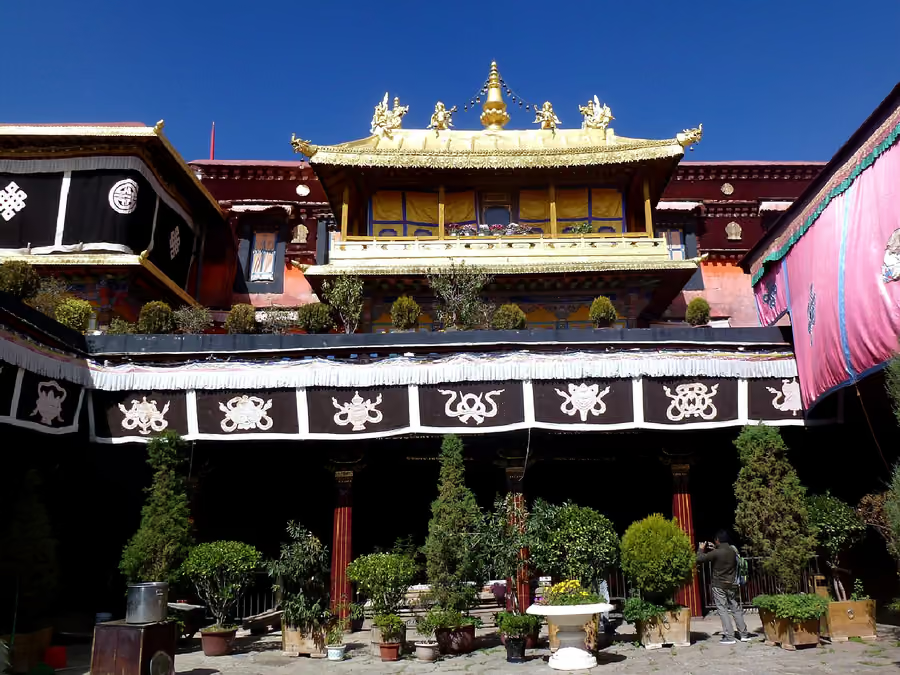
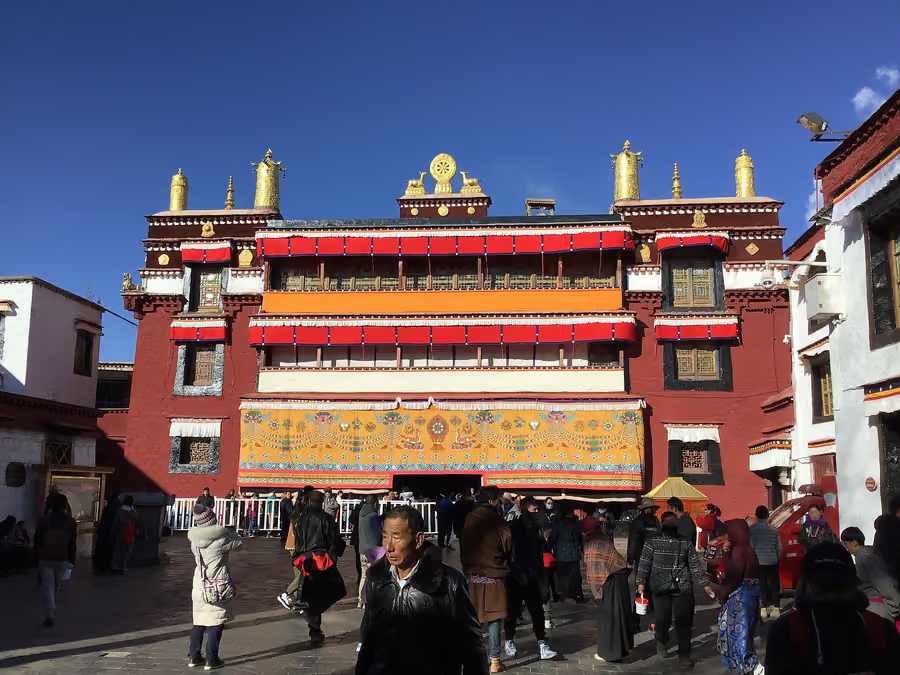
A compact three-storey temple on a busy street, far smaller and quieter than the Jokhang, with a gilded roof and a single main hall. Inside, the Jowo Mikyo Dorje sits in its shrine surrounded by butter lamps, with a short circuit of prayer wheels and chapels around it, and the Upper Tantric College quarters behind. The pace is slow and local: the visitors are mostly Lhasa residents on their daily round rather than pilgrims from far away.
A little local insight
Good to know before you go
- Come here when the Jokhang defeats you. Same period, comparable image, a tenth of the crowd, and you can stand in front of the statue for as long as you want.
- Know the story before you go in. The image you are looking at was found in two pieces in 1983, one half in a Lhasa rubbish tip and the other in Beijing, and nothing on site tells you that; it changes how the shrine reads.
- It is on Ramoche Road, a few minutes north of the Barkhor, and the lanes between the two are good old-city walking with almost no visitors.
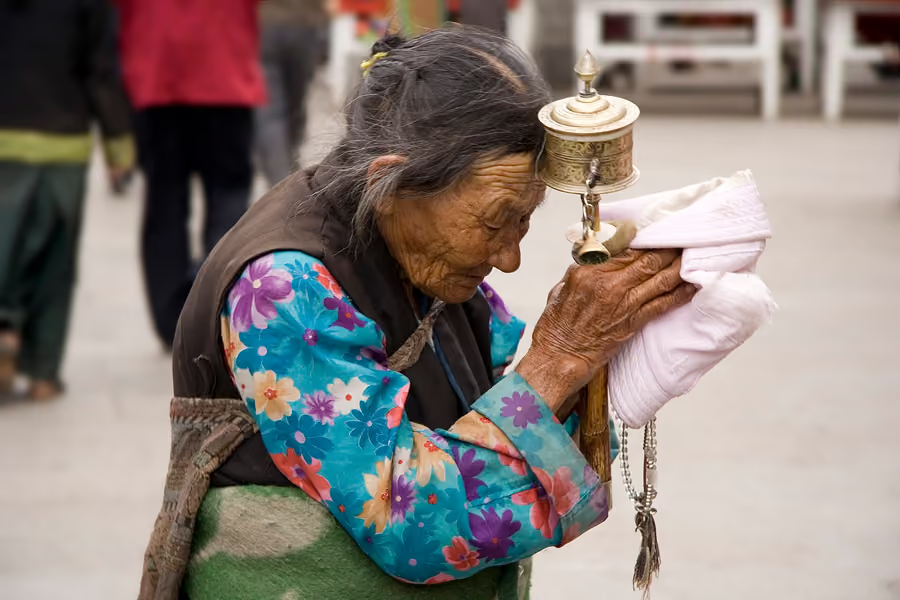
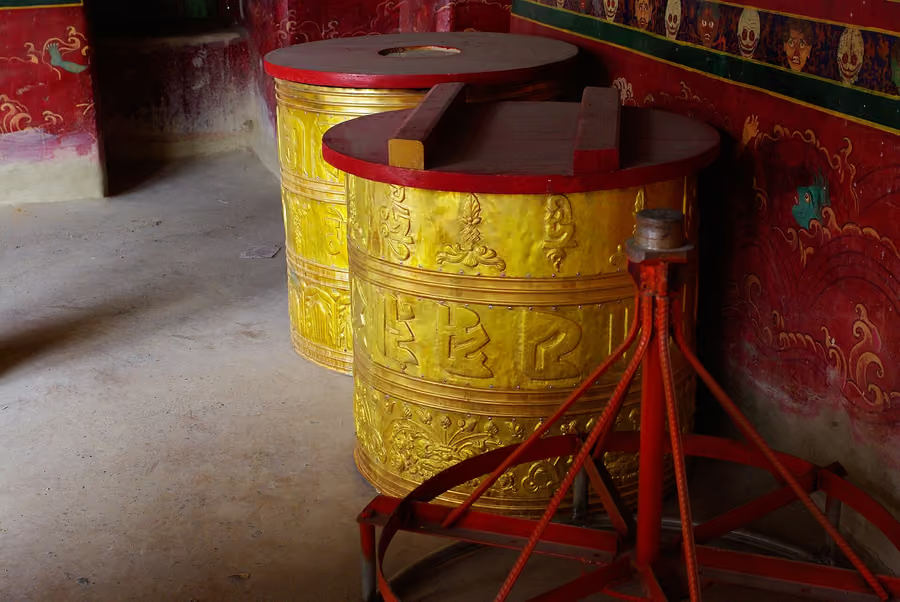
- Walk the small kora round the temple with the local worshippers, clockwise, and spin the prayer wheels on the outer wall. It takes five minutes and is how the building is used.
- Photography rules inside are the same as elsewhere: not in the chapels. Ask rather than assume.
- Combine it with the small Tsepak Lhakhang and Muru Nyingba temples nearby for an hour that gives you working Lhasa Buddhism without a single tour group.
When to come
Early morning, with the local worshippers, before the pilgrim and tour traffic reaches the north of the old city. Any season.
Getting around
Moderate. The temple is entered up a few steps from the street, and the ground-floor hall and its circuit are level once inside, though chapel thresholds are raised. The upper floors are reached by steep stairs only. A wheelchair can get into the main hall with help at the entrance steps; a bad knee will manage the ground floor without difficulty.
Worth knowing before you go
Pair it with the Jokhang on the same morning — the two statues were originally swapped between the temples, and the story only makes sense if you see both.
Compare established providers
Check live tours and tickets
Search for Ramoche Temple in Lhasa. Prices, availability, payment and confirmation are handled by the booking provider.
China Travel Select does not take payment or create the reservation. Confirm the exact name, dates, inclusions and cancellation rules on the provider’s page.
Take a closer look
Maps, videos & more
Prices and hours change. These are the places to check on the day.