Discover Lhasa
Norbulingka
罗布林卡
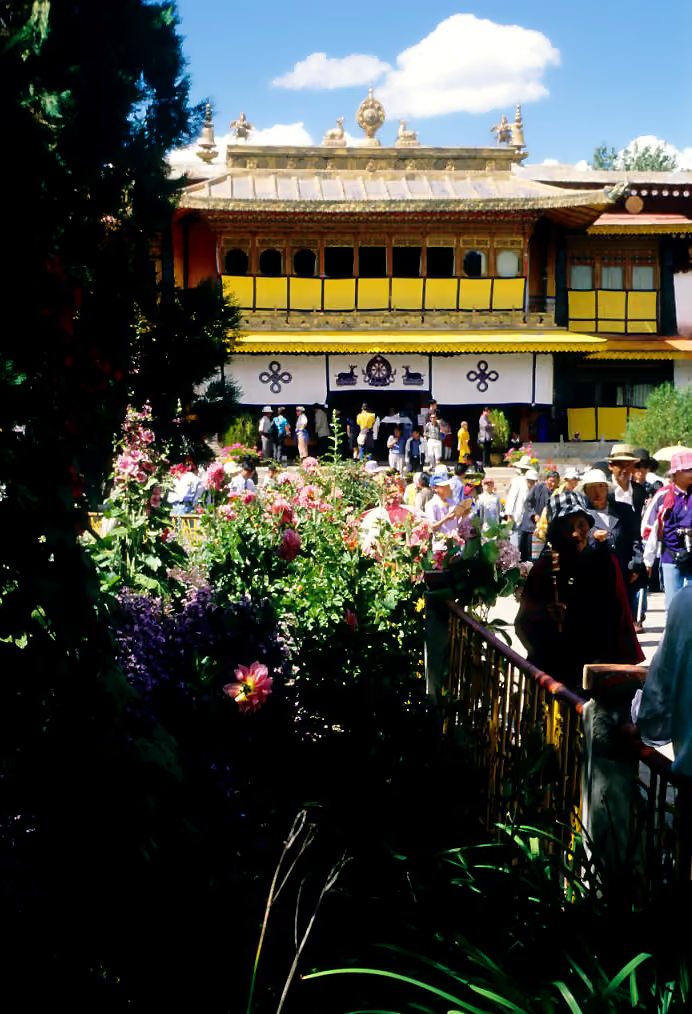
The Dalai Lamas' summer palace: a walled park of pavilions, ponds and gardens, including the 1950s New Summer Palace with its murals of Tibetan history and the rooms left as the 14th Dalai Lama used them. A UNESCO site and Lhasa's green space.
The story
What makes this place special
Norbulingka, the Jewel Park, was begun in 1755 by the seventh Dalai Lama as a summer residence and completed in 1783 under the eighth. It covers about 36 hectares in five sections, with lakes, a palace on islands in the southwest, and inner and outer walls. The earliest building is the Kelsang Phodrang, named after its seventh-Dalai-Lama founder. The last palace built here, the Takten Migyur Phodrang or New Summer Palace, was begun by the fourteenth Dalai Lama in 1954 and completed in 1956 with central government funds. He left Norbulingka on 17 March 1959, disguised as an ordinary Tibetan, and fled to India. The park hosts the Shoton or Yoghurt Festival each July or August, with Tibetan opera. It was added to the Potala Palace World Heritage listing in 2001.
What you’ll discover
A walled garden of trees, lawns, ponds and winding paths, with palace buildings standing separately among them, which makes it feel unlike anything else in Lhasa. The New Summer Palace is the one to see: the fourteenth Dalai Lama's private rooms left as they were in the 1950s, with a 1950s radio and bathroom fittings alongside murals of Tibetan history, and an audience hall. The older palaces and the pavilions on the lake islands are quieter. In summer the lawns fill with Lhasa families picnicking.
A little local insight
Good to know before you go
- The New Summer Palace is the reason to come and most group itineraries allow twenty minutes for the whole park. Go straight to it, see the private apartments, then walk the garden afterwards.
- Note what you are looking at in those rooms: they were occupied until March 1959, and the fourteenth Dalai Lama left from this compound. Nothing on site says so, so the detail has to come with you.
- Shoton, the Yoghurt Festival in July or August, is the one time Norbulingka is genuinely alive, with Tibetan opera on the lawns from early morning and the whole city picnicking. If your dates overlap, change your plans to be here.
- It is a garden, so it is a summer place. In winter the trees are bare, the ponds are low and the point of the design is invisible.
- The Tibet Museum is on the same road corner, so the two combine naturally into one half day away from the old city.
- It is large and flat, which makes it the easiest significant sight in Lhasa to do slowly on your first or second day while acclimatising.
When to come
Late June to August, when the gardens are in leaf and flower and the festival season is on; mornings for the palaces before groups arrive. Winter is the weakest season here.
Getting around
The best of the Lhasa palaces for mobility. The grounds are flat with wide surfaced paths and plenty of benches, so a wheelchair can cover most of the garden and a bad knee can walk it comfortably. The palace interiors are the limitation: each is entered up a flight of steps, with raised sills and internal stairs to upper floors and no lifts, so the New Summer Palace rooms are not reachable in a chair.
Worth knowing before you go
Visit during the Shoton (Yoghurt) Festival in late summer, when Lhasa families picnic in the grounds and Tibetan opera is performed all day — at any other time it is a quiet garden.
Compare established providers
Check live tours and tickets
Search for Norbulingka in Lhasa. Prices, availability, payment and confirmation are handled by the booking provider.
China Travel Select does not take payment or create the reservation. Confirm the exact name, dates, inclusions and cancellation rules on the provider’s page.
Take a closer look
Maps, videos & more
Prices and hours change. These are the places to check on the day.