Discover Lhasa
Potala Palace
布达拉宫
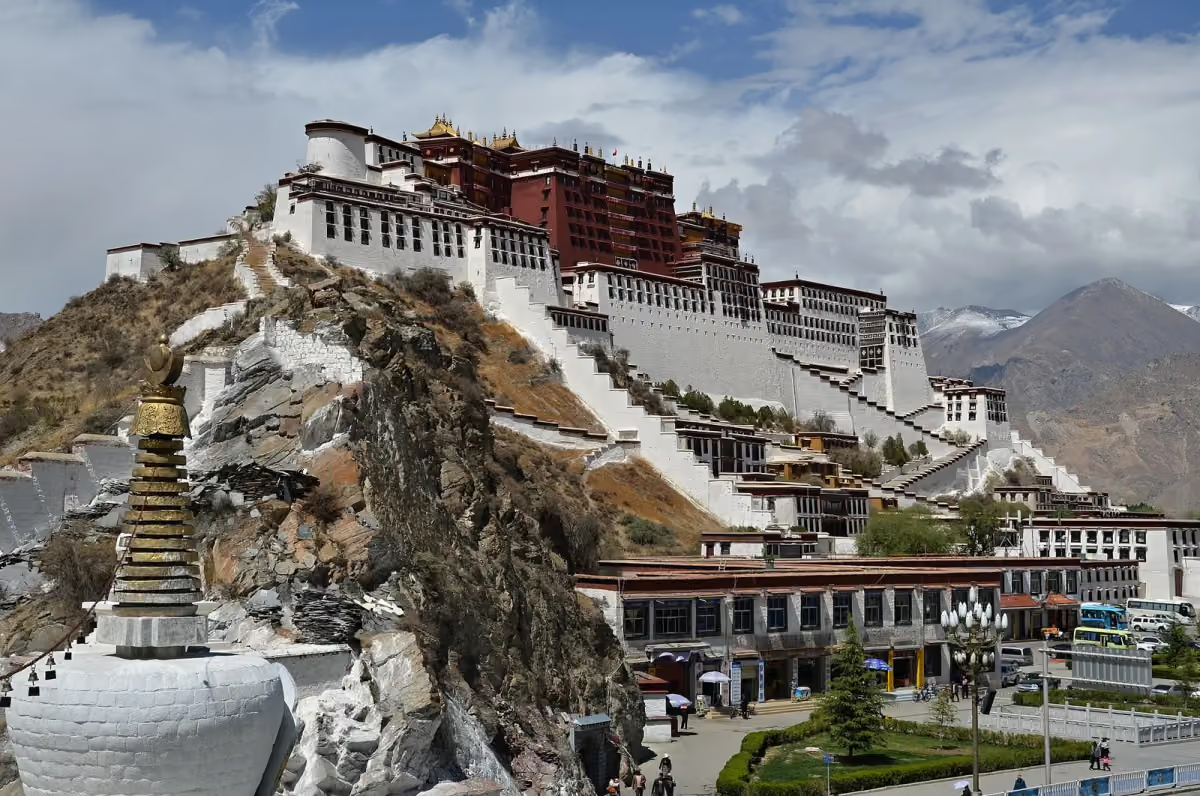
The thirteen-storey winter palace of the Dalai Lamas, rising 300 m above Lhasa on Red Hill and holding the jewelled funerary stupas of eight of them. It is the defining building of Tibet and a UNESCO World Heritage Site.
The story
What makes this place special
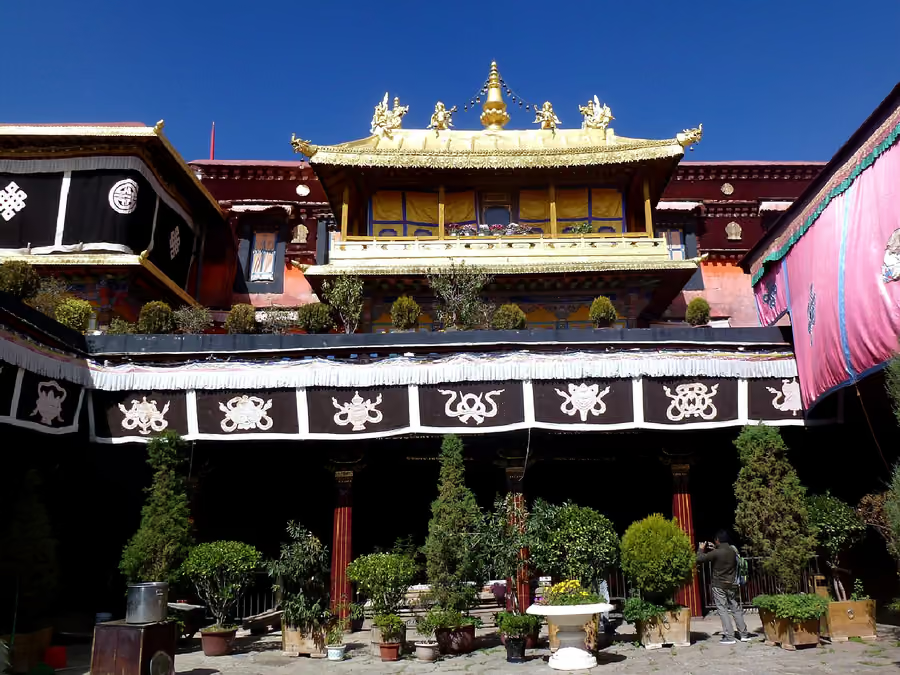
The Potala stands on Marpo Ri, the Red Hill, at about 3,700m, on the site of a palace traditionally attributed to Songtsen Gampo and dated to 637. The fifth Dalai Lama began the present building in 1645; the external structure took about three years and the interiors some forty-five. He and his government moved into the White Palace, the Potrang Karpo, in 1649, and it served as the winter residence from then on. The Red Palace, the Potrang Marpo, was added between 1690 and 1694. The building measures 400m east to west by 350m north to south, rises thirteen storeys and 119m above the hill, and holds more than a thousand rooms and very large numbers of shrines and images. It ceased to be a residence in 1959 and became a museum. It was inscribed as a World Heritage Site in 1994. From 1 May 2003 visitor numbers were capped at 1,600 a day with opening hours cut to six hours; the quota was later raised to about 2,300, and the roof was closed to visitors after restoration work in 2006.
What you’ll discover
You climb a long series of ramps and stone staircases up the front of the hill, then enter at the top and work downwards through the White Palace apartments and the Red Palace chapels: assembly halls, the private rooms of successive Dalai Lamas, and a sequence of enormous gilded funerary stupas, the largest of them that of the fifth Dalai Lama, in rooms thick with butter lamps. The route is one-way, prescribed, and you are moved along it. The interiors are dim, crowded and smell of butter and juniper; you see maybe a fraction of the thousand rooms.
A little local insight
Good to know before you go
- The time limit inside is real and strictly policed: visitors are moved through the palace interior in about an hour from the moment you pass the inner checkpoint. Decide in advance what you most want to look at, because you will not get to linger twice.
- The climb is the hard part, not the palace. It is some 300 steps of uneven stone at 3,700m, and visitors who arrived in Lhasa the day before routinely have to stop repeatedly. Give yourself two or three days in Lhasa first and climb slowly, with a bottle of water.
- Entry is by a timed slot tied to your name and document, and arriving late forfeits it. Build in a wide margin for the security check and the queue at the lower gate; bags are screened and liquids are restricted.
- Photography is prohibited inside the chapels and halls, and the rule is enforced. Take your pictures on the external terraces and on the way up.
- Go up the hill and come down the back. The exit at the rear puts you near Dzongyab Lukhang park and the north face, which is the better view of the building and costs nothing.
- The famous frontal photograph is not taken from inside. It is taken from Chakpori hill opposite, which is where the image on the 50 yuan note comes from.
When to come
The earliest slot of the day, for cool air on the climb, fewer people in the chapels and the best light on the south face. April to June and September to October are the most comfortable months; the palace is open through the winter and Lhasa in January is cold but clear and far emptier.
Getting around
Not accessible. The visit is a long climb of irregular stone staircases and ramps up the hill, followed by many flights of steep wooden stairs and raised sills between chapels inside, with no lift and no alternative route. A wheelchair cannot be taken round, and a bad knee will find both the ascent and the descent genuinely punishing at this altitude. There is no option to see the interior from a lower level.
Worth knowing before you go
Entry is to a fixed timed slot and the climb is several hundred steps at 3,650 m — give yourself at least two days in Lhasa to acclimatise before your slot, and carry your passport, since names are checked against the ticket at several points.
Compare established providers
Check live tours and tickets
Search for Potala Palace in Lhasa. Prices, availability, payment and confirmation are handled by the booking provider.
China Travel Select does not take payment or create the reservation. Confirm the exact name, dates, inclusions and cancellation rules on the provider’s page.
Take a closer look
Maps, videos & more
Prices and hours change. These are the places to check on the day.