Discover Lhasa
Tibet Museum
西藏博物馆
The region's main museum, reopened after a long rebuild beside Norbulingka, covering Tibetan prehistory, Buddhist art, thangka painting and folk culture. Useful as a first-morning stop while you are still acclimatising and should not be climbing anything.
The story
What makes this place special
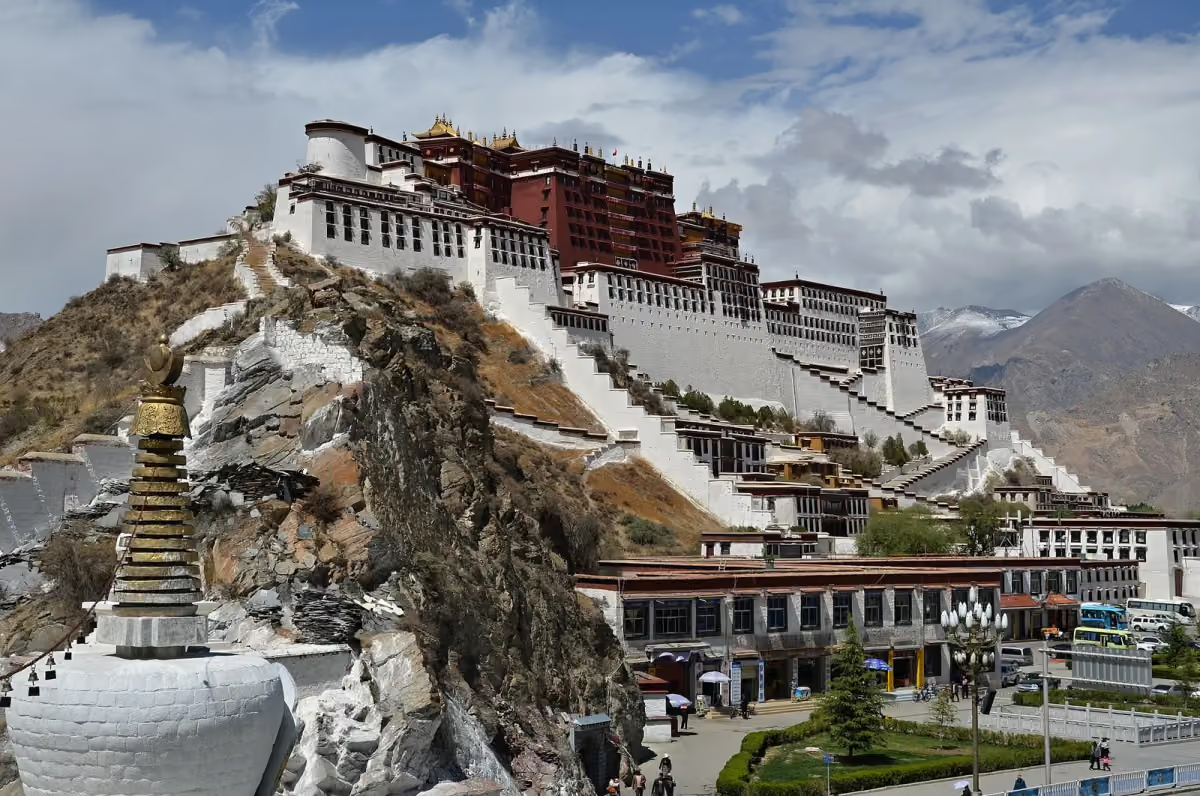
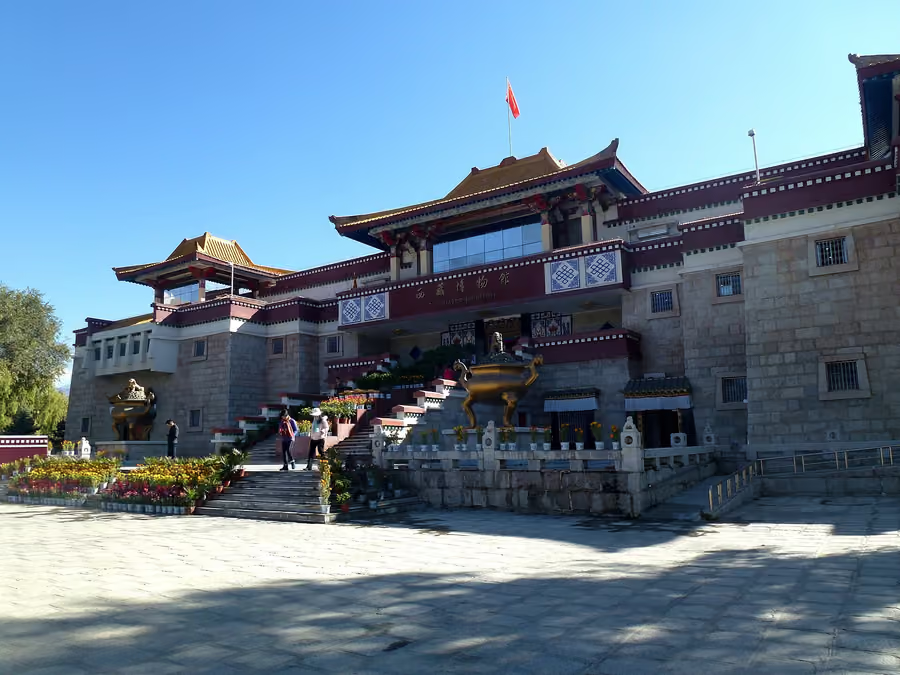
The Tibet Museum is the official museum of the Tibet Autonomous Region and was the first large modern museum built there, opening on 5 October 1999. It holds more than 520,000 items, including pottery, jade and Buddhist sculpture, with around a thousand pieces on permanent display. The building stands on the corner of Norbulingka Road, below the Potala. Its displays are arranged in four main parts: prehistory, with material said to run back tens of thousands of years and a substantial Neolithic section; political history, with seals, documents and imperial gifts including the original 1951 Seventeen Point Agreement; cultural arts, covering thangka painting, sculpture, theatre and Tibetan medicine; and ethnography, covering costume, tools and handicrafts. An expansion was announced in the later 2010s.
What you’ll discover
A large modern museum with level galleries, air conditioning and chronological signage, which is a change of pace from the temples. The strongest rooms are the prehistoric and Neolithic archaeology, which almost nothing else in Lhasa covers, the thangka and sculpture galleries where you can look at paintings in good light rather than by butter lamp in a crowd, and the Tibetan medicine section. The political history gallery presents the official state narrative, which is itself worth seeing for what it includes and omits.
A little local insight
Good to know before you go
- Come here before the monasteries, not after. An hour in the thangka and sculpture galleries in good light teaches you what you are looking at in the Jokhang and Drepung, where the same objects are in near darkness behind glass.
- Read the political history gallery as a primary document of the official narrative rather than as neutral background, and read other sources for context before or after. The 1951 agreement displayed here is the original.
- It is the obvious thing to do on your first or second day in Lhasa, when you should not be climbing anything. It is flat, indoors, warm and at city altitude.
- Bring your passport; you will need it to collect a ticket, and bag screening applies at the entrance.
- It is a few minutes' walk from Norbulingka, so the museum in the morning and the summer palace gardens afterwards makes a sensible low-exertion day.
- English labelling exists but is uneven and thinnest on the archaeology, which is the best material. A translation app is worth having.
When to come
Any morning. Being indoors and heated it is the best option in bad weather and in the Lhasa winter, and the right thing to do on an acclimatisation day.
Getting around
Fully accessible. A purpose-built modern museum with level floors, lifts, ramps and accessible toilets; a wheelchair can see the whole display and a bad knee has no obstacle beyond distance, with seating available in the galleries.
Worth knowing before you go
This is the ideal activity for your first full day in Lhasa — it is indoors, flat and air-conditioned, which is exactly what your body needs before you start climbing the Potala's steps.
Compare established providers
Check live tours and tickets
Search for Tibet Museum in Lhasa. Prices, availability, payment and confirmation are handled by the booking provider.
China Travel Select does not take payment or create the reservation. Confirm the exact name, dates, inclusions and cancellation rules on the provider’s page.
Take a closer look
Maps, videos & more
Prices and hours change. These are the places to check on the day.