Discover Lijiang
Baisha Village and the Baisha Murals
白沙古镇与白沙壁画
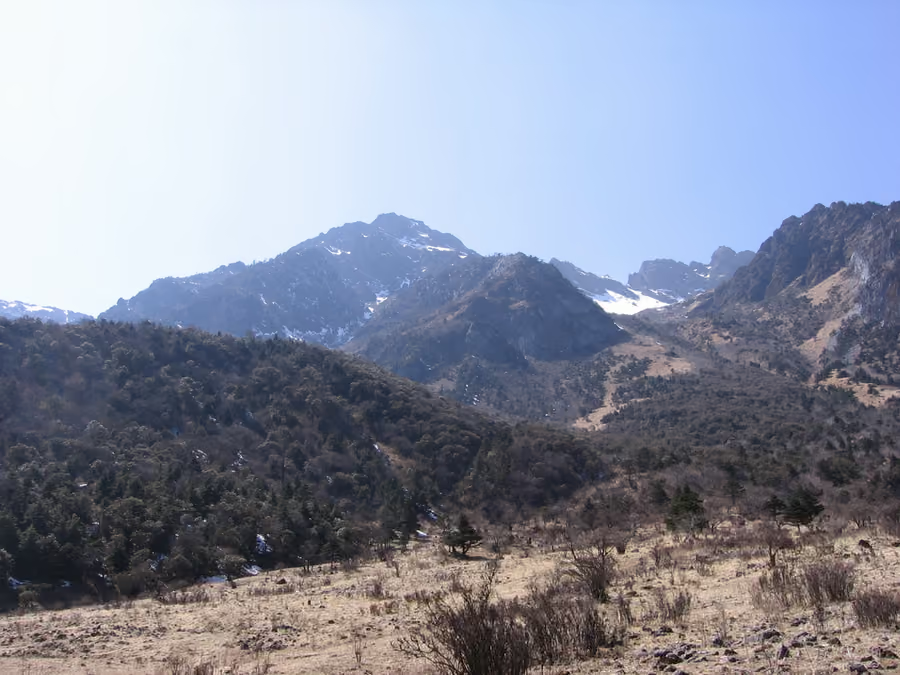
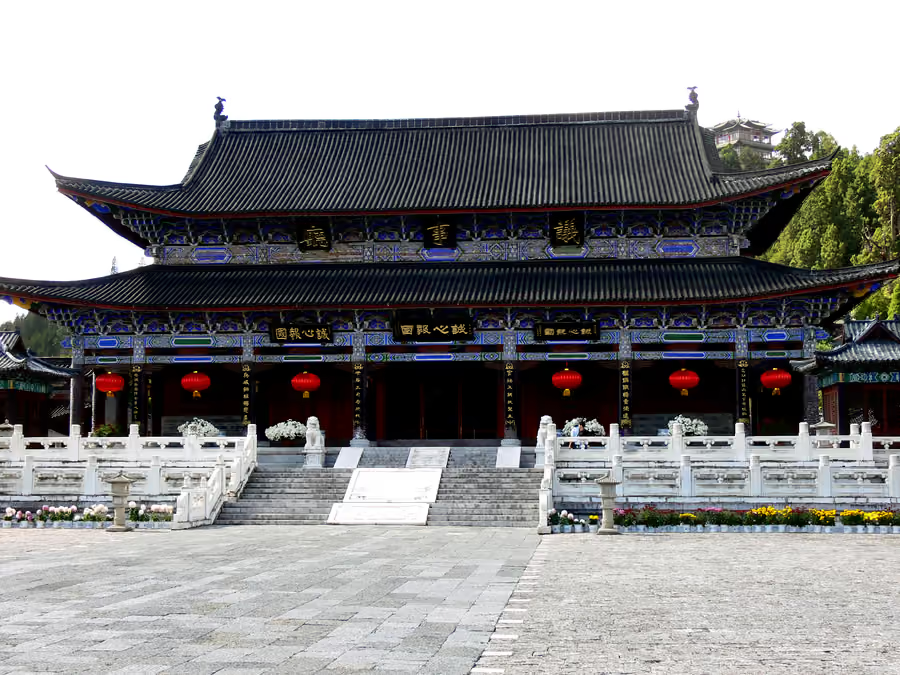
The original Naxi capital before Dayan, now a single dusty street of workshops under Jade Dragon Snow Mountain. Its 45 surviving Ming and Qing murals in Dabaoji Palace blend Tibetan Buddhist, Han Daoist and Naxi Dongba imagery in a way found nowhere else in China.
The story
What makes this place special
Baisha, about 10km north of Dayan at the foot of Jade Dragon Snow Mountain, was the Naxi political centre before the Mu family moved their seat down to Dayan, and it is the oldest of the three settlements in the 1997 World Heritage inscription. Its murals, painted inside Dabaoji Palace, the Liuli Hall and Dading Pavilion, were commissioned under Mu family patronage in the Ming and added to in the Qing, and are a national-level protected site. They are unusual because Han, Tibetan, Bai and Naxi Dongba painters worked on them, so Tibetan Buddhist deities, Daoist figures and Han Buddhist iconography appear in the same compositions. Reported counts of the surviving panels differ widely between sources.
What you’ll discover
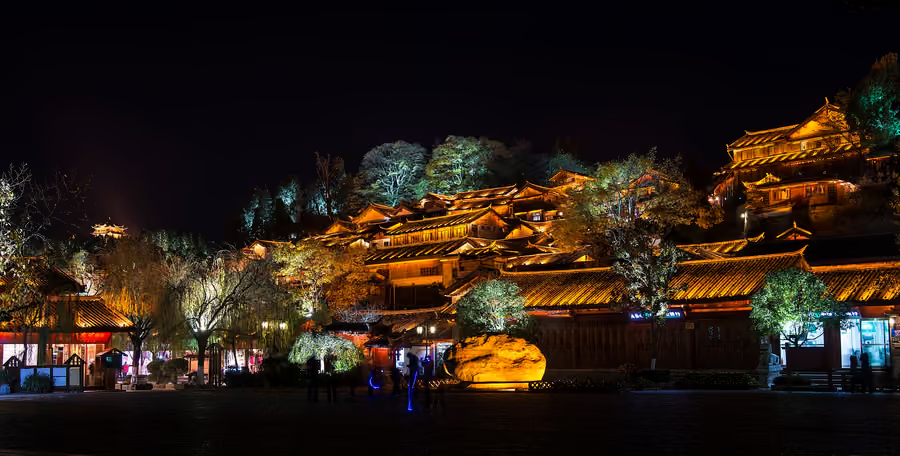
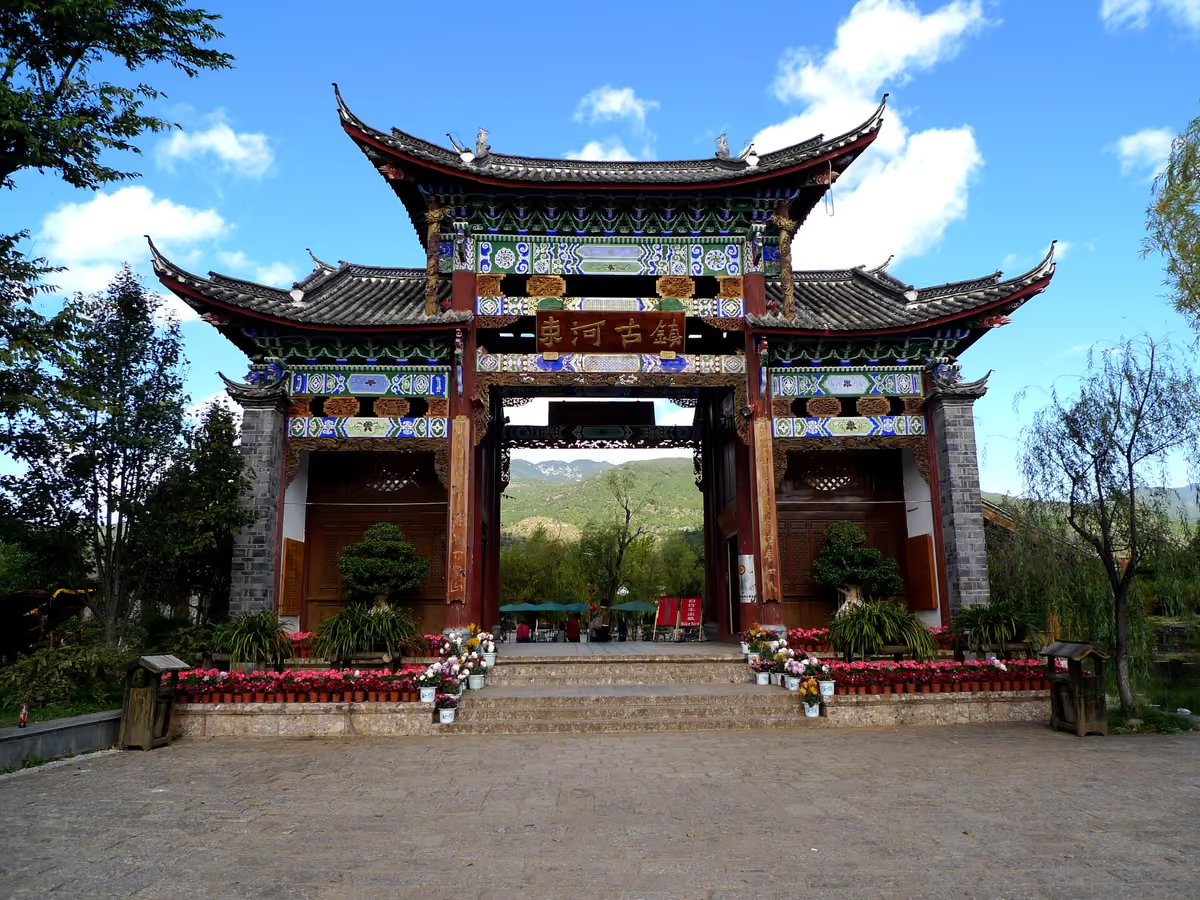
A working farming village of one long main street with a small square, where the shops still sit next to houses with maize drying on the balconies. The murals are in two or three modest temple halls, dim and unlit, and you look at them close up by whatever daylight comes through the door: crowded, dark-toned panels of deities arranged in tiers, some badly rubbed, some still with clear gold line work. The best-known single panel in Dabaoji Palace combines a Buddhist assembly with Daoist and Tibetan figures in one frame.
A little local insight
Good to know before you go
- Bring a small torch and do not expect labels in any language. The halls are deliberately unlit to protect the pigment, and in overcast weather you can barely read the upper registers.
- Photography inside the mural halls is restricted. Ask before raising a camera; the attendants enforce it.
- Baisha is the answer to anyone complaining that Lijiang is a shopping mall. It is the same architecture with residents still in it, and the embroidery workshops and the old Dr Ho clinic on the main street are long-standing village businesses rather than chains.
- The murals take twenty minutes. The village takes two hours. Pair it with a bike ride or a taxi loop on to Yuhu village at the mountain's foot, where Joseph Rock lodged, rather than treating Baisha as a single stop.
- Buses from Lijiang's old town north gate run to Baisha cheaply and frequently, and the road from Shuhe is flat enough to cycle.
When to come
Mid-morning on a bright day, when enough light reaches the mural walls. Avoid rainy-season afternoons, when the halls are too dark to see anything.
Getting around
The village main street is flat and mostly paved, and manageable with a wheelchair or a bad knee, though the surface is patchy. The mural halls are entered over raised stone sills and across a courtyard with a step or two; there is no ramp, and a wheelchair would need help at the thresholds.
Worth knowing before you go
The mural halls are dim and unlit to protect the pigment, and photography is banned inside — bring a torch or stand near a doorway rather than expecting to shoot them.
Compare established providers
Check live tours and tickets
Search for Baisha Village and the Baisha Murals in Lijiang. Prices, availability, payment and confirmation are handled by the booking provider.
China Travel Select does not take payment or create the reservation. Confirm the exact name, dates, inclusions and cancellation rules on the provider’s page.
Take a closer look
Maps, videos & more
Prices and hours change. These are the places to check on the day.