Discover Lijiang
Mu Palace (Mu Family Mansion)
木府
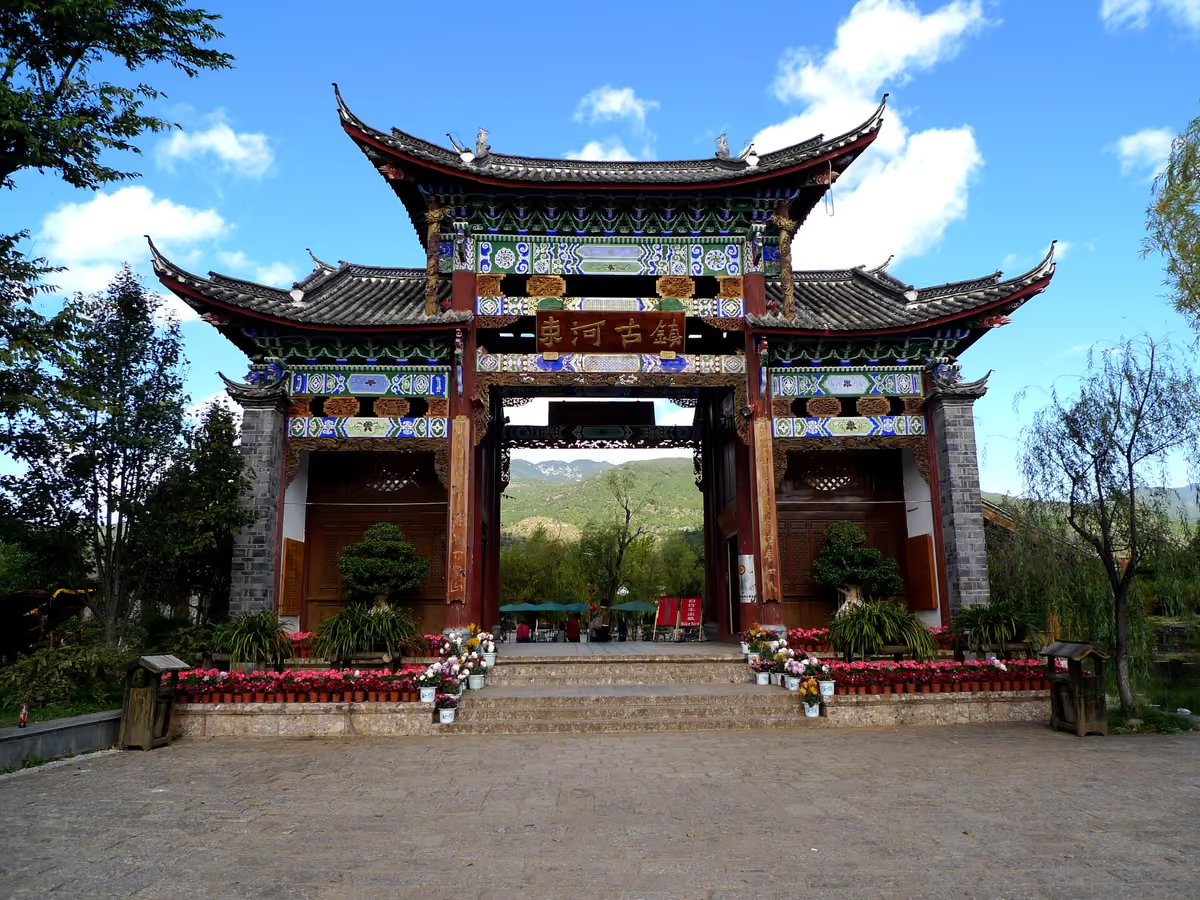
The restored seat of the Mu chieftains who ruled Lijiang for the Ming and Qing courts for over 400 years, built in deliberate imitation of the Forbidden City but using Naxi carpentry. It is the one place in the old town that explains how Lijiang was actually governed.
The story
What makes this place special
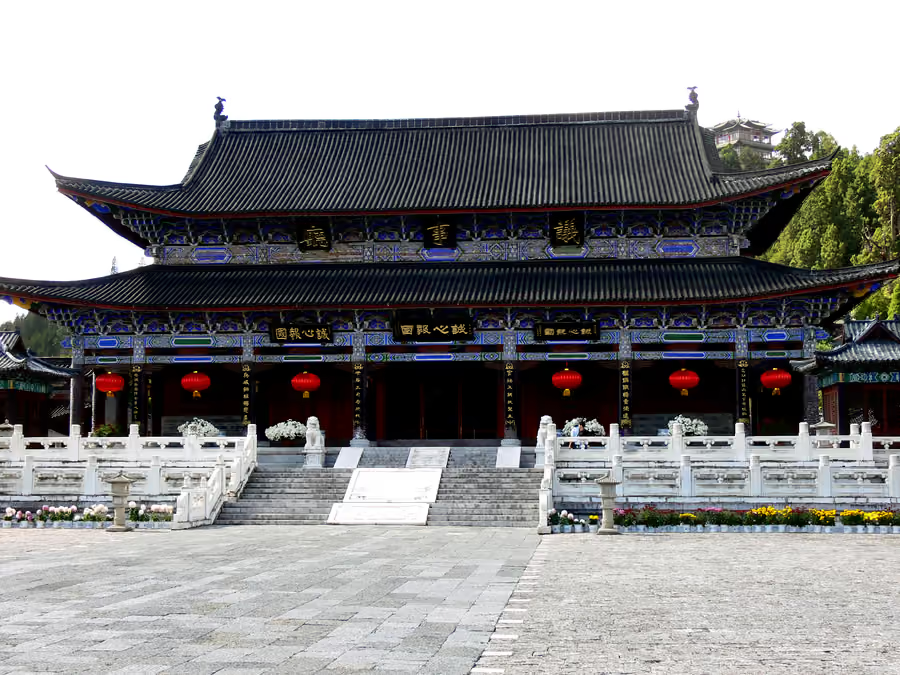
Mu Palace is the rebuilt seat of the Mu family, Lijiang's hereditary Naxi chieftains. Construction began in 1382 under the early Ming, with expansion in the Wanli era. Its treasures and imperial edicts were looted in 1647, most of the buildings burned in 1860 when Du Wenxiu's forces took Lijiang during the Yunnan Muslim uprising, and the stone Zhongyi archway was destroyed in the Cultural Revolution. After the 1996 earthquake the complex was rebuilt with about 58.6 million yuan, including a 33.6 million yuan World Bank loan, and the work was completed on 2 February 1999; the Lijiang Old Town Museum now occupies the site.
What you’ll discover
A long formal axis climbing the lower slope of Lion Hill: a screen wall and water bridge, the Zhongyi stone archway, the gate, then the Hall of Governance where the chieftains heard business, the Wanjuan Lou or Ten Thousand Volumes Tower that held Dongba scriptures and Buddhist canon, the Hall of Dharma Protection for family affairs, and above them Guangbi Tower, Yuyin Tower where imperial edicts were received, and Sanqing Hall at the top. Side courtyards hold museum displays on Naxi history, Dongba script and the Mu family's dealings with Beijing and Lhasa.
A little local insight
Good to know before you go
- Understand before you buy a ticket that almost everything you see dates from 1996-99. It is a careful reconstruction on the original site and the carpentry is genuinely good, but nothing here is Ming fabric.
- Enter at the bottom and leave at the top. The exit above Sanqing Hall puts you on Lion Hill, within a few minutes of Wangu Tower, so you climb once instead of twice.
- The Wanjuan Lou display on Dongba pictographic script is the most substantial explanation of Naxi writing in Lijiang, and most visitors walk through it in ninety seconds on the way to the view.
- Entry requires the old-town maintenance fee receipt as well as the attraction ticket, and it is checked here.
- Go when it opens. By 10:30 it is a procession of guided groups on the central axis and the halls are hard to photograph or hear anything in.
When to come
Opening time, before the groups arrive, and on a clear day for the view back over the old town roofs from the upper terraces. Any season works; summer afternoons are hot on the open stone axis.
Getting around
Poor. The whole complex is built as a rising sequence of courtyards connected by flights of stone steps, with raised sills at every hall door and no lifts or ramps. The first two courtyards are reachable on the flat from the entrance; beyond that a wheelchair cannot proceed. A bad knee can do roughly the lower half and should turn back rather than attempt the climb to Sanqing Hall.
Worth knowing before you go
A free Chinese-speaking guide is included with the ticket and waits at the first courtyard; English guiding is rare, so download an audio guide beforehand if you want the Mu family history.
Compare established providers
Check live tours and tickets
Search for Mu Palace (Mu Family Mansion) in Lijiang. Prices, availability, payment and confirmation are handled by the booking provider.
China Travel Select does not take payment or create the reservation. Confirm the exact name, dates, inclusions and cancellation rules on the provider’s page.
Take a closer look
Maps, videos & more
Prices and hours change. These are the places to check on the day.