Your destination guide 内蒙古
Inner Mongolia
Grassland and desert, in a window about ten weeks long
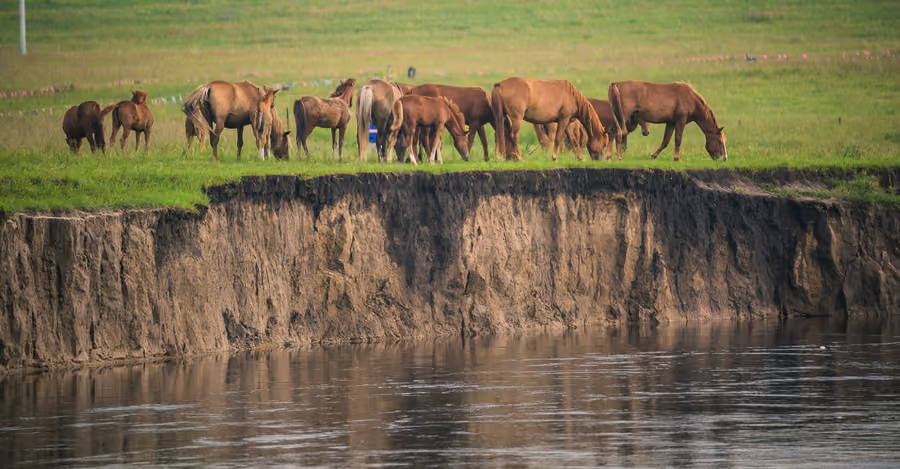
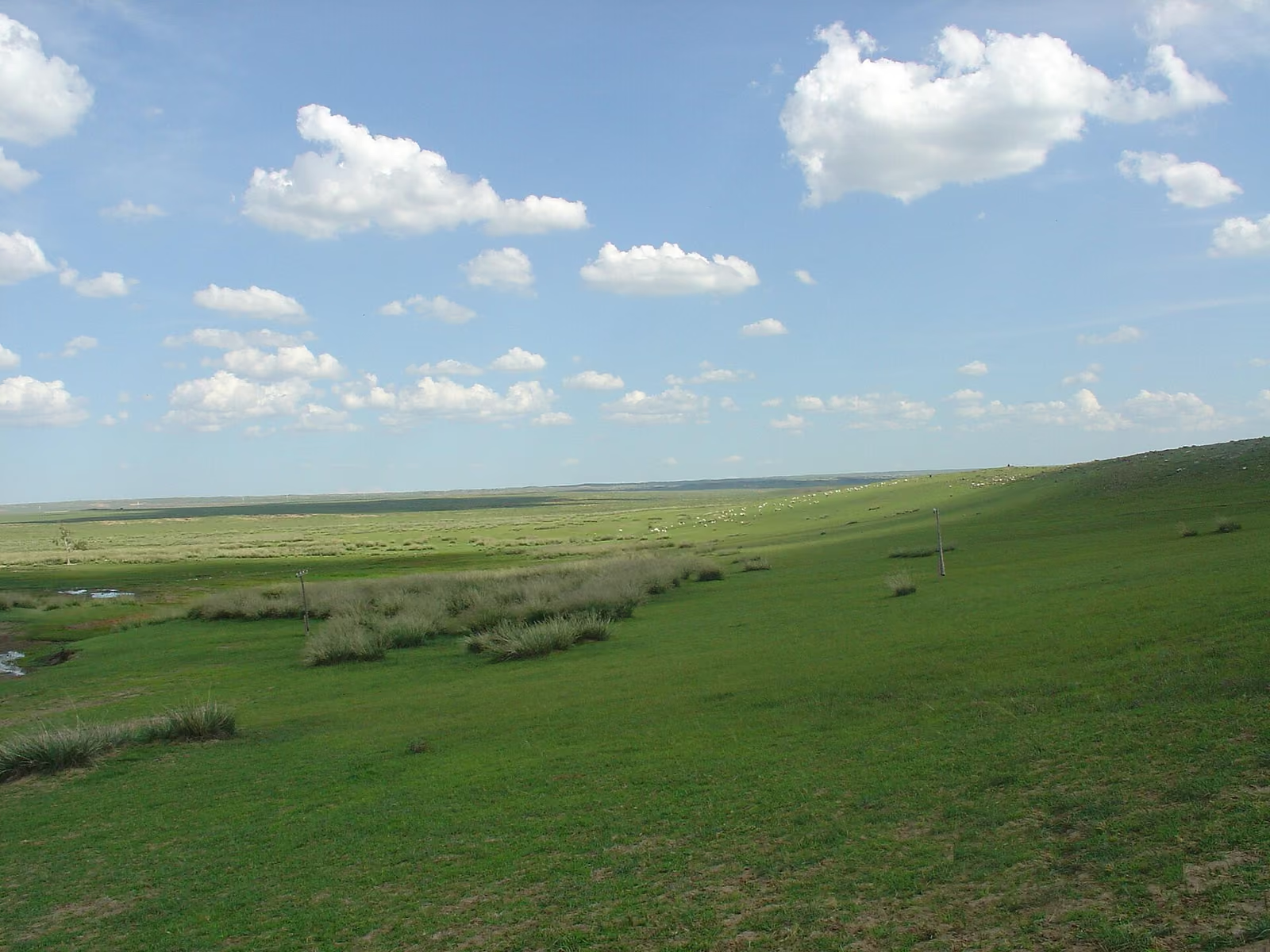
Hohhot is the way in, but the grassland and the Kubuqi desert are the reason to come — and neither has a railway. This is the most season-dependent destination on the site: outside roughly late June to September the steppe is brown, the camps are shut, and there is little point going.
Getting there
Fly to Hohhot — about 1h15 from Beijing — or take the Beijing–Zhangjiakou–Hohhot high-speed line, as little as 2h09. Check which airport your ticket names: a replacement, Hohhot Shengle International, has been under construction and is due to take over from the old Baita airport. Most high-speed trains use Hohhot East. The grasslands and the Kubuqi desert have no rail link at all, so you will need a car, a driver or a tour for the part you came for. Ordos, for the Genghis Khan Mausoleum and Resonant Sand Gorge, is 2.5–3 hours on by rail and has its own airport.
When to go
Late June to early September — the only window when the steppe is green, the herders' camps are open and the Naadam festival season runs. Mid-July to late August is peak: book ahead and expect timed entry at the big sites. September trades the green for gold grass, clear skies and far fewer people, though camps start closing from mid-month. Avoid November to March unless you are going for the snow — Hohhot sits below −15°C and most grassland operations shut entirely.
How long: 4–7 days
Give it 4 days for the headline sights, or up to 7 to see it properly and eat your way around.
Four is Hohhot plus one night on the grassland, which is the shortest trip that is worth taking. Seven lets you reach the Kubuqi desert and Ordos, stay out at a herders' camp rather than a tourist one, and eat lamb the way it is actually cooked here.
Inner Mongolia: go between late June and early September, or not at all
The grassland is green for about ten weeks a year and outside them the trip has no point. This guide covers the season, why the grassland and the desert cannot be joined by train, a five-day shape from Hohhot, salty milk tea, and why vegetarians should think hard before coming.
Make a few good memories
What to see in Inner Mongolia
Researched largely from Chinese-language sources, so it goes beyond the usual shortlist. Dollar figures are approximate, at the rate on 2026-10-08.
大召寺
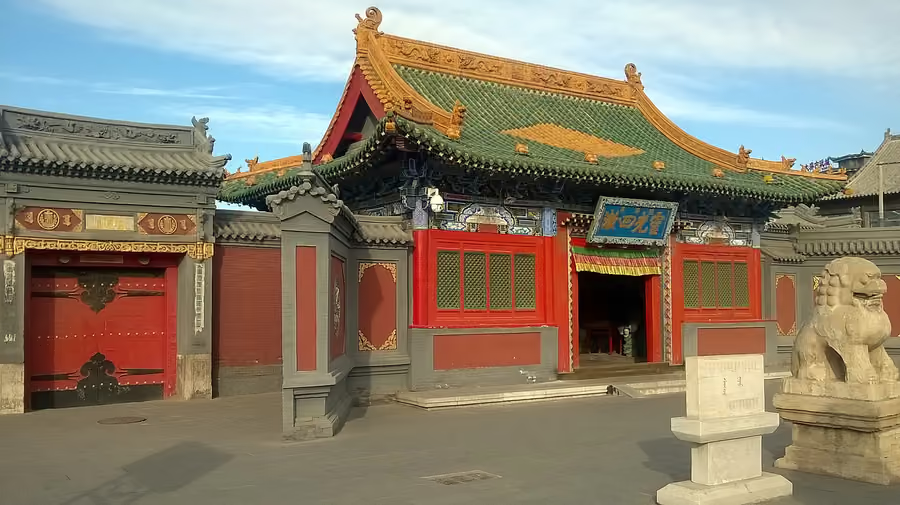
Hohhot's biggest and best-known Tibetan Buddhist monastery, founded in 1580 under Altan Khan, with a silver Sakyamuni figure at its heart. It is the clearest single place to see how Mongol rule and Tibetan Buddhism fused, and the lanes around it are the old city's most walkable quarter.
¥35
≈ US$5.21Opening hours, booking and how to get there →
五塔寺 (金刚座舍利宝塔)
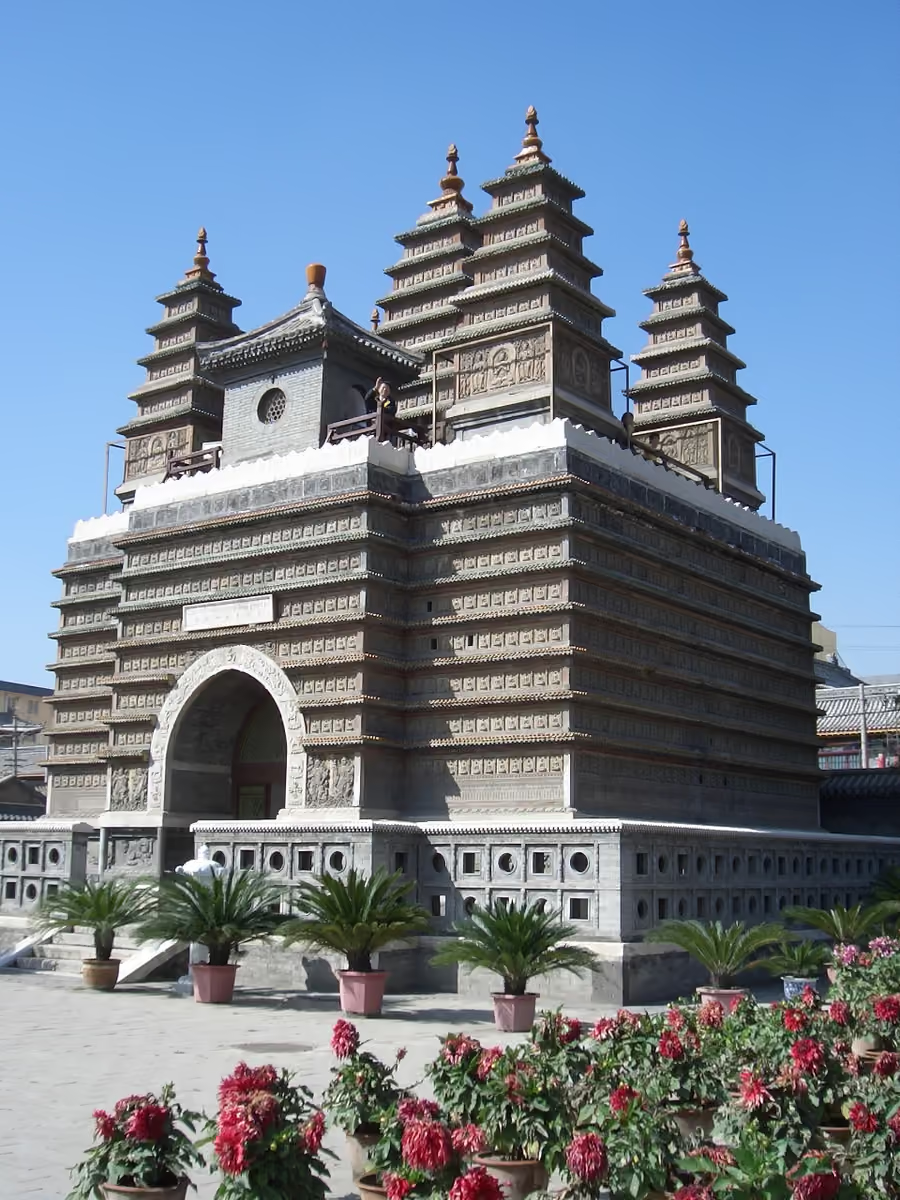
All that survives of the Qing-era Cideng Monastery is its extraordinary Diamond Throne pagoda - a 16-metre glazed-brick block carrying five small pagodas and covered in reliefs and Sanskrit, Tibetan and Mongolian inscriptions. On the back wall is a Mongolian-language star chart, thought to be the only one of its kind.
Listings disagree: some give Free, others ¥35 — not confirmed
≈ US$5.21Opening hours, booking and how to get there →
内蒙古博物院
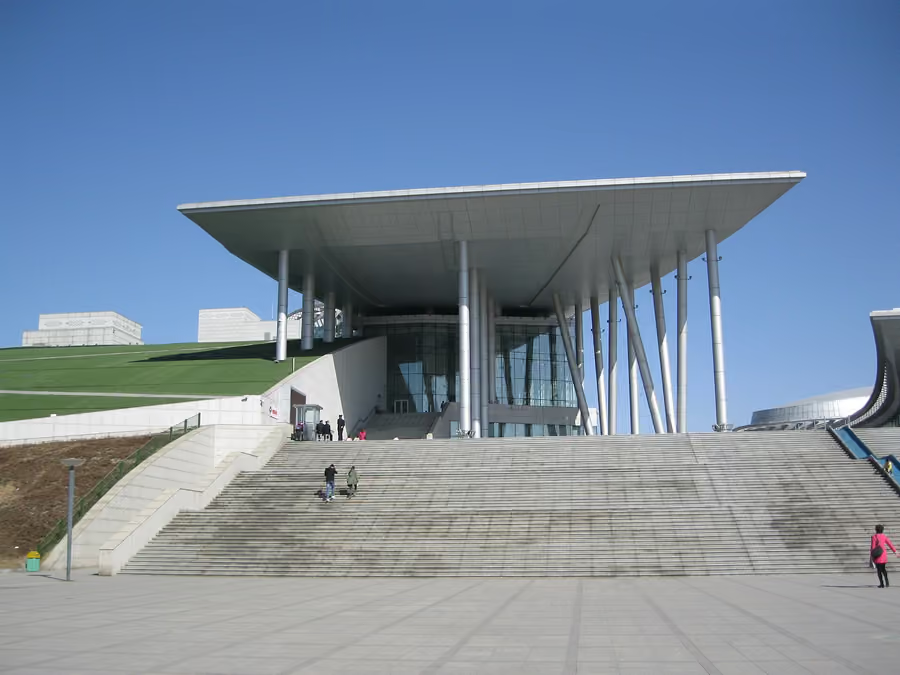
The regional museum is the single best primer on the grasslands before you drive out to them: Mongol nomadic material culture, Liao and Yuan dynasty finds, Xiongnu gold, and a strong dinosaur hall drawn from Inner Mongolia's fossil beds. Free, air-conditioned and genuinely well laid out.
Free
Opening hours, booking and how to get there →
昭君博物院
A large grass-covered tumulus traditionally held to be the grave of Wang Zhaoyun, the Han-dynasty palace lady married to a Xiongnu ruler in 33 BC and remembered in China as a symbol of peace between the steppe and the farmland. The modern museum complex around it explains Han-Xiongnu relations well, and the mound itself gives a view over the plain.
Free
Opening hours, booking and how to get there →
席力图召
The seat of Hohhot's most senior lama and, architecturally, the most interesting monastery in the city - a Han-Chinese timber hall fronted by a Tibetan-style assembly hall faced in blue-glazed tile, with a white marble stupa in the courtyard. Quieter than Dazhao and still a working temple.
¥25
≈ US$3.72Opening hours, booking and how to get there →
呼和浩特清真大寺
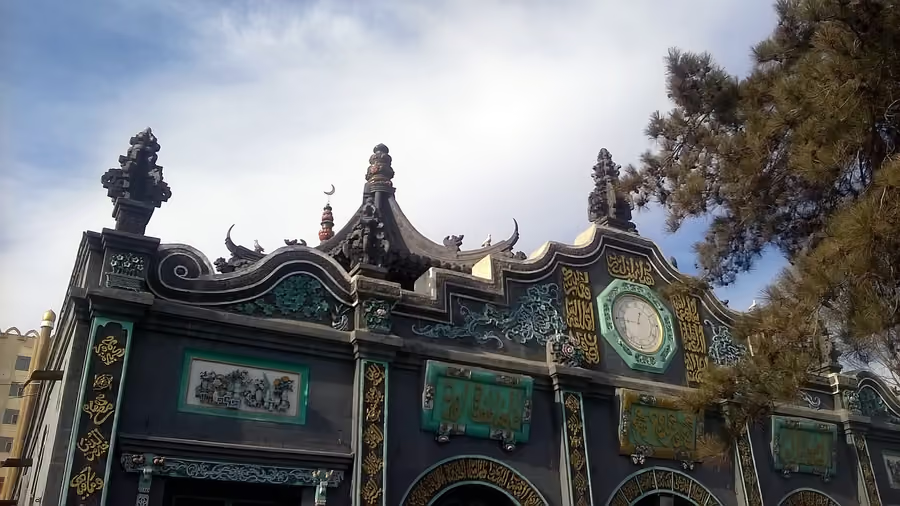
A Qing-dynasty mosque built in Chinese temple form - timber halls, grey brick and a tiled roof - but with a hexagonal Chinese-style minaret, serving Hohhot's Hui Muslim community. It anchors the Huimin quarter, where the lamb and noodle food street Kuan Xiangzi starts.
Free
Opening hours, booking and how to get there →
希拉穆仁草原
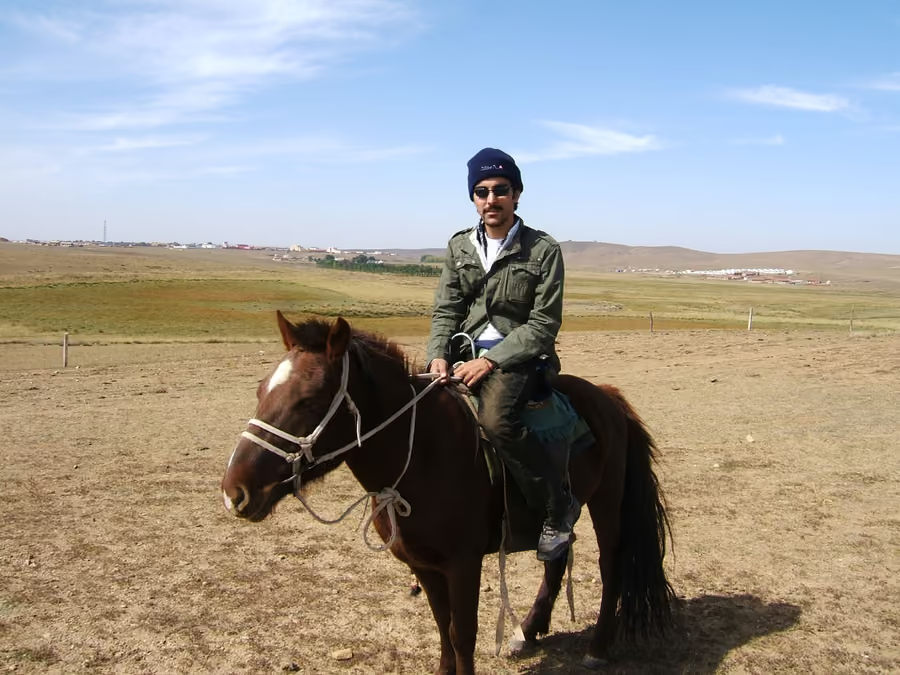
The closest stretch of open steppe to Hohhot and therefore the one most day-trippers see: rolling grass, a Mongol ovoo cairn, horse and camel riding, and herder-family visits. It is frankly commercialised, but it is the cheapest way to stand in genuine grassland and sleep in a yurt without committing two days to driving.
¥80 entry; all-in packages with riding, off-road vehicles, a herder-family visit and an evening bonfire show run up to about ¥398
≈ US$12–59Opening hours, booking and how to get there →
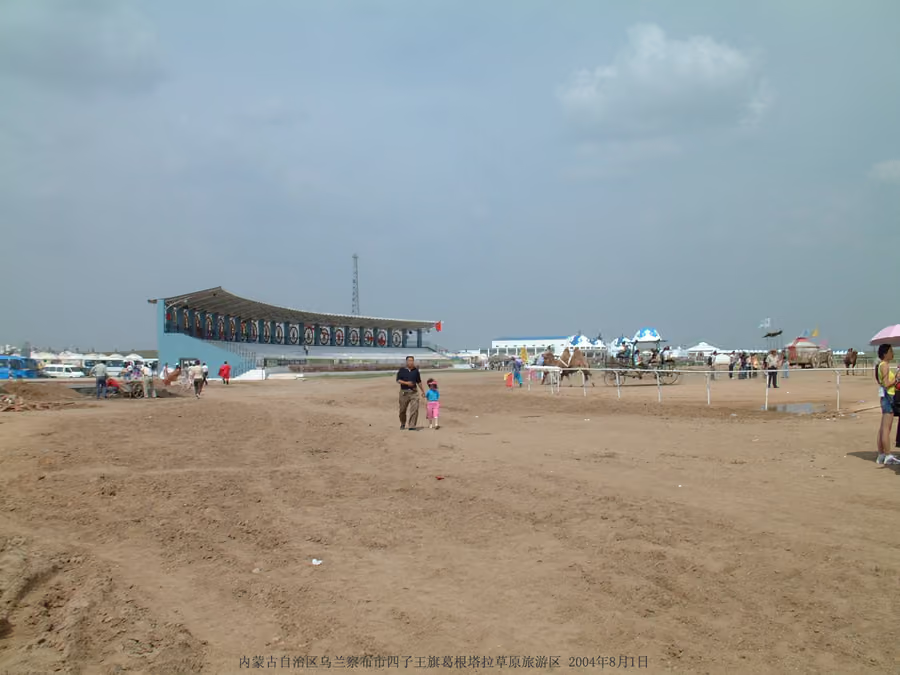
格根塔拉草原
A larger, somewhat less trampled grassland than Xilamuren and the traditional venue for a big summer Naadam gathering of wrestling, horse racing and archery. Worth the extra driving time if your trip coincides with the festival.
Price not confirmed
Opening hours, booking and how to get there →
呼伦贝尔草原
The grassland that justifies the phrase: thousands of square kilometres of unfenced steppe in Inner Mongolia's far north-east, threaded by the meandering Mergel River, with birch forest, Russian-influenced border towns and some of the least light-polluted night skies in China. This is the serious version of the grasslands, not the day-trip one.
Free to drive through; individual scenic spots within it charge separately — not confirmed
Opening hours, booking and how to get there →
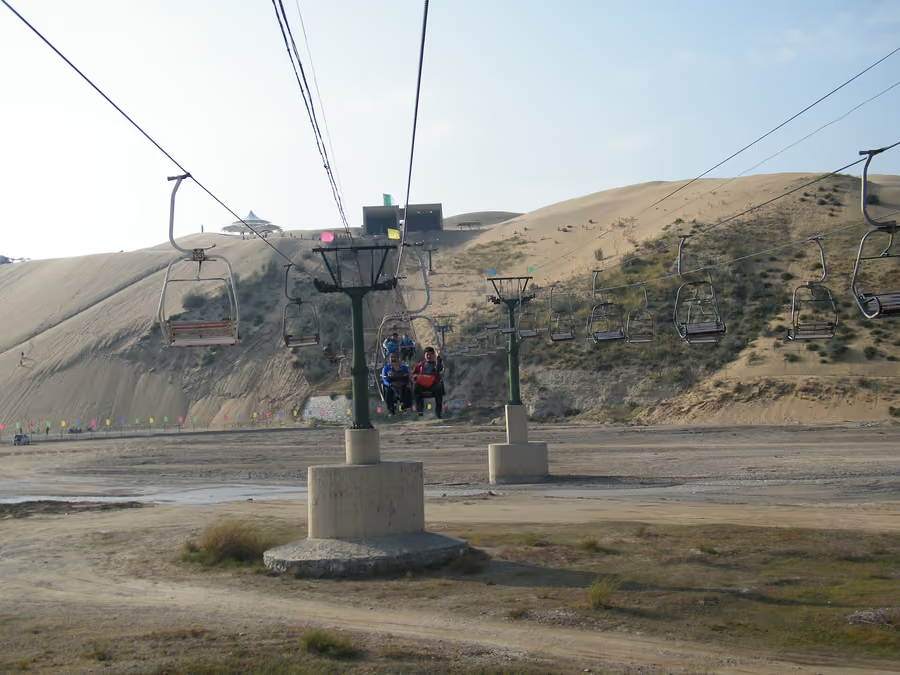
响沙湾
A 5A-rated resort at the eastern tip the Kubuqi, China's seventh-largest desert, named for the booming note the dunes make when sand slides down them. You reach the dunes by cable car or dune buggy, and there are desert hotels on the sand if you want to stay - it is a built-up experience, but the dune field itself is real and vast.
From ¥120 (entry); cable car, dune buggies and sand-sledging are charged on top and add up quickly
≈ US$18Opening hours, booking and how to get there →
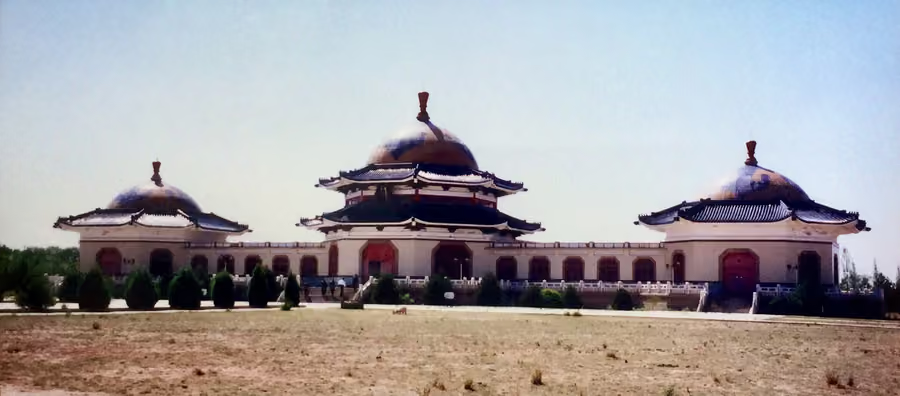
成吉思汗陵
Not a grave - nobody knows where Genghis Khan is buried - but the principal shrine to him, where the Darkhad guardian clans have kept the sacrificial rites going for centuries. The 1950s-era domed halls hold relics and a large statue, and the ceremonies here are the living centre of Mongol veneration of the Khan.
Reported around ¥170 in high season and ¥120 in low season (low season from mid-October); some visitors report about ¥90 — not confirmed
≈ US$13–25Opening hours, booking and how to get there →
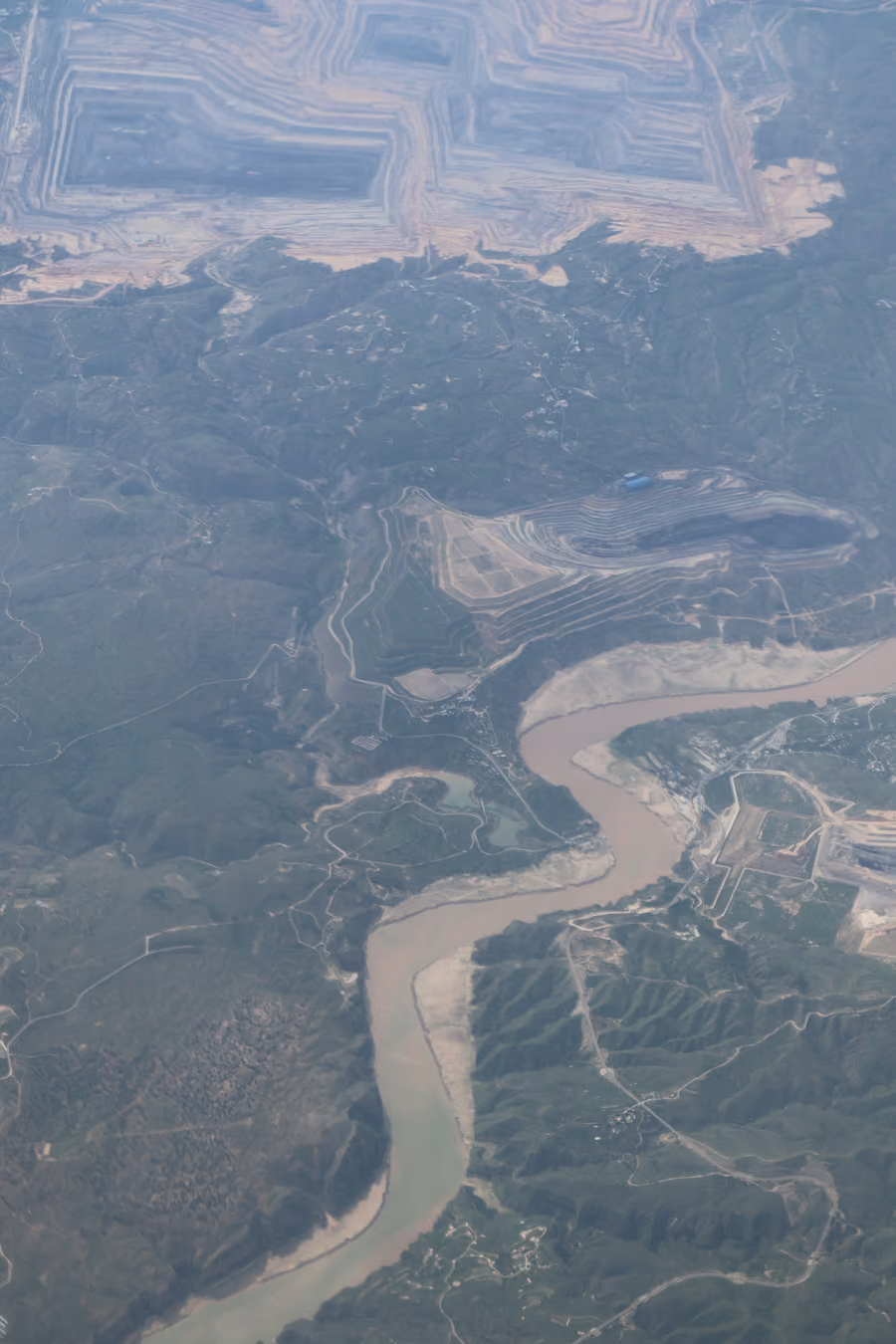
老牛湾黄河大峡谷
Where the Great Wall meets the Yellow River: the river makes a tight hairpin through a gorge on the Inner Mongolia-Shanxi border, with Ming watchtowers on the cliffs above. A 5A site and the most dramatic landscape within day-trip range of Hohhot.
¥40
≈ US$5.96Opening hours, booking and how to get there →
What to eat in Inner Mongolia
Inner Mongolian food rests on three things: mutton, dairy and wheat or oat flour, with vegetables a clear afterthought and rice barely present. The pattern of a meal is nomadic in origin - dairy and milk tea first, then meat, then a flour dish - and in Hohhot the day typically starts with a basket of lamb shaomai and a pot of brick tea rather than anything sweet. Two things reliably catch foreign visitors out: Mongolian milk tea is salted, not sweetened, and tastes like a thin savoury broth, and mutton here is cooked plain, on the bone, with the fat left on, because the whole point is to taste the meat. Vegetarians should plan carefully - outside the dairy and oat-noodle dishes there is very little, and even stocks and noodle sauces are usually mutton-based.
Hand-grabbed mutton
手把肉Shǒu bǎ ròu
Bone-in mutton is separated at the joints and boiled in plain water with no salt and no spices, so nothing masks the meat. It comes to the table in large pieces on a communal platter and you eat it with your hands and a small knife, scraping meat off the bone, dipping each piece in a sauce of chive flower paste, fermented red beancurd, sesame paste or just salt. The name means exactly what it describes.
Tastes like: Clean, mild, intensely sheepy and quite fatty, with the seasoning coming entirely from the dip you choose.
Not on the menu but in it: The dipping sauce is where the allergens are: chive-flower paste and fermented red beancurd are both soy-and-salt ferments, and sesame paste is a standard component. The meat itself is unseasoned, which visitors often read as the kitchen having forgotten the salt.
Where to eat it
- Gerile Ama Milk Tea House · ¥60–90 per person · Several Hohhot branches including the Jinqiao area (金桥店)
- Menggu Daying (Mongol Camp) · ¥180–220 per person · Qingshan District, Youyi Street, by Saihantala wetland park (青山区友谊大街 赛罕塔拉湿地公园)
Mongolian salted milk tea
蒙古奶茶Měng gǔ nǎi chá
A brick of compressed dark tea is broken up and boiled hard in water, then fresh cow's milk is poured in slowly and the whole thing is salted. It is served from a copper kettle into bowls, sometimes with butter or mutton fat stirred in, and drunk all day long with fried dough twists, stir-fried millet, dried beef and pieces of milk curd dropped straight into the bowl to soften. It functions as food rather than as a drink.
Tastes like: Savoury, salty and tannic with a milky body - closer to a thin broth than to anything a visitor would call tea.
Not on the menu but in it: It is salted, not sweetened - this is the single most consistent surprise for foreign visitors in Inner Mongolia, and if nobody warns you the first mouthful is genuinely unpleasant. Butter or rendered mutton fat is often added, so it is not a light drink, and brick tea is strongly caffeinated.
Where to eat it
- Erdun Hand-pulled Mutton · ¥100–180 · Hohhot; flagship branded as the ethnic-speciality store (民族特色旗舰店), exact address not confirmed
- Gerile Ama Milk Tea House · ¥60–90 per person · Several Hohhot branches including the Jinqiao area (金桥店)
- Menggu Daying (Mongol Camp) · ¥180–220 per person · Qingshan District, Youyi Street, by Saihantala wetland park (青山区友谊大街 赛罕塔拉湿地公园)
Lamb shaomai
羊肉烧麦Yáng ròu shāo mài
Open-topped steamed dumplings with a translucent, almost paper-thin wrapper gathered into a frilled collar, packed with minced lamb and spring onion. Hohhot's version is unusually juicy and heavily filled, and is sold by the weight of the dough rather than by the piece - one liang (一两) is eight dumplings. They are dipped in dark vinegar and chased with strong brick tea to cut the fat.
Tastes like: Rich, peppery and very juicy, with the lamb fat released into the wrapper; the vinegar is essential, not a garnish.
Not on the menu but in it: Ordering is by weight of wrapper dough, so '一两' means eight dumplings, not a small portion - two liang defeats most people. Sand onion (沙葱) or ginger is often in the filling, and the vinegar is a soy-free grain vinegar but the dipping soy is not.
Watch videos of Lamb shaomai →Roast whole lamb
烤全羊Kǎo quán yáng
A whole young wether is seasoned inside the cavity with spring onion, ginger, pepper and salt, brushed with a sugar-and-sesame-oil glaze, air-dried and then roasted whole until the skin lacquers to a crackling. It is wheeled out intact and opened at the table with a short ceremony, sometimes with a blessing and a cut of the first slice offered to the senior guest. Ordered ahead and eaten by a group.
Tastes like: Shatteringly crisp glazed skin over mild, fatty meat; richer and sweeter on the outside than boiled mutton.
Not on the menu but in it: The glaze contains sugar and sesame oil, so the skin is sweet. Dipping sauces served alongside typically contain soy and sesame paste.
Where to eat it
- Menggu Daying (Mongol Camp) · ¥180–220 per person · Qingshan District, Youyi Street, by Saihantala wetland park (青山区友谊大街 赛罕塔拉湿地公园)
Milk curd
奶豆腐Nǎi dòu fu
Fermented milk is strained through cloth, then cooked slowly while being stirred until it thickens, pressed in a bag to drive out the whey and set in a wooden mould to dry. Despite the name there is no soy in it at all - it is a firm fresh cheese. Mongolian households eat it as a snack, carry it as trail food, or drop cubes into hot milk tea to soften.
Tastes like: Firm, slightly rubbery and squeaky, ranging from faintly sour to faintly sweet depending on the maker; mild but unmistakably dairy.
Not on the menu but in it: Nothing hidden, but the name is actively misleading: 'milk tofu' is cheese, and anyone avoiding dairy who orders it expecting bean curd will be caught out. Drier aged versions are extremely hard and are meant to be softened in tea, not bitten.
Where to eat it
- Erdun Hand-pulled Mutton · ¥100–180 · Hohhot; flagship branded as the ethnic-speciality store (民族特色旗舰店), exact address not confirmed
Dried milk skin
奶皮子Nǎi pí zi
Fresh whole milk is simmered very gently until a thick skin forms on the surface, which is lifted off whole and hung to dry into a pale, wrinkled disc. It is the richest of the Mongolian dairy foods, essentially concentrated clotted cream, and is eaten in small pieces with sugar, rolled with sugar inside a piece of flatbread, or melted into milk tea.
Tastes like: Very rich, buttery and faintly sweet, somewhere between clotted cream and a dry cheese rind.
Not on the menu but in it: Extremely high in milk fat - a small piece is a large amount of cream. Sometimes sold with added sugar.
Watch videos of Dried milk skin →Stir-fried millet
炒米Chǎo mǐ
Broomcorn millet is steamed, dry-roasted and hulled into hard golden grains, known in Mongolian as a food that keeps almost indefinitely. It is not eaten alone: you stir it into salted milk tea, where it softens, or mix it with yoghurt and sugar as a cold dish, or eat it dry with butter as travel food.
Tastes like: Nutty and toasty, crunchy when dry and chewy once soaked; very lightly flavoured by itself.
Not on the menu but in it: Often pre-fried in butter or beef tallow before being added to tea, which makes a seemingly plain grain non-vegetarian in some kitchens - worth asking.
Watch videos of Stir-fried millet →Lamb offal soup
羊杂碎Yáng zá suì
Sheep head, trotters and the full set of organs - heart, liver, lung, intestine, tripe - are cleaned, cooked and shredded, then served in a heavily seasoned broth finished with a slick of chilli oil. Hohhot shops offer it either as tripe only (纯肚) or as the full mixture (全杂). It is a breakfast dish, eaten with a torn-up beizi flatbread dunked into the bowl.
Tastes like: Salty, peppery and deeply savoury with a strong organ-meat edge; the red chilli oil on top is what locals judge a bowl by.
Not on the menu but in it: Lung and intestine are standard components, not optional extras, and the broth is made from the offal itself. Ordering 纯肚 gets you tripe only if organs are a problem.
Where to eat it
- Deshunyuan · Hohhot century-old brand (百年老字号) · ¥40–60 · Multiple Hohhot branches; confirm which one before travelling
- Lao Suiyuan · Named as a national landmark food (中国地标美食) in Chinese coverage · ¥30–60 · Yuquan District, Dashengkui commercial street (玉泉区大盛魁商业街)
- Dazhao Maixiangcun · Hohhot century-old restaurant (百年老店) · ¥60–90 per person · Yuquan District, Dazhao Xijiadao, beside Dazhao Temple (大召西夹道店)
Beizi flatbread
焙子Bèi zi
Hohhot's everyday bread: a thick wheat flour bread baked against the wall of a drum oven, made round, square, triangular or rectangular depending on the filling, and sold plain (白焙子), salty with pepper and oil, or sweet with sugar or red bean. The savoury ones are split and stuffed with lamb offal, sausage or egg to make a breakfast sandwich, or torn and dropped into soup.
Tastes like: Chewy and substantial with a crisp blistered crust; plain versions are deliberately bland so they can carry something else.
Not on the menu but in it: Savoury versions are often laminated with rendered animal fat or mutton oil rather than vegetable oil, so a plain-looking bread may not be vegetarian. Some are brushed with sesame.
Watch videos of Beizi flatbread →Oat flour rolls
莜面窝窝Yóu miàn wō wō
Naked oat flour is scalded with boiling water, then each piece is smeared thin against a stone slab with the heel of the hand and curled into a small tube. The tubes are stood upright in a steamer in a honeycomb pattern and steamed, then eaten dipped in a hot mutton-and-tomato gravy or a cold sour sauce. Oats grow where little else will in Inner Mongolia, which is why this is a regional staple rather than a novelty.
Tastes like: Nutty, slightly bitter oat flavour with a firm, springy chew; the gravy supplies all the salt.
Not on the menu but in it: The dipping gravy is almost always mutton-based, so the dish as served is not vegetarian even though the noodles are. Oats here are not gluten-free as handled, since kitchens work with wheat flour alongside.
Watch videos of Oat flour rolls →Blood sausage
血肠Xuè cháng
Sheep's blood is mixed with chopped tenderloin, mutton fat, onion, ginger, pepper and salted water, then piped into cleaned sheep intestine, tied off and poached. It is sliced and served warm, sometimes pan-fried or re-steamed, and usually appears on the same platter as boiled mutton. A direct product of using every part of the animal.
Tastes like: Soft, mineral and iron-rich with a mild onion sweetness; fattier and looser than a European black pudding.
Not on the menu but in it: The casing is real intestine and the main ingredient is blood - menus rarely make either explicit in English. Contains no cereal filler, unlike British black pudding.
Watch videos of Blood sausage →Ice-boiled lamb
冰煮羊Bīng zhǔ yáng
A modern Inner Mongolian hotpot style: a copper or iron pot is filled with ice cubes rather than water, raw lamb is laid on top, and the pot is heated so the lamb cooks as the ice melts into its own broth. Goji berries, onion and sometimes yoghurt go in, and the resulting broth is drunk at the end. The claim is that starting from ice keeps the meat tender and reduces the muttony smell.
Tastes like: Clean and sweet rather than gamey, with a light broth that tastes of lamb and onion and nothing else.
Not on the menu but in it: Yoghurt is sometimes added to the pot, which surprises people. Dipping sauces are sesame-and-soy based by default.
Where to eat it
- Zecheng Ice-Boiled Lamb · ¥90–160 · Beside the north gate of Juhaicheng Area 1, Daxue East Street, Saihan District.
- Menggu Daying (Mongol Camp) · ¥180–220 per person · Qingshan District, Youyi Street, by Saihantala wetland park (青山区友谊大街 赛罕塔拉湿地公园)
Air-dried beef
风干牛肉Fēng gān niú ròu
Beef is frozen, hung in a ventilated shed for four to five months to dry out, then marinated and finished in an oven. The result is a hard, fibrous strip you tear rather than bite cleanly. Historically a cavalry ration, now the standard thing visitors take home from Hohhot, and also eaten crumbled into milk tea.
Tastes like: Concentrated, salty and beefy with a tough, stringy chew; the cumin-spiced versions are the most common.
Not on the menu but in it: Marinades usually contain soy and sometimes wheat-based seasoning, and spiced versions can be surprisingly chilli-heavy. Vacuum packs sold as souvenirs vary enormously in quality.
Watch videos of Air-dried beef →Fried yellow rice cake
油炸糕Yóu zhá gāo
Glutinous yellow millet flour is steamed, kneaded while hot, wrapped around a filling of sweet bean paste, sugar or sometimes savoury vegetable and meat, then deep-fried until blistered. Eaten hot, when the outside is crisp and the dough inside is stretchy. Associated with birthdays and festivals as a luck food, but sold year-round.
Tastes like: Crisp shell, very chewy sweet interior; the millet gives a faint sourness under the sugar.
Not on the menu but in it: Fried in large quantities of oil and sometimes animal fat. Savoury versions exist and look identical to sweet ones, so check which you are buying.
Where to eat it
- Lao Suiyuan · Named as a national landmark food (中国地标美食) in Chinese coverage · ¥30–60 · Yuquan District, Dashengkui commercial street (玉泉区大盛魁商业街)
- Dazhao Maixiangcun · Hohhot century-old restaurant (百年老店) · ¥60–90 per person · Yuquan District, Dazhao Xijiadao, beside Dazhao Temple (大召西夹道店)
Where to eat in Inner Mongolia
- Dianping (大众点评) — the real ratings. Chinese only, but photos, prices and a 4.5+ score survive translation. Its 必吃榜 "Must-Eat" list is the mainstream benchmark.
- Black Pearl (黑珍珠) — China's own fine-dining guide, published annually by Meituan and taken more seriously domestically than Michelin.
- Michelin covers only a few Chinese cities, so its absence means nothing outside them.
- Xiaohongshu (小红书) — what is actually busy this month, rather than this year.
Deshunyuan 德顺源
¥40–60≈ US$5.96A century-old Hohhot shaomai brand and probably the city's most commercially successful one, to the point that it opened a branch in Ikebukuro in Tokyo. The Hohhot branches are bright, efficient and the least intimidating entry point to the brick-tea-and-shaomai breakfast ritual.
Order: Mutton and spring onion shaomai (羊肉大葱烧麦), Brick tea (砖茶) and 1 more
What to order, booking and allergens →
Lao Suiyuan 老绥元
¥30–60≈ US$4.47A shaomai house on the Dashengkui commercial street in Yuquan District, trading from early morning to a crowd who eat dumplings with strong brick tea the way other cities eat congee. Shaomai is Hohhot's own invention — the old name for the city was Suiyuan, which is where this restaurant's name comes from and, by one account, where the dish was created in the Qing dynasty.
Order: Mutton and spring onion shaomai (羊肉大葱烧麦), Brick tea (砖茶) and 2 more
What to order, booking and allergens →
Gerile Ama Mongolian Kitchen 格日勒阿妈蒙古厨房
¥70–100≈ US$10The best-known milk-tea house in Hohhot and the easiest single introduction to Mongolian food for a visitor: salted milk tea by the pot or thermos, Xilin Gol tagged lamb, Alxa camel meat, stone-roasted meat and a full spread of dairy. The Alxa camel-meat pie is what regulars order. Strongly ethnic-Mongolian decor, which makes it touristy but also legible.
What to order, booking and allergens →
Zecheng Ice-Boiled Lamb 泽成冰煮羊
¥90–160≈ US$13A specialist in the ice-boiled lamb hotpot style, where ice cubes and raw lamb go into the pot together and cook down into their own broth. Fried lamb heart is the other thing to order. Popular with locals rather than tour groups.
Order: Ice-boiled lamb (冰煮羊), Lamb ribs (羊排) and 2 more
What to order, booking and allergens →
Erdun Hand-pulled Mutton 额尔敦·手扒肉
¥100–180≈ US$15A Mongolian restaurant group whose whole identity is shouba rou — mutton on the bone, broken at the joints and boiled in plain water, served with a knife and nothing else. This is the dish at the centre of Mongol food culture and the one most English-language guides mention without explaining how austere it actually is.
Order: Hand-pulled boiled mutton (手扒肉), Mongolian milk tea (奶茶) and 2 more
What to order, booking and allergens →
Banmudi Oat Noodle King 半亩地莜面大王
¥30–60≈ US$4.47Thirty-odd years of doing one thing: hand-smeared oat flour noodles, rolls and pockets, steamed in the honeycomb pattern and served with hot mutton gravy or cold sour dressing. The place to understand why oats, not rice, underpin food in this part of China.
What to order, booking and allergens →
Woludu Mongolian Cuisine 斡鲁朵蒙古料理
¥80–150≈ US$12A Mongolian restaurant trading on intangible-cultural-heritage cooking methods, strongest on grilled Mongol-khan lamb skewers and hand-grabbed mutton. Smaller and more cooking-focused than the big banquet halls.
What to order, booking and allergens →
De Le Hai Mongolian Restaurant 德乐海蒙餐
¥100–200≈ US$15A large, heavily decorated Mongolian banquet restaurant doing the full repertoire - boiled mutton, roast lamb cuts, dairy course, milk tea - with generous portions and the ceremonial side of Mongolian dining intact. A reasonable choice if you want the whole experience in one sitting.
What to order, booking and allergens →
Gerile Ama Milk Tea House 格日勒阿妈奶茶馆
¥60–90 per person≈ US$8.94The best-known Mongolian restaurant group in Hohhot and the one to use as your introduction to the cuisine, because it serves the whole grammar of a Mongol meal on one table: milk tea, boiled mutton on the bone, dairy pastries and sand-leek dumplings. The milk tea arrives in a vacuum flask and is refilled without limit, which tells you how central it is.
Order: Mongolian milk tea by the flask (蒙古奶茶), Hand-grabbed boiled mutton (手把肉) and 3 more
What to order, booking and allergens →
Dazhao Maixiangcun 大召麦香村
¥60–90 per person≈ US$8.94A near-century-old restaurant tucked beside the Dazhao Temple in the old city, and one of the names on Hohhot's list of historic eating houses. It does the Hohhot version of northwestern cooking — shaomai, noodles, mutton — in a plain room full of local regulars, and it is the best-placed of the old brands for a visitor already walking the Dazhao and Saishang Old Street circuit.
Order: Mutton and spring onion shaomai (羊肉大葱烧麦), Mutton offal soup (羊杂碎) and 2 more
What to order, booking and allergens →
Menggu Daying (Mongol Camp) 蒙古大营
¥180–220 per person≈ US$27A large banquet-format Mongolian restaurant out at the Saihantala wetland park on Youyi Street, built for the whole-roast-lamb performance: the lamb comes out lacquered gold, a knife ceremony is performed, and the carving happens at the table. It is theatre as much as dinner, but it is the realistic way to eat a whole roast lamb without driving out to the grasslands.
Order: Whole roast lamb (烤全羊), Hand-grabbed boiled mutton (手把肉) and 2 more
What to order, booking and allergens →
Chen's Chatang 陈记茶汤
Price not confirmedA tiny Hohhot institution selling chatang, a millet-flour gruel poured from a huge polished brass urn and whisked with sugar and sesame. It is a snack rather than a meal and takes ten minutes, but it is the kind of local thing a visitor otherwise walks straight past, and the pour from the urn is a small piece of street theatre.
Order: Millet chatang from the brass urn (茶汤), Sesame and sugar topping (芝麻糖)
What to order, booking and allergens →
See Inner Mongolia
Other people's videos, on YouTube — we link, we don't host. Worth knowing: YouTube is blocked in mainland China, so watch these at home, or download them in the YouTube app before you fly.
- Gorgeous Grassland of Inner Mongolia 🛖 I S2, EP103The Inner Mongolian grassland in its short green season, which is the only time the steppe looks like this.Little Chinese Everywhere · opens on YouTube
- 3 Days INNER MONGOLIA Vlog 🇨🇳 Camel, Horse Riding 🐫 Best Halal Food 😋 China Travel VlogThree days across Inner Mongolia including camel and horse riding and a stay out on the grassland.Yul Daze · opens on YouTube
- Hohhot, Inner Mongolia, China hides the beauty you can't imagine | Temples, food, grasslandsHohhot, the city most people pass straight through on the way to the grassland.SeiuTravel · opens on YouTube
- I Visited INNER MONGOLIA: Why Do No Foreigners Come Here?A foreign visitor's account of travelling in Inner Mongolia and why so few Western tourists go.Cori Ander · opens on YouTube
Videos belong to the channels credited above. We have no affiliation with them and earn nothing from these links.