Your destination guide 西安
Xi'an
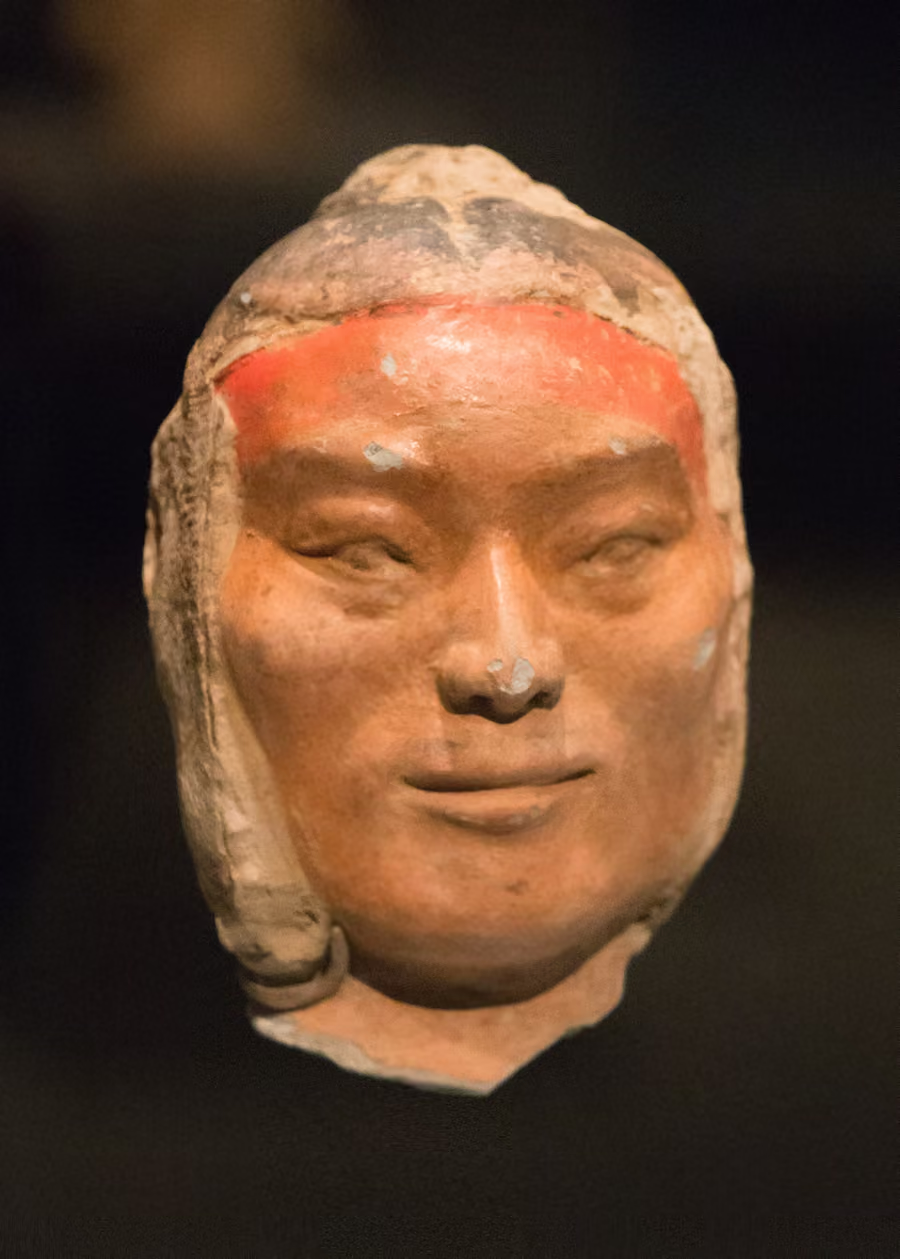
The Terracotta Army and a complete city wall
The eastern end of the Silk Road and capital of thirteen dynasties. Two days covers the headline sights; the city wall and the Muslim Quarter are what people remember. Its museum bookings are the hardest in China.
Getting there
Xianyang International (XIY), about 40 km northwest, connected to Xi'an North station by the airport rail link. Xi'an North is roughly 4.5–6 hours from Beijing and about 3 from Chengdu by high-speed rail.
When to go
Late April to May and September to October. July and August are hot and wettest; December and January have the poorest air.
How long: 3–5 days
Give it 3 days for the headline sights, or up to 5 to see it properly and eat your way around.
Three covers the Terracotta Army, the city wall and the Muslim Quarter. Five adds the Han tombs, the Beilin stele forest and Huashan, plus the time to eat your way along the food street instead of through it once.
Xi'an and Chengdu: five days, two very different cities
The classic second leg of a China trip. One city is Tang-dynasty history and the hardest museum booking in the country; the other is pandas, teahouses and the best food in China.
A little forward planning
Book these before you go
Timed, passport-linked and capable of selling out. Full detail on the reservation radar.
Terracotta Army 秦始皇帝陵博物院
Bookable in EnglishOpens 7 days ahead at 00:00 Beijing · high sell-out risk
Shaanxi History Museum 陕西历史博物馆
English via resellerOpens 5 days ahead at 17:00 Beijing · closed Monday · extreme sell-out risk
Mount Hua (Huashan) 华山
English via resellerOpens 3 days ahead · high sell-out risk
Xi'an City Wall 西安城墙
English via resellerOpens 0 days ahead · low sell-out risk
Make a few good memories
What to see in Xi'an
Researched largely from Chinese-language sources, so it goes beyond the usual shortlist. Dollar figures are approximate, at the rate on 2026-10-08.
秦始皇帝陵博物院(兵马俑)
Three excavated pits hold thousands of life-size clay soldiers, horses and chariots buried to guard China's first emperor around 210 BC. It is the single sight that most visitors build a Xi'an trip around, and standing at the rail of Pit 1 explains why.
¥120 (includes the Lishan Yuan burial-mound park and the free shuttle between the two)
≈ US$18Opening hours, booking and how to get there →
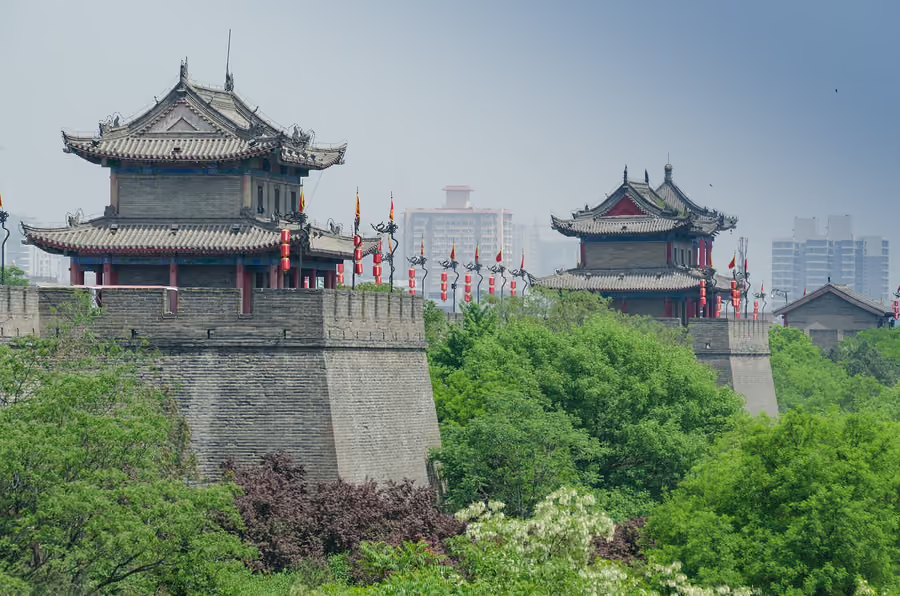
西安城墙
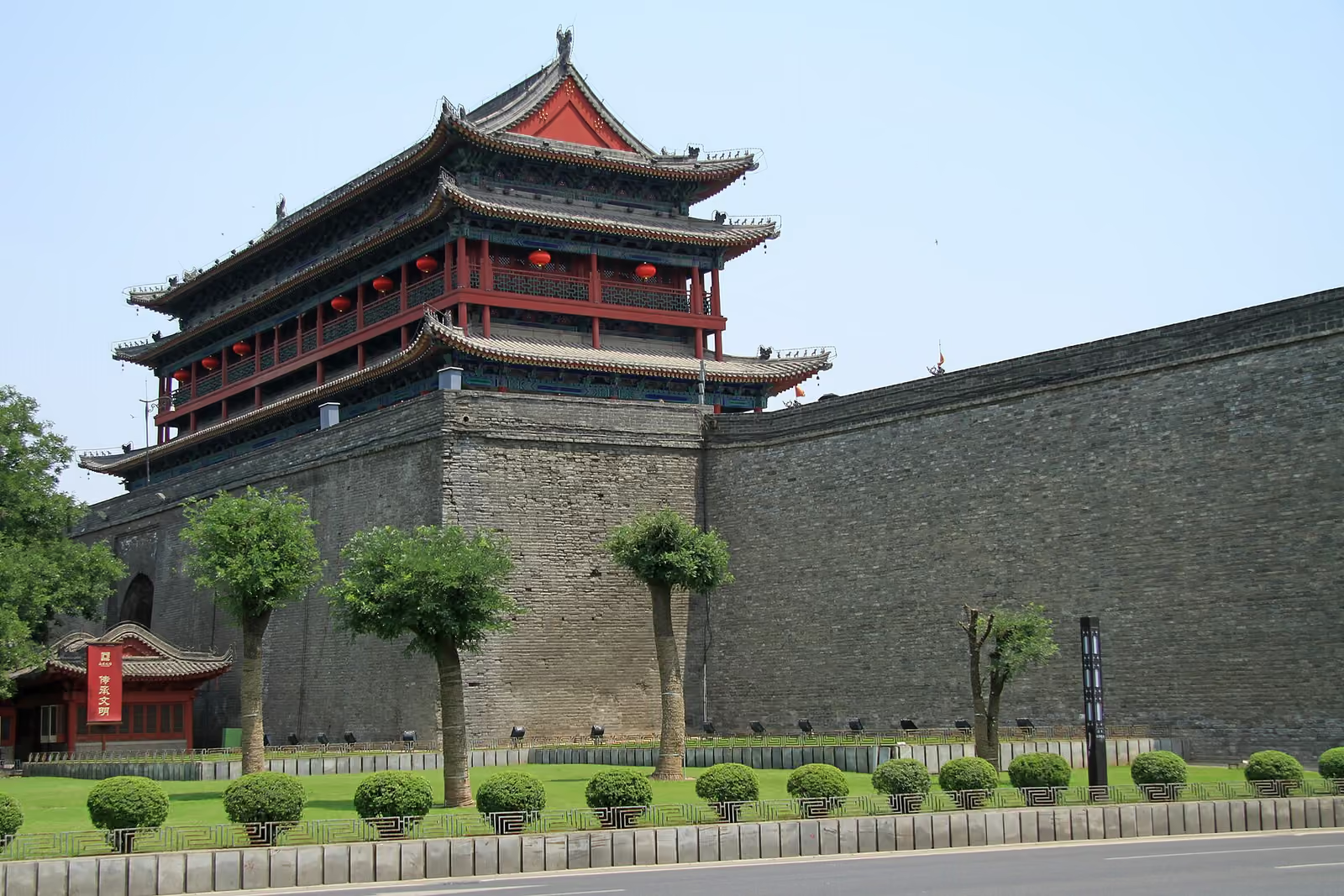
A complete 13.7 km Ming-dynasty rampart still rings the old city, wide enough on top to cycle the whole circuit. It is the best-preserved city wall in China and the most enjoyable way to get your bearings on arrival.
¥54; bicycle hire extra (around ¥45 single / ¥90 tandem for 2 hours, plus a refundable deposit)
≈ US$6.70–13Opening hours, booking and how to get there →
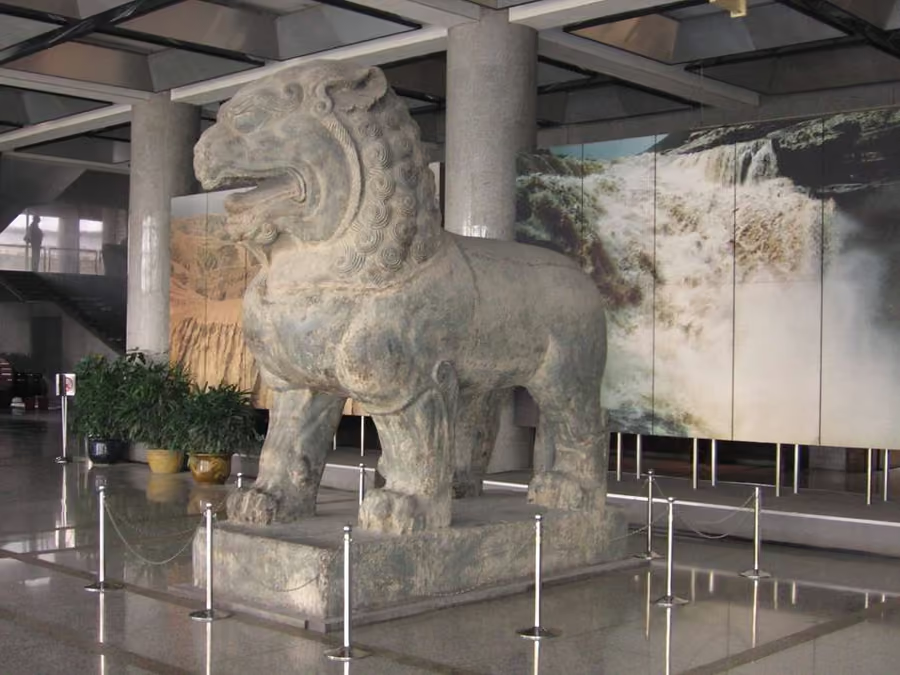
陕西历史博物馆
The national-grade collection for the heartland of the Zhou, Qin, Han and Tang dynasties, arranged as a walk-through of Chinese history rather than a treasure room. If you only enter one museum in China, this is a strong candidate.
Free for the permanent galleries; the separate 'Hejiacun Hoard' special exhibition costs around ¥30
≈ US$4.47Opening hours, booking and how to get there →
大雁塔・大慈恩寺
The brick pagoda the monk Xuanzang built in 652 to house the Buddhist scriptures he carried back from India, still standing in a working temple. It is Xi'an's emblem and the anchor of the city's liveliest modern plaza.
¥30 for Da Ci'en Temple; climbing the pagoda itself costs extra (around 20-¥30, bought at the pagoda base)
≈ US$4.47Opening hours, booking and how to get there →
西安博物院・小雁塔
A quiet garden compound combining the slender 8th-century Small Wild Goose Pagoda, the Tang-dynasty Jianfu Temple grounds and a well-curated city museum whose scale model of Tang Chang'an makes sense of everything else you will see. The calmest major sight in Xi'an.
Free for the museum and grounds; a separate small fee applies to climb the pagoda
Opening hours, booking and how to get there →
钟楼・鼓楼
Two Ming-dynasty timber towers at the exact centre of the walled city, built in 1380s to mark dawn and dusk for Chang'an. Lit up at night from the traffic roundabout, the Bell Tower is the postcard image of modern Xi'an.
¥35 each; a combined ticket for both is ¥50 (concession combined ticket around ¥30)
≈ US$4.47–7.45Opening hours, booking and how to get there →
华清宫(华清池)
Hot-spring bathing pools where Tang emperor Xuanzong wintered with his consort Yang Guifei, on a hillside that was also the site of the 1936 Xi'an Incident that changed modern Chinese history. It sits on the road to the Terracotta Army, so it pairs naturally with a Lintong day.
¥120 (some sources quote ¥150 in peak season - confirm when booking)
≈ US$18–22Opening hours, booking and how to get there →
西安碑林博物馆
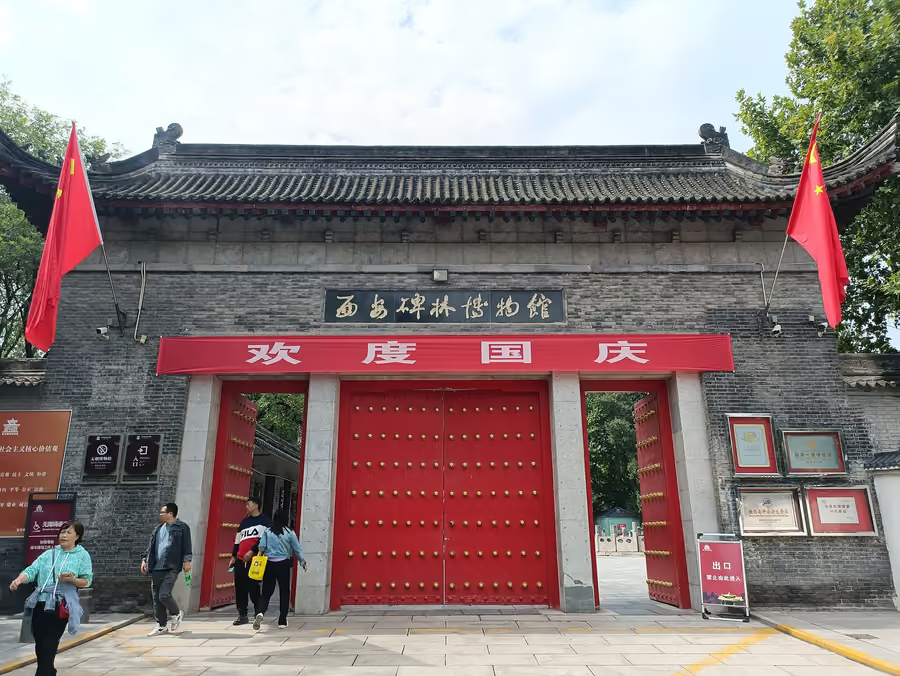
The world's largest collection of Chinese inscribed stone tablets - over 2,000 objects including the Confucian classics carved in stone and the Nestorian Stele recording Christianity's arrival in Tang China. Reopened in 2025 after a major expansion that roughly quadrupled the display space.
¥85 full price; ¥42 concession. One flat price all year
≈ US$6.26–13Opening hours, booking and how to get there →
回民街・化觉巷清真大寺
The lanes behind the Drum Tower are the heart of Xi'an's Hui Muslim community and the city's best-known street-food run - lamb skewers, roujiamo flatbread sandwiches and paomo mutton soup. Tucked off the main drag, the Great Mosque is a 14th-century complex built entirely in Chinese temple style, with pagoda-form minaret and courtyards.
Free to walk the streets; the Great Mosque charges a separate entry fee (roughly 25-¥30, lower in winter)
≈ US$4.47Opening hours, booking and how to get there →
西岳华山
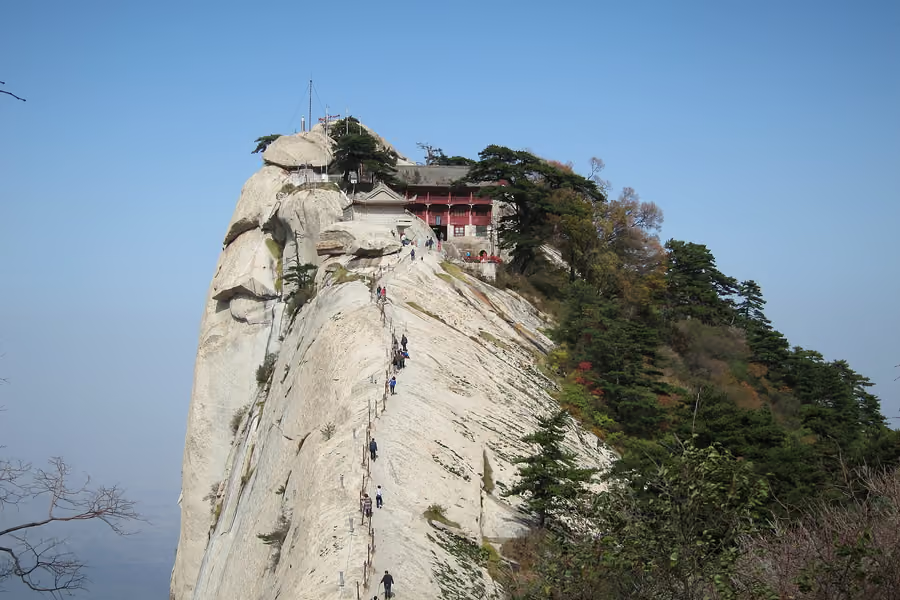
The sheerest of China's five sacred Daoist peaks, famous for granite staircases cut into near-vertical rock and the much-photographed plank walk bolted to a cliff face. A long but entirely doable day trip from Xi'an by high-speed rail.
¥180 in peak season (1 Mar-30 Nov); ¥100 in low season (1 Dec-28 Feb). Cable cars are extra - roughly ¥80 one way, ¥150 return on the North Peak line; the West Peak line costs more
≈ US$12–27Opening hours, booking and how to get there →
汉景帝阳陵博物院
The tomb complex of Han emperor Jingdi, where you walk on glass flooring directly above open excavation pits of miniature painted figurines, livestock and granaries. A quieter, more intimate counterpoint to the Terracotta Army, and many visitors prefer it.
¥90 (Mar-Nov); ¥65 (Dec-Feb)
≈ US$9.68–13Opening hours, booking and how to get there →
大明宫国家遗址公园
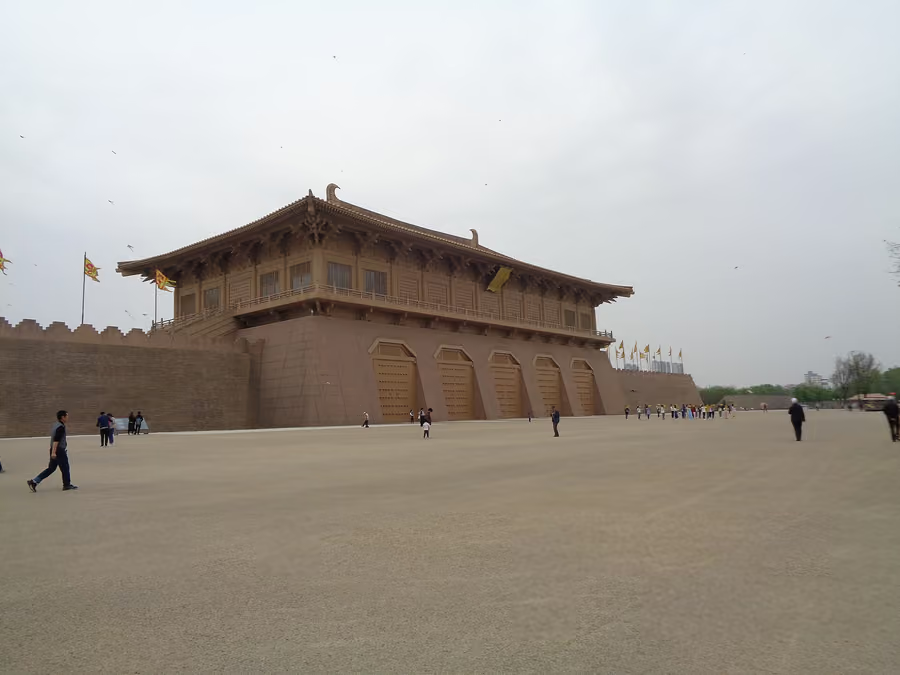
The footprint of the Tang imperial palace - once several times the size of the Forbidden City - preserved as a vast archaeological park with the reconstructed Danfeng Gate at its south end. More open space and foundation platforms than buildings, but it gives you the true scale of Tang Chang'an.
¥60 for the ticketed core area; half price for students and children. The outer park areas are free to walk
≈ US$8.94Opening hours, booking and how to get there →
大唐不夜城
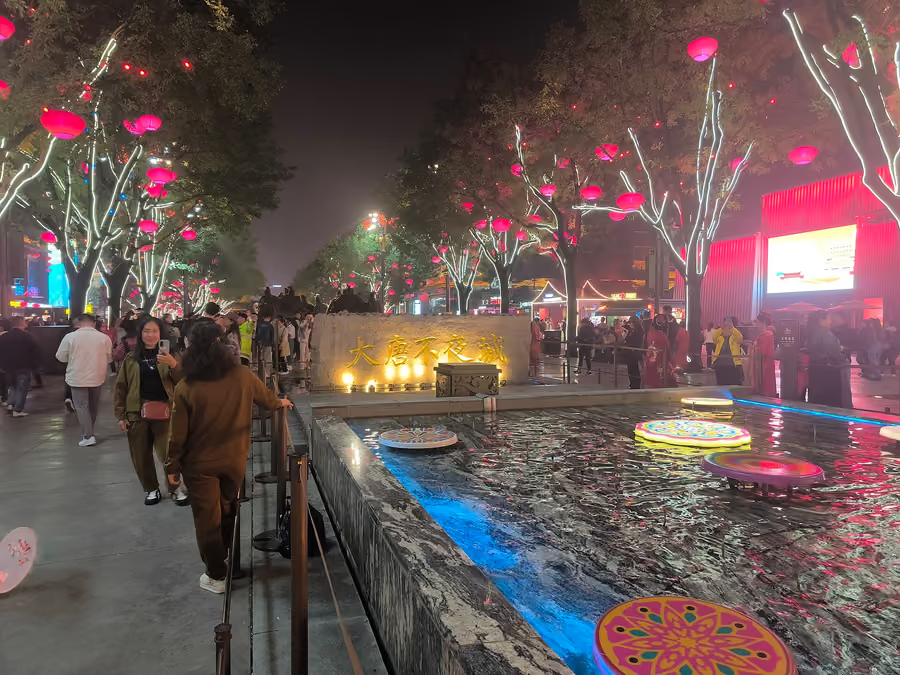
A kilometre-long pedestrian boulevard between the Big Wild Goose Pagoda and Qujiang, lined with Tang-style buildings and roaming street performers in period costume. Free, completely over the top, and the single most fun thing to do in Xi'an after dark.
Free (the separate ticketed 'Chang'an Twelve Hours' immersive theatre block inside is optional and paid)
Opening hours, booking and how to get there →
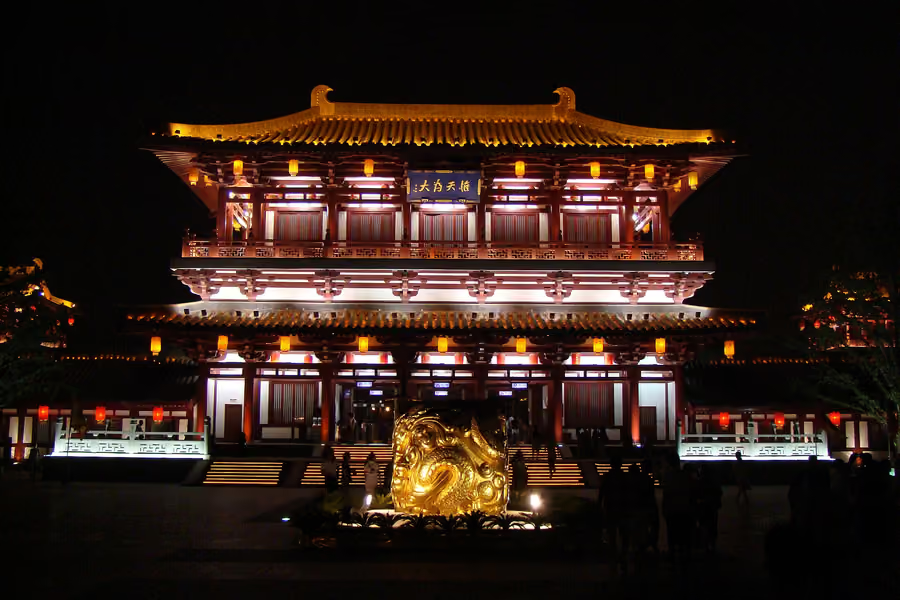
大唐芙蓉园
A large lakeside park in Qujiang rebuilt as a Tang imperial pleasure garden, with pavilions, costume rental and an evening water-screen show projected onto a 120-metre curtain of spray. The most theatrical way to see reconstructed Tang architecture.
Around ¥120 for a combined entry plus the 'Drum' court-music performance; entry-only tickets are cheaper. Prices vary by package
≈ US$18Opening hours, booking and how to get there →
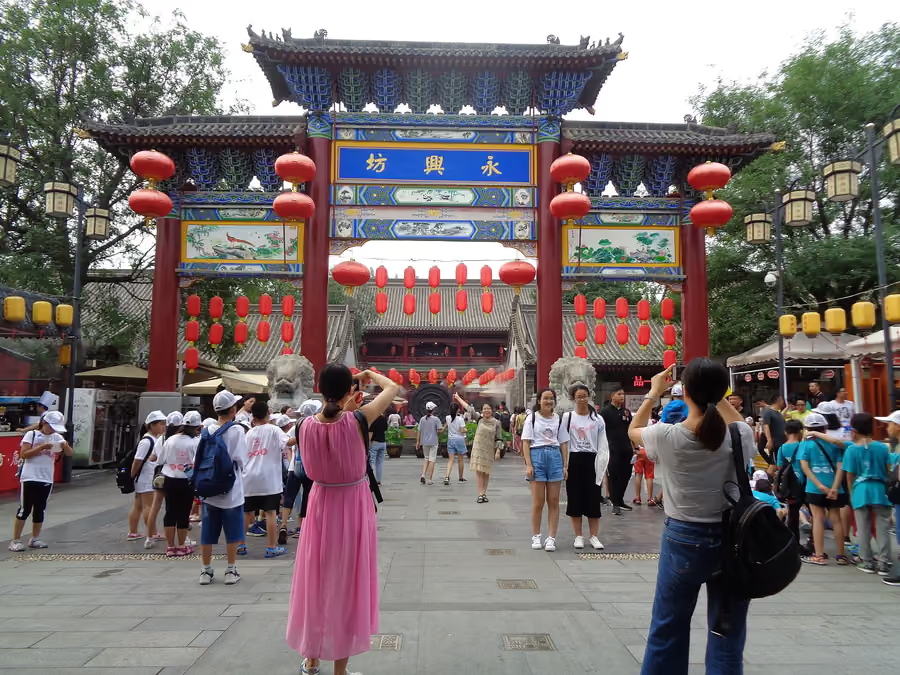
永兴坊
A compact Tang-style courtyard block beside the eastern city wall, organised into Guanzhong, northern-Shaanxi and southern-Shaanxi lanes so you can eat your way across the whole province in one visit. Less chaotic than the Muslim Quarter and strong on intangible-heritage snacks.
Free to enter; pay per dish
Opening hours, booking and how to get there →
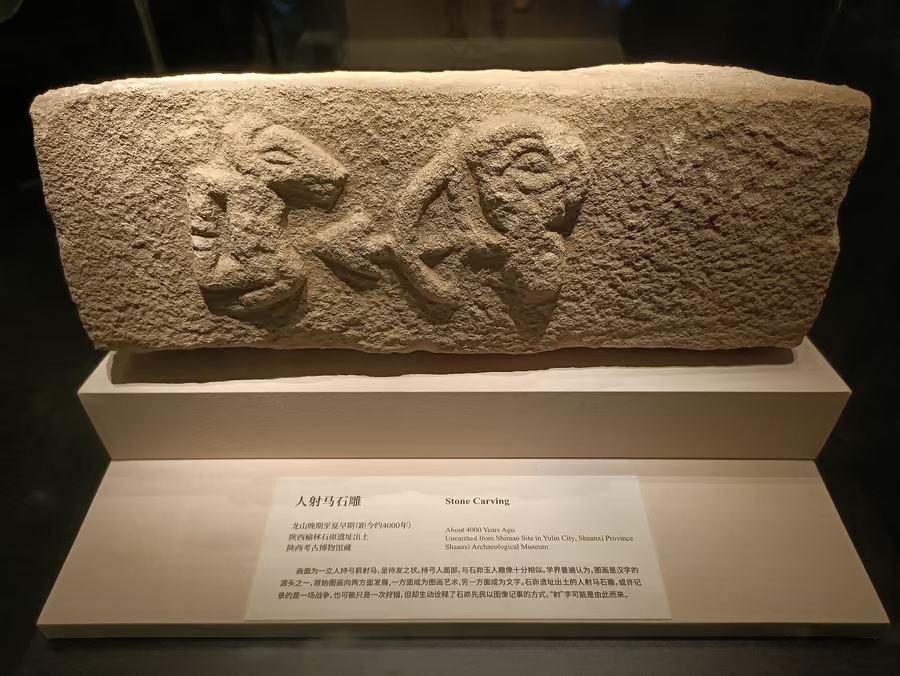
陕西考古博物馆
China's first museum devoted to archaeology as a discipline rather than to finished treasures: it shows you the trenches, the soil sections, the lab work and the reasoning behind the finds. Opened in 2022 and still largely missed by foreign visitors.
Free, but a timed ticket is required
Opening hours, booking and how to get there →
What to eat in Xi'an
If you eat only two things in Xi'an, make them roujiamo (the shredded braised meat flatbread sandwich) and a bowl of liangpi cold noodles — cheap, everywhere, and between them they cover the city's wheat-and-chilli character. Add a bowl of yangrou paomo on a cold day.
Meat in a bun
肉夹馍ròujiāmó
A crisp-edged griddled wheat flatbread split and packed with meat that has been braised for hours in a spiced master stock, then chopped on the board with a little of its own fat and juice.
Tastes like: Savoury, lightly spiced with star anise and cassia, juicy and faintly fatty; not spicy by default
Not on the menu but in it: The Han Chinese version is pork belly braised in a decades-old pork master stock; the halal version from the Muslim quarter uses beef or lamb. If you need halal, buy from a clearly Muslim-run shop rather than assuming.
Might not be for you: Chopped fat is mixed through the meat by design, so a pure lean filling is unusual — ask for 'chun shou' (pure lean) if you prefer.
Where to eat it
- Lao Sun Jia (Dongguan branch) · local institution (China Time-honoured Brand) · ¥40–70 per person · Beilin, Dongguan Zhengjie. Ctrip's listing places it a four-minute walk from Changlemen station exit C2 on Metro Line 6.
- Fan Ji Lazhi Rou (Zhubashi branch) · local institution (recognised Shaanxi heritage brand) · ¥15–25 per person · Nanyuanmen, Zhubashi street no. 53. Ctrip's listing puts it about 575m, an eight-minute walk, from Guangjijie station exit C on Metro Line 6.
- Xi'an Restaurant (Bell Tower branch) · local institution (China Time-honoured Brand) · ¥80–150 per person · Beilin, South Street no. 110, ground floor of the Xi'an Bell Tower Hotel, beside Bell Tower square.
Where: Dedicated single-item shops all over the city; halal versions throughout the Muslim quarter around Beiyuanmen and Sajinqiao
Watch videos of Meat in a bun →Cold skin noodles
凉皮liángpí
Wide, slippery sheets of steamed wheat-starch or rice-starch noodle cut into ribbons, served cold with cucumber, wheat gluten cubes, vinegar, garlic water and chilli oil.
Tastes like: Sour, garlicky, cool and chilli-fragrant rather than burning hot
Not on the menu but in it: Majiang liangpi (sesame-paste version) contains a lot of sesame. The spongy cubes mixed in are wheat gluten, not tofu — not coeliac-safe. The chilli oil is usually plant-based, which makes this one of the better genuinely vegetarian street options.
Might not be for you: The noodles are slick and rubbery, eaten cold; the raw-garlic hit is strong.
Where to eat it
- Tong Sheng Xiang (Bell Tower branch) · local institution (China Time-honoured Brand; paomo technique is a listed intangible heritage) · ¥40–70 per person · Lianhu, West Street no. 5, on the north side of Bell and Drum Tower Square. Ctrip lists hours of roughly 10:30-21:00.
- Fan Ji Lazhi Rou (Zhubashi branch) · local institution (recognised Shaanxi heritage brand) · ¥15–25 per person · Nanyuanmen, Zhubashi street no. 53. Ctrip's listing puts it about 575m, an eight-minute walk, from Guangjijie station exit C on Metro Line 6.
- Jia San Soup Dumplings (Beiyuanmen main shop) · ¥30–50 per person · Lianhu, Beiyuanmen no. 93 in the Muslim Quarter, just north of the Drum Tower. Ctrip lists hours of roughly 08:30-22:30.
- Sheng Zhiwang Sesame Paste Niangpi (Dapiyuan main shop) · ¥10–20 per person · Lianhu, Dapiyuan west end no. 225, at the junction with Beiguangjijie, inside the Muslim Quarter.
Where: Stalls and small shops citywide; the Muslim quarter and any neighbourhood market
Watch videos of Cold skin noodles →Lamb or beef stew with torn bread
羊肉泡馍yángròu pàomó
You are given a dense unleavened bread roll and tear it by hand into fingernail-sized crumbs; the kitchen then cooks it in a rich mutton or beef broth with glass noodles and sliced meat and returns the bowl to you.
Tastes like: Deeply savoury, mutton-rich, thickened by the bread; eaten with pickled sweet garlic and chilli paste
Not on the menu but in it: The broth is simmered from mutton or beef bones for many hours; there is no meat-free version. Most paomo houses in the Muslim quarter are halal, but confirm.
Might not be for you: Strong mutton aroma, and the bread turns to a soft, porridge-like mass. Tearing the bread yourself takes fifteen minutes and is part of the ritual — tearing it too large ruins the bowl.
Where to eat it
- Tong Sheng Xiang (Bell Tower branch) · local institution (China Time-honoured Brand; paomo technique is a listed intangible heritage) · ¥40–70 per person · Lianhu, West Street no. 5, on the north side of Bell and Drum Tower Square. Ctrip lists hours of roughly 10:30-21:00.
- Lao Sun Jia (Dongguan branch) · local institution (China Time-honoured Brand) · ¥40–70 per person · Beilin, Dongguan Zhengjie. Ctrip's listing places it a four-minute walk from Changlemen station exit C2 on Metro Line 6.
Where: Old paomo houses around the Drum Tower and the Muslim quarter; also Han-Chinese versions elsewhere in Beilin district
Watch videos of Lamb or beef stew with torn bread →Biang biang noodles
biangbiang面 / 裤带面biángbiáng miàn
A single enormous belt-wide hand-slapped wheat noodle, boiled and topped with chilli flakes, spring onion and garlic, over which smoking-hot oil is poured at the last second to bloom the chilli.
Tastes like: Toasty chilli fragrance, garlicky, salty-sour with vinegar; more aromatic than fiery
Not on the menu but in it: Usually vegetarian in its plain 'youpo' form, but many shops add a minced-pork or braised-meat topping by default and some use lard in the hot oil. Ask for 'su de' (plain/vegetarian).
Might not be for you: The noodles are extremely thick and chewy; portions are large.
Where: Noodle shops across Beilin and Lianhu districts, and inside the city walls
Watch videos of Biang biang noodles →Sour soup dumplings
酸汤水饺suāntāng shuǐjiǎo
Small boiled dumplings, usually lamb or beef, floated in a hot-and-sour broth sharpened with vinegar, chilli oil, coriander and sometimes seaweed and dried shrimp.
Tastes like: Sharply sour, mildly spicy, light
Not on the menu but in it: The soup frequently contains dried shrimp (haimi) and sesame oil, and is built on a meat broth even when the dumplings look plain.
Might not be for you: Coriander-heavy as standard.
Where to eat it
- Tong Sheng Xiang (Bell Tower branch) · local institution (China Time-honoured Brand; paomo technique is a listed intangible heritage) · ¥40–70 per person · Lianhu, West Street no. 5, on the north side of Bell and Drum Tower Square. Ctrip lists hours of roughly 10:30-21:00.
- Lao Sun Jia (Dongguan branch) · local institution (China Time-honoured Brand) · ¥40–70 per person · Beilin, Dongguan Zhengjie. Ctrip's listing places it a four-minute walk from Changlemen station exit C2 on Metro Line 6.
Where: Muslim-quarter dumpling shops and neighbourhood breakfast counters
Watch videos of Sour soup dumplings →Crumbled flatbread in mutton soup with meatballs
牛肉丸胡辣汤niúròuwán húlàtāng
A thick, starch-bound beef broth loaded with bouncy beef meatballs, potato, carrot, cabbage and wheat gluten, finished with a ladle of chilli oil. Torn flatbread goes in. A Xi'an breakfast, not the Henan version of the same name.
Tastes like: Thick, peppery, salty, moderately spicy and very filling
Not on the menu but in it: Beef-bone broth; the 'gluten' cubes are wheat. Heavily peppered with white pepper as well as chilli.
Might not be for you: The gloopy starch-thickened texture and the bouncy, almost rubbery meatballs are unfamiliar.
Where: Morning stalls in the Muslim quarter, especially around Sajinqiao; sold out by late morning
Watch videos of Crumbled flatbread in mutton soup with meatballs →Gourd chicken
葫芦鸡húluji
A whole chicken trussed into a gourd shape, then steamed, simmered and deep-fried so the skin shatters while the meat stays soft. A Tang-dynasty banquet dish and Xi'an's most famous sit-down speciality.
Tastes like: Mildly spiced, crisp-skinned, savoury; served with pepper-salt for dipping
Might not be for you: Served whole with bones in, to be pulled apart by hand or with chopsticks.
Where to eat it
- Xi'an Restaurant (Bell Tower branch) · local institution (China Time-honoured Brand) · ¥80–150 per person · Beilin, South Street no. 110, ground floor of the Xi'an Bell Tower Hotel, beside Bell Tower square.
Where: Old-brand Shaanxi restaurants inside the city walls; it is a restaurant dish, not street food
Watch videos of Gourd chicken →Soup-filled buns
灌汤包guàntāngbāo
Xi'an's Muslim-quarter version of soup dumplings: thin-skinned steamed buns filled with beef or lamb and a gelled broth, eaten with vinegar.
Tastes like: Savoury and lightly spiced, with a strong beef or mutton character
Not on the menu but in it: The soup is set with beef-bone aspic. Halal versions use no pork, but non-halal shops elsewhere in the city may.
Might not be for you: Very hot liquid inside; mutton versions have a strong aroma.
Where to eat it
- Jia San Soup Dumplings (Beiyuanmen main shop) · ¥30–50 per person · Lianhu, Beiyuanmen no. 93 in the Muslim Quarter, just north of the Drum Tower. Ctrip lists hours of roughly 08:30-22:30.
Where: The Muslim quarter around Beiyuanmen
Watch videos of Soup-filled buns →Small crispy pork/beef
小酥肉xiǎo sūròu
Cubes of battered, deep-fried beef (halal) or pork then steamed in a bowl until meltingly tender, served over rice with a ladle of chilli oil. In Xi'an the halal beef version is the famous one.
Tastes like: Rich, oily, soft, with a chilli-oil kick
Not on the menu but in it: The batter typically contains egg and wheat starch. The Sichuan dish of the same name is crisp and dry; the Xi'an one is steamed and soft.
Might not be for you: Very soft, almost mushy texture and a high fat content.
Where: Specialist shops in the Muslim quarter, several of which sell out daily
Watch videos of Small crispy pork/beef →Persimmon cakes
黄桂柿子饼huángguì shìzǐbǐng
Small griddled cakes made from dough enriched with pulped Lintong persimmon, stuffed with osmanthus-scented sugar, walnut or rose paste and fried on a flat pan.
Tastes like: Sweet, floral, sticky inside with a crisp outside
Not on the menu but in it: Walnut and sesame commonly appear in the filling; the frying fat is sometimes lard.
Where to eat it
- Liu Ming Persimmon Cakes (Huifang) · ¥5–15 per person · Lianhu, Sajinqiao no. 144, in the Muslim Quarter. Ctrip's listing places it a short walk from Sajinqiao metro station exit B.
Where: Griddle stalls along the Muslim quarter streets, made to order
Watch videos of Persimmon cakes →Gourd-head soaked bread (pig intestine paomo)
葫芦头泡馍húlutóu pàomó
A Han-Chinese cousin of paomo: torn bread in a milky pork broth with carefully cleaned, sliced pig large intestine and sometimes streaky pork.
Tastes like: Rich, milky, peppery, with an unmistakable offal depth
Not on the menu but in it: Pork intestine and pork-bone broth — definitely not halal, despite sitting on menus near the Muslim quarter.
Might not be for you: Pig intestine, with the characteristic smell that survives even careful cleaning.
Where to eat it
- Chun Fa Sheng (Nanyuanmen branch) · ¥35–60 per person · Beilin, Nanyuanmen no. 25, south-west of the Bell Tower.
Where: Old Han-Chinese paomo houses in Beilin district, away from the Muslim quarter
Watch videos of Gourd-head soaked bread (pig intestine paomo) →Rice wine with osmanthus
醪糟 / 桂花稠酒láozāo / guìhuā chóujiǔ
A cloudy, barely alcoholic drink of fermented glutinous rice, served warm and sweetened with osmanthus flowers; the traditional accompaniment to a Xi'an meal.
Tastes like: Sweet, milky, lightly yeasty and floral
Not on the menu but in it: Lightly alcoholic despite being sold as a soft drink — relevant for anyone avoiding alcohol on religious or medical grounds.
Where: Old Shaanxi restaurants and Muslim-quarter stalls (the quarter's versions are generally non-alcoholic sweet laozao)
Watch videos of Rice wine with osmanthus →Where to eat in Xi'an
- Dianping (大众点评) — the real ratings. Chinese only, but photos, prices and a 4.5+ score survive translation. Its 必吃榜 "Must-Eat" list is the mainstream benchmark.
- Black Pearl (黑珍珠) — China's own fine-dining guide, published annually by Meituan and taken more seriously domestically than Michelin.
- Michelin covers only a few Chinese cities, so its absence means nothing outside them.
- Xiaohongshu (小红书) — what is actually busy this month, rather than this year.
Tong Sheng Xiang (Bell Tower branch) 同盛祥·非遗(钟楼店)
¥40–70 per person≈ US$5.96Founded in 1920 and the halal counterweight to Lao Sun Jia, Tong Sheng Xiang occupies a Ming-Qing-styled building on West Street just off Bell and Drum Tower Square. Two floors: quick snacks downstairs, proper plates upstairs. It is the paomo house most often sent out to represent Shaanxi at state banquets, and the room feels institutional in a good way.
Order: Beef and mutton paomo (牛羊肉泡馍), Layered lamb pastry (羊肉千层饼) and 3 more
What to order, booking and allergens →
Lao Sun Jia (Dongguan branch) 老孙家饭庄(东关店)
¥40–70 per person≈ US$5.96A paomo house trading since 1898 and the single most famous name attached to Xi'an's mutton-and-bread soup. The Dongguan branch sits on three floors away from the Muslim Quarter crush, so it is calmer than the tourist-facing outlets near the Drum Tower. The house broth is deliberately peppercorn-forward, pale gold rather than muddy, and the kitchen will push you towards the premium grade.
Order: Mutton paomo, premium grade (优质羊肉泡馍), Cured beef in a flatbread (腊牛肉夹馍) and 3 more
What to order, booking and allergens →
Jia San Soup Dumplings 贾三灌汤包子
¥40–80≈ US$5.96The best-known halal soup-dumpling house in the Muslim quarter, with beef and lamb fillings and eight-treasure porridge alongside.
What to order, booking and allergens →
Ding Family Crispy Beef 定家小酥肉
¥30–60≈ US$4.47Single-dish halal shop in the Muslim quarter selling steamed crispy beef over rice, made in limited quantity each day.
What to order, booking and allergens →
Fan Ji Lazhi Rou (Zhubashi branch) 樊记腊汁肉(竹笆市店)
¥15–25 per person≈ US$2.23A hole-in-the-wall pork shop trading since the 1920s on Zhubashi, a lane of bamboo-ware sellers a few minutes south of the Bell Tower. Pork belly is simmered for hours in a replenished master stock, then chopped and stuffed into a baked wheat bun. This is the Han Chinese version of roujiamo and the reference point locals use for everything else.
Order: Pork bun, fat-and-lean mix (腊汁肉夹馍·肥瘦), Pork bun, lean only (纯瘦肉夹馍) and 2 more
What to order, booking and allergens →
Xi'an Restaurant (Bell Tower branch) 西安饭庄·非遗陕菜(钟楼店)
¥80–150 per person≈ US$12The grand old state-house of Shaanxi cuisine, on the ground floor of the Bell Tower Hotel on South Street. Its reputation rests on the Shaanxi snack banquet - dozens of small plates drawn from the province's street repertoire and served as a sit-down set - alongside the classic Tang-adjacent banquet dishes like whole gourd chicken and the golden-thread oil tower pastry. Formal rooms, white cloths, private dining.
Order: Gourd chicken (葫芦鸡), Golden-thread oil tower pastry (金线油塔) and 3 more
What to order, booking and allergens →
Chang'an No.1 长安壹号
¥400–800≈ US$60Upmarket modern Shaanxi cooking with Cantonese technique, the city's best-known fine-dining address for new-style Shaanxi cuisine.
What to order, booking and allergens →
Lao Li Jia Biangbiang Noodles (Bell Tower main shop) 老李家Biangbiang面(钟楼总店)
¥15–35 per person≈ US$2.23A small, permanently busy noodle shop in the lane south of the Dongdajie and Luomashi junction, doing the one thing Xi'an is most proud of: belt-wide hand-slapped wheat noodles. The name's famous 58-stroke character is said to be onomatopoeia for the dough hitting the bench. Order the combination bowl and you get several toppings on one sheet of noodle.
Order: Hand-slapped noodles with hot chilli oil (油泼扯面), Four-in-one biangbiang noodles (四合一biangbiang面) and 2 more
What to order, booking and allergens →
Jia San Soup Dumplings (Beiyuanmen main shop) 西安贾三灌汤包(北院门总店)
¥30–50 per person≈ US$4.47The best-known halal soup-dumpling house in the Muslim Quarter, on Beiyuanmen a few doors from the Drum Tower. Thin-skinned steamed buns filled with lamb or beef and a set broth that liquefies in the steamer. It is unapologetically on the tourist drag and the upstairs rooms can feel like a canteen, but the dumplings themselves are the real article.
Order: Lamb soup dumplings (羊肉灌汤包), Three-delight soup dumplings (三鲜灌汤包) and 3 more
What to order, booking and allergens →
Liu Xin Beef and Mutton Paomo (Sajinqiao) 刘信牛羊肉泡馍小炒(回民街店)
¥25–40 per person≈ US$3.72A thirty-odd-year-old halal shop at the Sajinqiao end of the Muslim Quarter, on the street where Xi'an locals actually eat. It does paomo, but what it is really known for is xiaochao - the stir-fried version, where the torn bread is tossed in a wok with beef, chilli and a slug of vinegar instead of being drowned in broth. Cheaper, sharper and more interesting than the hushed old houses nearer the Bell Tower.
Order: Stir-fried paomo (小炒泡馍), Premium beef paomo (优质牛肉泡馍) and 2 more
What to order, booking and allergens →
Sheng Zhiwang Sesame Paste Niangpi (Dapiyuan main shop) 清真盛志望麻酱酿皮铺(大皮院总店)
¥10–20 per person≈ US$1.49A single-dish halal counter at the west end of Dapiyuan that has become the local shorthand for Xi'an cold noodles. Niangpi is the thicker, chewier cousin of liangpi: steamed wheat-starch sheets, cut into belts, buried under sesame paste and bright red chilli oil. It makes a limited batch each day and shuts when it runs out, often by mid-afternoon.
Order: Sesame paste niangpi (麻酱酿皮), Cold wheat-starch noodles (凉皮) and 1 more
What to order, booking and allergens →
Chun Fa Sheng (Nanyuanmen branch) 春发生饭店(南院门店)
¥35–60 per person≈ US$5.21Founded in 1920 and named from a line of Du Fu, Chun Fa Sheng is the house that made hulutou its own - pig intestine and tripe, cleaned and simmered for hours, poured over torn bread in a milky broth. The Nanyuanmen room is bright, orderly and faintly old-fashioned. If you only try one offal dish in Xi'an, this is where to do it.
Order: Pig intestine paomo (葫芦头泡馍), Spicy stir-fried intestine (辣爆肥肠) and 2 more
What to order, booking and allergens →
Liu Ming Persimmon Cakes (Huifang) 回坊刘明柿子糊塌·刘明元宵
¥5–15 per personA tiny Sajinqiao stall built around one autumn ingredient: soft Lintong persimmons mashed into a batter, wrapped around walnut, rose paste or raisins and shallow-fried. Shihu ta is the loose fritter version, shizi bing the neat stuffed cake. It costs a few yuan and is the best single thing to eat while walking the quarter.
Order: Persimmon fritter (柿子糊塌), Stuffed persimmon cake (柿子饼) and 1 more
What to order, booking and allergens →
Defachang Dumpling Banquet (Bell Tower) 德发长饺子·非遗(钟楼店)
¥60–120 per person≈ US$8.94Trading since 1936 on West Street beside Bell and Drum Tower Square, Defachang built its reputation on the jiaozi yan - a dumpling banquet served in flights, each kind a different shape, filling and sauce, with a 'pearl' course of thimble-sized dumplings cooked at the table in a copper pot. It is theatre as much as dinner, and the staff narrate each course.
Order: Dumpling banquet (饺子宴), Crab-roe dumplings (蟹黄饺) and 3 more
What to order, booking and allergens →
See the Terracotta Army and Xi'an
Other people's videos, on YouTube — we link, we don't host. Worth knowing: YouTube is blocked in mainland China, so watch these at home, or download them in the YouTube app before you fly.
- How to Visit the Terracotta Warriors Without a Guide | Solo in Xi'an 🇨🇳Solo traveller shows how to reach and tour the Terracotta Warriors museum without booking a guide.Ligia travels the world · opens on YouTube
- I Spent 48 Hours in Xi'An 🇨🇳 This city is INCREDIBLE!Two days in Xi'an including the Terracotta Army, the city wall and the Muslim Quarter.Travel For Phoebe · opens on YouTube
- Terracotta Army: The greatest archaeological find of the 20th century - BBC NewsShort news report on the Terracotta Army's discovery and significance, with footage inside the pits.BBC News · opens on YouTube · Auto-generated subtitles
- Xi'an: Easy 4-Day Itinerary for The Terracotta Warriors and Must-Eat Noodles!Xi'an itinerary that includes the Terracotta Warriors pits plus the city's noodle and food scene.Cynny Goes To China · opens on YouTube · Auto-generated subtitles
Videos belong to the channels credited above. We have no affiliation with them and earn nothing from these links.
See Xi'an beyond the warriors
Other people's videos, on YouTube — we link, we don't host. Worth knowing: YouTube is blocked in mainland China, so watch these at home, or download them in the YouTube app before you fly.
- Xi'an China Travel Guide 2026 | Terracotta Army, Where to Stay, What to Eat & How to Plan Your TripA current Xi'an orientation covering the Terracotta Army and where to base yourself in the city.Thoughtful Travel Guides · opens on YouTube
- Xi'an, Huashan Travel Guide: Terracotta Army, Muslim Quarter, Bell and Drum Tower, Pagodas and moreXi'an plus a Huashan day, taking in the Muslim Quarter and the warriors.Vince Travel · opens on YouTube
- Xi'an China Travel Guide: Top 5 Must See Attractions (Terracotta Warriors & More)A short tour of Xi'an's five headline sights for a first visit.Advantage Traveller · opens on YouTube
- 15 Best Things To Do in Xian China Travel Guide 2026 4KFifteen things to do across Xi'an, filmed in 4K and wider than the usual two sights.Island Hopper TV · opens on YouTube
Videos belong to the channels credited above. We have no affiliation with them and earn nothing from these links.