




Your destination guide 厦门
Xiamen
An island city, and the ferry you must book 15 days out
A subtropical island city with a UNESCO islet offshore. Gulangyu is the draw and also the catch: since February 2026 the ferry is real-name, capped and sold only through a mini-programme, so this is one of the few places on this site where turning up on the day genuinely does not work.
Getting there
Gaoqi airport (XMN) is unusually central — 8 km out, 15 minutes by taxi to Zhongshan Road, and on Metro Line 3. Most high-speed trains use Xiamen North in Jimei, off the island: 40 minutes in on Metro Line 1. Some services still call at Xiamen station on the island itself, which is much better if you can get it. Shenzhen North is about 2.5 hours away.
When to go
March to May and September to November. Summer is hot and the typhoon season peaks in August and September; winter is mild and the quietest time for Gulangyu.
How long: 3–5 days
Give it 3 days for the headline sights, or up to 5 to see it properly and eat your way around.
Three covers Gulangyu and the island's waterfront, assuming your ferry booking worked. Five adds Nanputuo Temple, the Jimei school village, Shapowei harbour and enough meals to get through satay noodles, oyster omelette and peanut soup.
Xiamen and Gulangyu: book the ferry before you book the flight
Gulangyu ferry tickets have been real-name, capped and sold 15 days ahead since February 2026, which means your Xiamen dates are decided by a boat booking. This guide leads with that, then covers four days on the island city, the satay-noodle habit, the peanut-allergy problem and what to skip.
A little forward planning
Book these before you go
Timed, passport-linked and capable of selling out. Full detail on the reservation radar.
Gulangyu Island ferry 鼓浪屿轮渡
No English bookingOpens 15 days ahead at 09:00 Beijing · extreme sell-out risk
Make a few good memories
What to see in Xiamen
Researched largely from Chinese-language sources, so it goes beyond the usual shortlist. Dollar figures are approximate, at the rate on 2026-10-08.

鼓浪屿
A car-free UNESCO island of decaying colonial mansions, banyan lanes and piano music, five minutes offshore. The former international settlement, and the reason most people come to Xiamen.
Return tourist ferry ¥35 per person (valid for one round trip within 20 days of the use date); island entry itself free
≈ US$5.21Opening hours, booking and how to get there →

日光岩
The granite summit of Gulangyu, 92 metres up, with the whole island, Xiamen's skyline and the Taiwan Strait laid out below. Zheng Chenggong drilled troops here before taking Taiwan in 1661.
Covered by the ¥100 Gulangyu combination ticket (Sunlight Rock, Shuzhuang Garden, Haoyue Garden, Piano Museum, Seal Engraving Museum); the five bought separately come to roughly ¥130–150
≈ US$15–19Opening hours, booking and how to get there →
菽庄花园与钢琴博物馆
A 1913 private garden built out over the rocks so the sea washes into its courtyards, hiding a museum of around a hundred historic pianos. Gulangyu produced so many musicians it is nicknamed Piano Island.
Included in the ¥100 Gulangyu combination ticket
≈ US$15Opening hours, booking and how to get there →
南普陀寺
A thousand-year-old Buddhist complex climbing the hillside below Wulao Peak, backed by rocks carved with giant characters and fronted by lotus ponds. Working monastery with a renowned vegetarian restaurant.
Free
Opening hours, booking and how to get there →
厦门大学思明校区
Often called China's most beautiful campus - 1920s Minnan-style halls with swallowtail roofs, a lake, and a tunnel that leads straight out to the beach. Founded in 1921 by an overseas-Chinese rubber magnate.
Free
Opening hours, booking and how to get there →
胡里山炮台
An 1894 Qing coastal battery holding the largest surviving 19th-century Krupp cannon in the world, aimed across the strait at Kinmen. Live firing-drill re-enactments run several times a day.
From ¥25
≈ US$3.72Opening hours, booking and how to get there →

曾厝垵
A fishing village on the south coast swallowed by guesthouses, snack stalls and buskers - heavily commercialised but the liveliest night eating in Xiamen, and right on the beach.
Free
Opening hours, booking and how to get there →
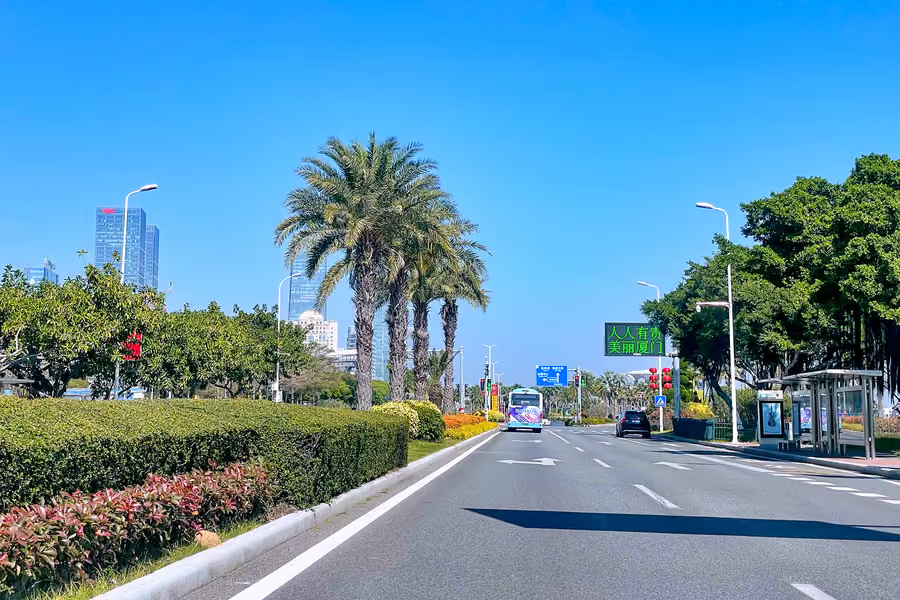
环岛路
A seafront boulevard with a dedicated cycle and running track hugging the south-east shore, facing Kinmen across the water. The best way to see Xiamen island in half a day.
Free; sightseeing bus roughly ¥20 on weekdays, ¥30 at weekends and holidays
≈ US$2.98–4.47Opening hours, booking and how to get there →
沙坡尾
Xiamen's original harbour, a horseshoe of water where the wooden fishing fleet used to shelter, now ringed by the Shapowai Art West Zone in old warehouses. The city's most convincing young neighbourhood.
Free
Opening hours, booking and how to get there →
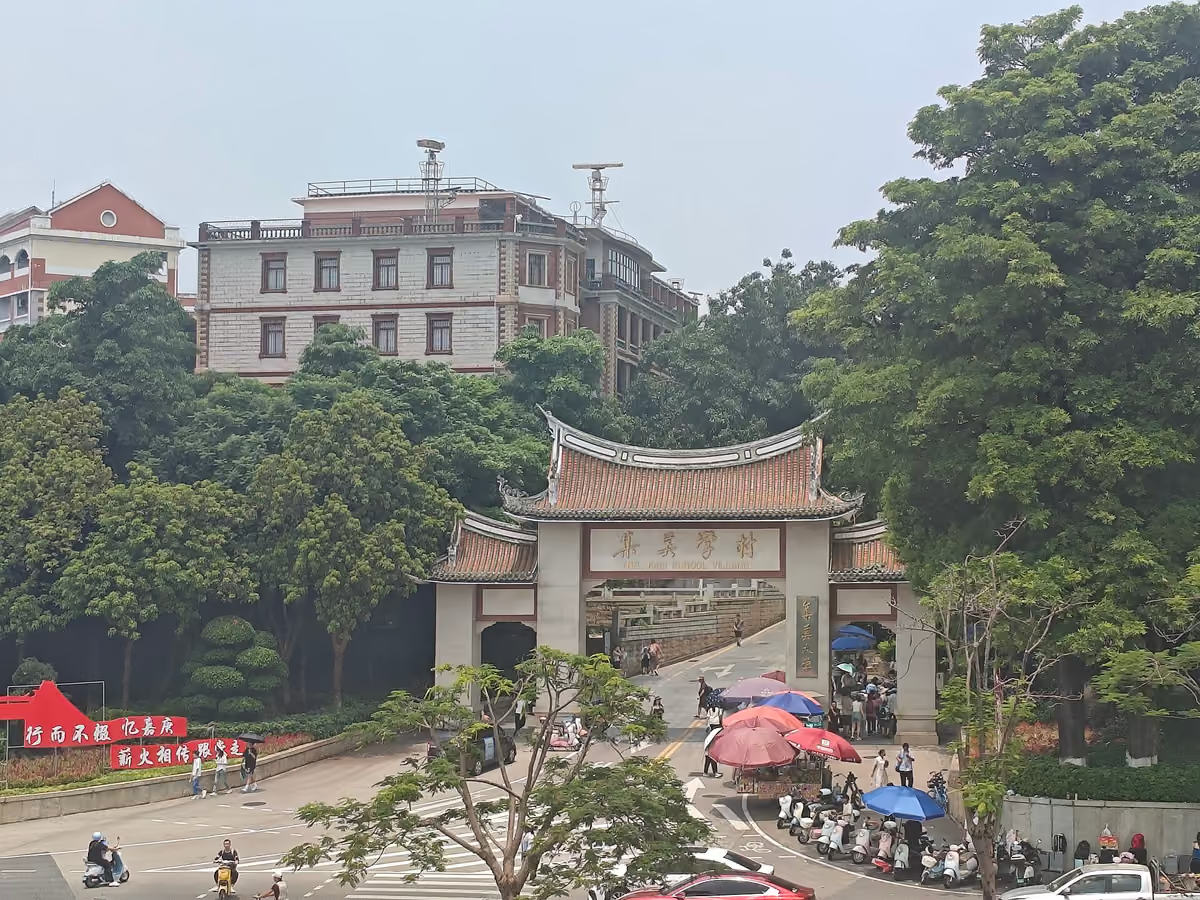
集美学村
Off the island, a whole township of schools built by the same overseas-Chinese philanthropist who founded Xiamen University, in a hybrid style of Western arcades under swallowtail Minnan roofs. Also his tomb, the Turtle Garden.
Free to walk the village; the Tan Kah Kee Memorial Museum is free with ID
Opening hours, booking and how to get there →
What to eat in Xiamen
Xiamen eats Minnan (southern Fujian) food, and the staples are rice, sweet-potato starch and wheat noodles rather than anything heavy or spicy. The defining flavours are peanut and shellfish: satay paste made from ground peanuts and fermented shrimp heads turns up in the city's signature noodle soup, peanut soup is a breakfast dessert, and oysters, clams, squid and dried shrimp season almost everything savoury. Eating here means grazing at small single-dish shops rather than ordering a table of dishes, so plan on three or four short stops instead of one sit-down meal, and expect many of the best old shops to be cash-only with no English menu.
Satay noodles
沙茶面Shā chá miàn
Alkaline wheat noodles in a brick-red broth built from Xiamen satay paste, which is ground peanuts plus shrimp heads fermented for two months or more, shrimp paste, garlic, five-spice and curry powder. You point at a tray of raw add-ins at the counter and the cook blanches your choices to order: pork intestine, pig's liver, duck blood, squid, oysters, fish balls, tofu puffs. The broth is ladled over the lot and eaten immediately with a spoon and chopsticks.
Tastes like: Thick, nutty, savoury-sweet and faintly curried, with springy noodles that soak up the broth; richer than it looks and not actually spicy.
Not on the menu but in it: The broth is fundamentally peanut-based and also contains fermented shrimp and shrimp paste, so it is unsafe for both peanut and shellfish allergies even if you order only vegetable toppings. Dried flatfish or fish sauce is common in the paste. Nothing on the menu is peanut-free.
Where to eat it
- Wu Tang Sha Cha Mian · Michelin Bib Gourmand 2026 · ¥20–40 per person · Siming District, 76 Minzu Road (metro station not confirmed)
- Chen Xian Sen Sha Cha Mian · Michelin Bib Gourmand 2026 · ¥15–40 per person · Jimei District, 131-3 Jiageng Road (metro station not confirmed)
- Shan Li Yan Sha Cha Mian · Michelin Bib Gourmand 2026 · ¥15–40 per person · Siming District, 285 Datong Road (metro station not confirmed)
Oyster omelette
海蛎煎Hǎi lì jiān
A batter of sweet-potato starch and water is poured onto a hot griddle with a handful of small local oysters, beaten egg, chopped garlic greens and coriander, then fried until the edges crisp and the centre stays gelatinous. It is flipped once, cut up with the spatula and served flat on a plate with chilli-garlic sauce on the side. Eaten with chopsticks as a snack, not as a main.
Tastes like: Crisp lacy edges over a soft, slightly gluey interior; briny and sweet from the oysters, sharpened by the sauce.
Not on the menu but in it: The chewy, almost translucent texture comes from sweet-potato starch, not flour, which surprises people expecting a Western omelette. The dipping sauce usually contains fermented soy and sometimes peanut.
Where to eat it
- Zhen Zhen Oyster Omelette · Michelin Bib Gourmand (year unconfirmed) · ¥30–60 · Siming District, 184 Xiahe Road (metro station not confirmed)
Peanut soup
花生汤Huā shēng tāng
Skinned raw peanuts are simmered four to six hours with rock sugar until they collapse at the touch of a spoon, leaving a cloudy white, barely sweet soup. It is served hot in a small bowl, often with a raw egg cracked in to poach in the heat, and eaten alongside a fried dough stick or a sweet fried pastry. Despite being sweet it is a breakfast item, not a dessert course.
Tastes like: Milky, gently sweet and nutty, with peanuts that dissolve to a paste in the mouth.
Not on the menu but in it: The common upgrade 鸡蛋花生汤 adds a raw egg that cooks in the bowl, so it is not vegan and is a problem for egg allergies; ask for it plain if needed.
Watch videos of Peanut soup →Oyster thin-noodle soup
蚵仔面线É zǎi miàn xiàn
Hair-thin wheat vermicelli cooked until it half-dissolves into a thick, starch-bound broth, then topped with small oysters, fried garlic and coriander. The noodles are deliberately broken short so the whole bowl is eaten with a spoon. A squeeze of black vinegar or a spoon of chilli is usually on the table.
Tastes like: Gluey and comforting, salty with a clean oyster sweetness and a strong hit of fried garlic.
Not on the menu but in it: The broth is usually built on dried flatfish or dried shrimp stock even when no seafood is visible, and the noodle itself is heavily salted in production.
Watch videos of Oyster thin-noodle soup →Thickened fine-noodle broth
面线糊Miàn xiàn hú
A Minnan breakfast of fine wheat vermicelli stirred into a sweet-potato-starch-thickened stock until it becomes a pale, spoonable gruel. You then choose toppings by pointing: braised pork, pig's intestine, duck gizzard, egg, oysters, fried fish fillet, each priced separately and added on top. A fried dough stick is dunked in it.
Tastes like: Mild, savoury and silky, with the flavour coming almost entirely from whichever toppings you pick.
Not on the menu but in it: The base stock is normally made with pork bones and dried seafood, so the plain-looking bowl is neither vegetarian nor fish-free. Topping prices are additive and a loaded bowl costs several times the base price.
Watch videos of Thickened fine-noodle broth →Minnan fresh spring rolls (popiah)
薄饼Bó bǐng
A paper-thin wheat crepe is laid flat, smeared with sweet sauce, then loaded with slow-braised shredded cabbage and carrot, bean sprouts, tofu, dried seaweed, fried shallot and a heavy dusting of crushed peanuts and sugar, and rolled into a fat cigar. Unlike the deep-fried spring roll this version is never fried and is eaten by hand. It is the Xiamen ancestor of Singaporean and Malaysian popiah.
Tastes like: Soft and juicy, sweet-savoury, with the crunch coming from peanuts and fried shallot rather than pastry.
Not on the menu but in it: The crushed peanut and sugar mixture is central and is often added by default without being mentioned. The braised cabbage filling frequently includes dried shrimp or oyster, so a vegetable-looking roll may not be vegetarian.
Watch videos of Minnan fresh spring rolls (popiah) →Five-spice pork rolls
五香条Wǔ xiāng tiáo
Minced pork mixed with chopped water chestnut, onion and five-spice powder is wrapped in a sheet of dried beancurd skin, deep-fried until the skin blisters, then snipped into bite lengths with scissors. It is served with a sweet-sour dipping sauce and sometimes mustard. One of the few genuinely crisp items in the Xiamen snack repertoire.
Tastes like: Shatteringly crisp beancurd skin around a juicy, aniseed-scented pork filling.
Not on the menu but in it: The crunch inside is water chestnut, not nuts. The wrapper is soy beancurd skin, which some people mistake for pastry; the dipping sauce is usually a sweet soy-vinegar blend.
Watch videos of Five-spice pork rolls →Braised-pork sticky rice dumpling
烧肉粽Shāo ròu zòng
Glutinous rice is stir-fried in lard with soy, then packed into a bamboo leaf around pork belly, shiitake, dried shrimp, chestnut and sometimes a salted egg yolk, and steamed for hours. It is unwrapped at the table and eaten hot, drenched in satay sauce, garlic paste and sweet chilli sauce, which is the part that makes it specifically Minnan rather than generic Chinese zongzi.
Tastes like: Dense, glossy and savoury, with melting pork fat; the satay topping makes it nutty and sweet.
Not on the menu but in it: The sauce poured over it is peanut-based satay, so the dish becomes a peanut dish at the last second. Dried shrimp inside, lard throughout, and the bamboo leaf is wrapping, not food.
Watch videos of Braised-pork sticky rice dumpling →Ginger duck hotpot
姜母鸭Jiāng mǔ yā
Duck on the bone is browned in sesame oil with a huge quantity of sliced mature ginger, then braised in rice wine and soy with Chinese tonic herbs until the sauce reduces to a sticky glaze. It arrives bubbling in its own cast-iron or clay pot over a flame and is shared, with the ginger slices eaten as well as the duck. Considered a warming, restorative dish and eaten most in cold months.
Tastes like: Deeply savoury and wine-scented with a slow-building ginger burn and a medicinal-herbal background note.
Not on the menu but in it: The herbal element (angelica, goji, sometimes ginseng) gives a bitter medicinal taste that is intentional. Cooked in sesame oil and rice wine, so it is neither alcohol-free nor sesame-free.
Watch videos of Ginger duck hotpot →Sea worm jelly
土笋冻Tǔ sǔn dòng
Sipunculid worms dug from coastal mudflats are cleaned, boiled until their own collagen leaches out, then set in small moulds into a clear jelly with the worms suspended inside. Served cold, turned out of the mould, with soy, vinegar, mustard, garlic, coriander and slices of cucumber. The name translates as 'earth bamboo-shoot jelly', which conceals what it is.
Tastes like: Cool, wobbly and faintly briny, with a crisp snap from the worms themselves; the dressing does most of the flavouring.
Not on the menu but in it: It is marine worms, not bamboo shoots or any kind of vegetable, and the jelly is the animals' own gelatine with no added setting agent. Peanut sauce is a common dressing option.
Watch videos of Sea worm jelly →Fish balls
鱼丸Yú wán
Mackerel or eel flesh is scraped from the bone, beaten with sweet-potato starch and egg white into a paste, then hand-moulded, sometimes around a nugget of minced pork, and poached. Served in a clear broth with white pepper and a few leaves of celery or coriander, or dropped into a noodle soup. Fujian-style balls are much springier than mainland-northern versions.
Tastes like: Bouncy to the point of rubbery in the best way, mild and clean, with a surprise of salty pork in the filled ones.
Not on the menu but in it: Many 'fish' balls contain a pork filling, so they are not a safe choice for anyone avoiding pork. Broth is often pork-bone based.
Watch videos of Fish balls →Four-fruit iced soup
四果汤Sì guǒ tāng
A build-your-own cold dessert: you choose from trays of red bean, Job's tears, taro balls, tapioca pearls, grass jelly, agar strips, mung bean, peanut, preserved plum and fresh fruit, and the stall tops the bowl with shaved ice and either sugar syrup, honey or coconut milk. Eaten standing up in hot weather, which in Xiamen is most of the year.
Tastes like: Icy and lightly sweet with lots of chewy textures rather than one dominant flavour.
Not on the menu but in it: Peanut is one of the default toppings and sits in an open tray next to everything else, so cross-contact is likely. Condensed milk or evaporated milk is a frequent sweetener even where coconut is advertised.
Watch videos of Four-fruit iced soup →Shrimp wontons with peanut-sauce noodles
扁食拌面Biǎn shí bàn miàn
The classic Minnan pairing of a bowl of tiny pork-and-shrimp wontons in clear broth alongside a small bowl of dry noodles dressed in peanut butter and fermented bean sauce. The wontons have almost more wrapper than filling and are deliberately slippery; the noodles are stirred hard at the table until the sauce coats every strand. Ordered together, not as alternatives.
Tastes like: Light, clean soup against thick, salty-nutty noodles; the contrast is the whole idea.
Not on the menu but in it: The dressing on the dry noodles is literally peanut paste plus fermented soybean paste, a severe peanut risk that English menus rarely spell out. Wonton filling normally includes dried or fresh shrimp.
Watch videos of Shrimp wontons with peanut-sauce noodles →Where to eat in Xiamen
- Dianping (大众点评) — the real ratings. Chinese only, but photos, prices and a 4.5+ score survive translation. Its 必吃榜 "Must-Eat" list is the mainstream benchmark.
- Black Pearl (黑珍珠) — China's own fine-dining guide, published annually by Meituan and taken more seriously domestically than Michelin.
- Michelin covers only a few Chinese cities, so its absence means nothing outside them.
- Xiaohongshu (小红书) — what is actually busy this month, rather than this year.
Yuehua Satay Noodles 月华沙茶面
¥15–30≈ US$2.23A forty-year-old satay noodle shop named after its founder, working from a family satay recipe with a strongly peanut-forward broth. You pick raw toppings from the counter tray and they are cooked into your bowl to order; duck blood and tofu are the house recommendations.
What to order, booking and allergens →
Zhen Zhen Oyster Omelette 珍珍海蛎煎
¥30–60≈ US$4.47A tiny one-woman operation where the owner is cook and server. The oyster omelette is packed with plump oysters and garlic sprouts. Menu of about 20 mostly small plates, including braised pork rice and shrimp-ball soup, at low prices.
Order: Oyster omelette (海蛎煎), Braised pork rice (卤肉饭) and 1 more
What to order, booking and allergens →
Lai Cuo Cheng Bian Shi 赖厝埕扁食店
¥15–40 per person≈ US$2.23A bian shi shop dating to the 1940s, when the founder sold dumplings from a bamboo-pole kitchen; now run by her son and still hand-wrapped. Signature is shrimp bian shi soup with springy noodles dressed in peanut and fermented-tofu sauce, near the old Bashi market.
Order: Shrimp bian shi soup (鲜虾扁食), Noodles in peanut and fermented-tofu sauce (花生腐乳拌面)
What to order, booking and allergens →
A Zhong Shi Fang 阿忠食坊
¥100–200≈ US$15Twenty years on from its start as a roadside stall, this is now a large open-air Minnan eatery where locals go for a proper sit-down seafood dinner. There is no printed menu: you choose live fish and shellfish from the tanks and order the rest à la carte. Signature plates include Sichuan-peppercorn-crusted yu fish and Xiamen-style liver stir-fried with pickled bamboo shoots.
What to order, booking and allergens →
Hao Shi Lai Dapaidang 好食来大排档
¥80–150≈ US$12A second-generation Minnan seafood canteen going since 1993, the kind of noisy open-fronted place the city calls a dapaidang. Known for clay-pot seared yu fish, which is tender and oily, and salt-and-pepper baby eel with a brittle coating. Service is notably friendly by local standards.
What to order, booking and allergens →
Hokklo (Xian Cheng) at Waldorf Astoria Xiamen 鲜承中餐厅
¥600–1200≈ US$89The fine-dining end of Fujian cooking, on the sixth floor of the Waldorf Astoria, where the kitchen rebuilds classics such as Buddha Jumps Over the Wall, satay-glazed prawns and rice-wine-steamed yellow croaker with modern technique. The clay-pot Hakka salt-cured chicken is the dish to ask about. Strong wine list and a seasonal, local-ingredient menu.
Order: Buddha Jumps Over the Wall (佛跳墙), Sacha glass prawns (沙茶琉璃虾) and 2 more
What to order, booking and allergens →
Huang Zehe Peanut Soup 黄则和花生汤
¥20–50≈ US$2.98The city's best-known old-brand snack house and the default place to try peanut soup, which arrives milky white and barely sweet, optionally with an egg cracked in. The counter also carries the full spread of Minnan snacks, so it works as a one-stop first meal: fresh spring rolls, sticky rice dumplings, taro cake, fried dough.
What to order, booking and allergens →
Lianhuan Oyster Omelette 莲欢海蛎煎
¥15–35≈ US$2.23A back-lane stall off Zhongshan Road that locals send people to for oyster omelette made one pan at a time: fresh oysters, sweet-potato starch, spring onion and egg, crisp at the edges and soft in the middle, with no muddy aftertaste. Tiny, with a handful of stools.
What to order, booking and allergens →
Fleurs et Festin (Liaohua Qingyu) 蓼花卿语
¥400+ per person≈ US$60A Chaoshan (Teochew) restaurant in a three-storey historic building on Liaohua Road near Zhongshan Park. A few tables sit on the ground floor while upstairs private rooms carry a minimum spend. The kitchen is staffed by Chaoshan natives and is known for cold-marinated (lu) dishes and fresh seafood, so it makes a good contrast to Xiamen's own Minnan food.
Order: Marinated goose and goose feet (卤水鹅 / 老鹅掌), Marinated pig-liver powder dish (粉肝) and 1 more
What to order, booking and allergens →
Wu Tang Sha Cha Mian 吴堂沙茶面
¥20–40 per person≈ US$2.98A decades-old noodle shop on Minzu Road with a one-item menu, sacha noodles, and over 20 toppings, from oysters and razor clams to pork heart and tripe. Michelin says the peanuts are toasted rather than fried for nuttiness and umami. Expect a queue, open-air seating and a ¥30-ish bill.
Order: Sacha noodles with oysters (沙茶面加蚝), Sacha noodles with razor clam (沙茶面加蛏) and 1 more
What to order, booking and allergens →
Chen Xian Sen Sha Cha Mian 陈先森沙茶面
¥15–40 per person≈ US$2.23A sacha-noodle shop in Jimei, across the harbour from Xiamen Island and popular with students. Michelin praises the coarsely ground peanut in the broth and the well-judged heat. It is a trip off the tourist core, so go if you are heading to Jimei anyway.
Order: Sacha noodles with oysters (沙茶面加蚝), Pork tendon (猪筋) and 2 more
What to order, booking and allergens →
Shan Li Yan Sha Cha Mian 山丽妍沙茶面
¥15–40 per person≈ US$2.23A small old-town shop where the owner couple know their regulars by name and the broth is kept piping hot all day. Michelin describes a balance of garlic, peanut and chilli.
Order: Sacha noodles (沙茶面), Sacha noodles with seafood topping (海鲜沙茶面)
What to order, booking and allergens →
A Xi Xia Mian 阿西虾面
¥15–40 per person≈ US$2.23Old-town prawn noodle shop, nearly a century old, near the Bashi market area. The broth gets its depth from whiskered velvet shrimp heads and shells that are toasted, pounded and slow-cooked for four hours. A lighter, seafood-sweet alternative to sacha noodles.
Order: Prawn noodles (虾面), Prawn noodles with pork (虾面加肉)
What to order, booking and allergens →
Lao Song Bian Shi 劳松扁食店
¥15–25 per person≈ US$2.23A household name for over 30 years serving tiny pork wontons (bian shi), blanched noodles tossed in peanut sauce and hand-shredded pork. You can pick plain-flour wrappers (soft, velvety) or pork-and-starch wrappers (bouncy, translucent). Cheap and near Bashi market.
Order: Pork bian shi soup (扁食汤), Peanut-sauce blanched noodles (花生酱拌面) and 1 more
What to order, booking and allergens →
Yanyu (Jiahe Road) 宴遇(嘉禾路店)
Price not confirmedA flagship Fujian restaurant that has been busy for over ten years, in a stylish modern room. It is known for top-grade dried seafood in Buddha Jumps Over the Wall and for Minnan prawn noodles in a rich orange tomalley broth. Only the Jiahe Road branch carries the star.
Order: Buddha Jumps Over the Wall (佛跳墙), Minnan prawn noodles in tomalley soup (闽南虾面) and 1 more
What to order, booking and allergens →
Da Tong Shao Jiu Lang 大同烧酒廊
Price not confirmedA bustling old-town place for shao jiu pei, the Minnan term for small plates eaten with alcohol. Run by a couple for over ten years, seafood-forward with meat and offal too. Good for an evening drink-and-snack session.
Order: Blanched octopus with secret dip (白灼章鱼), Pork kidney in Sichuan pepper sauce (花椒腰花)
What to order, booking and allergens →
Guo Gong Restaurant 国供饭店
Price not confirmedA no-frills local restaurant open since 1994 in Xiang'an district, part of many locals' food memories. The wall menu is only a guide; pick from the glass-fronted fridge. Feng rou, the braised trotter, is the signature (a Tong'an-style dish).
Order: Braised skin-on pork trotter with chestnuts, mushrooms and dried shrimp (封肉), Sauteed frog (爆炒田鸡)
What to order, booking and allergens →
See Xiamen and Gulangyu
Other people's videos, on YouTube — we link, we don't host. Worth knowing: YouTube is blocked in mainland China, so watch these at home, or download them in the YouTube app before you fly.
- Gulangyu Island 鼓浪屿 — Top 10 Things to Do | Xiamen's UNESCO Hidden GemA tour of Gulangyu, the UNESCO islet off Xiamen, and what there actually is to do once you have made it across.Holikl TV · opens on YouTube
- XIAMEN, CHINA Travel Guide | Happy TripXiamen itself rather than the island — the waterfront, the old town and the food.Happy Trip · opens on YouTube
- Summer in Gulangyu: 4 Must-Dos + 1 Don’t (Avoid Tourist Traps!)Gulangyu in summer, including which parts are tourist traps and worth skipping.Harmony Courtyard Boutique Hotels: Kulangsu & More · opens on YouTube
Videos belong to the channels credited above. We have no affiliation with them and earn nothing from these links.